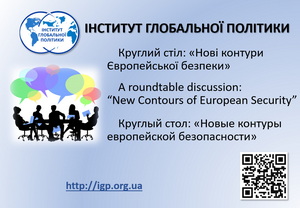
Round Table on the Topic: “New Contours of European Security”
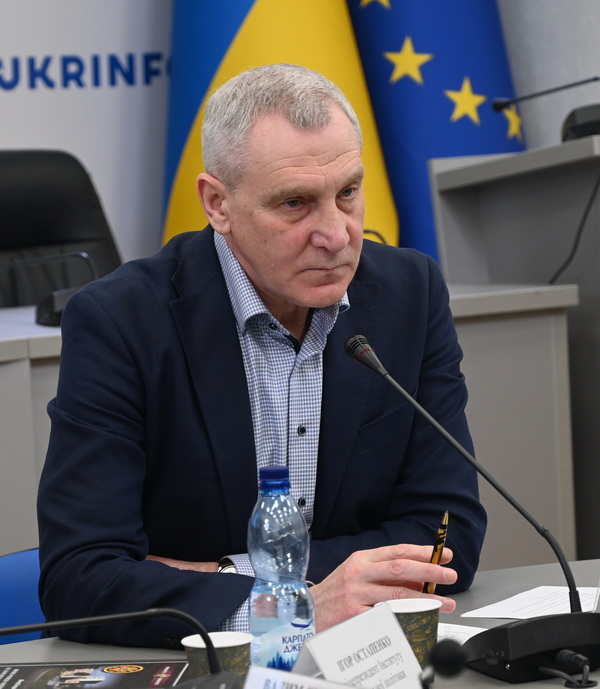
The Global Policy Institute proposed this topic for discussion at a round table held on 25 March at the premises of Ukrinform. The direct organiser of the event, as per tradition, was Oleg Bereziuk, President of the Institute, along with his colleagues who have long been engaged in issues of geopolitics and political science, including military matters, particularly those related to warfare and, above all, the ongoing Russo-Ukrainian war.
Given the relevance of the issues under discussion, distinguished representatives of well-known state and public institutions, research centres engaged in strategic studies, military personnel, human rights activists, and foreign diplomats responded to the invitation to participate. Among them were also former military officers who had previously held responsible positions not only in Ukraine but also far beyond its borders, indicating their willingness to remain actively involved during such a challenging time for Ukraine. In total, more than twenty individuals accepted the invitation to participate in the event.
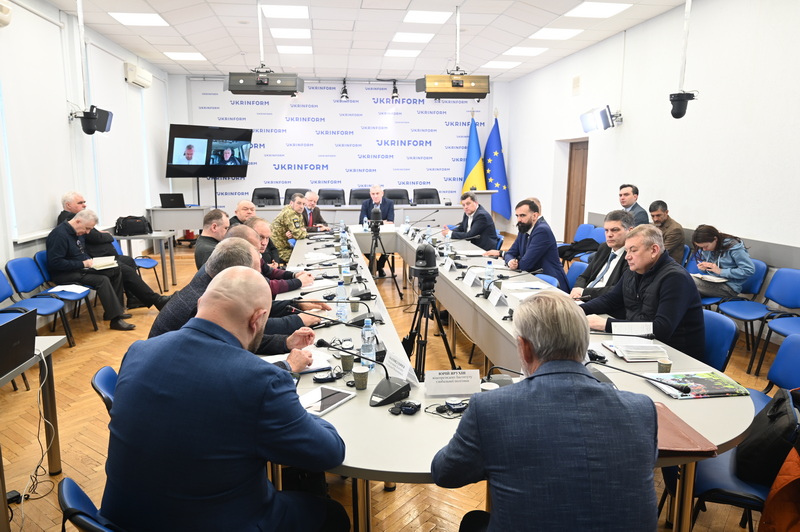
The moderator of the event was Oleg Bereziuk. In his opening remarks, he noted that in today’s complex global circumstances, not only in Europe but worldwide, the issue of security is becoming increasingly urgent due to well-known threats. Among these threats is the potential withdrawal of the United States from its leadership role, which is currently being suggested by the actions of the new American president. Since some European leaders share this perspective, there is a need for an appropriate response, especially from those politicians whose words the world consistently heeds. What exactly this entails, particularly in the context of the ongoing Russo-Ukrainian war, was the primary focus of the round table discussion.
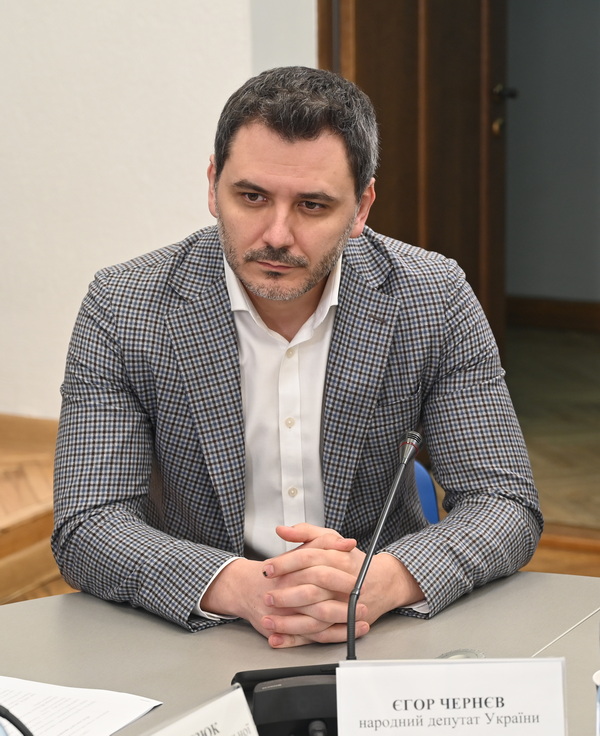
Ukrainian MP Yehor Cherniev, commenting on the current situation in Europe, stated that the complex situation, including the war in Ukraine, could be addressed through the dismantling of the Russian Federation. By dismantling, he referred to comprehensive pressure on Russia, including economic measures, without which restraining it would be difficult. The MP asserted that one way to influence Russia’s future would be to reset its government and transform the country into a confederation, where its constituent entities could play a constructive role on the global stage. As long as Russia exists in its current form, Cherniev argued, there will always be threats emanating from it, at the very least to the European Union. He added that ensuring the so-called American security umbrella for the EU is also crucial. Regarding the collapse of Russia as a neighbouring state, he suggested that this could occur following Putin’s death, after which regional elites might begin redistributing power.
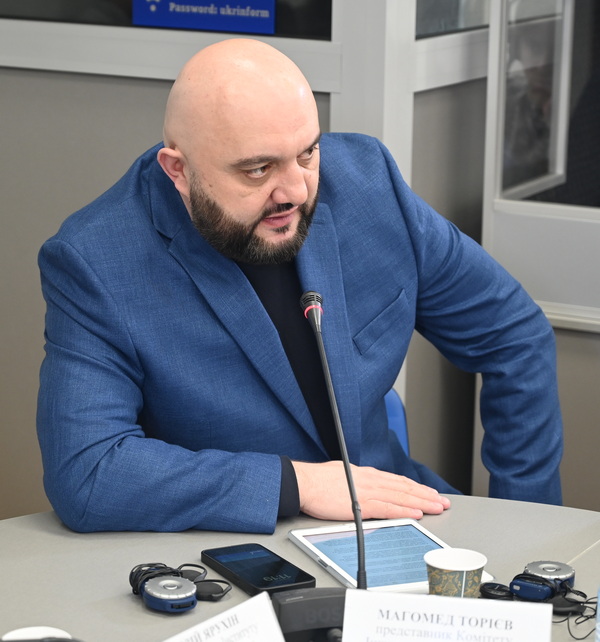
As a continuation of MP Cherniev’s remarks, Magomed Toriyev, a representative of the Ingush Independence Committee, delivered a speech in which he briefly outlined the purpose of the Committee’s establishment. He argued that Ukraine, through its war effort, has debunked the long-standing myths surrounding Russia’s military might by effectively dismantling its armed forces, destroying the Black Sea Fleet, and ultimately rendering Russia’s future existence uncertain. Among Russia’s weaknesses, he highlighted its lack of reliable allies and the prevalence of chauvinism, nationalism, and an arrogant attitude towards the various ethnic groups within its borders. “Russia is much weaker from within than it appears externally,” Toriyev asserted, referencing the recent attempted advance on Moscow by the military units affiliated with Yevgeny Prigozhin. “For the first time, the peoples of Russia are beginning to contemplate the consequences of this war and the blood price they are paying for the Kremlin’s ambitions. Russia is exterminating its minority nations—two have already ceased to exist.”
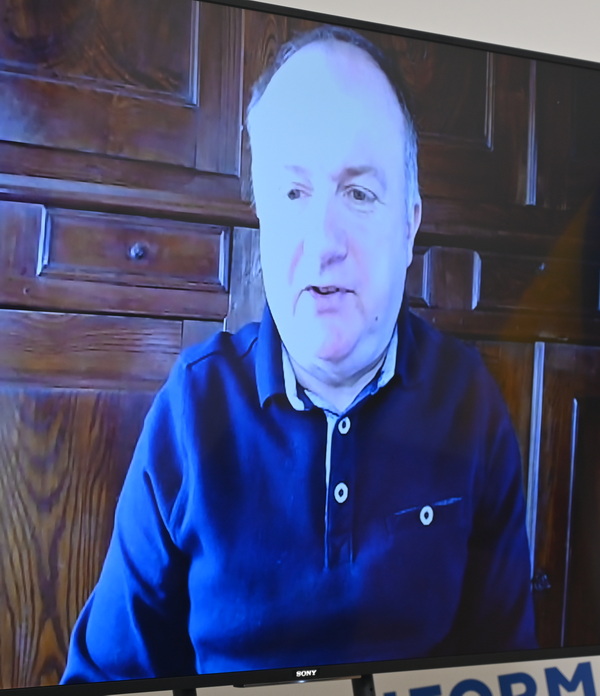
French journalist Olivier Védrine, who joined the discussion via Zoom, also shared his thoughts on the issue. He described the current situation in Europe and the policy of the incumbent American president, Donald Trump, who, somewhat unexpectedly, has begun discussing territorial expansion and conquests. Védrine pointed out how these “plans” align with Putin’s attempts to seize parts of Europe, which is currently preoccupied with its own unity, including its support for Ukraine. He also emphasised the importance of nuclear weapons held by certain European nations, stating: “There is no alternative today but to actively resist in order to preserve peace and democracy.”
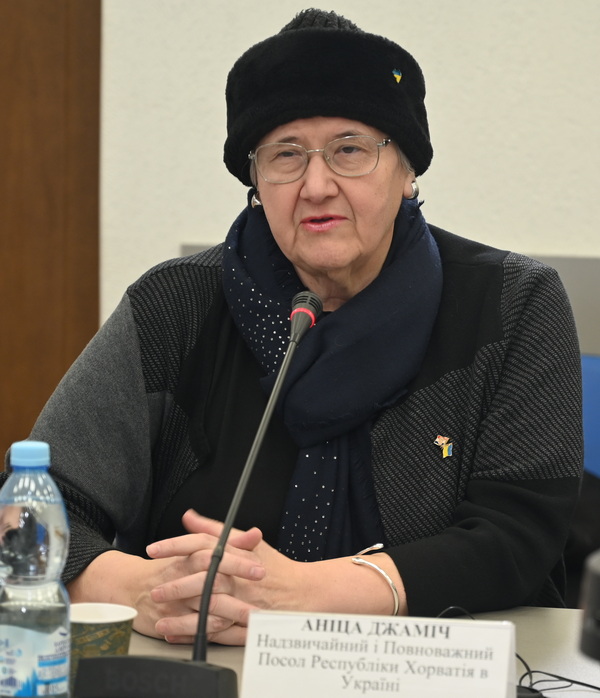
Subsequent speakers, including Mykhailo Melnykov (Head of the All-Ukrainian Union of Intelligence Veterans, retired Lieutenant General) and Anica Djamić (Ambassador Extraordinary and Plenipotentiary of the Republic of Croatia to Ukraine), agreed with Védrine. Reflecting on Ukrainian peacekeepers who had served in the former Yugoslavia during its dissolution, Melnykov remarked that he had never imagined Ukrainian cities and villages would one day be destroyed in a manner similar to what had happened in Croatia during its struggle for independence. He stressed that Ukraine must now make use of the military experience its soldiers had previously gained.
Former Croatian Armed Forces officer Željko Granatir supported his compatriot’s statements. From a purely military perspective, he noted that Russia is now studying modern warfare tactics, particularly observing how Ukrainians defend their homes. Recalling the wars in Croatia, Granatir stated, “We, too, hoped for support from the United States, but, as with Ukraine today, Europe was of greater help to us… Croatia, being more compact, won the war in its sixth year… Ukraine will have a harder time. Only now is it beginning to realise who its true friends are. And one more thing: the situation in Ukraine is uniting Europe.”
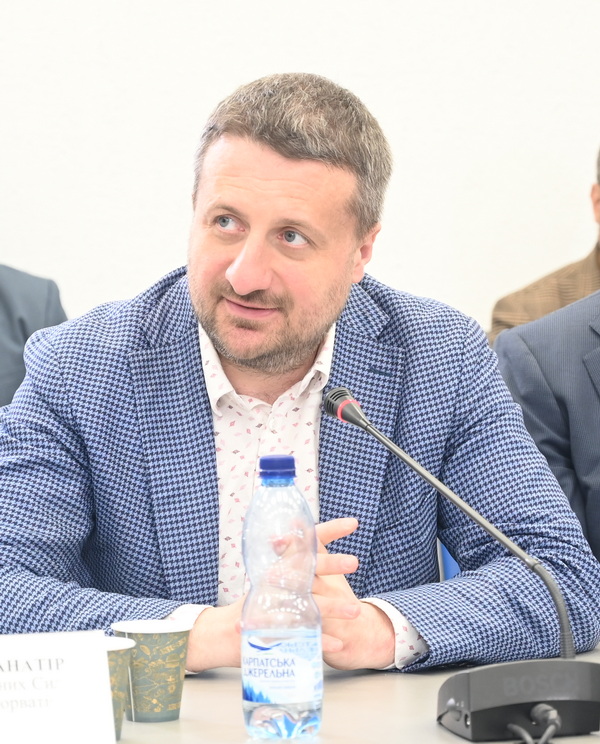
Renowned analyst Taras Zahorodnyi, Managing Partner of the National Anti-Crisis Group, also spoke at the event, presenting his perspective on the consequences of current events related to Ukraine. According to him, US policy under the previous and current American presidents remains largely the same, though some nuances exist. For instance, he observed that the White House is now attempting to weaken European unity in exchange for a potential alliance with Russia. “The US has undermined the sense of security… Ultimately, they are trying to sever ties between Russia and China… The only guarantee for Ukraine is military strength.”
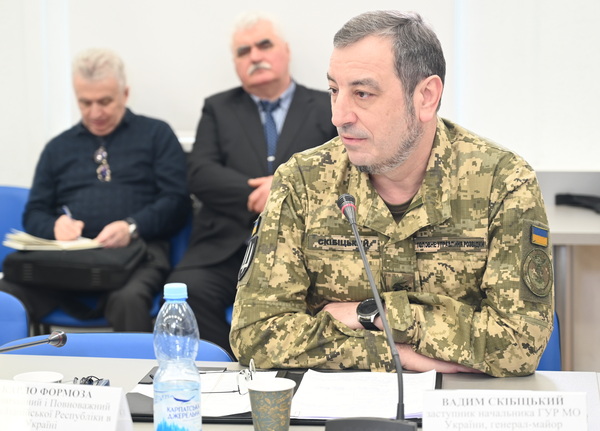
Deputy Head of the Defence Intelligence of Ukraine, Major General Vadym Skibitskyi, provided an overview of ongoing military actions on the frontlines, military strategy, and shifting security dynamics in Europe. Concerning Russia, he noted that it perceives itself as a key player in a so-called global leadership system and is working to shape the next 12-year period up to 2045, outlining four potential scenarios: (1) complete US dominance, (2) growing Chinese influence, (3) a multipolar world where Russia maintains a role, and (4) regional fragmentation. According to Russian analysis, “the Ukraine issue must be resolved by 2026.” Their assessments indicate that if the war continues for another five to ten years, Russia will never reach parity with the US and China and will remain a regional power. Skibitskyi also referred to Russia’s forecast of at least 15 military conflicts by 2045, with at least four affecting Northern Europe. Countries like the Baltic states and Poland are already preparing for such scenarios.
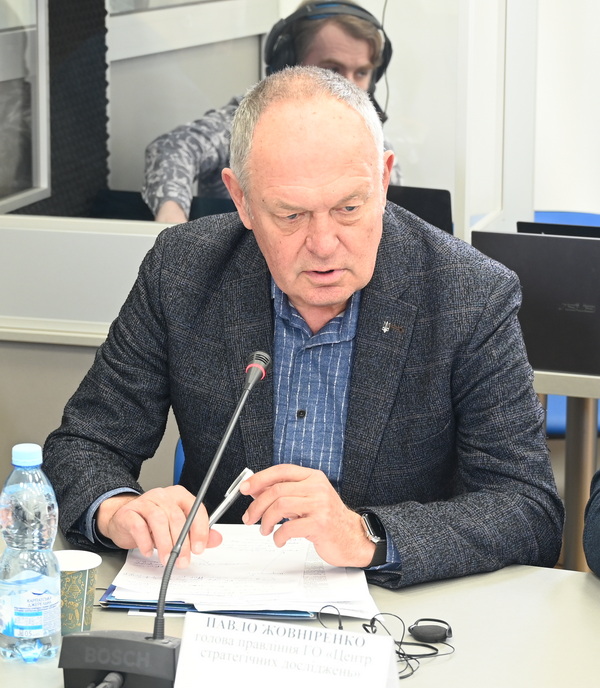
Chairman of the Board of the NGO “Centre for Strategic Studies”, Pavlo Zhovnirenko, focused on the structural composition of European security, which, in his opinion, cannot be concentrated solely on the European continent, as this would contradict the geographical principle of determination. As for Ukraine, he suggested that it could become a hub for nations seeking to break free from Russian dominance. Addressing European security structures, he emphasised that only democratic entities should be admitted into the European Union. A similar approach to EU integration was discussed in a Zoom speech by Belarusian Serhii Bulba, Head of the NGO “Pospolite Ruszenie.”
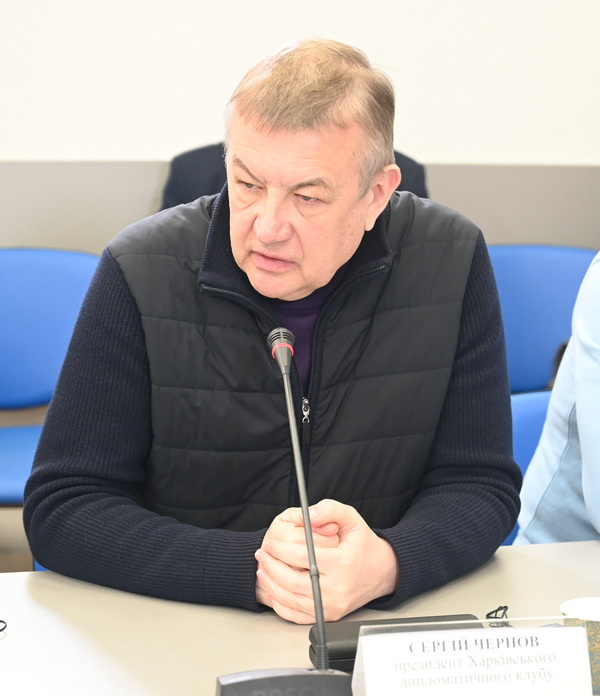
President of the Kharkiv Diplomatic Club, Serhii Chernov, as always, spoke concretely. This time, the audience attentively listened to his views on the information war, the need to reassess its evaluation approach, Ukraine’s role in European integration, and the assistance provided by European states to Ukraine.
Given the depth and significance of the speeches by other roundtable participants—including Serhii Pasichnyk (National Centre for Space Management and Testing), Oleksandr Prytula (President of the All-Ukrainian Federation “Spas”), Yurii Andriichuk (Director of the Centre for Strategic Analysis and Environmental Security), Father Ivan Hunia (chaplain of military unit A3073), Valerii Yuzba (President of the Ukrainian Trade and Economic Mission), and Armed Forces of Ukraine officer Illia Bozhko—President of the Institute for Global Policy, Oleh Bereziuk, deemed it necessary to publish a special edition compiling all the speeches of the guests and colleagues. This publication would be valuable for disseminating information and furthering research conducted by his organisation.
Video materials from the roundtable discussion are available at igp.org.ua.
Oleg Makhno
Head of the Press Service at the Institute of Global Policy
Photo by Volodymyr Rayevsky