The world is on the brink of a global ecological catastrophe
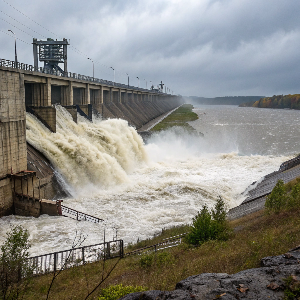
The destruction of the Kakhovka Dam, the strikes by UAVs on the Chernobyl Nuclear Power Plant, the armed seizure of the Zaporizhzhia Nuclear Power Plant, landmining, the use of phosphorus munitions and other chemical substances by Russian troops during the armed aggression of the Russian Federation against Ukraine poses a threat not only to the lives and health of people but also causes irreparable damage to the entire environment.
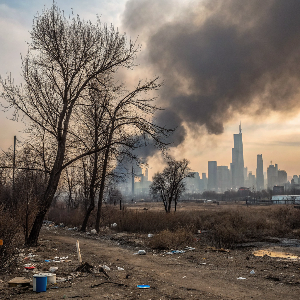 There is massive destruction of plant and animal life, poisoning of the air and water resources, which ultimately again poses a threat to human life and health. It can already be stated that the armed aggression of the Russian Federation against Ukraine has caused a real ecological catastrophe across the entire region, the consequences of which will have to be dealt with for many years to come.
In Ukraine, the actions of individuals responsible for the destruction of plant and animal life and harm to nature are criminally punishable and classified as ECOCIDE. Article 441 of the Criminal Code of Ukraine establishes a punishment of imprisonment for a term of 8 to 15 years for such actions. However, it is worth noting that this legal provision was written during peacetime, and therefore it cannot account for all the actual circumstances of such an unlawful act during a state of war. The fact is that during a war, such a crime as ECOCIDE constitutes a social danger not only for the direct participants in the fighting but also for all other residents of the adjacent territories and citizens of neighbouring countries who are not involved in the armed conflict.
It is known that the explosion of the Kakhovka Dam by Russian forces caused harm not only to Ukraine but to all other countries in the Black Sea basin. Russian tankers carrying smuggled oil also pose a potential threat to the Baltic states, Scandinavia, and Northern Europe.
The armed seizure of the Zaporizhzhia Nuclear Power Plant by the Russians and the strikes on the Chernobyl Nuclear Power Plant place the world on the brink of a global ecological catastrophe.
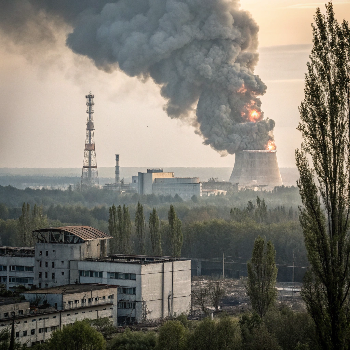 The events of 1986 are still fresh in our memory, when, after the Chernobyl disaster, we all witnessed a tragedy of international scale, which affected not only Ukraine, Belarus, and the European part of Russia but also Canada and the Scandinavian countries. It is possible that, as a result of nuclear terrorism by Russia, today the tragedy could be repeated.
It turns out that as a result of scientific and technological progress, we have all become highly interdependent, and our planet Earth is not so vast, and in the case of a global ecological catastrophe, there will be nowhere to hide. Here, it is important to highlight another issue, which is that modern international law lacks enforcement institutions, and therefore international legal sanctions are ineffective. As a result, the issue of establishing a new international legal order, where the legal norms of international law would be mandatory, and those responsible for their violation would be subject to unconditional legal prosecution and receive the deserved punishment, is becoming urgent.
Here, ECOCIDE, as a socially dangerous act of international scale, is a clear example of our interdependence and vulnerability. It is obvious that to resolve this problem, the efforts of individual countries are no longer sufficient. To overcome it, as well as to solve other issues of international significance, there is a need to seek an alternative to the UN and create effective political-legal mechanisms and institutions, which cannot be done without the necessary political will and the unification of efforts of all the leaders of the modern global world.
Oleh Bereziuk,
Institute for Global Politics