The Eightieth Anniversary of the Victory over Fascism As a Mirror of the Geopolitical Situation in the World. Implications for Ukraine
The eightieth anniversary of the victory over Nazi Germany reflects the current geopolitical situation in the world, as demonstrated by its celebration in Russia and Europe;
the world is once again bipolar in nature, with the United States and China as its poles, with their own spheres of influence in international relations. Russia plays a secondary role here and is in fact a satellite of China;
the holiday season was also a turning point in the USA and EU’s efforts to force Russia to peace. They managed to induce Russia to hold direct talks with Ukraine with virtually no preconditions;
Of course, it will not be easy for Ukraine. However, the development of the situation in the world gives grounds to hope for the best. Ukraine will become a part of Europe, although it will temporarily be unable to regain control of all the territories occupied by Russia.
The 80th anniversary the Anti-Hitler Coalition’s victory over Nazi Germany was the main event of May this year on a global scale. Despite the symbolic nature of this anniversary, many countries actively used it to their advantage. This was true even for those countries that were not involved in the war in Europe or did not exist at that time. And at the center of the political conflicts around the celebrations was again the war, this time between Russia and Ukraine. And this is not surprising, since such a war, to one degree or another, confuses the whole world and creates a real threat of a Third World War with even more catastrophic consequences than the previous one. So, everything that was associated with the recent holidays still attracts attention. Moreover, the circumstances of the celebrations allow us to draw a number of important conclusions and predict events that will undoubtedly affect Ukraine.
So, what does the 80th anniversary of the victory over German Nazism, which was called the “plague of the twenty-first century”, demonstrate?
Firstly, the final division of the world into two irreconcilable camps was confirmed. The first of these, the democratic one, includes Europe, Ukraine, and their partners. The second, totalitarian camp includes Russia, China, North Korea, Iran, and a number of other similar countries.
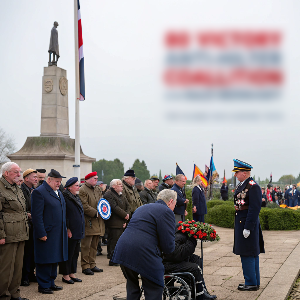
This was clearly demonstrated by the separate celebration of the victory over Nazi Germany by the countries of the above-mentioned groups, namely, the first — on May 8, 2025, in London and the second — on May 9, 2025, in Moscow. Their assessments of the current situation in the world in the context of the results of the Second World War were also fundamentally different.
And before Russia’s attack on Ukraine in 2014, we recall that they celebrated the victory together. The last time was in June 2014, as part of the celebrations marking the Allied landings in Normandy and the opening of the second front in World War II. It was then that the Normandy Group, consisting of France, Germany, Ukraine, and Russia, was established to regulate Russian-Ukrainian relations.
Secondly, US President D. Trump’s policy, so to speak, erodes the position of America, which finds itself in a “gray zone” between the two worlds. However, the complication of relations between the United States and China, and especially Moscow’s aggressive course, which actually supports Beijing, are forcing the President to change his views and restore America’s role as the leader of the democratic, i.e. Western world.
In the context of the 80th anniversary of the defeat of Hitler’s Germany, D. Trump’s statement declared the role of the United States as the leader of the Anti-Hitler Coalition and the winner in World War II. The nature of the celebrations in Moscow finally convinced D. Trump that it is impossible to have normal relations with Putin. In addition, it clearly demonstrated what today’s Russia is like. The US President has finally realized this to the fullest.
Thirdly, China, as the same center of power in the world as the United States, is confidently emerging as the center of unification of totalitarian countries with an anti-Western orientation. This was once again evidenced by Chinese President Xi Jinping’s visit to Moscow, which gave the impression that China had won the war, although, as we know, it fought only against Japan. In fact, the leaders of other countries came to Russia to demonstrate their loyalty to China. The celebration of Victory Day was just the right occasion for this. Xi Jinping also behaved accordingly, namely, as an emperor who arrived in one of his provinces or colonies. And not alone, but on parade with his guard in the form of a Chinese military unit. This was a clear demonstration of what awaits Russia if it tries to get out of China’s control.
Fourthly, no matter how hard Russia tries to use Victory Day to prove, or at least create the impression of, its leading role in the world, the celebration in Moscow showed something quite different. At one time, from a truly great power like the former USSR, it turned into one of the most needy countries of the Third World, albeit with nuclear weapons.
This is demonstrated by Russia’s so-called “influence in the world”, which extends only to its satellites from among the former Soviet republics and self-proclaimed state entities on their territory, several anti-American regimes in Africa and Latin America, as well as outright collaborators like Prime Minister of Slovakia R. Fico. But then, they used their visas to Moscow exclusively for their own purposes, not just to demonstrate respect for Putin.
There is no need to talk about Russia’s military “power” at all, it has long been clear. This is evidenced by Moscow’s humiliating request for a ceasefire from Ukraine during the celebration. And throughout the parade, Putin was hiding behind the President of the PRC as a human shield, fully confident that no one would attack him. The lion’s share of Russia’s air defense system was also working for Moscow, which was forced to leave other regions of the country without cover.
Fifthly, the nature of the celebrations once again confirmed the full support of Ukraine by its Western partners. This was both symbolic and practical. As you know, Ukraine was invited to the celebrations dedicated to the Victory Day in Europe on May 8 in London. A unit of the Armed Forces of Ukraine took part in the parade along with units of our partners. It was in the capital of Great Britain that the Western members of the Anti-Hitler Coalition gathered, who are now assisting Ukraine in the fight against Putin’s Russia as a center of modern fascism — the “plague” of the twenty-first century. At the same time, EU countries’ Ministers of Foreign Affairs met in London to discuss plans to build a new European security system with Ukraine’s participation. In fact, it can be considered an anti-Putin coalition aimed at countering threats from Russia.
And on May 9, Ministers of Foreign Affairs of the European Union arrived in Lviv to demonstrate unity with our country. These events were followed by a meeting of the “Coalition of the Willing” on May 10 in Kyiv with the participation of the leaders of the UK, France, Germany, Poland and a number of other countries. The participants of the summit decided to strengthen sanctions against Russia in case it refuses to make peace.
Washington has also changed its position. It is still trying to demonstrate equidistance from Russia and Ukraine, but has increased its ultimatum pressure on Moscow and continues to supply weapons to Ukraine under new packages approved by the Trump administration.
Sixthly, the period of celebrating the 80th anniversary of the victory over Nazi Germany has also become a turning point in the process of forcing Putin’s Russia to peace. Thus, joint pressure from the United States and the European Union, along with threats to impose new sanctions, forced Putin to agree to start direct talks with Ukraine in Turkey without preconditions, although he claims it as his initiative. However, Moscow has so far refrained from a 30-day ceasefire as an extension of the parties’ agreement to a May 8-10 ceasefire (although this was not implemented). However, one way or another, it will have to.
All this will determine the development of the situation in the future. Thus, the United States and China, as the two leading global centers of power, will indeed divide the world on relatively acceptable terms for both countries. Evidence of such prospects is the fundamental settlement of trade disputes between them as part of the signing of the relevant agreement on May 11, 2016 in Switzerland (by the way, negotiations on this issue also took place against the background of the celebration of the victory over Nazi Germany). On the one hand, the agreement allowed Washington and Beijing to avoid open confrontation in the trade and economic sphere, and on the other hand, it forced them to take into account mutual interests.
At this, the USA’s sphere of influence will include North America, Europe, as well as parts of the Asia-Pacific region, the Middle East and Africa. Among them, Europe will remain the main partner of the United States, despite the current problems in their relations. Moreover, D. Trump will not last forever, and the future US President most likely will choose more pragmatic positions.
The United States will not give up the North Atlantic Alliance, which will continue to be one of the main tools for realizing American interests in Europe. Of course, the European security system will undergo certain changes, which I analyzed in previous articles and which are generally well known, but NATO will still be at its core.
China will continue to consistently spread its influence in the Asia-Pacific Region, Central and Southeast Asia, South America, Africa, and Russia. At the same time, we should expect China’s increased participation in world politics and resolving key international problems. And the main mechanism for strengthening China’s positions in the world will remain the strategic initiative “One Belt, One Road” together with various organizations at the global and regional levels. The main ones will continue to be the BRICS+ and the SCO, which were created on Russia’s initiative but are now controlled by China.
Russia will leave the world stage and finally turn into a satellite of China, and in fact, its province. Unfortunately, this will not happen overnight, but the process of such decline is irreversible. Regardless of whether sanctions are lifted or not. The imperialist country that it is cannot exist in the modern world, and attempts to save it using Putin’s methods are doomed to failure.
Europe will strengthen its position as an independent center of power, the closest to Ukraine and its main support. In its turn, Ukraine will take its rightful place as a key element of the European security system, which will also become a reliable guarantee of its security.
Other countries and international organizations will have a certain influence on the situation around Ukraine, but it will not be of fundamental importance. Especially since India and Pakistan managed to overcome another escalation of the bilateral conflict in April and prevent it from escalating into a nuclear war, which would really change the world and divert its attention from our country.
Based on these circumstances, it is possible to make a forecast regarding the prospects for restoring peace in Ukraine. Judging by the current balance of power, which was revealed by the events of May 8–9, they are not too bad. The United States and Europe, and now probably China, are forcing Moscow to make concessions step by step. It is trying its best to delay, dodge, and exert military pressure on Ukraine, but it has already moved away from the “irreconcilable” positions it had before.
This in no way means that Moscow will give up its strategic goals for Ukraine. But “wanting” and “being able” are quite different things. At the moment, Russia cannot achieve its goals by military means, and therefore obviously hopes for other methods of realizing them, in particular, by influencing the elections in Ukraine. However, they are still beyond the horizon of current events, although the outcome of the peace talks will largely determine their course.
What is more important now is what awaits us in the near future. Here, Ukraine may face both positive and negative factors. For example, the USA and EU most likely will force Russia to agree to a long-term ceasefire, although it will not mean a complete cessation of hostilities. They will also force it to give up its claims to all the territories of Zaporizhzhia, Kherson, Donetsk, and Luhansk regions, and probably to leave the occupied areas of Kharkiv region and agree to the transfer of the Zaporizhzhia NPP to the United States. At the same time, at this stage, Ukraine will not be able to regain Crimea and most of the other occupied territories, even though it does not recognize them as Russian.
Such decisions will not eliminate all problems, but they will make it possible to restore at least a shaky peace as a prerequisite for Ukraine’s recovery and development.
Time will tell what happens next, although the general political trends just discussed are in general quite positive for Ukraine. We can only hope that they will help us achieve victory over Russia.
Yurii Ilchenko,
Institute for Global Politics