To Win the War: France Has Clarified Strategic Goals in the Sphere of Its Defense Capabilities until 2030
In recent years, France has been one of the undisputed and consistent leaders of the group of leading European countries that support Ukraine in its counteraction to Russia’s aggression and advocate for the preservation of peace and security at the global level. According to E. Macron, the security, freedom and future of Europe are closely linked to the fate of Ukraine.
Russia’s full-scale aggression against Ukraine, which has been going on for 3.5 years, has changed the views and approaches to assessing the prospects for the development of the strategic situation on the European continent and in the world, as well as its defense and security capabilities to adequately respond to challenges and threats. This requires the implementation of specific steps to strengthen such capabilities and, in general, to adapt France’s defense to new unfavorable conditions.
Therefore, in January 2025, as a sign of support for the policy of innovation and modern technologies in defense and security (in particular, to strengthen cyber defense and introduce artificial intelligence), the President of France visited the newly created Digital and Cyber Support Command for Ground Forces. During that visit, E. Macron announced his decision to clarify and detail the strategic directions of development of defense and security capabilities. In his address to the personnel of the Armed Forces, the Head of State assessed the current situation, focusing on the tasks of the army, the importance of developing and implementing advanced technological tools, and oriented the military and defense industry to the need to strengthen their capabilities to counter modern challenges and threats.
He also pointed out that the funds allocated for defense needs are insufficient given the security situation, as France is “at the forefront of threats”. The Head of State emphasized that much has been done in recent years to have the most powerful army in Europe, but this is still not enough to adequately respond to current security challenges.
In this context, E. Macron asked the General Secretariat for National Defense and Security (hereinafter – SGDSN [1]) to submit an updated National Strategic Review (hereinafter – RNS [2]). According to the President, the new document, was to outline the contours of defense and the directions of army rearmament, as well as the nation’s moral and psychological readiness to act in favor of the defense and security of the state. E. Macron also instructed the Minister of the Armed Forces to mobilize efforts to upgrade defense capabilities and develop the Industrial and Technological Defense Base (hereinafter – BITD [3]) to adapt the Armed Forces to current threats.
I. RNS-2025 As a Clarification and Detailing of the Directions of Development of Defense Capabilities
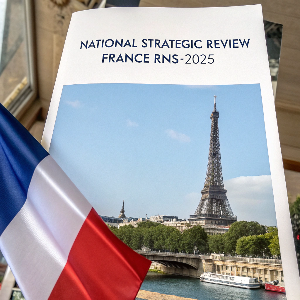 The RNS-2025 was published on July 14, 2025 and was timed to coincide with the national holiday of the French Republic. In this regard, the SGDSN statement said that all ministries, scientists, and analytical groups were involved in the work on the document, and consultations were held with specialized parliamentary commissions.
RNS-2025 is an updated version of RNS-2022. And this is understandable, since strategic documents cannot be changed frequently. The second section of the RNS-2025 is called: “Updated Ambitions-2030, Based on Adapted (to the Current Situation) Forces and Means”. It sets out 11 strategic goals (10 of which have been clarified and one added, see below) of France’s defense strategy. The wording of the new eleventh strategic goal in RNS-2025 is also presented as an element of updating the previous document.
All the main provisions of the RNS-2022 on problematic issues and directions of development of defense capabilities were also worked out based on the statement of challenges and threats posed by Russia’s aggression against Ukraine
However, after the publication of the RNS-2022, security and defense problems have become more acute, caused by the continuation of the full-scale war in Europe and sharp deterioration of the Middle East situation. The latter is accompanied by the Israeli-Iranian confrontation and the United States’ involvement in it. An additional challenge has been the reconfiguration of NATO’s ability to respond to threats (according to the RNS, relations between Allies are in a phase of uncertainty) due to the position of the new US administration and China’s growing ambitions in the Indo-Pacific region. The lack of progress in the actions of Russia, Iran and China to stop their aggression against Ukraine, their aggressive rhetoric, North Korea’s involvement in conflicts, and the attempts of dictatorial regimes to strengthen allied ties – all this is happening against the background of the collective West’s weakening defense capabilities. The reason for this was a significant reduction in defense spending after the collapse of the USSR and Europe’s long “strategic sleep” before Russia’s attack on Ukraine. All these factors have obviously pushed the French leadership to update the strategic doctrinal document to reflect current conditions.
An important impetus for clarifying France’s strategic ambitions was also Russia’s expansion in Africa (primarily in the French-speaking part of the continent). As a result of such actions by the Kremlin, Paris has lost ground in a significant number of countries that were considered, if not allies, then at least partners. That is why the RNS-2025 has an “Introduction” section (which the RNS-2022 did not have), explaining the need to clarify the country’s strategic defense orientations.
It should be noted that the RNS-2022 was also a correction of similar doctrinal visions of 2017 and 2021. Even then, it was emphasized that it set out a new international background created by the war in Ukraine. However, its primary aim was to prepare the ground for clarifying the Law on Military Planning (hereinafter – LPM [4]), which was in force at the time and covered the period of defense funding for 2019–2025. Therefore, in 2023, a new LPM 2024–2030 was adopted, which clarified defense spending for this period. It is expected that after the adoption of the RNS-2025, the current LPM 2024–2030 will also be updated to increase defense funding.
II. Main Ideas and Directions for Strengthening Defense Capabilities.
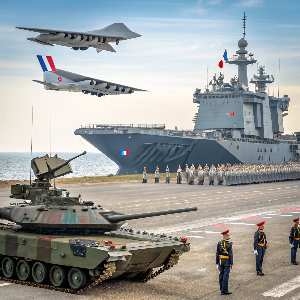 The Ministry of the Armed Forces of France has called RNS-2025 a roadmap for defense and diplomacy that ensures that the country can defend its sovereignty and ensure resilience, in particular in the context of threats posed by Russia.
The Defense Ministry has stated that Russia has intensified its hostile actions of nuclear intimidation, cyberattacks and sabotage. The Russian threat to interests of France and its allies and partners is now unprecedented.
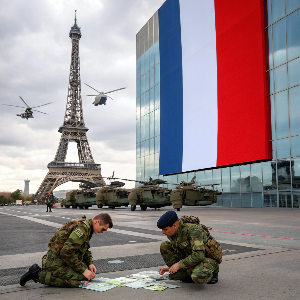
For its part, the Government Information Service has cited the RNS-2025 conclusion that by 2030, the main threat to France and European countries will be an open war against the “heart of Europe”. This implies a significant involvement of the Armed Forces of France outside the national territory, accompanied by a massive increase in hybrid attacks on territory of France and against French interests in the world.
In addition to Russia, the RNS-2025 also takes into account security challenges posed by other state actors, such as Iran, China, and North Korea. Therefore, France is demonstrating its desire to be materially and morally prepared by 2030 to face the challenges and win a major high-intensity war together with its allies and partners.
In his address to the Armed Forces of France on July 13, 2025, E. Macron emphasized that he had made defense a priority from the first days of his presidency. Currently, he said, the French Army is a strong structure, but its model needs to be improved. He also mentioned the lack of ammunition, the need for drones, strengthening air defense and electronic warfare, and developing space capabilities and reserves as problematic issues.
To meet these many challenges and realize the ambition to develop defense capabilities by 2030, RNS-2025 proposes to focus on four main priorities:
- Protection and defense of France, its overseas territories and citizens.
The realization of this priority is based first of all on nuclear deterrence, the main asset and symbol of French independence.
- Defense of Europe, including through nuclear deterrence.
France is able to take part in a high-intensity conflict, if necessary, within the framework of the NATO coalition. In this regard, it encourages the process of integration of Ukraine and Moldova into the European Union.
- Ensuring its security, protecting its interests and those of non-European allies within the framework of renewed partnerships in the area stretching across the Horn of Africa from the Gulf of Guinea to the Indian Ocean.
romoting stability in the Indo-Pacific region. - To this end, France should be able to increase its presence in French overseas departments and regions by redeploying forces from France during expeditionary operations.
In order to realize the above priorities, RNS-2025 defines eleven specific goals:
- Development of nuclear deterrence capabilities that must be reliable and sovereign is the basis of defense policy.
- Ensuring the resilience of France and its overseas territories. France must be able to cope with internal crises (pandemics, crime, terrorism).
- Development of the economy to ensure its readiness for war. The French industrial (ability to rapidly increase production of defense industry products) and state potential (stability of state institutions) must meet the needs of the Armed Forces in case of a major war outside France.
- Development of cyber forces. Ensuring that they are able to implement strategies that will make cyber attacks too costly for attackers.
- Maintaining transatlantic ties, the strength and effectiveness of which are extremely important, especially in the context of countering threats from Russia.
- Strengthening European defense capabilities in high-tech spheres.
- Intensification of international cooperation. France should offer a new range of partnerships, especially in Africa.
- Strengthening intelligence capabilities. Secret services should contribute to France’s defense and fight against threats that harm national unity.
- Controlling the situation, ensuring proactivity and decisiveness in hybrid spheres (primarily in cyberspace, information, economy, law, and military operations).
- Sufficient military and defense resources. France must retain freedom of action if necessary.
- Emphasis on academic and scientific excellence, which should help preserve the sovereignty of France and Europe.
In addition to the above-mentioned goals, France intends to adapt to the unstable geopolitical situation.
III. RNS-2025 As a Continuation of the Ideas of RNS-2022, Taking into Account the Current Context of the Situation in Europe and in the World and the Form (Structure) of Their Presentation.
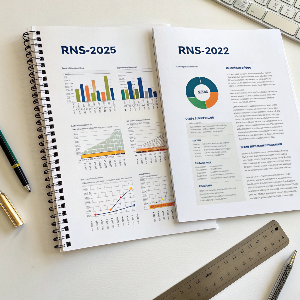 Structurally, RNS-2022 and RNS-2025 consist of three parts.
A comparative analysis of the documents suggests that the RNS-2025 is more elaborate (85 pages of text compared to 43 pages of the previous document) in terms of detailing the assessment of the strategic situation, problems of directions and processes to be implemented by 2030, as well as the list and needs of forces and means to ensure the achievement of the goals set.
The first part of both documents concerns the assessment of the strategic environment, challenges and threats. In RNS-2025, it is given on 19 pages, and in the previous one – on 9 pages. The main conclusion is that it is necessary to prepare for a war which Russia could start in Europe starting in 2030 if it is not stopped now in Ukraine.
During his address to the Armed Forces of France on July 13, 2025, E. Macron emphasized the constant Russian threat on Europe’s borders from the Caucasus to the Arctic. He also quoted the then Chief of the General Staff of the Armed Forces of France, General T. Bourcar: “This is a prepared, organized and long-lasting threat that France must be able to cope with”.
Strategic goals for the development and improvement of defense and security capabilities are the basis of the information content of both documents. In the RNS-2025, they (11 goals, 40 pages of text) are set out in the second part, while the strategic goals in the RNS-2022 found their place in its third part (10 goals, 15 pages of text). The second part of the RNS-2022 is entitled “Challenges to Be Overcome. Reminder of National Security Interests and Confirmation of Strategic Functions”.
Each strategic goal in the RNS-2025 is represented by two items. The first point analyzes what has been done and what is the situation in this area since the adoption of RNS-2022 (results achieved in the last 3 years). The second paragraph provides an action plan for achieving this strategic goal (what needs to be done in the next 5 years). This approach explains the overall increase in the volume of the text.
The Evolution of the Frmulation of Strategic Goals and Security Capabilities of France in RNS-2022 and RNS-2025
(Bold font in the 2nd and 3rd columns shows the differences in the wording of strategic goals ##2, 3, 5, 6, 9, 10)
|
Strategic goal |
Formulation of the strategic goal and its scope (p.) |
What result there should be by 2030 (according to RNS-2025) |
|
|
RNS-2022 |
RNS-2025 |
||
|
1 |
2 |
3 |
4 |
|
1. |
Reliable and credible nuclear deterrence. 1 p. 4 p. |
Political, operational, and technical reliability will be based on two components of deterrence: air and ocean. They are being updated |
|
|
2. |
A united and stable France 1.5 p. |
A united and resilient France: promoting the moral rearmament of the nation to overcome crises 4.5 p. |
The moral cohesion of the nation should ensure its resilience in confronting simultaneously: a) internal crises (pandemics, organized crime, riots, terrorism, etc.); b) hybrid actions. Achieving this goal requires efforts from the entire nation |
|
3. |
A competitive economy with a strong focus on defense 1.5 p. |
An economy preparing for war 3.5 p. |
Confidence that France’s economy, industrial and governmental mechanisms meet the needs of the Armed Forces and internal security forces to wage a major war outside the country’s territory that will have consequences for the national territory. Given this, it is necessary to strengthen France’s fiscal sustainability and financial independence, in particular by controlling the public debt |
|
4. |
Cybersecurity comes first 1.5 p 4 p. |
France maintains a cyber resilience that consistently keeps it among the leading cyber powers. In addition to continuing prevention and defense efforts, this goal is characterized by the implementation of proactive strategies to make cyberattacks particularly costly for attackers |
|
|
5. |
France – an exemplary ally in the Euro-Atlantic space 1.5 p. |
France – a reliable ally in the Euro-Atlantic space 3 p. |
Transatlantic ties remain extremely important for the security of Europe and France. Fulfillment of France’s role as a reliable ally in the defense of Europe, in particular against Russia, within the framework of NATO’s strengthened and balanced European direction |
|
6. |
France –one of the drivers of strategic European autonomy 2 p. |
France – the driver of strategic European autonomy 4.5 p. |
Strengthening European defense capabilities in the technological, operational, and capability areas, as well as in terms of European resilience, particularly in the energy sector. Europe must be able to defend its interests independently, if necessary |
|
7. |
France – a reliable partner in matters of sovereignty and a guarantor of reliable security 2 p. 3.5 p. |
Deepening and diversifying international cooperation. This includes developing new partnerships in Africa, strengthening France’s commitment to the Middle East, promoting the security of common spaces and regional stability in the Mediterranean and Red Seas, and enhancing cooperation in the Indo-Pacific region. The integration and role of the French overseas territories will be strengthened in this context within the framework of the regional partnership |
|
|
8. |
Guaranteed autonomy in assessing the situation and independence in decision-making 1 p. 2.5 p. |
Developing the state’s intelligence capabilities and capacity. On the territory of the country, intelligence services will take an active part in responding to threats that undermine the stability and cohesion of the nation. Strengthening departmental and interagency forecasting will also allow preventing events whenever possible and developing plans in accordance with foreseeable scenarios. Strengthening France’s strategic thinking and enhancing the integration of strategic researchers into national defense and security work |
|
|
9. |
The ability to defend and operate in hybrid spheres 1 p. |
Ability to operate in hybrid spheres 3 p. |
Given the hybrid threats, France must be able to force adversaries (especially Russia) to abandon the implementation of hybrid strategies. The defense organization of the state and its response capabilities, which are necessary to deter escalation, will be strengthened, in particular in five priority spheres: cyberspace, information, law, economy, and military operations. |
|
10. |
Freedom of action and the ability to conduct military operations, including high-intensity operations in all spheres (in different environments and sectors) 2 p. |
The ability to make decisions on participation in military operations and participate in them 4 p. |
France must have the military forces capable of preserving its freedom of action and defending its interests in all circumstances. The Armed Forces must defend the French from external aggression and participate in their defense on the territory of France and abroad. The Armed Forces must have all they need for this, demonstrate reliability and determination to win a war before it starts, and, if necessary, to enter into a high-intensity conflict and win it. The Armed Forces should be based on a model that is consistent and able to adapt faster than the enemy’s model. The rearmament program launched in 2017 should continue and accelerate until 2030 |
|
11. |
– |
Academic, scientific and technological excellence at the service of sovereignty of France and Europe 4,5 p. |
Given the acceleration of scientific and technological developments and their widespread use by competitors and adversaries, France must have academic, scientific and technological excellence in the service of protecting national and European sovereignty |
|
|
15 p. |
36.5 p. + 4.5 p. (goal № 11) = 40 p. |
|
In both documents, the strategic goals in the general plan are presented in a largely identical form. But in some cases, their wording in the RNS-2025 is closer to the current conditions and emphasizes the state’s preparation for war (see the table). For example, goal No. 3: in RNS-2022 – “Competitive economy with an emphasis on defense”; in RNS-2025 – “Economy preparing for war”.
It should be assumed that the sequence of goals is based on their importance for the current state of French defense. At this, some aspects of their formulation are pointed out: intentions to increase purely military capabilities (strike/firepower/, maneuver, security) are set out in the first (development of nuclear deterrence) and tenth (development of conventional forces) goals, including rearmament/improvement of weapons systems to be used by military formations.
However, the document also emphasizes that conventional military actions can be part of deterrence measures, as the defense strategy is an integral complex in which nuclear and conventional forces support each other. Therefore, the development of air and missile defense capabilities, as well as conventional strike forces to strike the enemy in depth (missile forces and artillery) are important areas that will expand this interaction.
The statement of plans to ensure the ability to counter hybrid threats (in particular, military operations) in Goal 9 has drawn some criticism from experts of the Montaigne Institute think tank, who do not consider military operations to be an element of hybrid warfare as such. At the same time, they agree that RNS-2025 fairly formulates its own definition of hybrid warfare, which means the use by a foreign actor of an integrated and deliberately ambiguous combination of military and non-military, direct and indirect, legal and illegal actions that are difficult to track. In other words, according to the RNS-2025, hybrid aggression (war), involves a military phase. This was the case in Georgia, where Russia waged a hybrid war. It began with destabilization and coercion operations, followed by a military invasion. Moscow used roughly the same hybrid strategy in Ukraine in Crimea and Donbas in 2014-2022. However, according to these experts, the concept of hybrid warfare, which as a must involves the use of military means, in these cases, i.e., before a full-scale invasion (as in Georgia and Ukraine), should be replaced by the concept of “peacetime conflict” to denote hostile actions of the state that are not a military operation in the full sense of the term, as they are conducted before a full-scale armed confrontation [5].
The sequence of goals is based on the logic of the state defense strategy, repeatedly voiced by E. Macron before the publication of RNS-2025, and reflected in goal No. 10: “To win the war before it starts”.
Although this “formula” is mentioned directly in Goal 10, the capabilities envisaged in Goals 1-9 and, in fact, Goal 10 should ensure its implementation by 2030.
All of the above should stop a potential adversary, forcing him to abandon his aggressive plans. The powerful (conventional) Armed Forces, which by 2030 should have the highest operational capabilities, as stated in Goal 10, also play an important role in the deterrence phase. However, their main task will be to reliably defend the state in case of open aggression against the national territory (which is considered unlikely), as well as national interests beyond its borders.
In the context of building up the capabilities of the Armed Forces (Goal 10), special attention will be paid to ammunition, unmanned systems, air defense, anti-drone warfare, electronic warfare, deep firepower (including the ability to strike with conventional missiles), maritime control, combat and transport aviation, and the ability to provide continuous command and control of troops, support and supply to ground forces.
Strengthening capabilities in the space sphere involves accelerating the deployment of low-orbit satellite constellations for surveillance and high-speed communications, which should increase intelligence capabilities and reliability of troop management.
The Armed Forces’ medical support capabilities will be enhanced through the supply of modern equipment and materials, as well as through cooperation with the Ministry of Health in planning to receive a large number of wounded in the country in case of large-scale combat operations.
Strengthening the capabilities of the Armed Forces in overseas territories will be achieved by ensuring reliable control over sovereign territories and establishing strongholds there to intervene in their areas of responsibility and receive reinforcements from France.
The third part of the RNS-2025 “Ways and Means” refers to the defined ways and means necessary to implement the strategic goals and achieve the updated ambitions by 2030:
- ensuring the protection of the nation and increasing its cohesion and resilience;
- strengthening strategic autonomy and the ability to act sovereignly and reliably;
- contributing to European and international security.
The ways and means outlined in the RNS-2025 will be refined and set out in roadmaps which each of the relevant ministries and services must approve within six months. Their implementation will be regularly monitored at the interagency level. If necessary, these roadmaps will be adapted to meet changing needs and circumstances.
It is expected that in the autumn of 2025, the President of France will make statements on the efforts that still need to be made in the field of reserves, as well as on new forms of involving young people in defense.
IV. Defense Spending Planning Until 2030 Will Be Adjusted.
 Achievement of the goals set for the evolution of defense capabilities planned by RNS-2025 will be achieved by increasing the annual defense budget, which should speed up the rearmament. On July 13, 2025, E. Macron announced the allocation of EUR 64 billion for defense in 2027 (twice as much as in 2017). According to the current LPM 2024-2030, this amount was to be reached in 2029. For his part, Minister of the Armed Forces of France Sébastien Lecornu has said that in 2030 the country’s defense budget will amount to EUR 68 billion. At this, in his opinion, for the sustainable development of defense in the long term, responding to the challenges associated with the introduction of the latest technologies, EUR 100 billion per year will be the ideal level of spending on France’s defense.
The President of France has emphasized that increasing the budget is an urgent need, otherwise, in his opinion, the country “may not be able to keep up”. That is why the LPM 2024-2030 will be updated in the autumn of 2025. Realizing the problematic nature of a significant increase in defense funding, the leadership of France expects to do so not at the expense of public debt, but by increasing production activity. At this, it is noted that the military independence of the state is inextricably linked to its financial independence. In this matter, E. Macron counts on the support of the nation: “”…saving the homeland means that we spend more on defense, and that everyone participates in these investments”.
Serhii Muzychenko,
expert in international relations
Volodymyr Palyvoda,
expert in international relations
Notes:
[1] The acronym for the French title is Secrétaire général de la défense et de la sécurité nationales (an organ of the Prime Minister’s Office).
[2] The acronym for the French title is Revue nationale stratégique.
[3] Acronym for the French title – Base industrielle et technologique de défense.
[4] The acronym for the French title is Loi de programmation militaire.
[5] Speaking in June 2024 at a Senate hearing, French Minister of the Armed Forces Sébastien Lecornu reported a sharp increase in attempts to physically and cyber-intrude into BITD enterprises since the beginning of Russia’s war against Ukraine (see also the article “Western Defense Industries – the Kremlin’s New Target” // https://igp.org.ua/publikacii/pidpriyemstva-opk-zaxodu/).