A New Nuclear Arms Race or Preserving Prospects for Restoring Strategic Stability in the World
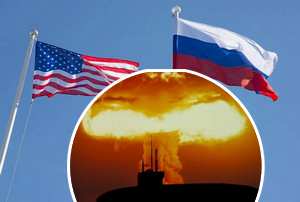
The expiration of the Russian-American START III Treaty on the reduction and limitation of strategic offensive arms has finally destroyed the legal basis for nuclear security in the world. Concluding a new treaty is an extremely difficult problem, due to the need to involve other nuclear countries and the differences between them, which cannot be quickly resolved. This situation poses a threat of a renewed nuclear arms race in the world, with critically negative consequences for all of humanity. However, it is likely that the USA and Russia, as the two largest nuclear powers, will refrain from doing so and will initiate a dialogue with the participation of other nuclear countries. At the same time, no peace talks are possible while the Russian-Ukrainian war continues, which is the main source of international tension and confrontation between Russia and the USA and Europe.
The Treaty between Russia and the United States on Measures for the Further Reduction and Limitation of Strategic Ofфfensive Arms (new START) expired on February 5 this year. Despite the fact that the Treaty effectively ceased to be in force in 2023, it remained a restraining factor for the resumption of the nuclear arms race between Russia and the United States and the involvement of third countries in it. Currently, there is no such factor.
Another five-year extension of START, as happened in 2021, is not legally possible. Therefore, there is a need to conclude a new treaty, taking into account global changes. However, this is a rather complicated matter.
Since the start of the full-scale Russian-Ukrainian war, Russia has actively used the START Treaty as a factor in nuclear blackmail against the USA and Europe, specifically regarding the Ukrainian issue. For example, the most resonant step taken by the Russian leadership was to suspend its participation in the treaty in 2023. Since Donald Trump’s return to the US presidency in January 2025, the Russians have stopped resorting to such practices but, on the contrary, have begun to insist on the conclusion of a new treaty. In this way, Russia hopes to create grounds for resuming strategic dialogue with the USA without raising the issue of the Russian-Ukrainian war. In addition, Russia is trying to incorporate other interests related to improving its nuclear balance of power with the USA and NATO, as well as preventing the USA from gaining strategic advantages over it as a result of the deployment of the new Golden Dome missile defense system with space-based elements.
To this end, Russia demands that the new START treaty take into account the nuclear arsenals of France and the United Kingdom as NATO members, as well as a ban on the parties improving their missile defense systems. In the Kremlin’s view, since the USA is interested in improving its nuclear security and strengthening strategic stability in the world, it can make some concessions on these issues.
Moscow began its practical activities to implement these plans immediately after the meeting between the Russian and US Presidents in Alaska in August 2025, which the Russian side perceived as America’s consent to a strategic dialogue. In September of the same year, Russian President Putin made a public statement about Moscow’s readiness to comply with the provisions of the START Treaty for another year after February 5, 2025. He said this would only happen if the USA agreed to do the same and didn’’t do anything that would mess up or break the current nuclear deterrence balance.
Moscow presented Putin’s proposal as a “gesture of goodwill” aimed at preventing a new arms race and creating favorable conditions for Russia and the USA to prepare a new treaty on nuclear arms control. In this way, Moscow sought to enhance Russia’s international image and present it as a separate center of power in the world, equal to the USA.
The USA welcomed this initiative, but no practical steps have been taken since work began on a new START treaty. This issue was discussed during a meeting between US Secretary of State Marco Rubio and Russian Foreign Minister Sergey Lavrov on the sidelines of the UN General Assembly in September 2025. At the same time, the USA confirmed its principled position on possible negotiations with Russia on START, but only after the war against Ukraine has ended.
However, in any case, the rapid conclusion of a new treaty on the reduction and limitation of strategic offensive arms is virtually impossible due to differences between its potential participants.
Russia’s additional requirements for the treaty were mentioned above. For its part, the USA believes that China, which has the third largest nuclear potential, should be included in the treaty, that all nuclear warheads should be taken into account, not just those deployed on delivery vehicles, and that restrictions should be imposed on the development of new nuclear delivery systems.
The issue of delivery vehicles was raised by the United States after the Russian leadership’s statements about testing new “Burevestnik” and “Avangard” missiles and the “Poseidon” underwater vehicle, which are said to be unparalleled in the world and capable of penetrating the US defense system.
In view of this, the USA is in favor of signing a new comprehensive treaty on nuclear arms reduction and control with the participation of all major nuclear powers. This would be the best option for the international community. However, its implementation would require extremely complex multilateral negotiations. France and the UK could, in principle, agree to this. But China rejects such a proposal. Beijing believes that in the current situation, it cannot do so because the USA and Russia have almost four times more nuclear weapons than it does. Therefore, its participation in negotiations will only be possible if a nuclear balance is achieved with them. For example, through the reduction of the nuclear capabilities of the USA and Russia to the level of China.
In other words, today there is virtually no strategic nuclear security system in the world, therefore a new nuclear arms race may begin. This is already happening in practice.
The USA accuses Russia of violating START by deploying more nuclear warheads on delivery vehicles than specified in the Treaty. For its part, China is vigorously increasing its nuclear capabilities, regardless of any restrictions. North Korea has already developed nuclear weapons, and Iran is seeking to do the same, which is the subject of a sharp conflict between it and the USA.
At the same time, most nuclear countries are developing and deploying new nuclear delivery systems. Russia is currently attempting to deploy new “Yars” intercontinental ballistic missiles, implement a program to put “Sarmat” and “Oreshnik” missiles into service, and develop the “Burevestnik”, “Avangard”, and “Poseidon” missile systems. The main areas of such activity in the USA are the creation of a new generation of ICBMs to replace “Minuteman-3”, a new B-21 bomber, and a new ballistic missile for Columbia-class submarines.
The USA and Russia are also deploying or expanding the deployment of their nuclear weapons and delivery systems in other countries. Since 2024, the USA has begun to increase the number of tactical nuclear munitions in its warehouses in Europe. In turn, according to reports from Moscow and Minsk, Russia has deployed “Oreshnik” missiles and tactical nuclear weapons in Belarus.
The next step could be for the USA and Russia to increase the number of nuclear warheads on already deployed missiles. As a result, the nuclear potential of both countries, ready for immediate use, could double.
In particular, the USA could deploy a significantly larger number of warheads on its Ohio-class submarines and “Minuteman-3” intercontinental ballistic missiles, while Russia could do the same on its own SSBNs and “Sarmat” ICBMs. Given such actions by the USA and Russia, China, India, and Pakistan are highly likely to use them to justify their own steps to increase their nuclear capabilities.
Another consequence of the collapse of the Russian-American nuclear arms control system could be the weakening or complete loss of validity of the Nuclear Non-Proliferation Treaty. A number of non-nuclear countries may ignore it and start developing their own nuclear warheads, as there will be no deterrent factors to prevent them from doing so.
Obviously, the race for strategic offensive weapons will be accompanied by a parallel race in missile defense, space militarization, and the spread of new military technologies. Such dynamics will be virtually impossible to stop.
At the same time, most experts believe that the USA and Russia will not intensify the arms race, as they are aware of the catastrophic consequences of such actions. They will adhere to the restrictions set out in START and begin negotiations on a new comprehensive treaty on nuclear arms reduction and control, including the involvement of other nuclear powers. This is evidenced by the position of US President Donald Trump. He is not particularly concerned about the expiration of the START Treaty. He says that it does not matter much, as a new, somewhat better treaty will be concluded in the future.
Besides, American experts believe that Russia is not prepared to participate in a nuclear arms race on a par with the USA due to the RF’s lack of funds and technological backwardness. Moreover, this is happening at a time of crisis in the Russian economy. This is confirmed by Russia’s problems with the deployment of the “Sarmat” ICBM, the exaggeration of the technical capabilities of the Oreshnik missile, and the purely propaganda nature of the “Burevestnik”, “Avangard”, and “Poseidon” projects.
However, whatever the case may be, serious negotiations on nuclear issues are impossible without at least a minimal easing of international tensions. First and foremost, Russia must end its war against Ukraine, which is the main source of destabilization in the world and confrontation between Russia and the USA and Europe. Therefore, real dialogue on the conclusion of a new comprehensive treaty in the field of START will begin only after the signing of a peace agreement between Ukraine and Russia.
Thus, in the near future, no new treaty to replace START will be concluded. Formally, this will signal the destruction of the entire system of strategic nuclear security in the world. However, neither Washington nor Moscow is likely to start a real nuclear arms race. Nevertheless, this situation is further evidence of the critically negative consequences of Russia’s war against Ukraine, which continues to destroy the collective security system in the world, including in the nuclear sphere.
Therefore, ending the war will be a key factor in enabling the process of restoring strategic stability at the global level to begin. This may also be a separate factor of external influence on negotiations to end the Russian-Ukrainian war. Leading countries around the world may increase pressure on both Russia and Ukraine to reach compromises that will enable peace to be restored.
Yurii Mykhailenko,
Institute for Global Politics