Based on the materials of the roundtable of the Institute for Global Politics “Russian Authoritarianism as a Threat to Global Security”
“Thank you to everyone in Ukraine for all you do for the rest of Europe!”
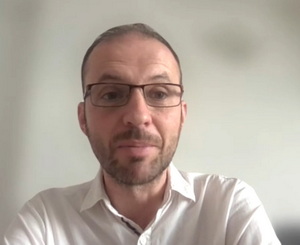
I am a member of the UK Parliament and I have been involved in a number of all-party groups, including the all-party group on Ukraine and the all-party group on Russia, which we recently set up. I’ll talk a little bit about the situation from a parliamentary perspective in the UK. I think that Russia’s war in Ukraine remains one of the most important priorities for any member of a legislature in Europe. As someone who has worked in this region for 20 years, I can tell you that we have been discussing this issue for a long time, since the first invasion of Ukraine in 2014. But actually, even earlier, if you look at the Kremlin’s plans in regions like Georgia, with the wars in Abkhazia, South Ossetia, the wars in Chechnya. This was predictable.
However, we still have issues related to the seriousness of the situation and attracting people’s attention. So, some of the questions we are looking at are how can we as European policymakers better cooperate and interact? There are a number of them, I’ll go through them in a moment in some of the areas that we are looking at, but we don’t have all the answers. I think one part of the work that we are doing, and it was very interesting to hear Arnold just now, is to better understand what is happening in Russia. Over the last few years, there has been a profound lack of awareness in the legislatures as well as in the media in the UK and elsewhere about this particular situation. Another area of work that we have to deal with is sanctions and their effects. As members of the legislature, we have a responsibility to hold governments to account, but we cannot do that unless we have full information. It is the work that you all do that becomes extremely important to us.
Another area is to improve cooperation between legislative bodies. We regularly discuss, for example, the issue of 300 billion of frozen Russian assets. We are working hard on this in the UK Parliament. I am working with colleagues from other political parties. And we know that colleagues are doing the same in other legislatures. But the response that we get all too often from governments that I know and that I don’t criticize too much… I know that they are doing their best, and it’s about doing things much better. For example, that the United Kingdom is not willing to act until Belgium acts, until France acts, until Germany acts. You will hear the same arguments in the Bundestag, in the National Assembly and elsewhere.
So how can we better coordinate our efforts? Also, when we look at the different areas, it is very important that we provide Ukraine with the appropriate amount of assistance and support. And that’s where our conversations with Ukrainian civil society, as well as with Ukrainian MPs, are so important. Are we providing the right amount of assistance to Ukraine? How can we provide more assistance to Ukraine?
One of the areas we have been working on recently is, for example, cooperation between our universities and Ukrainian universities. This is something that is ongoing. But if we look at research and some of the areas where we can provide assistance, I think even more important is how we can learn from the Ukrainians, given the innovative and entrepreneurial nature of their work. This should be a mostly bilateral process. So, I just wanted to raise a few of these questions and say that these are some of the issues that we are struggling with. These are some of the topics that it would be useful to talk to each other about.
I think that our activities in Europe are sometimes slow. I don’t think President Trump has been a good friend of Ukraine, but let me say this. I still think that the criticism that you get from the United States is that we in Europe could have done a lot more and should have done a lot more for Ukraine and for our own security. Yes, in terms of hard security and some of the difficult conversations around that, but also in areas like cybersecurity, our food and beverage policies. How can we achieve more security in food and drink policy? I think the UK is wrong to be outside the European Union, but how can we cooperate more effectively in these areas?
Energy security, but also the whole area of disinformation and polarization that poisons our political discourse and democratic societies. This is the biggest challenge we face. And as we strive to build a Europe that can cope with what is happening in Ukraine, that can help Ukraine at this time when Ukrainians are defending us every day, we need some answers and information that you will receive at your conference during these days that will help us in our work. Yes, it will help in the UK legislature, in other European legislatures, and in other institutions, such as the Council of Europe, where I work with my colleagues in the Parliamentary Assembly of the Council of Europe. And this is an ongoing conversation.
We at the Council of Europe are pleased that Ukrainian MPs are helping us with some issues. But we know that we need to go further and that we need better information on how we are dealing with this issue at home. So I’m very interested to hear what comes out of this conference over the next few days that can help inform the work we do in the UK Parliament as well as in other countries. This is extremely important work that will be crucial for the future of our common continent.
And finally, I want to say that I hear too often how Ukrainians come to London, Paris, Berlin and other cities and thank us for the help we provide them. In fact, the gratitude should come from the other side, and it should be very big. Thank you to everyone in Ukraine for everything you do for the rest of Europe! I think this is extremely important.
For us, gratitude is not just good manners. I think our gratitude is a powerful message because it recognizes what is happening in Ukraine and how it affects everyone in Europe. It affects my constituents in Scotland, which may seem like the other side of Europe, but it’s not. It is integral to the well-being of everyone on our common continent. And I hope that this message that I am delivering can be shared with everyone who is there and who is in Kyiv.
Stephen GATINS
Member of Parliament of the United Kingdom
of Great Britain and Northern Ireland