Mobilization in Russia. Plans and Problems
As many expect, following the parliamentary elections in late September 2026, Russia may announce a general mobilization. The plan is to recruit between 300,000 and 500,000 people;
Russia does indeed face this necessity, as staffing the Russian armed forces solely with volunteer contract soldiers is insufficient to cover frontline losses. As a result, it is unable to achieve its war objectives;
At the same time, the mobilization itself is associated with a number of problems. These include, first of all, a lack of funds, the defense industry’s inability to increase weapons production, and people’s reluctance to serve;
Therefore, Russia is unlikely to be able to significantly increase its troop strength. Consequently, it will not be able to achieve tangible success on the front lines.
Putin’s main goal in this war is to seize the entire territory of the Donbas. He is eager to carry out his plans as quickly as possible, since Russia could face an acute phase of an economic crisis as early as this autumn. At that point, the ability to conduct intensive combat operations – or even to continue them at all – will be lost. At the same time, as developments on the front lines show, despite the Russian army’s attempts to accelerate the pace of its offensive in the East of Ukraine, its advance remains extremely slow. According to most estimates, if the situation remains unchanged, Russia will not be able to achieve its objectives even by 2027. This is unacceptable to Russia. However, in the current situation, the Russian armed forces cannot significantly intensify their offensive because they lack manpower. The new recruits arriving in the army are not only insufficient to form strategic reserves but also fail to compensate for frontline losses. At this, the shortage is growing. According to data from the General Staff of the Armed Forces of Ukraine, in the first half of 2026, the enemy’s total losses amounted to 196,700 personnel. Of these, 115,300 were killed in action, 80,400 were evacuated for medical reasons, and 1,000 were taken prisoner. The leadership of the RF claims that these losses are more than offset. During this period, approximately 200,000 people reportedly signed contracts.
In reality, this is not the case. Russia, as always, is manipulating the facts. In this instance, it is exaggerating the number of people who voluntarily chose to serve in the army and participate in the war against Ukraine. According to independent estimates, which cite figures from Russia’s federal and regional budgets regarding contract payments, there were only 163,000 such individuals. In other words, the recruitment of contract soldiers actually covers only irreplaceable losses, while the rest are covered only partially. However, the actual losses are even greater than those reported by the General Staff of the Armed Forces of Ukraine. Official statistics take into account only confirmed losses of Russian troops on the front lines, as recorded by UAV cameras. In addition to these, there are losses from artillery, missile, and air strikes; small arms fire; explosions in minefields; suicides; and desertions. These factors are not included in the statistics. Therefore, at best, conscription likely covers only the number of those killed. This is evidenced by radio intercepts, which confirm a critical shortage of personnel in Russian forces in the combat zone. Combat units are generally manned at only 30–40% capacity. In normal countries, as a result of such losses, their troops are considered combat-ineffective and are withdrawn to the rear for reorganization. In Russia, however, this is not done, since the losses there can neither be replenished nor replaced. This is simply because there are not enough people willing to sign contracts.
There are also some interesting figures regarding estimates of the number of Russian troops on the front lines, based on the amount of funds allocated for salaries. This figure is publicly available and amounts to 1.8 trillion rubles for 2026. That amounts to 150 billion rubles per month. The average monthly pay for soldiers is 210,000–250,000 rubles, while sergeants and officers earn 300,000–400,000 rubles. The actual number of personnel is closer to 500,000, not 700,000–710,000. This figure was disclosed by the well-known Russian politician and expert V. Milov, who is in opposition to the current Russian government. In 2002, he served as Deputy Minister of Energy of the Russian Federation.
In other words, there is indeed a problem with the number of Russian troops on the front lines. Moreover, the situation is worsening, which is linked to an increase in their casualties and a decrease in the number of people willing to enlist to participate in the war. For example, last year, the Russian armed forces’ casualties averaged 24,000–30,000 per month. Currently, the figure stands at 35,000–40,000. The reason for this figure is the increase in the number of UAVs at the disposal of the Ukrainian Defense Forces, which are now the primary means of engagement. In addition, this past summer, the Russian armed forces intensified their assaults along the main fronts of the conflict. This has led to an increase in the number of Russian military personnel killed and wounded. At the same time, even according to official data, the number of contract soldiers recruited in the first half of this year decreased by 10,000 compared to the same period last year, when it stood at 210,000. In other words, more and more people have no desire to go to the front, even for a lot of money.
In 2026, in some regions, signing bonuses exceeded 4 million rubles. In addition, compensation for bank debts of up to 10 million rubles was introduced. In total, this amounts to about $150,000, which is indeed a substantial sum for most Russians. And this is despite the fact that in 2025, one-time payments were reduced due to an acute shortage of funds in local budgets.
By the way, these payments quickly lose their value due to high inflation. But Russian contract soldiers have very little chance of receiving them anyway. Once deployed to combat positions on the front lines, a Russian contract recruit survives, on average, only 20–30 minutes. The total time a soldier spends in service – from the moment he signs his contract until he is killed or wounded while serving in assault units – ranges from a few days to 2–4 weeks. Some manage to survive longer. However, this does not mean that such a soldier will necessarily receive everything they are owed. The money may be withheld as early as the contract signing stage – specifically, by promising to pay it out at the training center but then failing to do so. And even if the funds are eventually paid out, a portion of them will inevitably be taken by unit commanders. Not to mention that contract soldiers are forced to use their own money to purchase military uniforms and equipment, as well as to contribute a certain amount toward operational expenses and even the purchase of fuel for combat missions. Once there is a shortage of ammunition and weapons – which will become inevitable as the economic crisis in Russia worsens – its military will also have to pay for them. In other words, all the funds are quickly squandered without any benefit to the person hoping to profit from killing Ukrainians. By now, everyone is already aware of all this. It is also well known what rules prevail in the Russian army, as well as the authorities’ attitude to disabled veterans who are lucky enough to return from the war. In today’s world, none of this can be hidden, no matter how hard the Kremlin tries to suppress the spread of information.
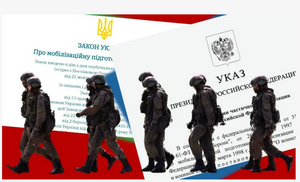
Russia hopes to address this problem by pressuring citizens through a partial mobilization, which was announced back in September 2022. For example, conscripts, citizens with debts they are unable to repay, those who fail to pay child support, as well as various marginalized individuals and even the disabled – who are generally unfit for any purpose – are being forced to sign contracts. For the same purpose, citizens are rounded up on the streets and falsely accused of various offenses. To facilitate these practices, medical restrictions for military service have been eased, and in some cases, medical examinations of those signing contracts are not conducted at all. The list of criminal articles prohibiting the conscription of prisoners into military service has also been shortened. Now, even those who have committed serious crimes are being recruited into the military.
Recruiters, military registration and enlistment office staff, police officers, and employees of other agencies involved in conscription are receiving higher bonuses for enlisting citizens into military service. In July of this year, these bonuses increased from 90,000 to 115,000 rubles per person.
Foreign mercenaries are being actively recruited through various methods. Some are offered high wages, others are promised Russian citizenship, and still others are coerced into signing contracts through deception. In this regard, the most telling example is the agreement between Russia and North Korea to send 30,000 North Korean soldiers and a missile unit to the front lines in Ukraine. But this is still not enough to amass a sufficient number of troops to carry out massive assaults aimed at breaking through our defenses.
Therefore, without a genuine, systemic mobilization effort, Russia will not be able to achieve its goals. It does not want peace and is preparing for a mass conscription of citizens into military service. In particular, military commissariats have stepped up the verification and updating of their registries. This is being carried out both through passport authorities, which oversee the registration of citizens at their places of residence, and through managers and human resources departments of state-owned and private enterprises. As was the case during the first phase of mobilization in the autumn of 2022, citizens will primarily be drafted at their places of work. There, they are in plain sight, it is hard for them to evade military service.
Besides, a supplementary number of specialists in organizing mobilization measures are being recruited and trained. Controls on citizens traveling abroad are being tightened, and plans are in place to introduce appropriate restrictions. Additional training grounds are being set up for individuals called up for military service.
However, this is an extremely complex issue that requires significant effort, as well as financial and other resources, to resolve.
Russian expert V. Milov has already been mentioned. According to his calculations, just to cover the pay for 300,000–500,000 newly mobilized servicemen, at least one trillion rubles must be allocated over the course of the year, since mobilized citizens will need to be paid no less than contract soldiers. On top of that, they must be clothed, equipped, armed, fed, and trained. There is simply no money in Russia’s state budget for all of this. Its deficit for the first seven months of this year has reached 6.5 trillion rubles. According to estimates by Russian experts, it will increase to 10 trillion rubles by the end of the year. The combined deficit of regional budgets has risen to over 2 trillion rubles, while the deficit of the Pension Fund – from which money is also being drawn for the war – has reached 1.5 trillion rubles. Expenditures from the National Wealth Fund have been suspended. The remaining funds are being held in reserve for use in case of a state of emergency.
The government of the RF cannot borrow on the foreign market, as this is prohibited by the sanctions that have been imposed. The domestic market has effectively closed to it. Auctions for the sale of government securities have not been held for two months, as banks are not buying them due to a lack of funds and the low interest rates offered by the government. The government could freeze citizens’ bank accounts, but this would achieve nothing, since the vast majority of funds are invested in the economy and exist only virtually. Furthermore, such a move could trigger social unrest in the country. The only remaining option is the gold and foreign exchange reserves. As of mid-summer 2026, they had fallen to their lowest level since February 2020, standing at 2,280 tons. In the first half of this year alone, approximately 44 tons of gold were sold for over $5.6 billion. Russia will not be able to sell any more gold, as it is subject to sanctions. Only China can purchase it, in limited quantities and at a low price.
It’s not just the army that needs money. The coal, metallurgy, and construction industries – as well as the railways, which are currently in a deep crisis – also need it. Logistics companies are in the same boat. And the Ukrainian Defense Forces’ strikes on Russian oil refineries, logistics centers, ports on the Black Sea coast, and tankers of the shadow fleet are finally undermining the Russian economy and preventing it from financing the war.
However, even if Russia somehow manages to find the money, this does not guarantee that it will be able to arm 300,000–500,000 additional soldiers and officers, since it is impossible to rapidly expand the industrial capacity of the military-industrial complex. According to a statement by Russian Minister of Industry and Trade A. Alikhanov, defense orders cannot be increased indefinitely this July. After a multiple increase in the production volumes of the Russian defense-industrial complex, further expansion is reaching its limits. Head of the state-owned corporation “Rostec” Sergey Chemezov has echoed this sentiment. The corporation supplies 80% of the Russian military’s weapons needs on the front lines. Therefore, its condition largely reflects the capabilities of the entire Russian defense-industrial complex. The situation surrounding missiles and UAVs demonstrates that Russia’s defense-industrial complex cannot increase its weapons production. Due to a lack of funds and production capacity, all of the military-industrial complex’s resources are focused on producing missiles for the “Iskander” tactical missile system, where the impact is most significant. Production of cruise missiles and UAVs such as the “Shahed” has been significantly reduced.
Another significant problem is the shortage of highly qualified personnel in Russia. If a general mobilization is declared, this shortage will become critical. The reason lies in the partial mobilization of autumn 2022, when citizens were primarily drafted from the industrial sector. At the same time, due to forced conscription into the army, more than a million Russians who did not want to participate in the war have left the country. Most of them belong to the most “advanced” segment of the population, which plays a crucial role in the Russian economy. Now, citizens will be recruited into the army primarily from industrial enterprises, which will exacerbate the shortage of skilled workers. This will trigger a second wave of the “wage race”. In other words, business owners will raise wages to retain their employees and poach workers from other companies. With the arrival of 300,000–500,000 new military personnel receiving high pay, the result will be another spike in inflation.
This is exactly what happened in 2022–2023. To curb rising prices, the Central Bank of Russia imposed high interest rates, which made it harder for businesses to access loans. As a result, the economy not only began to slow down but also started to decline. The same thing could happen now, but with far more severe negative consequences, since Russia’s economy is in worse state.
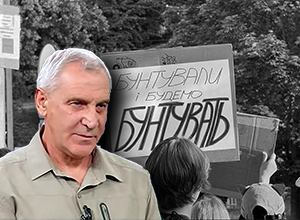
And finally, the announced mobilization is bound to cause discontent among the Russian population, which could escalate into social unrest and resistance to the authorities. This is already happening in some places. In particular, in Penza region, so-called “people’s militias” have been formed to prevent representatives of military commissariats and other authorities from forcibly conscripting people into the army in their communities. Anticipating the mobilization, people have begun leaving the country. As a result, housing prices have risen in Armenia, Georgia, and Kazakhstan. For now, Russians still have the opportunity to flee the country, and they are taking advantage of it. This comes as no surprise. Unlike in 2022, when the majority of the Russian population supported the war, there are now significantly fewer people who do so. According to opinion polls, only 8% of Russians support continuing the war until victory is achieved. In other words, Putin and his regime have found themselves in a dead-end situation. Without mobilization, he cannot even replenish losses on the front lines, let alone achieve any tangible successes. At this, the authorities cannot carry it out, as this would sharply exacerbate the country’s financial, economic, social, and political problems. Therefore, the existing practice of luring or coercing people into military service will most likely intensify. In this way, the Kremlin will attempt to at least make up for the number of the dead and wounded on the front lines in order to be able to continue the war. At the same time, it will continue to hope that Russia can wear down Ukraine and defeat it in a war of attrition. However, knowing Putin and his Russia, it is foreseeable that he might indeed resort to a general mobilization. This will most likely lead to chaos in the country with unpredictable consequences. However, even if this does not happen and Russia manages to recruit people into the army, train them, arm them, and send them to the front, there will be no significant changes there. Simply put, more Russians will die in the combat zone.
So, the Russian leadership faces an urgent need to significantly reinforce its troops on the front lines. The current number of soldiers and officers is insufficient to capture the entire Donbas region by the end of this year. The Russian leadership cannot afford delaying this, as a severe economic crisis could begin in the country as early as this autumn, and the ability to continue the war at its current intensity will be lost.
Despite Russia’s apparent abundance of human resources and the “patriotism” of Russians – as claimed by the country’s leadership – there is a significant shortage of volunteer contract soldiers to meet current needs. Moreover, their numbers are actually declining. This problem can only be addressed by declaring a general mobilization – that is, compulsory conscription. However, this involves a number of complex challenges that the Russian leadership is virtually unable to overcome. Therefore, it is most likely that Russia will only intensify partial mobilization, which will be accompanied by more active measures. Besides, the RF will increase its recruitment of mercenaries and attempt to secure a larger number of soldiers from North Korea. As a result of this approach, Russia will be able to temporarily offset its losses on the front lines and even slightly increase the size of its forces, but not significantly. Therefore, it will not succeed in achieving tangible successes on the front lines, as we are currently witnessing.
Yurii Ilchenko,
Institute for Global Politics