Parliamentary Elections in Russia and Possible Changes in the Country
The political situation in Russia is changing. For the first time since the early 2000s, a political struggle is unfolding in the country between the ruling authorities and their opponents;
so far, it has been covert and manifests itself only in the media. However, based on the results of the September 2026 elections, the “United Russia” party may lose its constitutional majority;
in that case, the situation in Russia will most likely escalate as these processes spill over into the open. At the same time, unrest may break out among the country’s population;
all of this will reduce Moscow’s ability to continue the war against Ukraine. Furthermore, the conditions for Russia’s disintegration will emerge.
As in any totalitarian country, Russia’s parliament does not play a significant role in the country’s system of government. It legitimizes the actions of the authorities in both domestic and foreign affairs and serves as a powerful propaganda tool in support of their policies.
For example, Russia’s Legislative Assembly – which comprises the Federation Council and the State Duma – operates entirely in Putin’s interests and carries out the task of supporting his efforts to consolidate his dictatorship within the country and pursue an aggressive foreign policy. This also applies to Russia’s war against Ukraine and its annexation of Ukrainian territories.
Specifically, on March 1, 2014, during Russia’s occupation of Crimea, the Federation Council approved the use of Russian troops on Ukrainian territory under the pretext of “protecting Russian citizens and the Russian-speaking population”. On February 22, 2022, the upper house of the Russian parliament unanimously authorized the use of the army outside the Russian Federation. Two days later – on February 24 of that year – Russia launched a full-scale military invasion of Ukraine.
On March 20–21, 2014, the Russian Legislative Assembly ratified an illegal treaty on the “admission of the Republic of Crimea into the Russian Federation” and adopted a federal constitutional law establishing two new “constituent entities” – the so-called Republic of Crimea and the city of federal significance Sevastopol. During the full-scale war – on October 3–4, 2022 – the State Duma and the Federation Council of the Russian Federation ratified further illegal treaties on the incorporation of Ukraine’s Donetsk, Luhansk, Kherson, and Zaporizhzhia regions into Russia, as well as on making corresponding amendments to the Russian Constitution.
In total, since the start of the full-scale war, the Federal Assembly of Russia has adopted 118 laws to support the so-called “special military operation”, 250 laws to counter sanctions, and 59 laws restricting the creation, dissemination, and access to information. For the most part, these restrictions pertain to Russia’s aggression against Ukraine.
On July 27, 2026, the State Duma of the 8th (eighth) convocation, which had been passing the aforementioned laws since 2022, concluded its term. Parliamentary elections are scheduled for September 20 of this year.
The State Duma included the parties “United Russia,” the Communist Party of the Russian Federation (CPRF), “Fair Russia,” the “LDPR,” and “New People.” As is well known, “United Russia” was the ruling party; it held a constitutional majority in parliament, fully supported Putin, and carried out all his directives. The rest of the parties constitute the so-called “systemic opposition” and also support the Kremlin’s course, although recently their representatives have begun to voice criticism of the authorities and the situation in the country.
Elections in Russia have always been rigged by the authorities. The same will obviously be true of the parliamentary elections this September. Therefore, at first glance, they seem unworthy of attention. However, this is not the case. This year’s elections in Russia involve some rather interesting twists and turns.
Indeed, unlike in previous years, when the “United Russia” party enjoyed genuinely high approval ratings, public trust in it has now fallen to an average of 33–35%, and in some regions as low as 10–20%. The reasons for this include a general deterioration in Russians’ attitudes to the country’s leadership and lawmakers due to the excessive prolongation of Russia’s war against Ukraine and the intensification of its negative consequences, which are already affecting the majority of citizens. This process was catalyzed by the Ukrainian Defense Forces’ strikes on Russian oil refineries and Wildberries warehouses, which caused a petrol shortage in Russia and inflicted enormous losses on businesses.
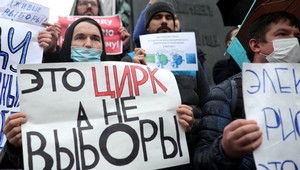
These circumstances significantly limit the Kremlin’s ability to rig the election results in favor of “United Russia”. If the authorities declare a decisive victory, the fraud will become obvious. This will spark public outrage, which could escalate into mass protests, as happened in a similar situation in 2011–2013.
At that time, the protests were brutally suppressed by the authorities, after which they sharply intensified the repressive regime in the country. And to justify these actions and boost the approval ratings of Putin and “United Russia” – which had begun to fall – Russia attacked Ukraine in 2014, seized and annexed Crimea, and provoked an armed conflict in the Donbas.
Those measures worked at the time. Putin’s approval rating rose, and people not only became afraid to take to the streets to protest but to criticize the government in general. Although street protests resumed in 2017–2019 – albeit on a smaller scale – this was a result of the country’s social problems worsening due to Western sanctions and the drop in global oil prices.
Russia’s socioeconomic problems have now reached a qualitatively new level, and in many cases, people have been driven to despair. Therefore, if the authorities openly falsify the elections, protests could resume and take on a significant scale, despite repression and the war. For the Kremlin, this is unacceptable, as it would shatter the myth of public support for its policies, derail mobilization, and make it more difficult to continue the war.
To prevent such a turn of events, the Kremlin will be forced to agree to a reduction in “United Russia”’s presence in the country’s parliament and even to its loss of a constitutional majority. However, this will be offset by the formation of a coalition with some of the above-mentioned parties that are part of the “systemic” opposition. Meanwhile, administrative and other forms of pressure will be exerted on the leadership of the remaining parties.
In this regard, the rise in the “New People” party’s approval rating – which has already exceeded 13% – is noteworthy. According to experts’ forecasts, it may rise to – or be propelled into – second place. The party espouses center-right and liberal views and was founded under the auspices of the Russian presidential administration with the aim of capturing protest votes and diverting them away from other parties. In the Russian State Duma, it votes almost unanimously with “United Russia” and will most likely form a parliamentary coalition with it.
At the same time, there are other possibilities as well. According to some speculations, the party may be “promoted” by certain political-oligarchic forces linked to Sergei Kirienko, the first deputy head of the Russian presidential administration, and the younger generation of fsb leadership, with the aim of creating an alternative to “United Russia”. The Kovalchuk brothers are cited as representatives of such forces. One of them – Yu. Kovalchuk – is considered Putin’s “personal banker”.
Despite this, they may be interested in a change of power in the country, as Putin is leading it to ruin. Furthermore, he has begun replacing the older generation of oligarchs with young businessmen loyal to him personally and redistributing financial and economic assets in their favor. Not to mention that funds are being seized from the oligarchs to finance the war. Therefore, a revolt in Russia is entirely possible.
This plan of action has already been discussed previously. Together with several other parties that will be part of the new State Duma, “New People” will pursue its own agenda aimed at ending the war and normalizing relations with the West. And if the opportunity arises, they will even amend the country’s Constitution and strip Putin of his actual powers. In this way, power in the country will be transferred through legal means, without an open coup or civil war.
A rather interesting situation is also unfolding around the “Yabloko” party, which is the only officially registered democratic organization in Russia that is not part of the “systemic” opposition. It was admitted to the elections and permitted to campaign on the basis of ending the war. Currently, over 70% of Russians support this idea, so the party has a good chance of winning a significant number of votes and entering the State Duma with a fairly large faction.
This issue also gives rise to various assessments and speculations. According to some experts, the Kremlin’s actions regarding the “Yabloko” party are intended to demonstrate the democratic nature and fairness of the elections, which should reduce tensions within Russian society.
It is also possible that the authorities might use the “Yabloko” party as an indicator of citizens’ true attitudes to the war. If its pre-election poll numbers begin to rise sharply, the Kremlin will be convinced of the reality and widespread nature of anti-war sentiment in the country. Based on this, a decision may be made to refrain from declaring general mobilization, as it would very likely lead to social unrest in the country. Conversely, if “Yabloko” receives few votes, mobilization will be carried out in full.
In all of the scenarios mentioned, the authorities may allow “Yabloko” to enter the State Duma but artificially suppress its results to a minimal level. As a result, the party will be unable to influence parliamentary decisions and, consequently, the country’s policies. If necessary, the Kremlin may also exclude it from the elections under one pretext or another.
The “Yabloko” party may also be used by Putin’s hidden opponents to form a coalition against “United Russia”.
In other words, for the first time since the early 2000s, preparations for parliamentary elections in Russia are accompanied by a real struggle between various political forces, even though outwardly most of them appear to be pro-government.
Evidence of these changes is the emergence in March 2026 – and the rapid spread across social media – of a wave of statements by all sorts of people criticizing the situation in the country, the government, and Putin personally, as well as calling for an end to the war. At first, the authorities ignored this, but then began shutting down popular messaging apps and restricting access to the Internet. Repression against those engaged in such activities has also resumed. But this is no longer yielding results.
In the current situation, Putin and the “United Russia” party desperately need visible successes on the front lines that can be presented as a victory in the war. Along with boosting their approval ratings, this would also allow them to suspend the war – the only way to stem the tide of the country’s deepening socio-economic crisis. These crises are currently escalating rapidly and could reach catastrophic proportions as early as this autumn, as we have repeatedly noted.
As is well known, given Russia’s inability to occupy all of Ukraine, Putin is attempting to seize at least the entire Donbas region, which would allow him to declare that the “objectives of the special military operation have been achieved” and to justify the war and the losses incurred in it. This is precisely where he is currently concentrating his main forces and military resources.
However, it is clear that, with less than two months to go before the elections, the Russian armed forces will not be able to occupy the entire territory of the Donbas. This is evident from developments on the front lines, where the situation has essentially reached a stalemate, and Russian troops’ advances are at their lowest levels in practically the entire war. The only thing increasing is the number of casualties among Russian servicemen, which, on the contrary, have reached their highest levels. At the same time, socioeconomic problems in the country are intensifying.
Therefore, Putin and the “United Russia” party will go into the elections without any notable successes and in a weak position. As a result, the party will effectively be unable to secure enough votes to obtain a parliamentary majority. This will force the Russian authorities to choose between open, large-scale election fraud and forming a coalition with other parties – a move with highly uncertain consequences.
Based on this, it is highly likely that the political situation in Russia will escalate after the parliamentary elections. This will result from the onset of an open struggle between the current government – and Putin personally – and their opponents among the aforementioned forces.
At the same time, unrest among the population may break out, driven by socioeconomic factors and provoked by election fraud and mobilization. This unrest will be supported and led by Putin’s opponents within the current ruling elite.
Internal conflict within the country will also affect its armed forces. It could spark new mutinies, similar to the “march for justice” on Moscow led by Yevgeny Prigozhin and his militants in June 2023.
Overall, these factors will reduce Russia’s ability to continue the war. And if Russia does not stop the war by this winter, Ukraine will also launch strikes against Russia’s energy infrastructure. First and foremost, these strikes will target facilities that supply electricity to Moscow. By autumn, Ukraine will already have ballistic missiles capable of carrying out this task. They will plunge Russia into complete chaos.
Thus, the term of the State Duma of the 8th convocation in Russia has come to an end; this Duma fully supported Putin’s course and served to provide legislative backing for his war against Ukraine. The next parliamentary elections are scheduled for September 20, 2026.
For the first time since the early 2000s, the run-up to the elections has been marked by a political struggle between Putin’s “United Russia” party and his hidden opponents from among certain political-oligarchic forces that have their own parties. At the very least, that is the impression being created.
If these forces do indeed exist and are capable of getting their candidates elected to parliament, an open or covert opposition to “United Russia” will emerge there. This will create the conditions for a change in power in the country, or at least a limitation of Putin’s powers.
After the elections, the situation in the country will most likely escalate. A political confrontation will begin between the current government and the new opposition, accompanied by unrest among the population. At the very least, this will reduce Moscow’s ability to continue the war against Ukraine; at worst, it will set in motion the process of Russia’s disintegration.
Yurii Ilchenko,
Institute for Global Politics