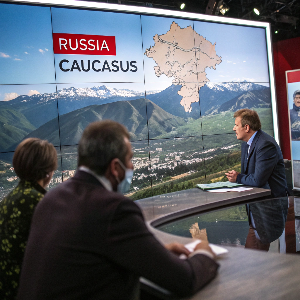
Moscow is steadily losing allies and partners in the Caucasus, who are gradually turning into its enemies
This weakens Russia’s position in the region and negatively affects the realization of its interests. As a result, Türkiye has the opportunity to strengthen its influence in the Caucasus and Black Sea regions. Besides, yesterday’s allies of Russia are eagerly switching sides. Türkiye’s political and economic measures to achieve its goals are accompanied by a revival of its military activity, which opens a new front for Russia, forcing it to divert its combat resources from Ukraine. New challenges and threats reduce Russia’s ability to continue the war, which is in Ukraine’s interests. However, Moscow’s motivation to keep Crimea and the South of Ukraine under control is increasing.
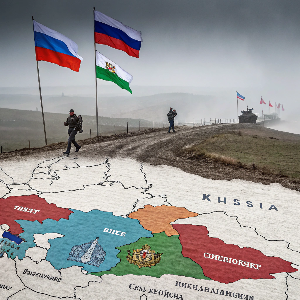 Moscow’s further losing partners and allies is a consequence of its imperial policy and arrogant attitude to them. As a result, some of its former close allies are switching sides to its rivals. Consequently, Russia’s international position is weakening, and there is a prospect of new hotbeds of military confrontation between it and its neighbors. One example is the deterioration of relations with Azerbaijan, which has become particularly important for Russia since the start of the war. According to some respected experts, Azerbaijan acts as a logistical channel through which Russia circumvents Western sanctions, including by obtaining dual-use goods. Türkiye, which has close economic ties with the EU but does not support its sanctions against the Russian Federation, also serves as such a channel. In addition, the Baku-Novorossiysk oil pipeline runs through the territory of Azerbaijan and Russia, designed to transport oil from the Caspian to the Black Sea region with further access to the world market. This allows Moscow to pass off its oil as Azerbaijani or Kazakhstan’s and thus circumvent Western restrictions on its oil exports.
However, even before the war, Russia had been pursuing its interests in the Caucasus with the help of Azerbaijan. In particular, on February 22, 2022, on the eve of Putin’s full-scale attack on Ukraine, the Moscow Declaration on Allied Cooperation between the Republic of Azerbaijan and the Russian Federation was signed. The main provisions of the document are: refraining from any actions that harm the strategic partnership between the two countries; providing military assistance to each other in case of need; deepening cooperation between the parties in the oil and gas sector.
Western experts believe that this was the basis for Azerbaijan’s covert assistance to Russia in resolving issues with American and European sanctions. For its part, Moscow simplified access for Azerbaijani goods to the Russian market and did not interfere with Baku’s efforts to regain control over Nagorno-Karabakh. Thus, in order to use Azerbaijan for its own purposes, Russia sacrificed Armenia, which is its ally in the Collective Security Treaty Organization (CSTO). This is precisely why Armenian-Russian relations have deteriorated, leading to a decline in Moscow’s influence in the Caucasus.
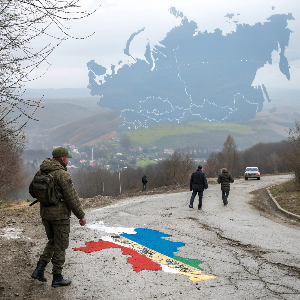 However, not everything is going well for Moscow in its relations with Azerbaijan, and this further undermes its position in the region. As is well known, the reason for this was the Russian air defense forces’ shooting down an Azerbaijani Airlines passenger plane flying from Baku to Grozny on December 25, 2024. Due to the damage caused by the Russians, the plane made a hard landing not at Russian airports, but on the territory of Kazakhstan, killing 38 people. Moscow acknowledged its involvement in the incident but refused to publicly apologize to Azerbaijan and pay compensation to the victims or their relatives.
At that time, the incident had no visible consequences, except for Baku’s loud indignation at Russia’s position. However, President of Azerbaijan Ilham Aliyev refused to participate in the Victory Day parade in Moscow on May 9 this year, although he sent an Azerbaijani military unit to it. It is also possible that Azerbaijan will not help Russia circumvent the known sanctions. It also continues to cooperate with Ukraine, providing it with humanitarian and economic assistance. Azerbaijan’s strategic partnership with Türkiye, which is Russia’s main rival and, in fact, its military opponent in the Caucasus, the Black Sea region, and the Middle East, is not in Russia’s interests either.
Analysts believe that because of all this, Moscow may try to “punish” Azerbaijan, including through its diaspora in Russia. This diaspora numbers more than one million people. People from Azerbaijan “hold” a number of powerful business structures in their hands and even control certain sectors of the Russian economy. Unlike many other post-Soviet countries, Azerbaijan does not depend on remittances from its workers in Russia. Nevertheless, Azerbaijanis perceive the diaspora abroad as part of their community.
Given this position of Azerbaijan’s people, Moscow deliberately dealt a painful blow to their dignity. This is how Azerbaijan perceives the fact that Russian law enforcement agencies detained at least 50 ethnic Azerbaijanis in Yekaterinburg on June 27 this year for their alleged involvement in a criminal group more than 20 years ago. Two people were brutally killed during the detention.
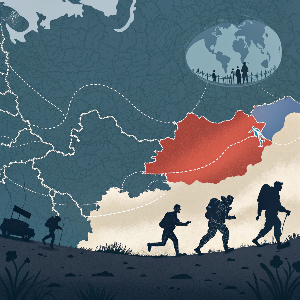 It should be pointed out that Baku did not accept Moscow’s actions and took harsh measures in response. Russian Deputy Prime Minister O. Overchuk’s visit to Azerbaijan was canceled, as were all Russian cultural events in the country. Azerbaijan’s leadership officially accused Russia of torturing and killing Azerbaijanis, comparing it to Nazi Germany. At the same time, Azerbaijani police searched the office of the Russian propaganda agency Sputnik-Azerbaijan and detained two of its employees on charges of working for Russian special services. Later, eight more Russians were detained on charges of drug trafficking.
Baku’s reaction came as a surprise to Moscow, which called it an anti-Russian move. Russian Z-propagandists and bloggers went even further, calling on the Kremlin to launch large-scale repression against the Azerbaijani diaspora, close the Russian market to Azerbaijani goods, and even declare war on Azerbaijan.
Of course, Moscow did not do so, as it is interested in relations with Azerbaijan. It is trying to resolve the situation diplomatically. At the same time, it seeks to force Azerbaijan to show loyalty and act exclusively in line with Russia’s policy. But this, as always, will serve as a basis for discord in their bilateral activities.
Especially as Türkiye is backing Azerbaijan, pursuing an active course to strengthen its position as a leader in neighboring regions, particularly Turkic-speaking ones. As part of these activities, Ankara uses Baku to promote its interests in the Caucasus.
Back in 1992, Türkiye and Azerbaijan signed a bilateral military cooperation agreement. And in 2010, the parties signed a strategic partnership and mutual assistance agreement between the Republic of Azerbaijan and the Republic of Türkiye. According to those agreements, Ankara has provided and will continue to provide comprehensive assistance to Azerbaijan, including in strengthening its armed forces.
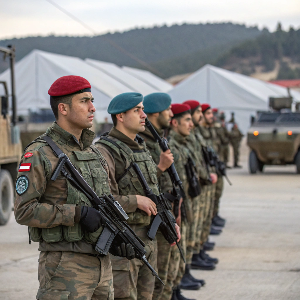 Currently, the armies of the two countries are closely integrated and have joint operational plans in the Caucasus. At the same time, Türkiye has become one of Azerbaijan’s main trade and economic partners and facilitates the export of its energy resources to foreign markets. In fact, Türkiye is also Azerbaijan’s mainstay in its disputes with Russia.
Türkiye’s assistance enabled Azerbaijan to win the second war with Armenia over Nagorno-Karabakh in 2020-2023 and restore its territorial integrity. In this way, Türkiye strengthened its influence on Azerbaijan and consolidated its position in the Caucasus. The deterioration of relations between Armenia and Russia has led to a rapprochement between Ankara and Yerevan.
Despite the existing problems in relations between Armenia, Azerbaijan, and Türkiye, a certain alliance is currently forming between them based on their shared interests in relations with Russia.
For example, Azerbaijan, Armenia, and Türkiye have signed an agreement on the Zangezur corridor, which is important for all parties. The corridor connects Azerbaijan with its province of Nakhchivan through the territory of Armenia, and Türkiye acts as the guarantor of this agreement. A peace agreement between Azerbaijan and Armenia is also being prepared.
A certain obstacle to Ankara’s final consolidation of its positions in the Caucasus is the pro-Russian course of Georgia’s current leadership. However, Ankara can strengthen its influence on Tbilisi by deepening bilateral economic ties. Türkiye is one of Georgia’s main trading partners and investors in its economy. In July 2023, at the height of Russia’s war against Ukraine, Ankara and Tbilisi signed a cooperation agreement on security.
Ankara is also using its successes in the South Caucasus to strengthen its positions in the North Caucasus (NC) and the Black Sea region (BSR). At this, Ankara is relying on a number of factors that are favorable to it, including: Moscow’s distraction from the war with Ukraine; a significant weakening of the Russian Black Sea Fleet, which suffered serious losses during the hostilities; the aggravation of socio-economic problems in Russia, which destabilizes the situation in the NC; and the lack of a powerful military advantage over Türkiye in the aforementioned regions.
In line with its policy towards the North Caucasus and the Black Sea Region, Türkiye is constantly stepping up its military activity in those areas in various formats. The main ones are: training national armed forces and participating in NATO joint exercises; increasing Türkiye’s military presence; further assisting Azerbaijan in strengthening its army and navy; supporting anti-Russian forces in the North Caucasus and, according to some estimates, their armed formations.
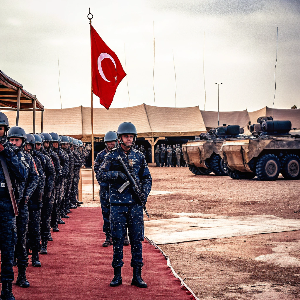 Thus, the 3rd Field Army(consisting of two army corps — a total of eleven mechanized brigades) of Türkiye’s Armed Forces has been deployed on the Caucasus-Russian direction. This allows to contain Russia in the Caucasus, especially in mountainous areas. The Black Sea straits and the northwestern part of Türkiye are protected by the 1st Field Army, consisting of three corps — a total of fourteen mechanized brigades.
The Navyof Türkiye dominated Russia’s Black Sea Fleet even in the latter’s best pre-war days. Now it has lost almost a third of its combat potential, and Russia cannot replenish it due to Ankara’s closure of the Black Sea straits.
That is why Türkiye ignores Russia and pursues a pragmatic policy based solely on its own interests. At the same time, through various military exercises, it demonstrates that it can implement those interests by force. The exercises include: Türkiye’s Armed Forces’ naval exercises “Mavi Vatan-2025” (“Blue Motherland-2025”) and land exercises “Kış-2025” (“Winter-2025”). Officially, these events were not directed against other countries. At the same time, their nature and locations give reason to conclude that elements of scenarios for possible armed conflicts and wars between Türkiye and Russia are being mastered.
Ankara, considering its interests in the aforementioned regions, also takes into account the interests of its ally Ukraine, which is defending its independence. That is why Türkiye provides the necessary military and technical aid to Ukraine and is trying to strengthen its participation in the process of ending the Russian-Ukrainian war.
Besides, Türkiye is objectively interested in deploying its military contingent on the territory of Ukraine as part of the international peacekeeping forces, as this will contribute to strengthening Türkiye’s influence in the Black Sea Region. And in case of an armed conflict between Türkiye and Russia, Türkiye’s troops will effectively have a foothold in the Northern Black Sea region. The presence of Türkiye’s Armed Forces units in the South of Ukraine will also provide Ankara with additional opportunities for conducting reconnaissance against Russia. However, Ankara also has a certain interest in continuing the war, as this weakens Russia and preserves all the above-mentioned factors that are beneficial to Türkiye.
If this happens, Russia will have to deal with a second – “southern front”, which will force it to adequately respond in a military way. Even though it really needs military resources to keep fighting Ukraine, Russia’s leaders will have to take some of them away to keep Türkiye in check in the Caucasus and Black Sea Regions. First and foremost, this concerns Russia’s Southern Military District and Black Sea Fleet, which are allocating personnel to cover the border with Azerbaijan, the Black Sea coast, and the Crimean Peninsula, as well as strengthening Russia’s military presence at the military base in Gyumri, Armenia, and in the self-proclaimed republics in Georgia. However, Russia’s ability to take adequate steps in response to Türkiye’s actions is currently significantly limited.
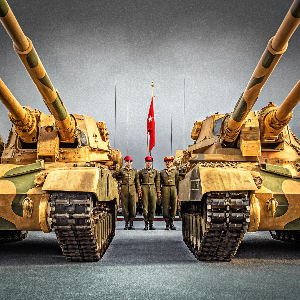 At the same time, intensification of challenges and threats from Türkiye increases the role and significance of Crimea and other territories occupied by Russia in the South of Ukraine. The Crimean Peninsula is the Russian Federation’s main foothold in the Black Sea region, while the temporarily occupied areas of Kherson and Zaporizhzhia regions are a connecting link to it, as an alternative to the Kerch Bridge and maritime communications, which can be relatively easily damaged. In this case, Moscow will not only try to keep them for itself at all costs, but also expand the captured coastal regions of Ukraine. In fact, this is one of the main reasons for the intensification of the Russian Armed Forces’ offensive actions in the South of our state, as well as Russia’s demand to transfer the entire territory of Kherson and Zaporizhzhia regions to it. The same applies to Moscow’s plans to capture Mykolaiv and Odesa regions of Ukraine.
The trends discussed have mixed consequences for Ukraine, both positive and negative. For example, the need to respond to Türkiye’s actions and changes in the situation in the Caucasus and the Black Sea Region distracts Russia’s attention and military resources from the war against our country. At the same time, maintaining control over Crimea and the occupied territories of the South of Ukraine is of vital importance to Moscow, which means that it will not give them up under any circumstances and will try to expand them.
However, at this stage, Türkiye’s plans for the Caucasus and the Black Sea Region are in line with Ukraine’s interests, as they contribute to weakening Russia and reducing its ability to continue hostilities.
Thus, since Russia seeks to use other countries for its own purposes, while violating their interests, its partners ultimately refuse to cooperate with it. Currently, this refers to the deterioration of its relations with Azerbaijan as a result of Moscow’s attempts to exert complete influence over it. Russia’s position in the Caucasus is also weakening due to the deterioration of its relations with Armenia. This, in turn, creates favorable opportunities for Türkiye to implement its plans to strengthen its influence in the Caucasus and Black Sea Regions. At this, Türkiye is backing up its intentions with military activity in the aforementioned areas, creating a second “southern front” for Russia. Even without entering an active phase, this front distracts Russia’s attention and military resources from Ukraine.
Yurii Mykhailenko,
Institute of Global Politics
(Images generated by artificial intelligence)