Without Mechanisms of Effective International Enforcement, Nuclear and Environmental Security Remains Extremely Vulnerable
Press Conference of the Institute for Global Politics
The topic of the Institute for Global Politics’ press conference, “Issues of Nuclear and Environmental Safety in the Conditions of War (as exemplified by the Zaporizhzhia Nuclear Power Plant, the Kakhovka Hydroelectric Power Plant, and International Oil and Gas Pipelines)”, which addressed the current Russian-Ukrainian war and nuclear safety during this conflict, is of great importance – a fact that no one can or has the right to deny. And if we add information about the impact of these critical “issues” on the environment, we can paint a broad picture of the problems facing Ukraine that must be resolved immediately.

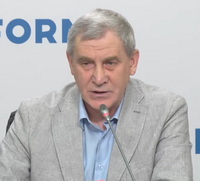 Everyone present in the Ukrinform’s hall agreed with this during the opening remarks by Director of the Institute for Global Politics Oleh Bereziuk, and the speakers who agreed to participate in the event both in person and online. They explained to the audience the consequences of Russia’s full-scale armed aggression against Ukraine, particularly regarding the Russian seizure of the Zaporizhzhia and Chornobyl nuclear power plants, the destruction of the Kakhovka hydroelectric power plant, not to mention the constant shelling of Ukrainian energy infrastructure, oil and gas pipelines, and thermal power plants.
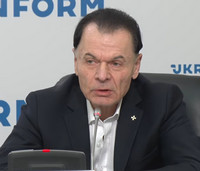 Director of the state research institution “Institute of Ecological Restoration and Development of Ukraine” and Academician of the National Academy of Agrarian Sciences of Ukraine Oleksandr Bondar spoke, in particular, about the immediate problems caused by the war, which Ukraine has been unable to resolve for many reasons beyond its control. He also reminded that Ukraine had experienced something similar in the past, specifically in 1986, when the Chornobyl nuclear power plant accident occurred. Just as then, the response today must be professional, given that the incident at the Zaporizhzhia Nuclear Power Plant was caused by Russian military aggressors. By the way, just one figure: in 1986, there were two thousand nuclear fuel collecting tanks at the Chernobyl plant, while today there are at least eighteen thousand at the Zaporizhzhia NPP, meaning that the contamination of our territory could be tens of times greater. And with the destruction of the Kakhovka Hydroelectric Power Plant, 600,000 hectares of agricultural land may be left without water.
There is another “datum” that deserves attention: the uranium burial sites in Zhovti Vody, where uranium waste has been stored since around 1947. If even a single Russian missile hits that area, the uranium waste will inevitably end up in the Dnipro River.
 In his speech, Chairman of the Board of JSC “Kyiv Scientific Research and Design Institute ‘EnergoProekt’” Yurii Sapozhnykov (the Institute that has existed for nearly 95 years), pointed out that the designers of the nuclear power plant did not anticipate any accidents resulting from military operations. At most, the only potential problem could have been an unexpected emergency crash of a light aircraft. Therefore, the expert is convinced that we must do our best to ensure that the Zaporizhzhia Nuclear Power Plant remains Ukraine’s property. So that the plant does not fall into the hands of Russian aggressors. Otherwise, irreversible and devastating events for Ukraine are bound to occur. And not only for Ukraine.
Could the IAEA assist in any way if Ukraine were to seek help on this matter? The expert stated that international regulation has proven ineffective in wartime conditions. There are many reasons, but one of the most telling is that within the IAEA’s structure, the influence of Russia and Ukraine cannot be considered comparable. After all, there are quite a few Russian representatives in that structure, and they are the ones hindering the resolution of the problem they themselves created. “Unfortunately, the IAEA has its own structure, and within that structure, the Russians’ influence is quite significant. In this situation, it (the IAEA) resembles a postman who passes information from one warring party to another,” he said.
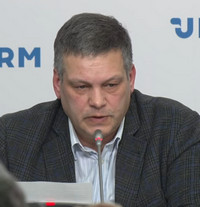 Director of the Center for Strategic Analysis and Environmental Security Yurii Andriichuk drew attention to the ecological disaster caused by the destruction of the Kakhovka Hydroelectric Power Plant. He reported that, due to the cessation of fresh water flow from the reservoir, seawater is beginning to flood the underground areas, which will cause soil salinization and turn all the southern fields into a desert.
The expert also emphasized that the enemy is attempting to exploit the pipeline infrastructure. This has been reported from time to time in the media, as well as in publications by our Institute, and requires an appropriate response. For example, a structure could be created to address this specifically. Thus, to resolve various crises and counter disinformation, a “situation information room” should be established at a scientific institute under the auspices of military organizations. Such a center could disseminate objective information about pollution levels in different regions, about landmines, the consequences of oil spills, or even about dangerous phenomena in the nuclear energy sector.
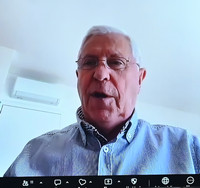 Expert on energy security, CEO of the consulting firm “Sidcon”, Associate Professor in the Department of Public Administration, Management, and National Security at the Ivano-Frankivsk Technical University of Oil and Gas Yurii Kohut agreed with this assessment. He also believes that current safety measures are insufficient. He argues that an audit of the physical security of the plants must be conducted and that individuals should be held personally accountable for any lapses. Our government leadership should regularly review reports and findings on the state of our nuclear energy sector and take appropriate measures. And it should involve everyone who has to do with nuclear safety in this work.
He also mentioned Russia’s so-called activities to create special military units for terrorist operations on foreign territories. This was observed during the seizure of the nuclear power plants in Chornobyl and Zaporizhzhia. “The Russian military servicemen who entered the Zaporizhzhia Nuclear Power Plant were fully prepared to seize the plant,” the expert emphasized.
And what is the global reaction to this? It cannot be considered adequate, because the Russians disregard it. Just as they disregard the resolution adopted by the IAEA Board of Governors, which acknowledges the direct consequences for nuclear safety and security caused by Russia’s systematic attacks on Ukraine’s energy infrastructure. What happens next?
 In his online address, CEO of the State Specialized Enterprise “Chornobyl NPP” Serhii Tarakanov not only drew attention to the current unsatisfactory state of nuclear safety but also to some of the reasons behind it. He emphasized that nuclear facilities must remain inviolable and be subject to international oversight. Describing how Russian military units stormed the Chernobyl Nuclear Power Plant in February 2022, he recalled how they cut off the plant’s employees from the outer world for 600 hours. He believes that if the world had responded appropriately at that time, the Zaporizhzhia Nuclear Power Plant would not have suffered a similar fate. And in 2025, a single Russian drone damaged the protective shielding of the plant, valued at EUR 1.2 billion.
In responses to questions from politicians and journalists present at the press conference, the discussion focused on holding Russian servicemen accountable for their participation in the attack on Ukrainian nuclear power plants, on mandatory training and education for engineers and scientists who are to work at such plants, and on the demining of Ukrainian territories, which is directly linked to environmental protection.
The participants in the press conference unanimously agreed that without effective international enforcement mechanisms, nuclear and environmental security remains vulnerable, and announced plans to organize an international scientific and practical conference on nuclear and environmental security featuring Ukrainian and international experts.
The experts’ presentations will be posted in full on the Institute for Global Politics’s website.
Oleh Makhno,
Head of the Press Service at the Institute for Global Politics