US Sanctions Against Russia and Their Expected Consequences
Due to Putin’s intransigence on ending the war against Ukraine, US President Donald Trump has changed his attitude to Russia and begun to pressure it with sanctions;
but then, in this way, Washington is trying not only to restore peace in Ukraine, but also to radically weaken Russia as its military adversary and competitor in the global energy market;
currently, as a result of effective joint efforts by the USA and the EU, Russia’s state system and economy are already deteriorating, and its ability to continue the war is being undermined;
therefore, in the long term, the Armed Forces of the RF will be forced to reduce the intensity of combat operations on the front lines. Then Moscow will face other problems related to preserving the Russian economy and Russia itself.
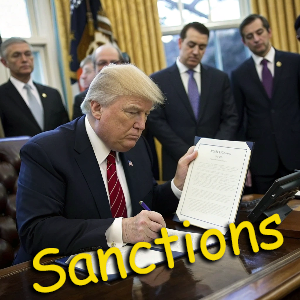
The development of the situation around Russia’s war against Ukraine has been significantly influenced by US President Donald Trump’s move to openly pressure Putin’s regime by imposing sanctions on the well-known companies “Rosneft” and “Lukoil”. These companies are considered leaders in the Russian oil and gas industry, and therefore such sanctions are most painful for the RF. At this, the USA coordinated its actions with the EU, which adopted the 19th package of its own sanctions against Russia. The package also affects the Russian energy sector. Right now, the USA and the EU are preparing new, equally damaging sanctions against the Russian Federation.
Most experts believe that D. Trump has changed his position on Russia because he has finally realized what Putin is really trying to achieve: to drag out negotiations in order to have time to implement his plans for Ukraine. Having realized this, D. Trump publicly identified Putin’s plans as the destruction of the Ukrainian state.
After all, Donald Trump was already aware of all this. He was merely outlining his strategy, which involves exhausting Russia by pushing it to continue the war against Ukraine, but without any significant gains. To this end, the USA is lowering global oil prices with the aim of eliminating the Russian Federation as the main source of military threats to America, as well as a competitor in the global energy market.
Today, D. Trump has largely achieved what he wanted. The economic situation in Russia has deteriorated sharply and is becoming increasingly complicated, with no real positive changes in sight. In addition, Russia has effectively lost the European oil and gas market and will never be able to regain its position there, as the USA is confidently taking its place.
Therefore, D. Trump has moved on to the open stage of implementing his intentions, that is, demonstrating his role and importance as a leading world leader capable of stopping Russia and destroying it as an evil empire. As a result, he will not only deserve the Nobel Peace Prize, but will also go down in history on a par with Ronald Reagan, who organized the collapse of the Soviet bloc and the USSR.
In any case, the main thing for Ukraine is that the Russian economy collapses completely in the near future. Within the next six months – to be exact, when USA sanctions will be in full force. Then Moscow will not only be unable to continue the war against Ukraine, but will also face a real threat of Russia’s disintegration for the same reasons that led to the collapse of the Russian Empire in 1917 and of the Soviet Union in 1991.
Some political analysts reject this scenario, believing that Russia will be able to circumvent the new sanctions, as it has done with the existing ones. At this, China, at least, will continue to import oil from Russia. And price discounts may also keep India among its buyers. Of course, Russia will lose some of its oil revenues, but this will not be fatal for it. Therefore, it will be able to continue waging war, albeit with less intensity. And by applying tough measures of state control over the economy of a mobilization nature, Moscow will be able to maintain its economic capacity and, accordingly, the integrity of the country.
President Putin traditionally spoke about this at a press conference on October 24 this year. He acknowledged that the next sanctions would have negative consequences for Russia. However, according to him, they would not be critical for the Russian economy. He also stressed that the Russian oil could not be replaced with any other on the world market. Because if it is abandoned, global prices for hydrocarbons, including petrol in the USA, will rise sharply.
However, Putin is obviously aware of what the tightening of sanctions against Russia could cause, especially those from the USA, which maintains its dominant position in the world and forces other countries to reckon with it. Moreover, the USA has joined forces with the EU and together they are putting pressure on the Russian Federation. Thus, the Kremlin’s hopes of reaching an understanding with Donald Trump, who seemed to be sympathetic to Russia, supported it, and held anti-European and anti-Ukrainian positions, have not been fulfilled.
None of this happened and could not happen, as it was only a false vision that Putin had formed based on the assessments and forecasts of his advisers and special services. In turn, they reported to Putin not what was really happening, but what he wanted to hear. In other words, the same situation repeated itself as when he expected a quick victory over Ukraine. However, Putin still hopes for the best for himself, and therefore sent his envoy K. Dmitriev to the USA to somehow resolve the problems that have arisen in Russian-American relations.
Given D. Trump’s goals, mentioned above, such attempts by Putin are doomed to failure. He will not be able to stop the processes that the US President has already initiated. This is evidenced by the reaction to US sanctions by India and China, which are currently the largest buyers of Russian oil. India’s leading oil holding company, Reliance Industries, has already effectively refused to buy Russian oil. Other Indian companies are likely to do the same. Large state-owned companies in China, such as PetroChina, Sinopec, CNOOC, and Zhenhua Oil, have also suspended imports of Russian oil. Private Chinese companies are still buying it, but are refraining from signing long-term contracts with Russian suppliers.
At this, the introduction of such sanctions against Russia by the United States did not cause any panic on the global oil market due to a possible shortage. Global oil prices did rise, but only by 3 %. Temporarily. Reports of sufficient oil reserves in the USA and the ability of Saudi Arabia and other countries to replace Russian supplies stabilized the situation. Therefore, Russia faced a direct threat of losing up to half of its oil revenues, which had already fallen by more than 20 % between January and September this year. In other words, instead of the $10 billion per month that Russia currently earns from oil exports, it will receive $5 billion. And that is if current prices remain unchanged. But they are bound to fall. And as early as next year, the Russian oil industry may become unprofitable.
Russia exports practically nothing else due to Western sanctions, which has already led to a crisis in its coal, metallurgical, and forestry industries. According to their representatives, the situation is now worse than it was in the 1990s. Russia is currently unable to compensate for the loss of oil revenues, which will bring its economy to the brink of collapse. Therefore, what was mentioned above will happen: not only will it be unable to continue the war, but it will also face a deep socio-political crisis.
The state of the Russian economy was discussed in more detail in our article “Russia’s Chances of Continuing the War and What Will Stop It”. Some new aspects can be added to it.
In particular, due to the general deterioration of Russia’s economy, in the second half of 2025, problems arose in the work of industries related to the military-industrial complex. According to Rosstat, in September, “production of finished metal products” fell by 1.6 % compared to the previous year. In August of this year, it still grew by 21.2 %, and by 31.6 % for the whole of last year.
At the same time, the growing budget deficit in most Russian regions is forcing a reduction in monetary compensation for Russian citizens who sign contracts for military service to participate in the war. This has already happened in Chuvashia, Tatarstan, Mari El, Nizhny Novgorod, Ulyanovsk, and Samara regions, the Yamalo-Nenets Autonomous Okrug, and Bashkortostan. In particular, the largest reduction was observed in Samara region – 9 times, from 3.6 million rubles to 400,000 rubles; in Tatarstan – sevenfold, from 2.7 million rubles to 400,000 rubles; in the Republic of Mari El – 6.5 times, from 2.6 million rubles to 400,000 rubles; in Chuvashia – 5.3 times, from 2.1 million rubles to 400,000 rubles.
This may also explain the decrease in the number of people willing to sign contracts and go to war. In August–October, this figure fell threefold, from 30,000 to 10,000 people per month. This weakens Russia’s ability to continue the war, which it calls “SVO”(from russian “spetsialnaya voyennaya operatsiya” – “special military operation” – Transl.)
New US and EU sanctions will affect all of the processes discussed, putting Russia in a rather difficult financial and economic situation. And for Putin himself, this situation will become simply hopeless.
Thus, the only thing he could do to improve the economic situation in Russia is to end the war. This would not eliminate the main problems of the Russian economy, which are related to the fall in world oil prices, but at least it would reduce military spending and get rid of some of the Western sanctions. This would create the conditions for the country to gradually emerge from the economic crisis.
However, for Putin, this would mean the collapse of his life’s goal, which he considers unacceptable. That is why he refuses to end the war, even if this course brings Russia closer to disaster. Even though the Kremlin propaganda constantly trumpets its victory. This is especially true when the majority of Russians do not care at all not only about the so-called Russian-speaking population of Ukraine, but about the inhabitants of certain regions of Russia itself, where living conditions are terrible. And more than 90 % of Russians are currently in favor of ending the war.
Putin ignores this fact as well. That is why Russia is moving along the worst path for itself, the same path that the Russian Empire and the USSR once followed. Although the circumstances of their collapse are different, the underlying causes of the collapse are similar, that is, they have common features.
Firstly, the depletion of the economy as a result of the war and external sanctions. Secondly, the loss of the ability to produce basic products that ensure the country’s vital functions, and the inability to purchase them abroad. Thirdly, the aggravation of the socio-economic and political situation in the country. Fourthly, the spread of separatism in the regions on economic, social, and political grounds. Fifthly, the beginning of mass civil disobedience, rebellion, or revolution in the state. Sixthly, the collapse of the country, the emergence of armed conflicts on its territory, and their escalation into civil war.
At present, Russia is confidently moving in the first of these directions, while the situation in the country contains elements of all the others. The economic crisis in the Russian Federation has already been mentioned. Therefore, let us turn to other aspects.
Russia can produce practically nothing on its own, importing 90 % of all industrial goods from China. Of course, not for free. And Russia is already running out of money. Therefore, after rapid growth in trade between Russia and China in recent years, it has now begun to decline. From January to September of this year, this indicator fell by 9.4 % compared to the same period last year.
Since the summer of this year, there has been a shortage of petrol and food in Russia, which it is also forced to purchase abroad. And in Russian regions, the question of banning their export outside their territory is already being raised. A relevant precedent was the decision of the local leadership to ban the export of potatoes from Kaliningrad region of the Russian Federation.
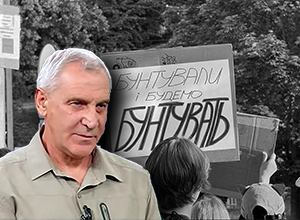
There are also reports of civil disobedience. So far, these have been limited in scale, but they show that Russian society is not so inert as it seems at first glance. One of the most resonant examples was the anti-Putin and anti-war protest by young people in St. Petersburg on October 15. The reason for this was the arrest of street singer D. Loginova for performing an anti-war song. This event demonstrates that young people are no longer happy with Putin’s regime. And this is despite all the efforts of the Kremlin propaganda to brainwash Russians.
Finally, the Russian authorities have openly begun to predict a rebellion against them. The FSB has accused former Russian oligarch Mikhail Khodorkovsky, who lives in London, and 22 members of the Anti-War Committee of preparing a coup d’état in Russia. Perhaps this is just fiction on the part of the Russian special services, but active purges in Russian ruling circles are already underway. So far, they cannot be compared to what happened in the former USSR in the 1930s, but there are more than enough facts of arrests and murders of Russian officials and businessmen.
In the current situation in Russia, the only way to save the country or at least slow down the process of disintegration is to establish strong and wise leadership. But there is no such leadership there anymore. Putin clearly does not have control over the situation, as evidenced by his public statements. Even members of the Russian government publicly refute what he says about economic issues. In some cases, they refuse to carry out his orders and act at their own discretion.
For their part, military servicemen are clearly deceiving Putin about the situation on the front lines and the country’s ability to counteract in its favor. This fact is once again confirmed by the report of the Chief of the General Staff of the Armed Forces of the Russian Federation, V. Gerasimov, during Putin’s meeting with the Russian military command on October 26 this year. As is known, Gerasimov claimed that the Russian armed forces had surrounded significant groups of the Armed Forces of Ukraine in the cities of Pokrovsk and Kupiansk. Besides, the successful testing of the “Burevestnik” nuclear-powered cruise missile was announced. In reality, no such test was carried out.
According to some estimates, Putin is aware of the real state of affairs, and the aforementioned meeting, which was actively covered by the media, was nothing more than a PR stunt. The goal was to demonstrate Russia’s power and successes in the war against Ukraine, and it was timed to coincide with the visit of Putin’s envoy K. Dmitriev to the United States. This may indeed be the case, but the Kremlin’s actions only demonstrate once again the utter futility of such actions, since everyone is well aware of what is happening on the front lines and the state of Russia’s nuclear programs.
The facts presented above show that Russia’s state system is deteriorating, as are its economy, military-industrial complex, and armed forces. This is becoming increasingly obvious. Sanctions imposed by the USA and the EU are speeding up this process.
Today, this is already confirmed by the Russians’ inability to achieve the desired success on the front lines. Russia is only imitating it, while trying to put pressure on the USA with various PR campaigns. However, it is unable to turn the situation to its advantage. For now, Russia is still capable of continuing the war, but it is expending its last reserves of strength and resources to do so. Therefore, even if Putin refuses to cease hostilities, in the near future the Russian armed forces will be forced to reduce their intensity and then minimize them.
And then the Kremlin will face specific problems with maintaining stability in the country and preventing the collapse of the economy, and with it the entire state.
Yuriy Ilchenko,
Institute for Global Politics
(Image generated by neural network)