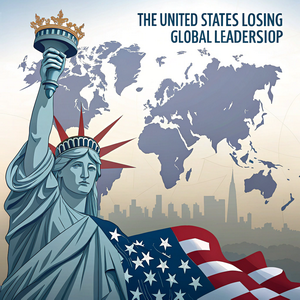
Are the United States of America Fading from History?
It increasingly seems that the answer to this question is likely to be yes. Not long ago, the world was living under Pax Americana, yet today, the United States is rapidly losing its global leadership.
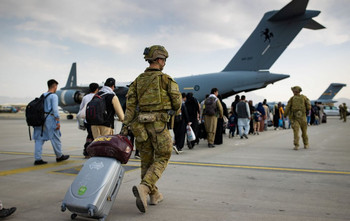
The first signs of a deep systemic crisis became apparent when American troops withdrew hastily—some would say fled—from Afghanistan, abandoning their former allies to the mercy of the Taliban. This was followed by Russia’s full-scale invasion of Ukraine. The Democratic administration, led by Joe Biden, either failed or chose not to stop Vladimir Putin, effectively allowing him to wage a brutal and bloody war against one of America’s key allies in Europe—Ukraine.
The military and financial aid provided by the United States, while significant, was insufficient for a decisive victory, though it did help slow Russia’s advances and prevent further territorial gains.
For some time, there was hope that the return of Republicans to power and the election of Donald Trump as President of the United States would alter the situation on the battlefield and force Russia to halt its aggression. Trump’s campaign rhetoric and his actions during his first term suggested such a possibility.
However, almost immediately after assuming office, Trump began making illogical moves. His words and actions did not align with the promises he had made to his voters. Instead of correcting Biden’s mistakes and restoring America’s international authority, Trump has further discredited and weakened the country. In fact, his policies appear to be a continuation of Biden’s, though executed in a cruder and more cynical manner.
There is little point in revisiting the unfounded accusations Trump has directed at Canada, Mexico, Panama, Denmark, and Palestine, as they are already widely known. His actions resemble the antics of a street thug rather than the measured and rational stance of a leader of a great nation.
When it comes to Ukraine, Trump’s behaviour appears particularly disgraceful and cynical. Rather than helping Ukraine counter the Russian dictator, Trump has befriended Putin and blamed Ukraine for the war.
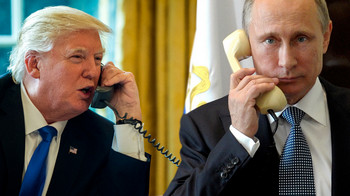
There are various theories as to why the American president appears to be siding with Russia. Two are particularly popular. Some experts believe that Russia has simply bribed Trump, taking advantage of his well-known obsession with money. Others suggest that Trump was recruited by the Soviet KGB (Committee for State Security of the USSR) years ago and is now serving Russian interests.
Ultimately, it does not matter which theory is more accurate—the fact remains that Trump has conspired with Putin, undermining trust in the United States as the leader of the democratic world. Domestically, his actions are damaging the Republican Party, the very force that brought him to power. In the near future, this is likely to provide an opportunity for the Democratic Party to regain political control. However, despite all the negatives associated with the scandalous behaviour of the current U.S. President, there are also some positive aspects.
European leaders—especially those of France, Germany, and the UK—have reacted appropriately to his aggressive statements and actions towards Ukraine and its president, Volodymyr Zelensky.
Recently, French President Emmanuel Macron declared: “We stand with Ukraine and take full responsibility for ensuring peace and security in Europe. This is a fundamental interest of France, and I am its guarantor.”
It is now evident that the political elites of the EU have finally recognised the dangers posed by America’s decline in global leadership. They understand that, in the current situation, Europe must rely on its own strength.
As a result, it is likely that the EU will soon begin developing its own European security system, tailored to new geopolitical realities and emerging global threats. In this context, Ukraine is expected to play a leading role, as it currently possesses the most battle-hardened and capable army on the continent.
Oleh Bereziuk
Institute for Global Politics