Energy Collapse in Kaliningrad Region: Reflections on a “Bright Future”
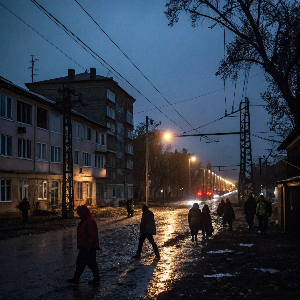
Over the past 80 years, Kaliningrad region of the Russian Federation — a former historical part of Europe — has turned into a Russian military base. And today it has also become Russia’s base for hybrid warfare operations against neighboring European countries and in the Baltic Sea. With the beginning of Russia’s full-scale invasion of Ukraine and the isolation of the region, the financial situation of a significant part of the population there has deteriorated significantly, and now that part of the population sees no positive economic prospects, and this makes them think about their future. Moreover, an impending energy collapse could become a catalyst for serious discontent among the region’s population.
As you know, in early February 2025, the Baltic States withdrew from the BRELL regional power system, which united the power grids of Belarus, Russia, Estonia, Latvia, and Lithuania. Thus, Kaliningrad region became isolated from the united energy system of Russia and Belarus. In addition, the 10-year agreement between the Lithuanian gas transportation operator and Russian Gazprom on the transit of 2.5 billion cubic meters of natural gas annually through Lithuania to Kaliningrad expires this year.
As for Lithuania, it is no longer dependent on Russian gas imports: in April 2022, its purchases were completely stopped. In March 2025, President of Lithuania G. Nausėda stated that the issue of Russian gas transit is not a bilateral one and that the decision to extend the contract should be made at the level of the European Union. Thus, despite the obvious commercial losses for transit, Vilnius demonstrates its loyalty to the consolidated all-European position on Russia’s aggression against Ukraine.
What can Russia do in this case? In 2019, it resorted to an alternative way of supplying gas to its enclave. Liquefied natural gas began to be supplied via the Baltic Sea with the help of Russia’s only floating mobile regasification unit (MRU) for liquefied natural gas regasification and storage, “Marshal Vasilevsky”. But as it turned out, the capacity of the existing underground storage facilities in Kaliningrad region is not enough to create a strategic gas reserve. In addition, in case of any emergency situations with the MRU (the vessel is used extremely actively, transporting liquefied gas to the Mediterranean and Southeast Asia), gas supplies will be completely cut off for an indefinite period. Russia will simply not be able to repair the unit, built at the South Korean shipyard Hyundai Heavy Industries, on its own. And to do so in South Korea or by the Finnish company Wärtsilä under the tough sanctions imposed on Russia, is at least a questionable option.
Therefore, the consequences of energy isolation for Kaliningrad region are not difficult to predict. After the start of full-scale aggression, Russia clearly demonstrated this on the example of Ukraine, having organized an almost complete blackout. But the difference is that the international community rushed to Ukraine’s aid. Therefore, the consequences of the Russian attacks were promptly eliminated, alternative supply routes and additional production capacities were created. But will such a situation be repeated in case of a disruption of the heating season in Kaliningrad? It is highly doubtful.
Due to the international sanctions imposed on Russia in connection with its aggression against Ukraine, food, consumer goods, electronics and cars have stopped being legally imported from neighboring European countries to Kaliningrad region. The sanctions have already had a significant impact on the local economy, business, job creation, prices and wages. And the energy crisis into which the region is diving, will also make the residents of the region think seriously about their “bright future”.
Oleh Makhno,
Institute for Global Politics