NATO Summit in The Hague. Positive and Negative for Ukraine
NATO’s leadership demonstrates its firm intention to continue and strengthen support for Ukraine. A decision on this issue will be made at the Alliance’s summit in The Hague in June;
it is also planned to adopt a number of other initiatives that will help strengthen NATO as the main support of our country in the military confrontation with Russia;
these initiatives relate to the main priorities of the Alliance, which include ensuring adequate funding for its defense needs, maintaining nuclear parity with Russia and building up NATO’s Armed Forces;
at the same time, certain problems in NATO’s work arise from D. Trump’s position, who is trying to “avoid excessive aggravation of relations with Russia”. This topic may be raised at the NATO summit.
Russia’s continuation of the war against Ukraine, even in the absence of decisive successes on the front line, keeps the topic of NATO’s support for our country and its Euro-Atlantic integration highly relevant.
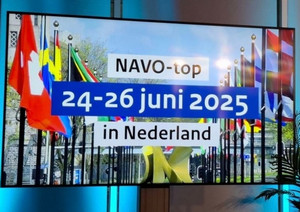
Therefore, the NATO Summit on June 24-25 in The Hague will be of great importance. The NATO leadership’s meeting with the leaders of the Alliance member states is intended to answer a number of important questions, primarily those related to: ensuring the necessary funding for the Organization’s defense needs; clarifying the priorities in its activities and ways to further strengthen it; forms and amounts of assistance to Ukraine.
Let’s start with NATO’s support for Ukraine, which is the most important for our country. Thus, during the previous events held within the framework of the preparation of the NATO summit, the role and importance of Ukraine as one of the main forces in deterring Russia’s military expansion to the west was confirmed. According to NATO experts, today Ukraine is at the forefront of Russia’s aggression, diverting most of its military resources and preventing it from using them against Europe. That is why Ukraine’s defense capability is one of the main guarantees of Euro-Atlantic security.
In accordance with this approach, the NATO leadership plans to continue to consistently increase the volume of military-technical and other assistance to Ukraine, which is considered an investment in the security of the Alliance itself. In particular, the NATO summit in The Hague is expected to decide on an additional $20 billion for Ukraine’s defense needs. In 2024, the amount of such assistance amounted to $40 billion, and in 2025 — to $50 billion. These funds will be included in the defense expenditures of NATO member states and spent on the purchase of weapons for Ukraine and investments in its defense production. At the same time, relevant technologies will be transferred. This will allow Ukraine to produce the weapons it needs, including long-range systems capable of striking targets deep inside Russia without the Western countries’ permission. Although most of the weapons received by our country already have such permits.
At the same time, NATO’s leadership and the leaders of most of the Alliance’s member states positively perceive Ukraine’s Euro-Atlantic integration. According to NATO Secretary General M. Rutte on the eve of the Alliance’s summit, Ukraine deserves to be the 33rd member of the Alliance. Therefore, he will fully support the process of its accession. However, US President D. Trump and his administration do not agree to Ukraine’s full membership in NATO. In fact, he concedes to Russia’s demands that the Alliance should give up its further enlargement with the participation of the countries of the former Soviet Union and give appropriate written guarantees in this regard. At the same time, D. Trump justifies his position by the need to create favorable conditions for negotiations on Moscow’s ending its war against Ukraine. Ukraine’s possible accession to NATO is also denied by Hungary and Slovakia, with their openly pro-Russian policies, including in the North Atlantic Alliance.
Most of NATO’s other priorities and action plans also meet Ukraine’s interests, although their implementation is again complicated by the positions of the United States, Hungary, and Slovakia.
Thus, in preparation for the NATO summit, NATO’s leadership and the leaders of its member states have confirmed their common perception of Russia as the main adversary of the Alliance. This fact will be discussed and most likely confirmed at the NATO Summit. In view of this, the Alliance’s main task will continue to be to deter Moscow’s aggressive course and prepare to repulse possible aggression from it. According to NATO Secretary General M. Rutte, this requires the Alliance to be fully operational by increasing the number of troops, improving their technical equipment and skills in its use, and ensuring quality logistics. That is, the need to counter Russia remains a key factor in NATO’s consolidation, including on the Ukrainian issue. The US leadership shares these views on Russia, but tries to avoid harsh criticism of it.
As in the previous case, Washington’s position is justified by the need to create favorable conditions for peace talks and to avoid excessive aggravation of relations with Russia, which would increase the level of threats to NATO. This is also the point of view of Hungary and Slovakia.
Despite such flirtations with Russia, the United States and D. Trump personally not only support all measures to strengthen NATO, but also initiate them. According to D. Trump’s statement during his meeting with Federal Chancellor of Germany F. Merz on June 5, 2017 in Washington, the United States does not intend to leave the Alliance and withdraw its military contingent from Germany. Therefore, the United States will continue to take an active part in ensuring the security of Europe. And the new European security system will in fact remain part of the Euro-Atlantic security architecture. By the way, D. Trump in no way denies Ukraine’s participation in it, although it will be quite close to the topic of our membership in NATO. According to European experts, this position of Washington is strategically important for Europe, which would not be able to confront Russia and repel a possible attack from it on its own, without the United States.
Also, in the course of preparing for the Summit, the issue of NATO member states increasing their defense spending was fundamentally resolved, which will ensure reliable financing of the Alliance’s defense sector. Thus, a preliminary agreement was reached to increase this figure to 5 % of GDP. Of this, 3.5 % should be core defense spending; 1.5 % should be investments in related defense and security spheres (in particular, infrastructure, resilience, and cybersecurity) and assistance to Ukraine.
Besides, the Defense Investment Plan was preliminarily approved, which is supposed to increase NATO’’s military capabilities and clearly allocate funds for it. The plan is organically combined with the EU’s new investment program – the Security Action for Europe (SAFE). Together, they create a financial framework for strengthening Euro-Atlantic and European security.
The plan and proposals for increased defense spending by NATO member states will be submitted to the NATO Summit for final approval. It is expected that a positive decision will be made. This will not only create favorable conditions for the implementation of NATO’s military programs, but will also restore harmony within the Organization. This issue was one of the main disagreements within the Alliance, as a number of NATO members were reluctant to increase defense spending, explaining that it was unlikely that a war would break out in Europe and that their countries were facing a difficult economic situation. Moreover, they did not take into account Russia’s attack on Ukraine in 2014, as it was considered a distant event. As a result, the decision of the Wales NATO Summit in September of that year to increase defense spending by the Alliance members to 2 % of GDP was practically not implemented. This situation changed during D. Trump’s first presidential cadence in 2017–2021, when he put forward tough demands to European countries to unconditionally implement the decision. This complicated relations between the United States and Europe, but European NATO members began to gradually increase their military spending.
With the outbreak of Russia’s full-scale war against Ukraine in 2022, the United States increased defense spending to almost 5 % of GDP and called on other NATO members to do the same. However, under President Biden, this proposal caused a limited reaction in Europe. Given the obvious increase in threats to European security from Moscow, a number of European countries brought their figures to about 3 %, but some members left them at the same level.
After his return to power in 2025, D. Trump, like the previous time, chose a tough stance on the financial issue and began to put pressure on Europe with elements of blackmail. One of the components of such actions was his declarations of intent to reduce US participation in guaranteeing Europe’s security, as Europe is unwilling to pay for the necessary and actually shifts such costs to America. Later, he conditioned his participation in the NATO summit in The Hague in June on the agreement of European countries to increase their defense spending. These circumstances have created a danger of undermining transatlantic unity, which has become especially dangerous in the context of Moscow’s transition to openly implementing its neo-imperial policy by military means. This problem has now been virtually eliminated.
In the context of the escalating confrontation between Russia and the West and the real threat of a military clash, the leadership of the North Atlantic Alliance pays special attention to maintaining the nuclear missile parity of the parties. At the NATO Summit in The Hague, a meeting of the NATO Nuclear Planning Group is scheduled. The leaders of the organization will discuss the progress and consequences of implementing the decisions taken in response to changes in Russia’s nuclear doctrine in November 2024, as well as the division of nuclear deterrence functions between the United States and the United Kingdom and France as part of building a new European security system.
According to NATO Secretary General M. Rutte, nuclear deterrence remains the cornerstone of the Alliance’s security. In view of this, all possible efforts will be made to increase its power and effectiveness in order to preserve peace and prevent aggression.
At the same time, the NATO Summit should consider plans to increase the number of NATO Allied Forces and the armed forces of the Organization’s members. According to the Alliance’s Command, Russia’s measures to build up its armed forces during the war against Ukraine and the escalation of confrontation with the West have already allowed it to gain an advantage over NATO in Europe. This trend is becoming particularly dangerous due to the possibility of the United States’ reorienting part of its efforts and resources to contain China in the Asia-Pacific Region.
In view of the above, it is concluded that it is necessary to strengthen NATO Allied Forces and their national components. In particular, according to Minister of Defence of the FRG B. Pistorius, in order to effectively fulfill NATO’s tasks of deterring Russia and repulsing possible aggression from it, the number of the German Armed Forces should be increased by at least 50-60 thousand military servicemen.
Given the experience of Russia’s war against Ukraine, it is also planned to strengthen NATO’s air and missile defense in the European Theater. Taking into account the capabilities of the Russian Armed Forces and the real state of air and missile defense of NATO member states, it is considered necessary to increase their capacity at least five times.
Thus, the NATO Summit in The Hague in June this year will be quite ambiguous for Ukraine.
Thus, the Summit participants’ expected decision to increase assistance to our country will be positive for Ukraine. In addition, an agreement is likely to be reached on increasing defense spending by NATO member states, taking appropriate measures to maintain the Alliance’s nuclear missile parity with Russia, and building up NATO’s Allied Forces and their national components. This will help to strengthen the Alliance, which is Ukraine’s main support. In any case, the topic of Russia’s war against Ukraine will be raised, which creates the basis for NATO’s consolidation, including on the Ukrainian issue.
At the same time, negative for Ukraine will be the growing disagreements within NATO on some important issues concerning its interests, which may be reflected in the summit and its results. As noted above, the reason for this is the policy of US President D. Trump, who, in fact, makes concessions to Moscow. Under these circumstances, the final declaration of the Summit will not include harsh language against Russia, nor will it confirm NATO’s openness to Ukraine.
Moreover, the discussion of such issues could lead to sharp controversy or even scandal. This is the reason why the Summit program was shortened from three to one working day. The NATO leadership has also given up all joint meetings with partners. Not only will there be no NATO-Ukraine Council in The Hague, but there will be no other similar events either, including meetings with the Prime Ministers of Japan and South Korea.
According to European experts, in such a situation, Ukraine should choose a balanced position. In their view, it is more important for Ukraine to have NATO’s decisions to assist it than to have regular declarations of support for its Euro-Atlantic integration prospects without any real plans to implement them. The same applies to Russia. Even if the Alliance does not demonstrate a tough attitude to it, it will still pursue a policy of countering its aggressive course.
Yurii Ilchenko,
Institute for Global Politics