Priorities of Denmark’s Presidency of the European Union
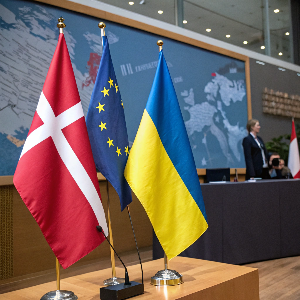
On July 1, Denmark took over the EU Presidency from Poland. According to agreements between the two countries, it will continue its course, including with regard to Ukraine.
Denmark, like Poland, supports Ukraine’s membership in the European Union and NATO. Therefore, its presidency of the EU is positive for our country, as it is in line with Ukrainian interests;
according to Denmark’s priorities, the main areas of its activity will be strengthening the EU, supporting Ukraine, improving the efficiency of European funds, and resolving Europe’s energy problems;
In general, Denmark’s activities as EU president will contribute to increasing Ukraine’s capabilities in its confrontation with Russia, deepening its European integration process, and developing Ukraine’s economy.
The previous article discussed the main directions of the European Union’s policy in the context of Ukraine’s interests. The EU’s governing bodies implement these policies in close cooperation with the Organization’s members. And here, the attitude to Ukraine of the countries holding the EU presidency, which change every six months, is of great importance. Although the presidencies do not determine the EU’s course, they influence the processes of its implementation, including with regard to Ukraine.
Therefore, for Ukraine, Denmark’s presidency of the European Union since July 1 of this year is positive in nature. Like Poland, which previously held the EU presidency, Denmark is one of Ukraine’s greatest supporters in the European Union. According to preliminary Polish-Danish agreements, Denmark continues to adhere to Poland’s policy, including comprehensive support for Ukraine.
Denmark’s position is determined by Ukraine’s role as the front line in Russia’s military expansion in Europe. Copenhagen believes that Moscow’s aggressive course directly threatens the security of Europe and the Baltic region as its integral part. Therefore, Denmark considers Ukraine’s security to be the key to the security of the entire European Union.
That is why Denmark condemns Russia’s war against Ukraine and advocates for its unconditional cessation; supports Ukraine’s independence, sovereignty, and territorial integrity; promotes the processes of European and Euro-Atlantic integration of our state; and assists Ukraine in strengthening its defense capabilities. All this is done both in various international formats and at the bilateral level.
Thus, Denmark participates in all EU and NATO programs related to Ukraine and advocates for Ukraine’s full membership in these Organizations. Denmark’s leadership believes that Ukraine’s accession to the European Union and the North Atlantic Alliance will help in their confrontation with the Russian Federation.
As part of this practical approach, Copenhagen became one of the initiators and partners of the Ukraine2EU program, launched in January 2025, which is considered a joint project of the EU, Denmark, Lithuania, and Sweden to assist Ukraine in its accession to the European Union. The program includes a set of measures to support the actions of Ukrainian authorities in the implementation of reforms. The main ones are the Office of the Deputy Prime Minister for European and Euro-Atlantic Integration of Ukraine, the Secretariat of the Verkhovna Rada and the Committee on European Integration, as well as the Ministry of Justice. The program is designed for 2025–2027 and is implemented by the Central Project Management Agency of Lithuania. A joint fund of EUR 16.7 million has been set up to finance the program.
Besides, Denmark, together with Nordic Countries and Baltic States, supported the Joint Declaration of the G7 countries and the EU on the start of negotiations on security guarantees for Ukraine. The Declaration was adopted on the sidelines of the NATO Summit in Vilnius in July 2023. Denmark’s joining the Declaration, which is actually an agreement, formalizes its bilateral and multilateral security commitments to Ukraine.
Denmark is also one of Ukraine’s most active partners in the security sphere at the bilateral level. In particular, in 2022, Denmark’s Government provided Ukraine with more than EUR 560 million in military aid. And in 2023, a Danish fund to support Ukraine was created for a total amount of EUR 8.5 billion. The funds are calculated for the period until 2028.
To date, Denmark has already provided Ukraine with 25 defense aid packages using these funds. They include artillery systems, F-16 aircrafts, ammunition, and other equipment. Besides, investments are being made in Ukraine’s defense industry. Thanks to cooperation with Denmark, a special model for the development of Ukraine’s defense industry has been created, which allows other countries to unite around investments in weapons production in our country. This primarily concerns artillery systems, missiles, and long-range drones.
In February 2024, the partnership between Ukraine and Denmark was formalized by an Agreement on Cooperation in Security and Long-Term Support. The document condemns Russia’s war against Ukraine, confirms Denmark’s support for the independence, sovereignty, and territorial integrity of our state, and determines areas of cooperation between the parties in the field of security.
Under the Agreement, Denmark undertakes to assist Ukraine in multilateral formats and at the bilateral level on issues such as: strengthening military capabilities, resilience, and deterrence of Russia’s renewed aggression; European and Euro-Atlantic integration; participation in meeting military needs and building up the Ukrainian Army; development of the defense industry; exchange of intelligence information; cyber defense and countering hostile disinformation; strengthening sanctions against Russia and holding it accountable.
A separate area is Denmark’s assistance in restoring and increasing Ukraine’s resilience. Therefore, work in this area will continue in all directions. At the same time, Denmark, as co-leader of Ukraine’s Peace Formula working group on energy security, is focusing its attention on this issue. In particular, at the end of last year, Denmark allocated EUR 6 million to restore Ukraine’s energy infrastructure damaged by Russian attacks.
In 2024–2025, the above-mentioned Agreement was supplemented by other documents regulating cooperation between the parties in the economic sphere. The main ones were:
- Memorandum of Understanding on Long-Term Cooperation and Reconstruction of Ukraine (April 2024). It provides for the Denmark’s government to allocate approximately EUR 40 million to support the private sector involved in the reconstruction of Ukraine, as well as EUR 380 million to support critical infrastructure using renewable energy;
- Denmark’s Transition Program for Ukraine for 2025–2028 (February 2025), which is a comprehensive approach to Ukraine’s recovery. It combines humanitarian aid, economic development, green transformation, and support for democratic reforms, as well as promoting Ukraine’s integration into the EU and its sustainable development in the long term;
- The Danish-Ukrainian Cooperation Strategy for 2025–2028 (March 2025). It consolidates a comprehensive approach to Ukraine’s recovery, including humanitarian aid, economic development, green transformation, and support for democratic reforms with the aim of integrating Ukraine into the EU.
During its EU Presidency, Denmark intends to continue its efforts in all of the above areas, which will be one of its main priorities. These intentions were confirmed by the country’s Prime Minister M. Frederiksen in June this year. At this, she pointed out Ukraine’s significant progress in meeting the criteria for membership in the European Union.
In view of the above, during its presidency of the EU Council, Denmark will focus on creating conditions for opening all clusters of negotiations on Ukraine’s accession to the European Union, which are planned at this stage. It will promote the development of EU legislation to simplify the procedure for Ukrainian goods to access the European market and will assist Ukraine in preparing regulations to further open its market to European Union countries.
Denmark’s leadership has also expressed its intention to use all available instruments of influence to persuade Hungary to change its attitude to Ukraine and stop blocking the process of its European integration. According to a number of reports, Denmark will intensify its diplomatic efforts with Germany, which is its partner and, at the same time, has the ability to exert pressure on Hungary in the financial and economic sphere.
Besides, Denmark intends to use its presidency of the EU Council to speed up the implementation of the European Union’s programs to enhance Ukraine’s defense capabilities. This issue is one of Denmark’s strategic priorities, and it plans to focus its efforts on overcoming obstacles to the implementation of EU decisions already adopted regarding our country. In particular, this concerns the new EU investment program — Security Action for Europe (SAFE), which provides for the allocation of EUR 150 billion for the development of defense-industrial complexes of EU member states and partners, including Ukraine.
Other priorities of Denmark’s presidency of the EU Council, such as increasing the efficiency of European funds and reducing energy prices, are also in line with Ukraine’s interests.
During Denmark’s presidency of the EU Council, the European Union leadership will begin work on the Organization’s next multiannual financial program for 2028-2034. Previously, Copenhagen has traditionally advocated the need to adhere to a prudent financial policy, namely, strict economy of European funds. The Netherlands, Austria, and Sweden also took similar positions. In particular, they resisted the EU leadership’s plans to allocate large-scale subsidies to European countries affected by the COVID epidemic.
Copenhagen changed its position after Russia’s full-scale invasion of Ukraine. According to Denmark’s Prime Minister Mette Frederiksen, in the face of growing threats from Russia, she is ready to give up her previous principles and agree to increased spending in the interests of strengthening European defense and increasing support for Ukraine. In the opinion of the head of the Danish Government, additional funds should be directed primarily to the purchase of weapons and financing of the defense industry. At the same time, Denmark will continue to maintain a tough stance on other expenditure items.
Along with this, Denmark’s Government, presiding over the EU Council, plans to intensify its participation in resolving the European Union’s problems in the energy sector. The main problem is high energy prices, which are significantly higher than in the USA and China. As a result, the EU’s economic competitiveness has declined compared to the USA and China, while prices for goods and services in Europe have risen. All of this fully applies to Denmark and other northern European countries, which are in a worse position than other EU members due to the region’s harsh climate.
Environmental organizations also have a significant influence on Denmark’s energy policy. In particular, under their pressure, in 2020, the Danish Government decided to reduce oil and gas production, which further increased the country’s dependence on imports.
In this situation, the Danish leadership fully supports the EU’s efforts to improve the efficiency of European energy by: speeding up the process of phasing out oil, gas, and coal and transitioning to renewable energy sources; expanding the use of energy-saving technologies; optimizing the European energy market and reducing dependence on imports, first of all from Russia.
As part of the practical implementation of these plans, the Danish Government is taking a wide range of measures within the country and proposing that they be applied throughout the European Union. The main idea is to encourage businesses and people to switch to renewable energy sources and use energy-saving tech by giving targeted loans for these projects and putting taxes on using oil, gas, and coal for heating. In addition, Denmark is actively involved in various EU initiatives to integrate European energy markets and reduce dependence on Russian energy carriers.
Given the close ties between Ukraine’s energy sector and the European Union’s energy system, improving its efficiency will contribute to strengthening our country’s energy security.
A separate area of Denmark’s activity during its presidency of the EU Council will be to strengthen fighting illegal migration and its overall restriction. At the same time, it has differences with the European Union in this sphere. Denmark adheres to a strict migration policy that does not comply with the principles of the European Union’s migration policy. In particular, back in 2021, Denmark passed a law that effectively deprives refugees of the opportunity to seek asylum in the country. According to the law, they are deported outside Europe. This decision contradicts the EU’s migration policy and has been condemned by the European Union, which provides shelter to refugees and distributes them among European countries. At the same time, Denmark has accepted and continues to accept refugees from Ukraine and provide them with temporary protection.
Thus, Denmark’s presidency of the EU Council is positive for Ukraine and in line with its interests. It will continue Poland’s policy, as agreed between the two countries.
In line with this approach and Denmark’s own interests, its main priorities as EU president will be to strengthen the European Union by increasing support for Ukraine, improving the efficiency of European funds, and addressing Europe’s energy problems.
As a result, Ukraine will have greater opportunities to meet its arms needs, speed up its European integration process, and enhance its energy security. At the same time, Denmark is an important partner for Ukraine at the bilateral level and within other international organizations and groups.
Yurii Ilchenko,
Institute of Global Politics