Russia’s War Against Ukraine in the Context of the Cold War Between the USA and China
Many experts believe that Russia’s war against Ukraine is part of a new global Cold War involving the USA and China. At this, China is using it to strengthen its position in its confrontation with the West. As in the previous Cold War, the participants in the new global confrontation are taking a series of measures to prepare for a possible military clash. This increases the threat of a Third World War, which could be a continuation of the Russian-Ukrainian war or a consequence of armed incidents between the USA and China, or between their allies and partners. In this situation, peace talks with Russia are considered futile, as the latter acts on the instructions and with the support of China. It is with the PRC that the USA is conducting a dialogue on restoring peace in Ukraine.
 Russia’s war against Ukraine, as the quintessence of the confrontation between the totalitarian and democratic worlds, objectively affects most leading and ordinary countries. The question arises: can this war be considered a harbinger of World War III? The answer is important if we are to objectively determine the role of the Russian-Ukrainian war in the world and the prospects for its cessation. Conclusions on these issues may differ from the established views that currently dominate the expert community. But it is precisely the consideration of different alternatives that makes it possible to verify the correctness of our view of the world and specific events. So, let’s look at Russia’s war against Ukraine from this angle.
First, we need to figure out what a world war is. According to classic military science, it’s an armed conflict between the world’s leading powers, which form two or more military camps. Those wars cover a significant part of the world, involve a large number of people, and are characterized by their global scale and massive casualties and destruction. Usually, this term refers to World War I (1914–1918) and World War II (1939–1945). The causes of each of those wars were a critical deterioration in relations between the leading centers of power at the time, which led to military conflict.
The pre-war periods were similar: intensification of contradictions between the parties to the future war; creation of military alliances; increase in military spending; conversion of countries’ economies to military production and increase in arms production; the build-up of armed forces and the deployment of corresponding troop formations in the main directions and areas of future combat operations.
The same applies to the causes for starting world wars, which were armed conflicts involving the interests of all parties. At this, they were caused by inter-state contradictions. In the first case, the reason was the armed conflict between Austria-Hungary and Serbia, and in the next — Germany’s attack on Poland.
 All of the above-mentioned elements, adjusted for the current situation, can be observed today. Therefore, considering what happened during the First and Second World Wars and the Cold War between the USSR and the USA and Europe, we can draw analogies with today and make appropriate conclusions. Thus, the main centers of power during World War I were Great Britain, France, Germany, Austria-Hungary, and Russia. At the end of the war, they were joined by the USA, which had previously held isolationist positions. It was they who created two opposing coalitions, one of which included Great Britain, France, Russia, and later the United States, and the other — Germany and Austria-Hungary. Italy, Portugal, Greece, Serbia, Montenegro, and Japan also sided with the former, while Turkey and Bulgaria sided with the latter.
The configuration of allies and opponents during World War II was fundamentally similar, with a few exceptions. The main participants in the first group were the United States, Great Britain, France, and the Soviet Union, which was formed on the territory of Tsarist Russia. The second group consisted mainly of Germany, Austria, Italy, and Japan. The former were supported by Canada, Australia, India, and China, while the latter group was supported by Bulgaria, Romania, Hungary, and Slovakia.
Today’s balance of power is completely different in nature. Currently, the leading global powers are the USA and China, which have sharp military-political and trade-economic contradictions. It is between them that the global confrontation is taking place. On the side of the USA there are the European Union, Canada, Japan, Australia, South Korea, and Ukraine. All of them can be called the Democratic world. Siding with the PRC are Russia, Iran, and North Korea, which form the basis of the totalitarian world.
Russia considers itself a separate center of power, on a par with the USA and the PRC, but neither Washington nor Beijing agree with such ambitious definitions. Moreover, the Russian Federation is effectively a satellite of China and is rapidly turning into a kind of province. Therefore, the confrontation between Russia and the West can be considered part of the overall confrontation between China and the Democratic world. Within this model, China focuses its efforts on countering the United States in the world and its allies in the Asia-Pacific region (APR). It assigns Russia the role of an instrument of nuclear deterrence against the USA and pressure on Europe. This takes into account the approximate equality of the nuclear capabilities of the Russian Federation and the USA, as well as Russia’s desire to regain control over the post-Soviet space and achieve dominance in Europe.
Taking the above into consideration, it can be argued that the Russian-Ukrainian war is part of Beijing’s policy and is fully in line with its interests. By supporting Russia and its actions against Ukraine and the West, China is strengthening own position in the confrontation with the USA, Europe, and their allies in the Asia-Pacific region, but without resorting to open confrontation with them.
 Nevertheless, this situation could become a basis for military clashes between the USA and China, Russia and Europe (NATO and the EU), with other countries subsequently becoming involved, which would become World War III. In view of this, all of them are preparing for such prospects according to the usual pattern, similar to that before the First and Second World Wars, as well as during the latest Cold War.
Thus, the USA and China have recognized that they are competitors, and in fact adversaries, and have created or modernized military-political blocs to counter each other. The USA remains on the side of the North Atlantic Alliance, which is supplemented by bilateral agreements with partner countries. Relations between China and its satellites are regulated by bilateral treaties and agreements without formalizing them as official alliances, but they allow for cooperation, including in the military sphere.
With competition between the USA and China intensifying, which is in fact a confrontation between the two sides, they and their allies and partners are increasing their military spending, building up their armed forces, deploying troops and fleets in threatening areas, and scaling up arms production. As part of this approach, the USA’s military spending will increase to $1 trillion in 2025, up from $886 billion last year. Most of these funds will be allocated to the largest US Armed Forces reconstruction program since the Cold War. These intentions are explained by the need to increase the USA’s ability to respond adequately to growing threats from China. At this, the experience of Russia’s war against Ukraine is taken into consideration.
The main efforts are focused on: strengthening the USA’s nuclear missile potential; improving missile defense and air defense systems, including under the “Golden Dome for America” program; improving high-precision long-range firing capabilities; mass equipping of troops with unmanned aerial vehicles for various purposes; adopting new cyber systems and electronic warfare capabilities; improving capabilities for conducting combat operations in space.
Prior to this, a major upgrade of US Armed Forces weapons was carried out during the height of the Cold War between the USSR and America/Europe in the late 1970s and early 1980s. At that time, M1 Abrams tanks, M2/M3 Bradley fighting vehicles, AH-64 Apache attack helicopters, UH-60 Black Hawk helicopters, and Patriot air defense systems were adopted. They were also supplied to American allies and partners.
NATO is taking similar measures. As is well known, at the North Atlantic Alliance Summit in June this year, a decision was made to increase defense spending by Alliance member countries to 5 % of GDP. This is three times more than before — 1.5–2 % of GDP — and is an unprecedentedly high level for Western countries in peacetime.
At the same time, at the meeting of the European Council held immediately after the NATO summit, a large-scale program for the rearmament of Europe worth about $170 billion was approved. These funds are to be used to purchase weapons and restore and develop the European defense industry, which was significantly reduced during the period of temporary easing of international tensions after the Cold War.
Since 2023, China has also begun to actively increase its military capabilities. Its military spending is increasing by more than 7 % per year and reached about $250 billion in 2025. However, according to various estimates, they may be significantly higher than officially stated and amount to $1 trillion. These funds are being used to implement a large-scale program to modernize the People’s Liberation Army (armed forces) of the PRC in all spheres, which is scheduled to run until 2027.
Russia’s military spending is growing at an even faster pace, which is related to both its war against Ukraine and preparations for a possible military confrontation with NATO and the USA. In 2024, Russia’s total military spending increased by 42 % to 13.1 trillion rubles, equivalent to $460 billion in purchasing power parity. In 2025, they are expected to increase by another 14 % to the equivalent of $550 billion. This represents about 7 % of GDP and 40 % of the country’s budget expenditures, although in reality the figures may be much higher.
The leadership of the Russian Federation is currently systematically increasing the size of the country’s Armed Forces. In 2023, this figure was increased by 170,000 to 2.2 million, of which 1.32 million were military personnel. And in 2024, the number of the country’s Armed Forces increased by another 200,000 people — to 2.4 million, including 1.5 million military personnel. As a result, the number of Russian troops on the front lines is increasing, and new formations and units of the Russian Armed Forces are being formed on Russia’s borders with Poland, the Baltic states, and Finland.
Russia’s military-industrial complex has been effectively put on a wartime footing, and other related sectors of Russian industry have been partially mobilized. This has enabled Moscow to increase its production of weapons and military equipment, first of all missiles, unmanned aerial vehicles, and ammunition. Russia is being assisted in this endeavor by China, Iran, and North Korea, which are supplying it with dual-use goods, UAVs and components for them, shells, and some types of missiles.
Against this background, the USA and China are building up their naval and air forces in the Asia-Pacific Region. In turn, NATO and Russia are deploying additional troops in the Baltic and Arctic regions.
 Such activities by the USA and China, as well as their allies and partners, reflect the escalation of contradictions between them into a new Cold War, which could turn into a military conflict in the form of World War III. It can be said that this characteristic process is already becoming automatic. Thus, each step on one side provokes a similar response from the other, which increases the tension in their relations. At the same time, the outbreak of a full-scale military conflict between America and China, involving other countries, is not inevitable. Both Washington and Beijing are trying to avoid a critical development of events and prefer a political solution to the problems arising in their relations. Evidence of this is the progress made in negotiations between the USA and China on ending the trade war between them.
However, the desire of the USA and China to maintain peace does not guarantee that they will be able to avoid a military conflict that could escalate into World War III. This is mainly due to their short-sighted actions. In particular, according to NATO Secretary General Mark Rutte, China could push Russia to attack the Baltic states, which would focus the attention of the USA and NATO on the war in Europe and give Beijing the opportunity to regain control over Taiwan.
However, most experts believe that the USA and its allies in the Asia-Pacific region will in any case rush to Taiwan’s aid, leading to military confrontation with China. Combined with the armed conflict in Europe, this is highly likely to trigger World War III.
Besides, armed incidents between the USA and NATO on the one hand, and China and Russia on the other, could provoke such a war. These could be caused by: Russian missiles and UAVs falling on the territory of NATO and EU countries bordering Ukraine, which is already happening in reality; one side crossing maritime and air borders with ships, and the other with military aircrafts, which is also happening; detention of civilian ships for inspection, as well as attacks on them; accidental shelling of each other during naval and air exercises; unscheduled flights of medium- and long-range missiles during test and combat training launches, etc.
The parties will try to prevent all this from escalating into war through diplomatic means. But their efforts may prove futile, especially if the incidents have large-scale or high-profile consequences involving significant human casualties or destruction of important military and civilian facilities.
Thus, Russia’s war against Ukraine is part of the Cold War between the USA and China, which could escalate into World War III. At this, Moscow is waging this war with the permission, and possibly at the initiative, of Beijing, which is thus trying to strengthen its position in its confrontation with the USA and, more broadly, with the Western democratic world. In turn, Russia is implementing its plans to regain control over the post-Soviet space and establish its dominance in Europe.
It is under these circumstances that the Russian-Ukrainian war fully meets the interests of Russia and China. Therefore, they will not allow it to end until they achieve their desired goals or until circumstances of a military, political, and economic nature arise that are critical for them. Within the framework of this approach, China will continue to assist Russia in continuing its war against Ukraine, in particular by supporting its economy and providing it with military and technical assistance.
This policy of the PRC reduces the effectiveness of Western sanctions against Russia, which, thanks to this, maintains a tough position in negotiations with Ukraine and issues ultimatums. In this way, Moscow is deliberately dragging out the peace dialogue with the aim of seizing as much Ukrainian territory as possible and forcing Ukraine to surrender. This explains the lack of progress in the peace dialogue.
Therefore, any negotiations with Russia on ending its war against Ukraine will not yield real results without China’s consent. Most likely, US President Donald Trump understands all this and is therefore focusing not on dialogue with Moscow, but on reaching agreement with China on fundamental issues of the USA-China relations, which should also contribute to the restoration of peace in Ukraine. This is especially true given that China is the only effective force that can significantly influence Russia.
Ukraine is unable to influence either the USA or China, which can continue or end the war. However, it can significantly increase its resistance to Russia on the front lines by stepping up efforts to undermine its internal stability. This is made possible by the problems facing the Russian Federation, related to the worsening socio-economic situation in the country, turmoil in the Russian Army, and contradictions among the ruling elite. This will reduce Moscow’s ability to continue the war, even with China’s support.
Yuriy Mykhailenko,
Institute of Global Politics
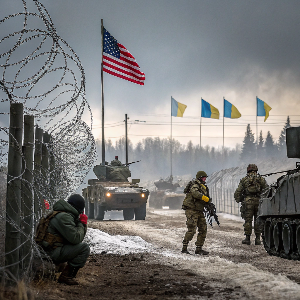
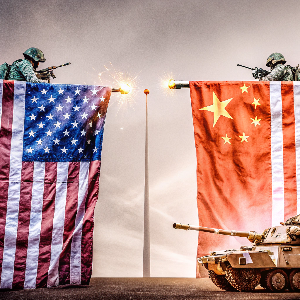
(Images generated by artificial intelligence)