Russia’s “Second Front”: A Hybrid War Against Europe
Since its invasion of Ukraine in February 2022, Russia has been conducting a large-scale campaign of sabotage and hybrid activities against Europe. Its main goals are to destabilize European Union member states, undermine NATO’s credibility, and weaken public support for Ukraine.
According to an August 2025 report by the International Institute for Strategic Studies (IISS [1]), these activities include cyberattacks, arson and infrastructure destruction, and psychological operations aimed at creating a sense of chaos and uncertainty in Western societies.
According to The Economist and the Center for Strategic and International Studies (CSIS [2]), the number of Russian sabotage acts in Europe almost quadrupled in 2023-2024. The scale of these activities can be directly linked to the West’s decisions to supply Ukraine with more and more advanced weapons – the greater the military support for Kyiv, the more intense the attempts to destabilize its European neighborhood.
The Drone in Osiny: Information Chaos As a Tool
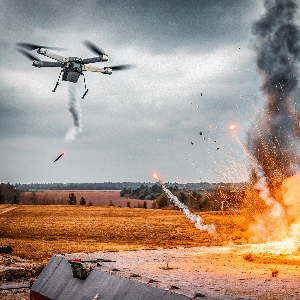
A striking example of Russian hybrid warfare is the incident on the night of August 20, 2025, when a drone exploded near the village of Osiny in Lublin Voivodeship of Poland. The explosion set a cornfield on fire and damaged the windows of several houses, but there were no casualties.
According to the first conflicting reports, it was assumed that it could have been a fragment of an aircraft engine, while the Prosecutor’s Office reported that it was a UAV with an explosive device. For its part, the Air Defense Command stated that no airspace violations had been recorded. Experts pointed out that the drone could have been flying too low to be detected by the relevant radar systems.
Minister of National Defense Vladyslav Kosinyak-Kamysh outlined three possible versions: a Russian UAV that went off course; a drone used to smuggle contraband; and an act of sabotage. There have also been reports of a so-called decoy UAV, which was intended to test air defense systems. Later, the Foreign Ministry Spokesperson confirmed that it was indeed a Russian “Shahed”.
However, the debate over the incident was dominated by political narratives. Even before the investigation was completed, the head of the Defense Ministry called the incident a Russian provocation. The dispute over the interpretation of the incident, fueled by sharp political polarization, showed that the debate was dominated by politics rather than cold-blooded threat analysis.
The lack of consistent messages and quick political interpretation may actually work in favor of the Kremlin, which uses chaos and social unrest as its main tools of psychological warfare.
Critical Infrastructure in the Crosshairs
According to a report by the Foreign Affairs Advisory Board [3], Europe’s energy and water systems still depend on outdated technologies, making them vulnerable to cyberattacks and sabotage. Breakthrough Energy [4] points out that the average age of electrical infrastructure in the EU is about 40 years. In addition, up to 90 % of NATO’s military logistics depends on civilian assets, which significantly increases the vulnerability of the entire system.
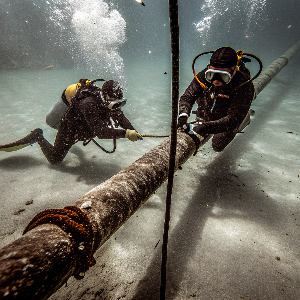
Submarine cables are especially vulnerable, transferring approximately 95 % of global data and financial transactions. Even a seemingly minor incident, such as an anchor dragging on the seabed, can cause billions of euros in damage.

A New Model of Sabotage: Proxies and the “Gig Economy” [5]
After the mass expulsions of Russian intelligence officers in 2022, Russia changed its tactics. Instead of acting through traditional intelligence structures, the Kremlin began to use outsourcing, recruiting foreigners, migrants, and criminal groups through messaging platforms such as Telegram.
According to Europol, Russia is using existing criminal networks in Europe that perform tasks such as monitoring military transportation, sabotage, and vandalism. Such a “dispersed” model makes it difficult to identify the perpetrators and reduces the Kremlin’s operational costs. Importantly, contractors rarely have direct links to Russian government agencies, making it difficult to establish their involvement.
Examples of Russian Operations in the EU
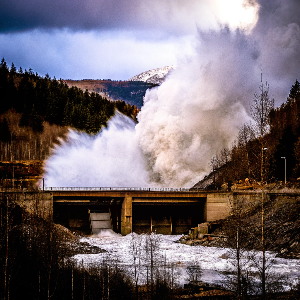
The list of incidents is quite long. In 2024, packages with flammable substances exploded in the centers of the logistics company DHL in Germany and the United Kingdom. A shopping center at 44 Mariwilska Street in Warsaw burned down, and Russian intelligence was involved. In Germany, water was contaminated at NATO bases, and in Norway, pro-Russian hackers hacked into the control system of the Bremer Dam, causing chaos.
In Poland, intelligence services successfully repelled a cyberattack on the water supply system of a large city. While the physical consequences of those incidents may be limited, their psychological impact is enormous.

Fear As a Weapon
According to IISS experts, the aim of sabotage is not only physical destruction, but also fear. One incident can trigger an avalanche of fear and distrust. Russia is deliberately amplifying these events through troll farms and pro-Russian media, creating a narrative: “Europe is fragile, NATO will not protect you, your governments are helpless”.
As a result, trust in institutions is weakening and populist moods are growing. Such actions directly affect the stability of democracy.
The example of the French TGV railway, whose rails were damaged just before the 2024 Olympics, also demonstrates how sabotage can affect political processes. It results not only in chaos but also in violent social polarization.
According to CSIS, Russia hopes that deepening social divisions will lead to increased support for radical groups. According to the study cited by IISS, the state’s inability to prevent further incidents leads to the phenomenon of “panic of mistrust”.
Bartosz Doctrine – Chaos Theory in Practice
The actions described above are consistent with the model of hybrid warfare presented in the monograph by Alexandr Bartosh, an expert of the Center for Military Diplomatic Analysis, retired GRU Colonel. He pointed out that the key to effective operations is a comprehensive impact on all spheres of the enemy’s life, from cyberspace to social consciousness [6].
The basis of the Russian strategy is to identify weaknesses, manipulate emotions, manage flexibly, and continuously monitor the situation to clarify the next steps. This is not improvisation – this is a long-term doctrine.
The NATO and EU Response – Steps in the Right Direction, but Too Slow
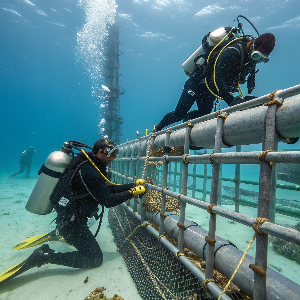
In response to Russia’s actions, NATO and the EU are taking measures: in 2023, a submarine infrastructure protection unit was created, in 2025, “Operation Baltic Watch” was launched, and six Nordic countries created the NorthSeal platform [7]. The European Commission has implemented the NIS2 and CER directives, which raise security standards. The United Kingdom passed the National Security Act in 2023, Poland closed the Russian Consulates General in Poznan and Krakow in 2024-2025, and France held Russia responsible for specific acts of sabotage.

The Problem of Attribution [8] and the Need for Deterrence
Attribution remains the biggest challenge for the West. States are reluctant to accuse Russia without convincing evidence, allowing the Kremlin to act with a sense of impunity. Hybrid operations are conducted in the so-called gray zone, below the threshold of open warfare.
CSIS experts emphasize that Europe must move from a strategy of resilience to a strategy of deterrence. Without significant real costs, Russia will continue to perceive hybrid operations as a safe and effective weapon.
It is worth remembering that Russian hybrid warfare does not seek to physically destroy infrastructure – its aim is to create chaos, fear, and destroy trust. If Europe fails to learn from this and combine resilience with effective deterrence, further acts of sabotage will not only pose a security threat, but will also become an effective weapon in the Kremlin’s pre-threshold war.
Volodymyr Palyvoda
expert in international relations
Notes:
[1] Acronym for the International Institute for Strategic Studies, a research center on military-political conflicts headquartered in London.
[2] An acronym for the Center for Strategic and International Studies, an American think tank based in Washington, DC.
[3] An independent body that advises the Government and Parliament of the Netherlands on foreign policy.
[4] Breakthrough Energy is the umbrella name for several organizations founded by Bill Gates in 2015 that aim to speed up innovation in sustainable energy and other technologies to reduce greenhouse gas emissions.
[5] A labor market for temporary, short-term, or freelance work, where people are self-employed and paid for specific projects or “contracts” rather than a regular salary.
[6] A.A. Bartosz. Questions of the Theory of Hybrid Warfare. // https://readli.net/ voprosyi-teorii-gibridnoy-voynyi
[7] A security platform established in accordance with the Joint Declaration on Cooperation to Protect Infrastructure in the North Sea. NorthSeal’s aim is to monitor suspicious maritime activities, ensure rapid information exchange and coordinate joint actions between the six North Sea countries: Belgium, the Netherlands, Germany, Norway, the United Kingdom and Denmark.
[8] In cybersecurity, it is the process of identifying those responsible for a cyberattack.
(Images generated by neural network)