China Is Building a New World. Plans and Mechanisms for their Implementation
Recent meetings, summits, negotiations and other international events confirm the division of the world into two opposing groups centered around the United States and China. In this situation, Beijing is forming its own anti-American and anti-Western bloc, based on the Shanghai Cooperation Organization and the countries of the Global South. In this regard, the SCO summit and the celebrations in China dedicated to the 80th anniversary of the end of World War II showed Beijing’s priority attention to India and Russia. Türkiye is also important to it. However, China treats Russia as a secondary partner. Therefore, China’s assistance so far has allowed Moscow to continue its war against Ukraine, but it will not be able to avoid an economic crisis.
Political events in August and early September confirmed the fact of the world’s final division into two opposing camps, including democratic and totalitarian countries. That is, the world has once again become bipolar with two opposing centers of global power, the United States and China. Therefore, a new Cold War has emerged. At first glance, it is between the United States/Europe and Russia, but in reality, it is between the West and China. At this, Russia is not a separate center of power, but a satellite of China.
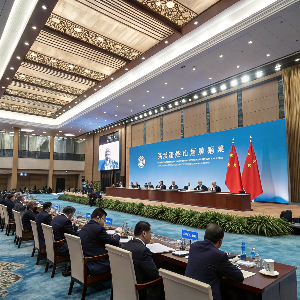
This was evidenced by the meetings of the leaders of the United States, Europe and Ukraine on August 18 in Washington and on September 4 in Paris, as well as of China, the Global South and Russia within the framework of the SCO+ summit in Tianjin, China, and the celebrations in Beijing dedicated to the 80th anniversary of the end of World War II on August 31-September 3. The former of these meetings discussed ways to end Russia’s war against Ukraine as a guarantee of strategic security in the world and its democratic development, while the latter discussed plans for a new redistribution of the world in favor of totalitarian countries.
The results of the meetings are well known, so there is no point in repeating them again. It is more important to understand the changes taking place in the world in the context of recent events. As for the actions of Western countries, relevant assessments have already been made. Their conclusions have been presented in our previous publications and in other media. The main one is the statement of the West’s intentions to prevent totalitarian regimes from seizing dominance in the world and destroying democracy and international law. The same assessments and conclusions are required for the actions of totalitarian countries.
For example, apart from confirming the emergence of new geopolitical realities in the world, international events in China demonstrated the growth of the latter’s authority as the most powerful state in the world after the United States, which unites other totalitarian countries around itself.
This was demonstrated by the participation in the SCO+ summit and festive events in Beijing of more than 20 leaders of various countries, both partners of China and those that have contradictions with it. Among them were Russian President Putin, Indian Prime Minister N. Modi, President of Türkiye R. Erdogan, President of Iran M. Peseshkian, President of Kazakhstan K. Tokayev, Pakistan’s Prime Minister Shahid Sharif, Prime Minister of Vietnam Pham Minh Tinh, and Prime Minister of Egypt M. Madbouli. This representation was unprecedentedly broad.
Relying on its authority and the support of its partners, China continues an active course to strengthen its international positions with the ultimate goal of becoming the world’s main leader and redistributing the world in its favor.
During the SCO+ summit, President of the PRC Xi Jinping launched the Global Governance Initiative, which envisages building a new system of international relations with the leading participation of the Shanghai Cooperation Organization. Given that China holds leading positions in the SCO and SCO+, it uses it as a tool for implementing its plans.
At the same time, Xi Jinping also revealed the mechanism of relevant actions. According to him, the SCO has a “mega-economic potential” and a “mega-market” that allows it to increase the importance and potential of the Global South. This approach is fully consistent with the goals and methods of implementing China’s strategic initiative “One Belt, One Road”, which builds a sphere of Chinese influence by creating a common economic space with neighboring and other countries.
And to encourage China’s existing and prospective partners to participate in such initiatives, they are offered various kinds of preferences. According to Xi Jinping, this year China will provide the SCO member states with 2 billion yuan (280 million US dollars) in free aid and another 10 billion yuan in loans to the Organization’s banking consortium.
As always, China’s intentions are masked by statements about the need to build a more just, global, democratic, equal and multipolar world with a common future for humanity.
In this context, the “congress” of leaders of totalitarian countries in China under the auspices of Beijing was actually anti-American and anti-Western.
It could not have been otherwise, since the United States is China’s main rival in the world and the main obstacle to the realization of its plans to change the world order. Most other countries represented in China also have their own contradictions with the United States and Europe.
In this regard, Xi Jinping, Putin, N. Modi and leaders of a number of other countries have directly or indirectly accused the United States of intentions to maintain its sole dominance in the world, imposing sanctions against American opponents that are not supported by UN decisions, and pursuing a colonial policy towards the countries of the Global South.
At the same time, they rejected the possibility of concessions in favor of the United States, despite pressure from D. Trump and his threats to impose sanctions on China and India for their continued cooperation with Russia. The position of China and its partners was presented in a somewhat veiled form in the final declaration of the SCO.
The document emphasizes the principles of non-interference in the internal affairs of other countries, as well as the non-use of force in resolving disputes and international problems. It is pointed out that the SCO countries are against unilateral coercive measures, including economic ones. At this, they completely ignore the violation of such principles by Russia itself within the framework of its war against Ukraine.
Among the partners of China and the countries of the Global South, India, Türkiye and Russia are the most important for it.
For example, Indian Prime Minister N. Modi’s visit to China was interpreted by the Chinese and Indian media as a historic event. It was emphasized that it was the first since the border conflict between the two countries in 2020.
In the current situation, China needs India as a powerful partner in reshaping the world in accordance with the approach discussed above and in countering the United States. With this in mind, China is “turning a blind eye” to the disagreements between the two countries over influence in Southeast Asia and border issues. India is doing the same, as China is its important trading partner and a pillar in defending its positions against the United States.
The common interests of the parties were consolidated during the negotiations between Xi Jinping and N. Modi. The two leaders agreed to improve Sino-Indian relations and expand cooperation in trade and investment. In addition, a decision was made to resume air traffic between China and India.
The parties’ desire to establish good-neighborly relations was to some extent enshrined in the SCO’s final declaration. The document condemns the terrorist attack that caused the aforementioned conflict and almost led to war between the two countries.
In turn, the main common interest of China and Türkiye is the creation of the Trans-Caspian International Transport Route, which is of strategic importance for both countries, as well as for the countries of Central Asia, the Caspian region, the Caucasus, the Black Sea region, and Europe. The project envisages the creation of a unified system of transport communications between China and Europe, bypassing unstable Russia. China and Türkiye are also interested in developing trade and investment cooperation.
In view of the above, the composition of Türkiye’s delegation, which included President R. Erdogan, the Ministers of Foreign Affairs, Energy, Finance and Defense, the head of the intelligence service and several senior officials, was quite indicative. In Beijing, they held separate meetings with Chinese representatives in their respective fields.
Russia plays an important role for China as an instrument of military counteraction to the West, as a market for Chinese goods and a source of cheap natural resources. However, it is completely dependent on China, which determines its attitude to it as a junior partner and satellite.
Thus, Xi Jinping demonstrated respect for Putin, as well as for all other leaders of countries who came to China. However, experts point out a lower level of his reception in China than that of other heads of state. In particular, in Tianjin, Putin was met by the secretary of the regional branch of the Communist Party of China in that province, while, for example, President of Azerbaijan Ilham Aliyev was met by the Minister of Industry and Information Technology of the PRC.
Besides, the Chinese media did not pay special attention to Putin’s visit to China and presented him as one among others. Xi Jinping’s demonstrative step on the eve of the events in China, namely his official congratulations to Ukraine on Independence Day, is also noteworthy. According to the media, this was the first time he congratulated a post-Soviet country on such a holiday. By doing so, the Chinese leader publicly dissociated himself from Russia’s war against Ukraine and expressed his commitment to our country’s independence, in contrast to Moscow’s intentions to destroy it.
At the same time, an important achievement for Russia was the signing of a memorandum between the Russian company Gazprom and the Chinese CNPC on the construction of the “Power of Siberia–2” gas pipeline. Although, according to many experts, this was done solely to show the firmness of China’s position in supporting Russia and its disregard for US threats. In reality, the gas pipeline is unlikely to be built due to the lack of funds of Gazprom and Russia in general, as well as China’s unwillingness to deal with unreliable business partners. Moreover, it buys gas from Central Asian countries and implements a number of joint projects with them to develop energy transportation infrastructure.
Putin used his visit to China to break out of international isolation and gain political and economic support from Beijing. However, he failed to achieve his goals in full.
The leaders of the countries that participated in the events in China accepted Putin as an equal, and the heads of China, India, and Türkiye agreed to separate meetings with him. At the same time, no one supported Putin’s war against Ukraine, although the SCO+ summit participants did listen to his position on it.
Most of the non-Russian experts pointed out the decline in Russia’s role in the SCO+ and the transition of leadership in the Organization to China. Only the Russian media, which conducted a special information operation on this issue, wrote about Russia’s leading role in the SCO+. But then total deception and distortion of reality is their usual practice.
Putin did not receive financial assistance from China or other countries either. Although this result was quite predictable. The PRC only invests in its own and joint projects in other countries, but does not give financial loans to anyone. Especially to those who cannot repay them.
During the events in China, the issue of Russia’s war against Ukraine was hardly raised. Most of the leaders of the SCO+ member states understand its causes, but do not want to spoil relations with Moscow.
Only Putin himself raised the topic of war, using the SCO+ international platform to justify Russia’s attack on Ukraine. To this end, he made traditional statements about the “coup d’état in Ukraine”, the “Kyiv regime’s attack on the Donbas”, and “the West’s involving Ukraine in NATO, which threatens Russia’s security”. However, this did not provoke any reaction.
As mentioned above, no one supported Russia’s war against Ukraine. But no one condemned Moscow’s attack on Ukraine either. The leaders of China, India, and Türkiye, as well as UN Secretary General António Guterres, called for an end to the war and a peaceful settlement of relations between Russia and Ukraine. But nothing concrete was said in this regard. Only R. Erdogan emphasized the need to establish a just peace.
Against this background, a number of experts point to Xi Jinping’s more constructive policy and behavior than D. Trump’s, which makes China more attractive than the United States.
According to political analysts, in the context of D. Trump’s tariff wars against the world, inconsistency of his policy and constant whims, as well as his dismissive attitude to partners, China looks like an “island of stability and consistency”. That is why it is becoming a center of gravity for many countries, while the United States is pushing them away.
However, there are also problems within the SCO that prevent it from becoming a full-fledged military-political or even economic union.
Chinese and Indian experts recognize that contradictions between China and India remain. Despite the improvement in relations between them, they cannot be resolved quickly. Relations between India and Pakistan, and between Russia and Kazakhstan are also quite complicated. And if the SCO is joined by its current partners, such contradictions will become even more numerous.
Moreover, such SCO members as Kazakhstan, Uzbekistan, Kyrgyzstan and Tajikistan, and by and large Pakistan, do not have any significant problems in their relations with the United States and Europe. Therefore, they have no reason to confront them together with China and Russia. In fact, the same applies to India, which is interested in developing cooperation with the United States and has found itself under US sanctions only because of the Russian Federation. As for Türkiye, being a partner of the SCO, it is a NATO member.
Claims that there is a strong economic basis for deepening cooperation within the SCO have also been significantly exaggerated. In particular, in 2024, China’s trade with all SCO members amounted to $512 billion, while with the United States (China’s main rival) – $688 billion, and with the EU – $518 billion.
The economic situation in China itself, which is the engine of the SCO, is also deteriorating. In 2024, the country’s GDP growth rate fell to 5 %, the lowest in recent years. Domestic trade and services are declining. Instead, China’s external debt is growing rapidly. Since the beginning of this year, it has increased by 12 % to $4.3 trillion, or about 24 % of GDP. Even more complicated problems have arisen in Russia, where the economic crisis is worsening due to its war against Ukraine.
A number of Western media outlets are also drawing attention to the complication of Xi Jinping’s own situation, as he tries to demonstrate the success of his policy in strengthening the PRC.
In this regard, it is noted that he has violated the party tradition that does not allow one person to be elected president of China more than twice. In 2023, he was elected for a third term, which caused dissatisfaction among some of the party elite, who accuse him of usurping power. At the same time, Western political scientists do not rule out possible conspiracy attempts against Xi Jinping. Evidence of this is the large-scale purges in the leadership of the country’s Armed Forces that he has recently carried out under the pretext of fighting corruption. Dissatisfaction with Xi Jinping is also spreading among the country’s population, as a result of growing social problems.
In such a situation, the SCO summit and the celebration of the 80th anniversary of the end of World War II were indeed events that allowed Xi Jinping to show the greatness and international importance and authority of the People’s Republic of China. This was reinforced by the most powerful military parade in history in Beijing.
These events and processes allow us to draw a number of conclusions regarding the overall situation in the world and Ukraine’s interests.
Thus, the world has returned to a bipolar system with two opposing centers of power, which are now the United States and China. The fundamental differences in their interests have led to the actual Cold War between them.
In this situation, China is taking consistent steps to strengthen its international position with the prospect of gaining world leadership. To this end, Beijing is forming an anti-American bloc consisting of countries that have their own contradictions with the United States.
The basis of this bloc is the SCO, which is centered around China. Among the members of the Organization and its partners, India, Türkiye, and Russia are the most important for China. At the same time, Beijing sees Russia as its junior partner and even a satellite, which is reflected in its attitude to it.
China uses Russia as an instrument of military counteraction to the United States and Europe and is the mainstay of its economy. At the same time, it refuses to provide real assistance to Moscow in containing the crisis in the Russian economy through loans and other forms of financial support.
China’s position so far allows Russia to continue its war against Ukraine. However, it will not save it when it finds itself in crisis and loses the ability to continue fighting.
Yurii Mykhailenko,
Institute for Global Politics