Slovakia and Hungary As Sources of Problems for Ukraine and Europe
What Will Be the Result of Their Governments’ Attempts to Resolve Their Problems by Befriending Russia?
While NATO and the EU are sympathetic to Ukraine, some European countries are unwilling to accept this course of action. This refers to Slovakia and Hungary, which adhere to anti-Ukrainian and pro-Russian policies. Their governments are trying to replace productive work with their usual preferences from Russia. First of all, this refers to the possible import of Russian energy carriers at reduced prices. In this situation, Russia is pushing its agenda in Europe through Slovakia and Hungary, namely, trying to undermine Europe’s unity in providing Ukraine with the necessary assistance. However, the USA and the leadership of NATO and the EU are managing to block such Russians’ intentions.
Compared to Hungary’s openly active anti-Ukrainian and pro-Russian policy, Slovakia’s similar course is, figuratively speaking, in the shadow. For example, R. Fico, having returned to the post of Prime Minister of Slovakia in 2023, openly sided with Russia and even supported its criminal actions against Ukraine. He publicly accused Ukraine of killing the Russian population of the Donbas, which allegedly caused the war in 2014. In fact, he justified the Putin regime’s full-scale attack on Ukraine, calling Moscow’s actions necessary to defend Russia’s interests and security. Adhering to this political line, R. Fico stopped the supply of Slovak weapons to Ukraine and ordered an investigation into the legality of such deliveries already made, including their impact on Slovakia’s defense capabilities. This included MiG-29 aircraft that were in its armed forces and were simultaneously replaced with American F-16 fighter jets. R. Fico condemned their transfer to Ukraine, which allegedly caused damage to Slovakia’s security.
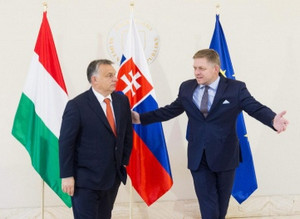
At the same time, he supported V. Orbán, the Prime Minister of Hungary, when the latter began to block NATO and EU decisions to provide assistance to Ukraine in its military confrontation with Russia and to impose new sanctions against the RF. It should be noted that R. Fico sometimes took a tougher stance than Orbán. For example, in September this year, he tried to prevent the adoption of the 19th package of EU sanctions against Russia, even after Hungary had agreed to the sanctions. In addition, R. Fico demanded that the sanctions not prohibit European countries from purchasing Russian energy carriers.
He takes the same position as V. Orbán on the issue of restoring peace in Ukraine. In fact, he advocates that Ukraine agree to Russia’s conditions for ending hostilities and suggests that its refusal should be interpreted as unwillingness to make peace. R. Fico presents Ukraine’s position of defending its interests as another argument against providing it with assistance from NATO and the EU.
Following the example of the Hungarian Prime Minister, R. Fico demonstrates his affection for Russia, thus trying to establish close relations with Putin. Since the beginning of his third term as Prime Minister, R. Fico has met with the Russian president three times, namely in December 2024 and May 2025 in Moscow and in May of the same year in China. The first meeting was aimed at discussing the supply of Russian energy carriers to Slovakia. The second concerned Russia’s celebration of the 80th anniversary of the victory over Nazi Germany. The third was the celebration in China of the 80th anniversary of the victory over Japan in World War II. At that time, R. Fico was the only representative of an EU member state who personally visited Moscow. It was a clearly demonstrative act, showing Slovakia’s attitude to Russia as a strategic partner. And this was despite Russia’s confrontation with the West and its war against Ukraine. In order to get to Moscow, R. Fico was forced to take special measures, as the Baltic countries closed their airspace to planes flying to Russia during the holiday period. This incident demonstrated the importance of Russia for R. Fico.
The basis of his policy is the same as that of Viktor Orbán. The government of Slovakia, like the government of Hungary, is also linked to Moscow in its attempts to preserve Russian preferences. And at the heart of this are machinations surrounding the supply of Russian energy carriers. Exactly as it was done at the time by the Ukrainian government under Viktor Yanukovych. Therefore, both R. Fico and V. Orbán have no desire to give up Russian oil and gas. And to explain this somehow, R. Fico uses arguments similar to those of Hungary. He says that the cost of Russian energy carriers is lower than that of European, American, or other ones. He also points out that Slovakia does not have access to sea terminals. If it violates the contracts signed with Russia until 2034, it will lose almost EUR 10 billion. Building the new infrastructure needed to maintain alternative gas import routes would require the same amount of financial expenditure. And Slovakia does not have the money. Therefore, Slovakia, together with Hungary, is completely dependent on Russian hydrocarbons. Thus, after Ukraine stopped the transit of Russian gas through its pipeline system on January 1, 2025, Slovakia and Hungary have been receiving it through the Turkish Stream gas pipeline. As for Russian oil, it is transported to them via the Druzhba gas pipeline, which runs through Ukraine, and is processed at the Slovnafta refinery in Bratislava, owned by the Hungarian company MOL. In this way, Slovakia and Hungary are provided with relatively cheap energy carriers from Russia, and their governments implement opaque schemes around such supplies. Moscow, in turn, has the opportunity to exert political influence on Bratislava and Budapest and be present on the European energy market. Its presence in Europe is quite modest compared to its former positions before the introduction of the well-known sanctions, but they can be considered a “springboard” for restoring them in the future. At least, that is what Moscow hopes for.
That is why Slovakia and Hungary have reacted extremely negatively to Ukraine’s refusal to transit Russian gas and to the Ukrainian Armed Forces’ strikes on the Druzhba gas pipeline infrastructure on Russia’s territory. Despite the fact that the purchase of Russian energy resources finances Russia’s war against Ukraine, they were quick to accuse Kyiv of deliberately organizing their energy blockade. They even appealed to the EU on this issue…
- Fico also began to threaten to stop supplying electricity to Ukraine. Slovakia does not produce enough electricity to meet its own needs and export, but it does transit electricity from Europe to our country. At this, the Slovak Prime Minister also referred to Ukraine’s critical electricity problems resulting from Russia’s deliberate destruction of our generating capacities and substations. Fico’s “”activities” were accompanied by an active anti-Ukrainian information campaign in Slovakia. There were attempts to spread it in Europe. But Bratislava failed to do so due to a lack of resources. There were also attempts to influence Ukraine by provoking separatism among the Rusyns of Transcarpathia (ethnically related to the Slovaks), as Hungary does in the same region with regard to the Hungarian minority.
As part of their anti-Ukrainian and pro-Russian policies, both R. Fico and V. Orbán hoped that US President D. Trump would help them. After all, at the beginning of his presidential term, he seemed to hold similar positions. However, in September-October this year, the master of the White House began to understand that it was impossible to agree on anything with Putin. In particular, that he would end the Russian-Ukrainian war as a result of tough pressure on him and support for Ukraine. At this, D. Trump also threatened European countries with negative consequences if they did not refuse to buy Russian energy resources. In addition, Fico’s actions began to run counter to Trump’s efforts to restore peace in Ukraine. So far, the US President has not been in a hurry to openly show his dissatisfaction with the Slovak Prime Minister’s course, but – as the saying goes – only until the time is ripe.
The EU leadership and leaders of major European countries are putting increasing pressure on R. Fico. They have already expressed dissatisfaction with his policy, as they believe it undermines European unity in supporting Ukraine and putting pressure on Russia. This has quite negative consequences for the EU and NATO. After all, threats to their security from Russia are intensifying. And this increases the role and importance of Ukraine as one of the key elements of European and Euro-Atlantic security systems. Sanctions against Slovakia have not yet been imposed, but it has been warned that such action is entirely possible.
Besides, the EU is considering imposing additional restrictions on Russian oil imports, in particular a ban on supplies through the Druzhba pipeline, which is not yet subject to sanctions. The European leadership’s measures to remove member states that deliberately undermine the European Union’s work from the process of making important decisions directly affect Slovakia.
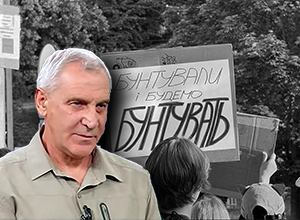
The population of Slovakia negatively reacts to Fico’s policy. This is confirmed by public protests, in particular against the government’s plans to abolish the special prosecutor’s office investigating large-scale corruption. Moreover, his actions at the state level may already harm the welfare of Slovakia itself and the development of its armed forces, as well as joint actions with other European countries to ensure their security.
Surveys conducted last month show a high level of distrust among Slovakia’s citizens toward the highest officials of the state. Thus, 28 % of citizens trust R. Fico, while 69 % of those surveyed do not. In general, the survey results show that the government is generally not trusted. In other words, there is a widespread crisis of confidence, as not a single current minister of Slovakia is viewed positively.
Under these circumstances, R. Fico is forced to change his position and begin searching for ways to diversify energy imports and normalize relations with Ukraine.
At least, he demonstrates such intentions.
He has not yet given up importing Russian oil and gas, but has already agreed to partially replace them with hydrocarbons from other sources. Poland has offered to help Slovakia in this matter. Currently, the energy systems of both countries are connected by an interconnector, which gives Slovakia access to Baltic liquefied gas terminals.
According to R. Fico, he discussed this option with D. Trump and President of Poland K. Nawrocki. However, such plans can only be implemented if gas prices are acceptable to Slovakia. In other words, Slovakia’s Prime Minister is trying to preserve the possibility of further cooperation with Russia in the energy sector.
Bratislava also initiated negotiations between Slovakia and Ukraine at various levels, which culminated in a meeting between R. Fico and Ukrainian President V. Zelenskyy in September this year in Uzhhorod. The prospects for the development of trade between the two countries, Ukraine’s possible participation in supplying Slovakia with gas through its pipeline infrastructure, which is connected to the European one, as well as the resumption of military-technical cooperation between the parties were discussed.
So far, it is hard to tell how real and sustainable the changes in Slovakia’s policy are, including with regard to Ukraine. However, there are already some positive signs. In particular, in October this year, Bratislava announced a new package of military-technical assistance to Ukraine. This includes five Bozena demining vehicles and other non-lethal equipment, including medical evacuation vehicles, truck cranes, and excavators. The investigation into Slovakia’s transfer of MiG-29 aircraft to Ukraine has also been suspended.
Besides, R. Fico refused to support V. Orbán’s initiative to create something like an anti-Ukrainian bloc involving Hungary, Slovakia, and the Czech Republic. By doing so, he is trying to avoid what V. Orbán has already done to Hungary, having turned his country into a pariah in Europe.
In addition, thanks to new investments from the European Union, Slovakia is slowly becoming a new transport hub for Ukraine. The European Commission is allocating EUR 135 million to Slovakia for the modernization of its railways. At this, Eastern Slovakia is being developed as an EU logistics corridor for Ukraine and a common economic space. In other words, thanks to close cooperation with the EU in supporting Ukraine, Slovakia can hope to receive additional European investments and financial contributions to its economy.
Thus, Slovakia, like Hungary, remains a source of problems for Ukraine. First and foremost, this refers to Bratislava’s anti-Ukrainian and pro-Russian course, which resembles that of Budapest’s.
The reason for such Slovakia’s policy is the pro-Russian nature of R. Fico’s government, which is unable to improve the country’s economy through effective and transparent work and continues to focus on Russia. In other words, it completely copies the activities of V. Orbán’s government.
In turn, Moscow is using these circumstances to maintain its influence over Bratislava and Budapest, while trying to extend similar practices to other countries in Central and Eastern Europe. In particular, this applies to the Czech Republic, where a similar situation may arise.
At the same time, the USA and EU leadership, as well as the leaders of leading European countries, are counteracting the development of such a state of affairs. They have already forced Slovakia to change its position in a certain way and start looking for alternative to Russian sources of energy and establishing normal relations with Ukraine.
In general, the events surrounding Slovakia and Hungary demonstrate the inevitability of negative consequences for all countries and their governments that are oriented toward cooperation with Russia and are trying to compensate for miscalculations in their activities, including those related to corruption.
Oleh Makhno,
Institute for Global Politics