Ukraine After the War
Positives and Negatives of a Peace Agreement
The most important thing for Ukraine today is to end the war, while protecting its national interests. Negotiations on this issue are complex in nature and accompanied by various speculations. At the same time, an analysis of the already agreed terms of the peace plan and the possible principles for adopting those still under consideration allows us to draw certain conclusions about Ukraine’s future. It must remain an independent state and become part of Europe through EU membership. At the same time, it will be able to take care of its own security and play a key role in the European defense system. Unfortunately, Ukraine will temporarily lose the territories occupied by Russia. But then, it will retain the possibility of regaining control over them. This will be the task of our state in the long term.
Despite the complexity of the peace talks and Russia’s intensification of hostilities to force Ukraine to capitulate, they give hope that the active phase of the war may be suspended in the foreseeable future. It is hard to predict when this will happen. Of course, Moscow wants to capture the whole of Ukraine. But it does not have the strength to achieve its goal. According to the most optimistic estimates, Russia will be able to continue the war for no more than 18 months. However, it will most likely lose this opportunity as early as next year, as evidenced by the state of its economy.
In fact, the war has become a war of attrition, similar to what happened on the Western Front during World War I. In other words, Russia is spending resources that it no longer has, but cannot achieve any tangible results. Most of its successes are merely declarations by Russian propaganda, as demonstrated by Ukrainian President Volodymyr Zelenskyy’s visit to Kupiansk, which was allegedly captured by Russia.
Therefore, the Kremlin will be forced to suspend the war, even though it threatened to “fight it forever”. In view of this, questions arise about what will happen to Ukraine after peace is restored. It is possible to answer them, at least approximately, based on the terms of the peace agreement currently being discussed with the mediation of the United States. They will change in one way or another, but the principles of future peace are more or less clear. The peace agreement will indeed not satisfy either Ukraine or Russia, but this is the essence of compromise when neither side can achieve a significant advantage. However, their consequences for Ukraine will not necessarily be negative and catastrophic for it, as some politicians and experts say today. Ukraine will be able to have a number of important preferences that will, to a certain extent, compensate for what it has lost. This deserves attention, as it will determine our future. All the more so because there is a lot of speculation surrounding what has been lost, which is causing a certain amount of anxiety in Ukrainian society. So, let’s take an objective look at what we can gain after peace is restored.
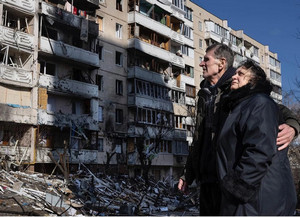
In any case, Ukraine’s main achievement will be the unconditional preservation of its independence and sovereignty. This effectively means victory, since the loss of its independence and sovereignty was and remains the main goal of Putin’s regime in this war. This was also the goal of all other wars waged by Russia against Ukraine, which took various forms. For the first time in its history, Ukraine has managed to defend its statehood in a war with Russia, albeit at the cost of territorial losses, human casualties, and destruction of its infrastructure.
The peace treaty will enable Ukraine to accelerate its accession to the EU. This will consolidate Ukraine’s position as a European state, which is the historical aspiration of the Ukrainian nation. At the same time, it will fully guarantee that Ukraine will not return to Russia’s sphere of influence or to the “gray zone” between Russia and the West.
As for all other countries, Ukraine’s membership in the EU will provide it with broad prospects for economic, political, and democratic development. At this, it will be an integral part of the European community, which has no internal borders and is open to the world. Under these conditions, Ukraine will gain free access to the European market, funds, investments, and technologies, as well as international transport corridors passing through Europe.
In addition, the European Union will become one of the main financial donors to international efforts for Ukraine’s post-war recovery. This is also provided for in the terms of the peace agreement. The USA, G7, European and other countries will also be involved in the implementation of relevant programs. This approach will help rebuild Ukraine and modernize its economy based on Western principles, models, and technologies.
At the same time, Ukraine’s accession to the EU will impose strict obligations on it to comply with European norms and rules. Besides, the EU governing bodies have the right to make decisions that are binding on all member states in areas that affect the entire Organization. These include, in particular, contributions to joint EU funds, limits on public debt, quotas for the admission of refugees, and so on. At the same time, the policies of EU member states in all important areas must comply with the common policies of the European Union in the relevant areas. All this limits the ability of EU member states to act independently. And if they violate the criteria, decisions, and requirements of the European Union, sanctions are imposed, including restrictions on access to financial funds.
Of course, this will also apply to Ukraine. However, such restrictions will be an adequate price to pay for the preferences of EU membership.
However, even after peace is restored, the threat of Russia’s new attack on Ukraine will remain. Therefore, Ukraine needs reliable security guarantees. These can be provided both by Ukraine’s partners and by its own forces.
The terms of the peace agreement will most likely not allow Ukraine to join NATO or to host Western military contingents on its territory. Russia does not agree to this, and Western countries will not oppose it on such issues due to the threat of direct military confrontation. Although, according to some estimates, Moscow may allow foreign troops to enter Ukraine, but only from countries friendly to it, such as China or Brazil. But Ukraine will not agree to this.
It is also unclear how Article 5 of the NATO Treaty will apply to Ukraine without its membership in the Alliance. Especially as the pro-Russian stance and selfishness of a number of European countries intensify, complicating important decisions within NATO and the EU. In other words, such security guarantees for Ukraine are unlikely to be effective.
However, Ukraine will not be left on its own to face Russia. In the current situation and in the near future, this issue will be most important for Ukraine. Therefore, it is worth considering it in more detail.
At the moment, the leadership of the EU and the European component of NATO are taking practical steps to integrate Ukraine into the new European and Euro-Atlantic security system. Ukraine has quite powerful Armed Forces and experience in waging war with Russia. Ukraine already serves as the front line of European defense on its southeastern flank. In view of this, it is included in NATO’s operational plans for the European theater of operations.
In turn, Europe serves as Ukraine’s operational and strategic rear. NATO logistics hubs, located in Poland and Romania, provide for the needs of the Ukrainian Armed Forces. Military contingents from Western countries will also be stationed there with the task of providing immediate assistance to Ukraine in case of Russia’s attack on it. They may subsequently be reinforced by NATO’s second echelon forces in Europe. To increase the speed of their redeployment to Ukraine, the country has been connected to NATO’s military mobility system.
At the same time, Europe is implementing a number of large-scale programs to provide financial assistance to Ukraine, manufacture weapons for it, and promote the development of the Ukrainian defense industry. Ukrainian and joint Ukrainian-European defense enterprises are being established on the territory of EU countries. They are safe from Russia’s attacks and manufacture weapons for Ukraine. As a result, Ukraine is now even more deeply integrated into the European and Euro-Atlantic security system than many EU and NATO members.
At the same time, Defense Forces of Ukraine will remain the most effective guarantor of its security. No matter how much Russia wants to disarm Ukraine, it will not succeed. The draft peace agreement agreed between Ukraine, Europe, and the USA sets the size of the Armed Forces of Ukraine at 800,000 personnel, which will be sufficient in times of relative peace.
Moscow’s demands that the Armed Forces of Ukraine renounce long-range weapons capable of striking targets deep inside Russian territory have also been rejected. Ukraine’s Western partners not only do not support the possibility of such a compromise with Russia, but encourage the Armed Forces of Ukraine to strike Russian oil refining facilities located in the RF’s rear areas. In addition, Ukraine already produces own long-range weapons, which allows it to use them at its discretion without the permission of its partners.
All this greatly strengthens Ukraine’s position and increases its defense potential, acting as a powerful deterrent for Russia. Unlike in 2014 and 2022, after its de facto defeat in Ukraine, Russia will be more cautious in deciding on a new attack on Ukraine.
And finally, there is the territorial issue, which is the most sensitive and complicated. This primarily concerns Russia’s demands for the transfer of part of the Donbas, which is under Ukraine’s control. This issue is of fundamental importance for both Ukraine and Russia. Therefore, we will also consider it in more detail.
True, Ukraine, like any other normal state, cannot cede its territories. Especially to simply give them away without a fight. Besides, there are powerful defensive fortifications in the western part of the Donbas, which act as a barrier to Russia’s advance into Ukraine. With this in mind, Ukraine is defending them with everything it has. Although, under pressure, it may agree to certain compromises, but only if its interests are taken into account.
In turn, Putin needs at least some achievements in the war which he could demonstrate to the Russian population. One of the main reasons for starting the war back in 2022 was the “liberation of the Donbas”. Russia cannot do this, at least in the near future. Attempts to resolve this issue by military means are leading to a critical depletion of its resources and bringing the Russian economy closer to collapse. That is why Moscow is demanding that Ukraine surrender the territories it controls in the Donbas without a fight. In addition, Russia, of course, seeks to improve its operational and strategic position on the front lines in Ukraine, including to create more favorable conditions for a new attack on it.
Unfortunately, the USA still hopes for a quick end to the war by satisfying Moscow’s territorial claims to secure the captured territories of Ukraine. Therefore, Ukraine is highly likely to temporarily lose them. It is difficult to say what will happen to the Donbas. Only certain assumptions are possible.
In particular, an agreement may be reached to transform the areas of the Donbas currently controlled by Ukraine into a demilitarized zone under US or UN control. In principle, this would satisfy all parties. Ukraine would be satisfied with keeping its lands outside Russia and without Russian troops. Moscow could tell Russians that it has “liberated the Donbas from Ukrainian nationalists”, that is, achieved the goals of the “special military operation”. And the USA would be satisfied with the prospect of at least a suspension of the war.
However, this does not mean that Ukraine will lose its territories forever. It will be able to regain them politically or with minimal use of force in case of Russia’s collapse, following the example of the USSR. There is nothing impossible about this. What is happening now in the economy of the Russian Federation completely repeats the economic processes in the Soviet Union on the eve of its disintegration.
In the 1990s, Russia was also moving along the same path, and only the rise in oil prices saved it. Thanks to the USA and its partners, the trend on the global oil market is now completely different. Besides, they are actively removing Russia from this market. Russia has no other sources of income. Therefore, it has no way of avoiding a deep economic crisis.
However, the implementation of such prospects will take time, although not too much.
All this allows us to draw some conclusions about the war and the future of Ukraine.
Thus, despite Russia’s unchanged strategic goal of destroying Ukraine as an independent state by military means and continuing the war, it will not be able to do so but will be forced to cease hostilities in the foreseeable future.
Since the conditions for restoring peace will not satisfy either Ukraine or Russia, a new war is entirely possible. At the same time, for the first time in its modern history, Ukraine has been able to repel Russia’s attack and defend its independence. Moreover, conditions are emerging under which Russia’s new aggression can be prevented. Under the peace plan, Ukraine is effectively recognized as part of Europe, worthy of full membership in the EU. This is the realization of our state’s historical aspirations and finally removes it from Russia’s control and sphere of influence. EU membership gives Ukraine a wide range of preferences on a par with other members of the Organization. At the same time, it will be forced to commit to complying with European standards.
The biggest problem for Ukraine will remain the temporary loss of part of its territories. However, the development of historical processes will give it the opportunity to regain control over them, including through political means. Evidence of this possibility is the reunification of Germany in 1990 after it was divided in 1945 as a result of its defeat in World War II.
In any case, Ukraine has already demonstrated that it is a viable, independent, and European state. Russia, on the other hand, appears to be a weak country and has been excluded from the circle of leading states. It is, in fact, on the verge of disintegration. In general, this is all a continuation of the process of the collapse of the Russian Empire, which began more than a hundred years ago when it was defeated in the war with Japan in 1905.
Yurii Mykhailenko,
Institute for Global Politics