The Munich Security Conference Against the Background of the Global Geopolitical Situation
The main global political event in February this year was the Munich Security Conference, which brought together leaders from around 60 countries. The Conference confirmed the final breakdown of the entire system of international relations that had existed until then. At the same time, it outlined the contours of a new world. In it, Ukraine is defined as one of the main components of the new European and Euro-Atlantic security system, which is why it will continue to be of great importance to the USA and Europe. All this requires that the results of the conference and its consequences for Ukraine be considered very carefully, taking into account the characteristics of today’s geopolitical situation in the world.
An analysis of how the situation in the world is developing leads to the conclusion that a new stage has begun in the process of radical restructuring of the entire system of international relations that emerged after the collapse of the USSR. The essence of this process is the formation of a new bipolar architecture of the world order under the leadership of the USA and China, replacing the sole dominance of America.
At this stage, the world order that emerged after World War II and remained intact even after the disintegration of the Soviet Union has effectively ceased to exist, and a new one has not yet been formed. The reason for this is the intensification of the struggle between the world’s leading countries to realize their interests in the future.
The USA seeks to maintain its dominance in the world. China proposes to build a multipolar world. Russia wants to be recognized as an equal center of power. And Europe is making efforts to consolidate its regional leadership. Other countries are also taking steps to strengthen their positions.
In order to achieve their goals, global and regional power centers are trying to strengthen their national economies and increase their military capabilities, as well as create zones of influence in the world. At this, the practice of mutual economic pressure and the demonstration and use of military force is becoming more widespread.
Thus, Donald Trump’s strategic concept of “America First” officially implies, above all, the USA’s hegemony in the world. In this regard, China is identified as the main competitor of the USA, which must also be contained by military means. Russia is viewed at the strategic level as a military adversary of the USA and a source of threats to the security of Europe, which is an ally of America.
With this approach, the USA has initiated the creation of a new Euro-Atlantic and European security system, which envisages focusing its efforts on containing China, and Europe’s – on countering Russia with America’s support. At the same time, a certain part of American resources is being redirected from the European to the Asia-Pacific theater of operations. Meanwhile, the USA is imposing its will on other countries by resorting to trade wars. Ultimately, it may resort to military action, as demonstrated by events in Iran and Venezuela.
Beijing is implementing a strategy to transform China into a major world power with Chinese characteristics, mainly through economic means, relying on the countries of the “Global South” and the participants in the well-known “One Belt, One Road” initiative. However, it does not form military-political alliances and relies solely on its own forces. The PRC’s main rival is objectively the USA, although Beijing is in no hurry to openly designate any country as its enemy. It only demonstrates its readiness to regain control over Taiwan through military action.
Today, Moscow pursues an aggressive foreign policy, which aims to restore Russia’s position to that of the former USSR, forcing the USA and Europe to take it into account. Currently, the main manifestation of this policy is the war against Ukraine, which aims to destroy it as an independent state and establish control over it. At the same time, as part of the redistribution of the world, Russia is preparing for a possible war with the USA and NATO.
In the context of increasing threats to Europe from Russia and declining US attention to it, the EU leadership is taking measures to ensure European security mainly through the efforts of European countries themselves. Thus, their defense spending has been increased, which has made it possible to launch large-scale programs to rearm Europe. At the same time, Europe has supported the US initiative to build a new Euro-Atlantic and European security system.
The personal qualities of their leaders play a role in shaping US and Russian policy. This refers to elements of an irrational worldview, as well as the substitution of their countries’ interests with their own. In particular, the common features of Donald Trump and Vladimir Putin can be considered their tendency toward dictatorship, disregard for international law and democratic values, and willingness to use force to resolve existing problems.
These peculiarities of developments in the global situation shaped the nature and content of the 62nd Munich Security Conference, which took place on February 13-15 under the general slogan “under destruction”.
A distinctive feature of this event was that it took place at a time when Russia’s war against Ukraine is ongoing. This is nothing less than a major challenge to the security of Europe and the world, as well as the final breakdown of the old world order, which was effectively brought about by Donald Trump. In view of this, the main topics of the conference were European security, transatlantic relations, multilateral cooperation, regional conflicts, and technology.
Given the relevance of these topics in today’s situation, at least 60 world leaders attended the Conference, which is an unprecedented level of representation. An equal number of countries were represented by their Ministers of Defense and Foreign Affairs.
Among them were predominantly representatives of Europe, which is currently facing the most challenging security situation. In particular, leaders of the European Union, NATO, and leading European countries were present. The largest delegation was from Germany, led by Chancellor F. Merz.
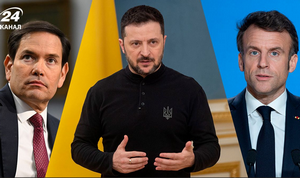
Due to the complicated domestic situation in the USA and another shutdown, the Americans reduced their presence at the Conference. US Secretary of State Marco Rubio represented the USA. The size of the American delegation was also reduced. Incidentally, some US congressmen attended the conference at their own expense.
Some experts gave this fact a demonstratively negative connotation. In their view, the fact that the US Congress was represented in Munich not as a single delegation, but as a “mosaic of independent players” reflects transatlantic relations. Washington remains both a key military stronghold of the West and a center of strategic unpredictability.
A high-level Ukrainian delegation led by President Volodymyr Zelenskyy attended the Conference. The delegation also included Minister of Foreign Affairs of Ukraine Andrii Sybiha.
China was represented by Minister of Foreign Affairs Wang Yi, demonstrating Beijing’s interest in participating in resolving global problems as the most powerful center of power after the United States.
Official delegations from Russia and Iran were not invited to the Conference. The only participants from the Russian Federation were those involved in the negotiation process to end the Russian-Ukrainian war. This once again confirmed the de facto international isolation of Moscow and Tehran by the world’s leading countries.
A number of other international events took place within the framework of the Conference, including a meeting of the G7 Ministers of Foreign Affairs, as well as bilateral and multilateral negotiations, including those involving Ukraine. Among them, the most important for our country were the meetings between V. Zelenskyy and M. Rubio, A. Sybiha, and Wang Yi, the “Ukrainian lunch”, organized by the V. Pinchuk Foundation, the meeting of the “Odesa Triangle” with the participation of Ukraine, Moldova, and Romania, as well as negotiations with Foreign Ministers of influential countries in Asia, the Asia-Pacific region, the Middle East, Latin America, and high-ranking officials from the EU, NATO, and the UN.
These events focused on accelerating the peace process, developing effective security guarantees for Ukraine, assisting in the restoration of Ukraine’s energy sector, meeting Ukraine’s defense needs, and imposing sanctions on Russia.
The Munich Conference report “Under Destruction” and the speeches of its participants assessed the current geopolitical situation in the world, identified key international problems, and proposed ways to address them.
They mainly concerned the consequences of the actions of the USA and Russia, which have the greatest impact on the security situation in the world and in Europe. At this, the course of the USA, as a global power center, was viewed through the prism of global problems, while Russia’s policy – primarily in the context of European security.
Thus, according to the conclusion of the European participants of the Conference, which is supported by certain European politicians, the actions of the USA have undermined the international order that America itself has been building since 1945.
Donald Trump was blamed for this, as he resorts to a “ramming” or “bulldozing” policy of deliberately destroying international institutions that have been created over decades. On his initiative, the USA withdrew from 66 international organizations, which destroyed the mechanisms for collective decision-making in the political, economic, and security spheres. In addition, D. Trump ordered the closure of the USAID international development agency, signalling the USA’s giving up its humanitarian leadership.
At the same time, there was a noticeable trend towards the rapid transformation of the world into “an arena ruled by hegemons rather than universal laws”.
The reason for this was determined to be that Donald Trump practices harsh pressure on other countries, including the USA’s allies, and seeks to use military force to support his policies. Manifestations of this approach include the trade (tariff) wars he has started against virtually the entire world in order to subjugate it to his will.
It was also pointed out that America was preparing military operations against Iran on a significantly larger scale than the strikes that were carried out against it in June last year. The US operation to kidnap Venezuelan President Maduro, as well as D. Trump’s claims to Greenland, are viewed in the same light.
Western politicians believe that another negative consequence of D. Trump’s policy is his replacement of global partnerships with various “deals” similar to commercial activities.
Based on this, most of his actions are perceived as aimed at achieving short-term economic gains rather than realizing long-term political interests. On the one hand, this harms the USA’s allies and partners, and on the other, it gives its opponents an opportunity to exert influence on them.
This is precisely how Donald Trump’s decision to end financial support for Ukraine and the supply of weapons to it at the expense of European NATO members is presented. This allowed him to save US state budget funds and fill American companies with orders. At the same time, the opportunity to focus American and European funds on helping Ukraine gain an advantage in the war with Russia was lost. This also caused damage to European security.
In view of D. Trump’’s actions, Moscow is offering him a wide range of economic preferences in cooperation with Russia in exchange for forcing Ukraine to capitulate. However, the US President has not yet dared to do so and agrees to resume cooperation with Russia only after the end of the Russian-Ukrainian war.
The above-mentioned approach is also linked to D. Trump’s irresponsible attitude to US allies and partners in a broader context.
First and foremost, this concerns the reduction of America’s participation in ensuring European security, which is already happening in practice. As already mentioned, the US leadership justifies such actions by the need to reorient part of American resources to contain China in the Asia-Pacific region.
At the same time, experts point out that the US military presence in the Asia-Pacific region is not growing as much as it should. Based on this fact, it can be concluded that D. Trump is once again trying to save money on European security. In the same way, D. Trump is saving on support for American allies in the Asia-Pacific region, which is being reduced despite the fact that they are the USA’s mainstay in containing China.
According to Europe and, increasingly, America itself, D. Trump’s policies are destroying transatlantic unity and the trust of their allies and partners in the USA. This applies to both Europe and the Asia-Pacific region. As a result, the positions and security of the entire Western and democratic world, which includes the USA, Europe, Japan, South Korea, and Australia, are being undermined.
Against this background, European leaders and politicians have expressed particular concern about the weakening of the reliability of US security guarantees for Europe amid growing military threats from Russia.
According to their assessments, this threat affects both Europe and the whole world. Moscow is not just continuing its war against Ukraine. It is preparing for a military confrontation with NATO, which unites Europe and the USA. Moreover, Russia’s leadership constantly emphasizes that it is ready to use nuclear weapons against its opponents.
Moreover, Russia has already started a hybrid war against Europe. This includes UAV incursions into the airspace of European countries, sabotage against energy and railway infrastructure, jamming of radio navigation systems, cyber attacks, as well as interference in elections and provocation of political tensions.
This allows Moscow to create a pretext for aggression against its European neighbors, which could then escalate into a war with NATO and the USA.
During the discussion of these issues, participants of the Conference recognized the need to restore unity between the USA and Europe in order to counter common threats to their security. In this regard, representatives of the EU and European countries welcomed the changes in America’s attitude to Europe demonstrated by Secretary of State M. Rubio.
He spoke in favor of creating a new alliance between the USA and Europe to strengthen transatlantic unity. According to M. Rubio, the USA and Europe have close historical ties, which form the basis for jointly building their future. Moreover, the new alliance between America and Europe should be based not only on military cooperation within NATO, but also on the realization of common economic interests.
At the same time, M. Rubio denied the possibility of NATO’s collapse and the USA’s withdrawal from it. According to him, the Alliance will remain the foundation of Euro-Atlantic security. In this regard, M. Rubio emphasized that the USA is interested in strong allies, the main one being Europe. Therefore, America will contribute to enhancing its defense capabilities and economic growth.
The nature of M. Rubio’s speech indicates a departure from the USA’s previous attitude to Europe. This may be America’s attempt to strengthen its position by improving US-European relations.
European leaders have agreed to strengthen relations with the USA. At the same time, they have spoken out in favor of strengthening the European Union’s independence in the military and economic spheres.
As part of the construction of a new Euro-Atlantic and European security system, it is planned to continue the implementation of large-scale programs to rearm Europe. Leading EU member states are also planning their own measures to strengthen their security. In particular, Chancellor of Germany F. Merz has announced plans to transform the Bundeswehr into the most powerful armed forces in Europe.
All of these intentions and programs were clearly declared as measures to deter Russia and prepare for repelling possible aggression on its part. At the same time, a willingness was demonstrated to give Russia a harsh rebuff in ccase of its attack on Europe. According to NATO Secretary General M. Rutte, the North Atlantic Alliance has sufficient forces to repulse Russia’s aggression. NATO’s current level of defense capability guarantees superiority in case of a direct confrontation.
In turn, President of the European Commission Ursula von der Leyen has confirmed the EU’s intentions to increase funding to support the development of the European economy and enhance its competitiveness. At this, as planned, the European Union will completely abandon Russian energy sources by 2027.
At the Munich Conference, special attention was paid to Ukraine. Participants in the event recognized Ukraine’s leading role in deterring Russia, which makes our country one of the key elements of the Euro-Atlantic and European security system. With this in mind, representatives of the G7, the USA, NATO, and the EU, as well as Western countries, demonstrated their support for Ukraine.
On the sidelines of the Conference, G7 Foreign Ministers discussed ways to provide security guarantees to Ukraine for the post-war period. In addition, decisions were made to provide assistance to Ukraine to strengthen its air defense system and energy resilience.
For his part, US Secretary of State Marco Rubio assured the G7 that America would continue its mediation in the negotiation process to end the Russian-Ukrainian war. He thus denied rumors of Donald Trump’s possible withdrawal from the negotiations.
NATO Secretary General Mark Rutte also expressed support for Ukraine and pointed out the strengthening of defense commitments to it. According to him, the Alliance will not abandon Ukraine under any circumstances. He also confirmed NATO’s decision to allocate EUR 38 billion to enhance Ukraine’s defense capabilities in 2026. According to M Rutte, aid to Ukraine has moved to a stable and predictable format, which will allow Kyiv to plan its defense needs for the entire year.
President of the European Commission Ursula von der Leyen stressed the need for “peace through strength” for Ukraine and announced a 20th package of sanctions against Russia. She also stressed the importance of joint work between Europe and the USA to achieve a just peace.
The Acting Chairman of the Munich Conference, I. Wolfgang, summed up the results of this issue. He expressed the common opinion that the consequences of the war in Ukraine will determine the future of Europe.
An important aspect of the Conference was the consideration of global security issues. This topic was raised by Minister of Foreign Affairs of China Wang Yi.
In line with China’s position on this issue, he spoke in favor of building a multipolar world and achieving indivisible global security. At the same time, Wang Yi warned of the recent increase in global instability. According to him, humanity is once again at a crossroads in choosing its path between confrontation and peaceful coexistence.
In this context, Wang Yi criticized the USA’s attitude to China as a systemic rival and condemned the American policy of containment, which could lead to bilateral conflict. According to the Chinese Foreign Minister, his country has all the means to counter such a course by the USA, but is open to dialogue. In this regard, he confirmed the preparation of a meeting between Xi Jinping and Donald Trump in April this year.
Wang Yi gave a positive assessment of the peace talks on ending the Russian-Ukrainian war and supported Europe’s intentions to join them.
Thus, the Munich Security Conference confirmed that Europe is genuinely concerned about US President Donald Trump’s actions to destroy the international security system and reduce America’s responsibility for European security. This situation could be quite dangerous given the growing threats to European security from Russia, which not only continues its war against Ukraine but is also preparing to attack Europe and does not rule out a possible war with the USA, with the use of nuclear weapons included.
According to the consensus of the conference participants, these circumstances indicate the need to restore unity between the USA and Europe in order to counter common threats to their security. Changes in America’s attitude to Europe, as demonstrated by US Secretary of State Marco Rubio, were noted as a positive development.
The Conference confirmed Ukraine’s role as one of the main forces in deterring Russia, making it a key component of the new Euro-Atlantic and European security system. In view of this, the G7, NATO, the EU, and leading European countries confirmed their intention to continue their support for Ukraine.
At the same time, on a global scale, the Conference demonstrated that the process of forming a new bipolar world led by the USA and China is continuing, but there are certain contradictions between them. However, they are trying to find a compromise on this issue.
Yurii Mykhailenko,
Institute for Global Politics
Collage by Channel 24