A Global War Between the USA and China and Ukraine’s Role in It
As of today, World War III is effectively breaking out between the USA and China. Its local manifestations are the interconnected wars waged by Russia against Ukraine and by the USA against Iran. As a result, alongside the Asia-Pacific region, new lines of confrontation between the USA and China are emerging along the borders of Ukraine and throughout Europe, as well as in the Middle East, the Mediterranean region, and North Africa. In this situation, the USA and Ukraine are acting as allies. The USA is providing assistance to Ukraine in countering Russian aggression. Ukraine, in turn, shares its expertise and technology for countering UAVs with the United States. This increases the level of threats to Ukraine. At the same time, Ukraine’s role in the new European and Euro-Atlantic security architecture is growing, which also contributes to strengthening its own security.
The world, growing ever more complex, is becoming dangerous and is characterized by a rapid increase in its potential for conflict. This is evidenced by Russia’s war against Ukraine and the USA’s war against Iran. They differ in nature and reasons, but share a common origin. Both are the result of intensifying geopolitical competition between the USA and China, as the two most powerful centers of power.
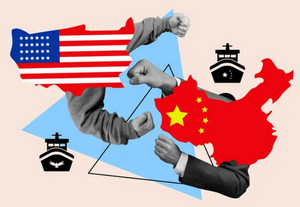
They are the main driving forces behind global developments. They are competing with one another for influence on the international stage and for access to natural resources and markets. This is gradually escalating into a confrontation between the two countries, which is evident in the political, economic, and military spheres and affects most nations. Manifestations of this include the USA’s efforts to contain China’s global expansion, particularly in the Asia-Pacific region; the trade wars between them that began after D. Trump returned to the White House; and the buildup of military capabilities by both sides around the world and in the Asia-Pacific region. Both the United States and China are extending their influence to other countries while simultaneously exploiting their mutual rivalry. In fact, the world is returning to a new Cold War, where the roles of the Western and Eastern blocs – formerly led by the United States and the USSR – are now filled by the United States and China, along with their respective partners. The United States’ main partners include Europe, Japan, South Korea, and Saudi Arabia – and now Ukraine as well. For its part, China’s allies include Russia, Iran, North Korea, and other members of the “axis of evil”.
As is well known, the Cold War between the Western and Eastern blocs – but, in fact, between the United States and the USSR – was accompanied by armed conflicts in different regions of the world, which served as its military manifestation. These conflicts were provoked by Washington and Moscow with the aim of strengthening their own positions and weakening the opponent’s influence in different regions of the world, as well as to test and exhaust the military capabilities of both sides.
The most well-known of these include: the war on the Korean Peninsula from 1950 to 1953, with the direct participation of the United States and China and covert involvement by the USSR; the war in Vietnam from 1959 to 1975, with the open involvement of the United States and covert involvement by the Soviet Union and China; in Afghanistan from 1979 to 1989, with overt actions by the Soviet Union and covert involvement by the United States. Since the 1950s, wars and armed conflicts have continued between Israel and Islamic countries and extremist organizations. At this, the USA directly supports Israel, while the USSR – and now Russia – supports, either openly or covertly, Islamic countries and Islamists.
Another military component of this competition – and, by and large, of the confrontation and new Cold War between the USA and China – is the USA’s military operation against Iran and Russia’s war against Ukraine.
The main goal of the USA’s war against Iran, as openly acknowledged by Washington, is to gain access to Iran’s oil resources. According to Washington’s calculations, now that the USA has already gotten its hands on Venezuelan oil, this will enable it to control most of the world’s hydrocarbon reserves. Besides, the USA is weakening Iran as a partner of China.
If the USA achieves its goals, it will significantly strengthen its position in the world and have greater opportunities to counter China’s global expansion. In the war in the Middle East, the Americans rely on the support of certain partners, namely Israel, Saudi Arabia, Qatar, the United Arab Emirates, Bahrain, and Kuwait. Europe has refused to assist the USA. Instead, Ukraine has sided with the USA, providing assistance to both the USA and its Middle Eastern partners in neutralizing Iranian drones. It is precisely in this area that our country has unique experience.
The USA is pursuing similar goals in its support for Ukraine in the latter’s military confrontation with Russia. Indeed, Russia’s aggression against Ukraine gives the USA grounds to impose sanctions on the Russian oil sector, which has already been done. As a result, the Russian Federation’s position in the global oil market is deteriorating. This works to the USA’s advantage. Furthermore, the USA is replacing Russian oil on the European market with its own.
At the same time, the war is exhausting Russia, weakening it as a partner to China, which in turn reduces China’s ability to compete with the United States. Neither of these two countries views the Russian Federation as an immediate military threat to their security, since they are separated by an ocean. However, Russia poses a potential threat to them, particularly in the nuclear and missile spheres, and requires an appropriate response. This is precisely where the USA is assisting Ukraine, which serves as a deterrent to Russia. Europe, meanwhile, just as during the last Cold War, acts as an ally of the USA, playing a significant role in undermining Russia’s power. This is Europe’s primary task, since Russia is the source of the main and immediate military threat to its security.
One way or another, Iran and Russia will be radically weakened, which will reduce China’s ability to use them for its own purposes against the USA.
China is acting in its own way. It is using Russia’s war against Ukraine and the USA’s military operation against Iran as means to divert the attention and efforts of the United States and Europe. In this way, it is increasing its capabilities in its geopolitical competition and confrontation with them. In these actions, Beijing relies on the Russian dictator Putin, who keeps clinging to power and is trying to satisfy his ambitions as a “unifier of Russian lands” through further full-scale aggression against Ukraine. China supports Russia’s actions by supplying it with goods it does not produce (and there are many such goods), providing dual-use products, purchasing Russian oil, and helping it circumvent sanctions. Incidentally, this also allows Beijing to strengthen its influence over Russia and expand its access to Russia’s natural resources, markets, and economic assets. At the same time, China is profiting from Russia by selling its goods at prices higher than global market rates (ten times higher for dual-use goods) while purchasing Russian oil at a price below market value. As a result, Russia has become a tool through which China implements its foreign policy and military power in the military dimension of the Cold War with the West. At this, Russia is beginning to lose its autonomy and is turning not merely into China’s junior partner, but into its satellite.
China is also covertly participating in the USA’s military operation against Iran on Iran’s side, which creates additional problems for the Americans. China supplies Iran with weapons and purchases oil from it, which allows the Iranian economy to continue functioning and enables Iran to keep resisting the USA for nearly half a year now. The most significant impact comes from China’s supplying Iran with of UAVs and man-portable air defense systems, as well as intelligence. It is precisely because of this that Iran is able to launch strikes against neighboring countries and US military bases in the region and counter the tactical aviation of the US Armed Forces.
This assistance to Iran has become one of the key reasons for the failure of the USA’s blitzkrieg and the protracted war in the Middle East, which has significant negative consequences for the region, the world, and the United States itself. First and foremost, this refers to rising global oil prices and financial losses suffered by Middle Eastern countries as a result of Iran’s blockade of the Strait of Hormuz and damage to the oil and gas infrastructure of its neighboring countries.
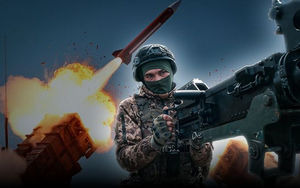
At the same time, the USA’s Armed Forces are suffering losses, forcing Washington to increase military spending. The US air defense system has failed, as it was unable to effectively counter Iranian drones and missiles. Missile stocks for the Patriot air defense system were wasted, and the USA cannot quickly replenish them. In fact, the USA’s military operation is failing and cannot break Iran’s resistance, as Iran refuses to make concessions on issues of principle. First and foremost, this refers to Iran’s attempts to maintain control over its oil reserves and continue its nuclear program. All of this negatively affects the USA’s global standing and erodes Americans’ trust in D. Trump and his Republican Party. This is especially true given that the war against Iran lacks significant support among the American public.
In other words, Ukraine and Iran are indeed focal points of the confrontation between the USA and China, which is unfolding in the political, economic, and military spheres. Today, this confrontation is already escalating from a Cold War between them into a Third World War, which, to one degree or another, affects a significant number of countries and spans a vast territory. Thus, the direct participants in the war are Russia and Ukraine, as well as the United States and Iran. China, Europe, and the countries of the Middle East are directly involved in the war. The consequences of the war affect virtually the entire world. As noted above, the war in the Middle East has led to a significant rise in global oil prices. At the same time, mutual sanctions imposed by the USA, China, Europe, and Russia are creating barriers to global trade and hindering the growth of the global economy.
As we see every day, direct combat operations are taking place in Ukraine and Iran. But the war encompasses much larger territories, including: countries in Northern, Central-Eastern, and Southeastern Europe, which are being targeted by Russian drones and missiles; the Black, Azov, and Caspian Seas, where hostilities are taking place between Ukraine and Russia – and, in fact, Iran; countries in the Middle East that are under attack by Iran; the Strait of Hormuz and, more broadly, the Persian Gulf, which are being blockaded by the Islamic Republic of Iran.
The war is beginning to spread to the Mediterranean Sea, where Ukrainian naval drones are attacking Russian “shadow fleet” vessels, while pro-Iranian terrorists are targeting American tankers. Ukraine is already targeting illegal carriers of Russian oil in the Atlantic Ocean as well. Meanwhile, Iran is striking its enemies in the Red Sea and the Gulf of Aden.
All of this is accompanied by an intensification of nuclear missile preparations by the parties to the conflict. The United States, Russia, China, the United Kingdom, and France are upgrading their nuclear missile capabilities. Besides, the United States and Russia are deploying their nuclear munitions on the territory of their allies. American nuclear bombs are already stored in Italy, Germany, Belgium, the Netherlands, Türkiye, and the United Kingdom. The possibility of deploying them in Finland, Poland, and the Baltic states is being considered. For its part, Russia has deployed tactical nuclear weapons on the territory of Belarus. France is joining this effort. Its new nuclear doctrine provides for the possibility of temporarily stationing part of France’s nuclear arsenal outside the country’s borders. Germany, Norway, Belgium, the Netherlands, Denmark, Poland, and Sweden have already given their consent or may do so in the near future.
Despite pressure from the United States, Iran’s leadership is effectively refusing to scale back its nuclear missile program, which is aimed at developing nuclear weapons and their delivery systems. Ukraine does not possess nuclear weapons and has no plans to develop them.
It is precisely the Russians’ threats to use nuclear weapons – which are becoming increasingly acute as the crisis in Russia deepens, its offensive on the front lines stalls, and Ukrainian strikes on Russian territory intensify – that could serve as a catalyst for the military component of the Cold War between the USA and China to escalate into a full-scale Third World War. This is already becoming a reality, and therefore it would be prudent to forecast how the situation might unfold. We will not consider the nuclear-missile scenario, since in that case human civilization would simply perish. Therefore, we will limit ourselves to a general forecast of how the current stage of global confrontation will end, viewed through the lens of the Russian-Ukrainian and US–Iranian wars.
Indeed, in the foreseeable future, joint actions by the USA, Europe, and Ukraine will completely undermine Russia’s economy and inflict critical losses on it at the front, forcing it, at the very least, to suspend the war. Negotiations will then begin, which may result in the signing of a peace treaty between Ukraine and Russia. However, this treaty will not resolve the underlying conflicts between them nor normalize their relations. Their relationship will come to resemble that between North Korea (DPRK) and South Korea (ROK). In this scenario, Russia, like the DPRK, will find itself within China’s sphere of influence, while Ukraine, like the ROK, will become part of the Western world.
However, another scenario is also possible. Russia could collapse under the pressure of an internal crisis – a possibility that even Russian politicians are already predicting. As a result, its eastern and central regions would come under China’s protectorate, its southwestern regions would gravitate toward Ukraine, and its northwestern regions would gravitate toward Northern Europe. As a result, Ukraine will become one of the most powerful European states.
In the Middle East, the outlook is clearer. Everything will essentially return to the pre-war status quo. The USA and Iran will reach a certain agreement and sign a peace treaty on terms similar to those that existed before the war. Iran did not win the war against the USA, but neither did it surrender to the mercy of the world’s most powerful country. As a result, it has grown stronger and is already using this fact to deter the USA in the region. It actually controls the Strait of Hormuz, and only with its permission – and for a fee – can tankers and other vessels pass through it freely. This was not the case before. Most likely, after some time, Iran will resume developing nuclear weapons and supporting Islamists in the region in their attacks on Israel. At the same time, China’s influence over Iran, as its ally, will clearly grow. The USA’s position in the region, on the other hand, will weaken. Of all these scenarios, China stands to benefit the most. Thanks to its control over Russia – or over whatever state entities emerge in its place – it will come very close to Europe and Ukraine. At the same time, China will gain a foothold in the Middle East, enabling it to continue its expansion toward the Mediterranean region and North Africa.
The United States will also see certain gains. For instance, its entry into the European energy market as one of the main suppliers of oil and gas will strengthen the American presence in Europe. At the same time, the USA’s assistance to Ukraine in repulsing Russian aggression will lay the groundwork for deepening their bilateral relations in the future. Against this background, new lines of confrontation between the USA and China will emerge outside the Asia-Pacific region. These will be Europe and Ukraine in the north, and the Middle East, the Mediterranean region, and North Africa in the south. It is precisely there that World War III will be fought. Ukraine is already an ally of the United States and Europe and will remain so.
Thus, the geopolitical rivalry between the USA and China is evolving into their own Cold War, which includes a military component in the form of the Russian-Ukrainian and US–Iranian wars. These conflicts are interconnected and, in fact, are becoming the focal point of World War III. Russia, Ukraine, the USA and China are already directly involved in it, while China, Europe, and the countries of the Middle East are indirectly participating in this war. To one degree or another, hostilities will engulf vast territories stretching from Northern Europe and the Mediterranean Sea to Russian Siberia and the Persian Gulf. Moreover, signs of war are already evident in the Atlantic Ocean.
To date, China has been the most successful in the war. It has strengthened its influence over Russia and Iran and has effectively reached the borders of all of Europe, while also establishing a foothold in the Middle East, which will enable it to begin expanding toward the Mediterranean region and North Africa. The USA’s position is strengthening in Europe and Ukraine, but weakening in the Middle East.
It is precisely in these regions that new lines of confrontation and local wars between the USA and China will emerge. Wars may break out in the future and escalate into regional and global military conflicts. Moreover, Ukraine will once again find itself at the crossroads of the interests of the world’s leading power centers – now the USA, together with Europe, and China.
Such prospects will obviously force the USA to reconsider its plans to reduce its military presence in Europe. At the same time, Ukraine’s importance as a component of the new European and Euro-Atlantic security system will increase even further.
Yurii Mykhailenko,
Institute for Global Politics