Resumption of Peace Talks. Expectations and Prospects
The situation surrounding Russia’s war against Ukraine is changing. And these changes give reason to hope that peace talks will resume. US President D. Trump’s representatives’ recent visits to Moscow and Kyiv may serve as a basis for this. Russia is forced to agree to negotiations because it has not achieved the successes it sought on the front lines, and its economy is suffering from a crisis. New US sanctions and Ukrainian strikes on Russian oil refineries could deal a final blow to Russia. The situation for the Russians will become even more complicated once Ukraine acquires ballistic missiles. However, Russia will still drag its feet on negotiations to buy time to achieve its war aims – if only to seize the entire Donbas region. At this, it will intensify its offensive operations on the front lines and its missile and drone strikes across Ukraine. Nevertheless, Russia will ultimately have to make concessions, at least regarding a possible agreement with Ukraine on an energy ceasefire for the duration of the coming winter. Unlike in previous years, it will not be able to strike Ukraine with impunity.
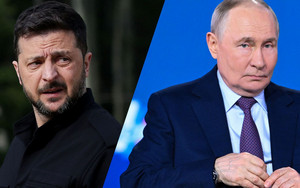
The main goal of Putin’s war is the destruction of Ukraine, which he considers the primary obstacle to the realization of his geopolitical plans to revive the Russian Empire. At the same time, Russia’s inability to achieve its objectives by military means and the significant deterioration of the Russian economy are forcing him to resort to other methods. In particular, he is trying to achieve his goals through negotiations with Ukraine mediated by US President D. Trump. In early September, after a fairly long hiatus, preparations began for the next round of negotiations, which may take place at the end of the month. This time, unlike previous rounds, the negotiations may yield some positive results – a possibility that, incidentally, Ukraine’s leadership anticipates. Therefore, this topic deserves attention. To better understand it, we must recall the course of the dialogue that began in February 2025, when D. Trump returned to the office of US President.
Background of the Negotiation Process
Indeed, Putin has always relied on the US President – both then and now – because he considers him an ally and hopes he will force Ukraine to surrender. That is precisely why, in February 2025, the Russian dictator agreed to negotiations mediated by D. Trump. At this, Russia made harsh demands on Ukraine: to hand over Donetsk, Luhansk, Zaporizhzhia, and Kherson regions to the Russians; to recognize Russian sovereignty over all territories they occupy; to renounce NATO; and to reduce the size of our Armed Forces.
Initially, D. Trump did indeed support Russia and tried to force Ukraine to make concessions in favor of the aggressor. In this way, he hoped to quickly end the Russian-Ukrainian war and begin implementing joint economic projects with Russian businesses. At the same time, Europe and Ukraine, as well as Russia’s supporters and opponents in the USA, managed to convince D. Trump that his hopes and actions were misguided. Moreover, he himself came to realize that it is Russia that does not wish to end the war, and that its terms for peace are unjust and cannot be accepted by either Ukraine or Europe. Therefore, D. Trump began to put pressure on Russia, although he still hoped to secure certain benefits for himself and the USA through economic cooperation with Russia. At the same time, starting in mid-2025, the economic situation in Russia began to deteriorate significantly as a result of the cumulative effect of Western sanctions and US measures, compounded by the drop in global oil prices. Meanwhile, on the front lines in Ukraine, the pace of the Russian offensive slowed down.
As a result, Putin was forced to agree to certain concessions. He temporarily abandoned his demand that Zaporizhzhia and Kherson regions be transferred to Russia, retaining such demands only with regard to the Donbas as conditions for suspending hostilities on the front lines and adopting a peace agreement. All of his other demands remained unchanged. It is possible that such an agreement was reached during the meeting between D. Trump and Putin in Alaska in August 2025, which gave rise to what was called the “spirit of Anchorage”.
Control over the entire territory of the Donbas is of fundamental importance to the Russian dictator. He would be able to declare that the objectives of the “special military operation” have been achieved and call it a “victory”. Anything else would signify Russia’s defeat and a personal loss for Putin, which he is determined to avoid. However, Ukraine, like any other state, cannot voluntarily agree to territorial concessions. This is all the more true given that meeting Russia’s demands regarding the Donbas in no way guarantees the restoration of peace or that Russia would not make further claims in the future, including regarding Zaporizhzhia and Kherson regions. Consequently, the negotiations have stalled once again. Without being overly confrontational, D. Trump has resumed pressure on Ukraine, this time regarding the transfer to Russia of that part of Donetsk region that was under Ukrainian control.
The Development of the Dialogue in the First Half of 2026 and Its Cessation
In early 2026, the negotiation process underwent further changes. The drop in global oil prices in January of this year – to below the cost of production – placed Russia in an extremely difficult position, as it remains critically dependent on energy exports. According to a number of reports, Putin was then prepared to halt hostilities along the front lines and engage in substantive negotiations.
However, the military operation against Iran launched by the USA and Israel in February of this year, saved Russia so to speak. Hostilities in the Middle East and Iran’s blockade of the Strait of Hormuz led to a significant rise in global oil prices and, consequently, to Russia beginning to generate revenue. Prices for other raw materials that Russia exported also rose. Moreover, as the war dragged on, this helped maintain a favorable situation for Russia. Therefore, it moved quickly to raise its rates. In May of this year, Russia announced that it was suspending peace talks with Ukraine until it had brought the entire territory of the Donbas under its control. At this, it emphasized that the Russian armed forces were capable of capturing the Donbas and would set out to do so in the near future.
To carry out these plans, Russia intensified combat operations across the entire front as part of its summer campaign. In accordance with these plans, the Russian armed forces focused their main efforts on taking control of the Sloviansk-Kramatorsk metropolitan area in the west of Donetsk region. At the same time, the Russian army intensified its offensive operations in the South of Ukraine in Zaporizhzhia region and in the Northeast in Kharkiv and Sumy regions. Simultaneously, the Russians attempted to actively involve Belarus in the war against Ukraine.
But Russia failed to achieve its goals. Its armed forces became bogged down in battles within Ukraine’s defensive belt in the Donbas and in fortified areas on the approaches to Zaporizhzhia, and their losses exceeded the limits of what could be replenished. Moreover, Ukraine has begun to seize the initiative with successful counteroffensives at the junction of Zaporizhzhia, Dnipropetrovsk, and Donetsk regions, as well as through air operations aimed at isolating Crimea and disrupting the logistics of Russian troops in the South of our country.
Against this background, Russia’s economy has been gripped by a systemic crisis. It is deepening further under the impact of Western sanctions and strikes by the Ukrainian Defense Forces on its oil refineries and seaports. To date, the Ukrainian Defense Forces have already destroyed more than 60% of Russia’s oil refinery capacity and blocked grain and oil exports from Black Sea ports. Meanwhile, the positive impact on Russia of the war in the Middle East has begun to wane.
As for Ukraine’s economy, it is not in the best shape – and may even be in worse shape. Russian shelling is putting not only individual enterprises but entire industrial sectors out of commission. Ukraine has also lost the ability to export its grain through Black Sea ports. However, it is being supported by its Western partners, which allows it to survive and continue the war.
Russia recognizes this and is using the last of its available capabilities to put pressure on Ukraine and ultimately force it to capitulate. Currently, its temporary advantage over Ukraine in ballistic missiles and jet-powered UAVs creates a window of opportunity for this. Russia is using those weapons against civilian infrastructure of Kyiv and Kyiv region, as well as of other Ukrainian cities and towns. In this way, the Russian leadership hopes to create chaos in Ukraine and cause panic among its population so that they would begin to pressure the government, demanding that it agree to surrender.
However, Russia’s actions are not yielding the results it expects but are instead uniting Ukrainians in their resistance against the aggressor. And in the near future, the enemy’s aforementioned capabilities will be significantly reduced. The USA, Germany, and Japan will ramp up production of anti-missile rounds for the Patriot air defense system. This is expected to happen in just a few months. Until then, Ukraine’s needs will be partially met by its partners. This is currently a priority for NATO and the EU. In addition, by the end of September of this year, Ukraine will be producing sufficient quantities of jet-powered drones designed to intercept new types of Russian UAVs.
Ukraine has also already established production of its own cruise missiles, which are successfully striking the enemy, including deep within its territory. Ballistic missiles with a range of up to 300 km have been developed, tested, and are being put into service. By the end of this autumn, ballistic missiles with a range of up to 900 km – capable of reaching the Russian capital – will also be operational. This will enable us to respond adequately to attempts to destroy our energy infrastructure this winter.
Russia is facing such problems, as evidenced by public statements from representatives of the Russian government, who are effectively acknowledging that the Russian economy is on the brink of a crisis. And in the official forecast by Russia’s Sberbank, released in August of this year, a cessation of hostilities is generally identified as the best option for Russia. In fact, the only one advocating for the continuation of the war is Putin, who is still trying to achieve at least its minimal objectives.
Although, according to some estimates, Putin may be content with what has already been seized in Ukraine, and if the situation in Russia comes dangerously close to disaster, his inner circle will begin to exert significant pressure on him.
As for Russia’s failure to “liberate” the entire Donbas, Russian propaganda will justify it as yet another “gesture of goodwill” or cite some other reasons. This is all the more true given that the vast majority of Russians have no need for the Donbas at all. They simply want the war to end.
Trump’s Influence and the Prospects for Resuming Negotiations
Under current circumstances , the USA’s actions – such as the imposition of tough sanctions against Russia and its partners – could spell disaster for Russia. And such sanctions would ultimately destroy Russia’s economy. This is precisely what D. Trump is capitalizing on as he works to resume Russian-Ukrainian negotiations with his mediation. Moreover, he needs at least some outcome from the peace dialogue to improve his approval ratings and boost the standing of the Republican Party ahead of the US midterm congressional elections on November 3 of this year. This issue has become particularly pressing for D. Trump due to the sharp decline in Americans’ trust in him since the start of his second presidential term in January 2025. This decline stems from missteps in his domestic and foreign policies, which have sparked a negative reaction among the American public. On the foreign policy front, this primarily concerned the failure of the USA’s military operation against Iran and, so to speak, D. Trump’s mediation in ending Russia’s war against Ukraine. This threatens the Republican Party with defeat in the elections, which D. Trump cannot allow, as he risks losing control of Congress. Meanwhile, Democratic Party leaders also intend to pursue legal action against him for violating US law should he somehow win. Therefore, he is striving to rectify the situation by resolving at least the aforementioned foreign policy issues.
Thus, the USA is seeking to get Iran to agree to comply with American demands to abandon the development of nuclear weapons. To this end, it is employing a combination of incentives and heavy-handed pressure. On the one hand, the USA is offering to lift the ban on Iranian oil exports; on the other, it is blocking Iranian tankers from leaving port and continuing to carry out airstrikes against military and economic infrastructure.
At the same time, after a brief hiatus during which he focused his attention on Iran, D. Trump has stepped up his efforts regarding Russia as well. In line with the sentiments of most Americans, he has shifted his stance toward Russia from de facto support to a policy similar to the one applied toward Iran. As before, Trump is demanding that Russia cease hostilities along the front lines and subsequently move toward negotiations. If Russia agrees to this, he promises to facilitate a partial lifting of sanctions against it and to begin implementing joint economic projects. At the same time, D. Trump threatens to impose harsh sanctions on Russia and supports Ukraine as it forces Russia toward peace by intensifying strikes on its oil refineries and other critical economic facilities.
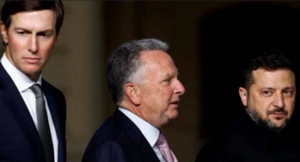
It was within the framework of this approach that CIA Director J. Ratcliffe visited the Russian capital on August 25 of this year, and a meeting took place between US Treasury Secretary S. Bessent and Minister of Finance of the RF A. Siluanov on August 31 of this year on the sidelines of the G20 summit in Asheville (USA) as well as the visits by D. Trump’s special envoys – S. Witkoff and J. Kushner – to Moscow and Kyiv on August 5–6 of this year. It is clear that they conveyed to Putin the firmness of D. Trump’s resolve to achieve his goals.
Prospects for an End to the War
In any case, D. Trump’s actions prompted Russia to agree to resume dialogue. Because, in fact, it found itself in a dead-end situation. On September 9 of this year, RF President’s Press Secretary Dmitry Peskov announced Russia’s readiness for trilateral talks in the Ukraine-Russia-the USA format. At the same time, according to him, there is still no peace plan. Furthermore, Russia has once again refused to cease hostilities until it regains control of the entire Donbas region. Given this, we should expect Russia to manipulate the negotiations once again. In other words, it will drag out the process in order to achieve its goals regarding Ukraine – at the very least, to bring the entire Donbas under its control. Furthermore, the Russian leadership hopes that far-right, pro-Russian, and anti-Ukrainian forces will win the 2027 presidential election in France and the 2026–2027 regional parliamentary elections in Germany. According to Russian expectations, the winners will block the imposition of new sanctions against Russia and the provision of aid to Ukraine. Moreover, the pretense of dialogue will allow Russia to avoid new sanctions from the United States as well. Such actions by Russia will be accompanied by increased military pressure on Ukraine, including terrorist attacks on the civilian sector of our country and intensified offensive operations on the front lines. This will be one of the main objectives of the second phase of mobilization in the RF, which is expected to take place after the country’s parliamentary elections. And during the winter, Russia will try to disable Ukraine’s energy infrastructure. However, Russia may still agree to an economic truce with Ukraine. It could be forced to do so by pressure from the USA, as well as, in particular, by Ukraine’s possession of ballistic missiles capable of reaching Moscow. This would threaten Russia’s energy sector and the energy supply to its capital, which is particularly sensitive for the Kremlin. It doesn’t care what happens across the rest of the country, but unrest among Moscow residents due to a lack of electricity and heat would pose a real danger to Putin’s regime. The economic benefits of cooperation with the USA could also push Putin toward genuine negotiations with Ukraine. This is all the more likely given that the White House has limited this opportunity to a clearly defined timeframe leading up to the US midterm congressional elections, making it clear that if the Russians do not agree to peace by then, they will no longer be needed.
At the same time, only two factors can truly have a significant impact on Putin’s position as Russia’s dictator, who determines the country’s policy:
First – a critical escalation of the economic crisis in the country, as a result of which it will lose the ability to continue military operations. According to various estimates, this could happen by the end of 2026 at the earliest and by 2028 at the latest. Once again, Ukraine’s strikes against the Russian oil refining industry could play a decisive role here;
Second – a breakthrough by the Defense Forces of Ukraine on the front lines, which would radically change the situation. In that case, Russia would also be forced to agree to a ceasefire along the front lines in order to avoid losing everything. At the moment, the conditions for this are taking shape near the town of Lyman in Donetsk region, Northeast of Sloviansk. We will monitor how events unfold.
Thus, increased pressure from the United States has forced Russia to agree to resume peace talks with Ukraine. At the same time, the groundwork for this was laid by a critical deterioration of the economic situation in Russia, coupled with its lack of tangible successes on the front lines. However, as before, Russia will drag out the negotiation process in order to achieve its goals regarding Ukraine – at least as far as seizing the entire territory of the Donbas is concerned. At the same time, Russia will try to avoid new sanctions in this way. Therefore, it will intensify its attacks on the front lines and its terrorist strikes against Ukraine’s civilian sector. And during the winter, it will attempt to destroy our country’s energy infrastructure. However, if Ukraine possesses its own ballistic weapons capable of reaching Moscow and striking its energy infrastructure, this could force the Russian leadership to agree to a ceasefire in this area.
At the same time, true peace will come only when Russia loses the ability to continue the war – either due to a devastated economy or a major breakthrough by the Ukrainian Armed Forces on the front lines – which will force the enemy to cease hostilities to avoid suffering significant losses. Recent developments indicate that such a situation is approaching. Russia is gradually losing ground and making concessions step by step. Therefore, Ukraine, together with its Western partners, will defeat Russia.
Yurii Mykhailenko,
Institute for Global Politics