Based on the materials of the roundtable of the Institute for Global Politics “Russian Authoritarianism as a Threat to Global Security”
“Both in Britain and in other countries, we still tend to hear about rather fatalistic views of Russia. Russia will not change even when Putin leaves the Kremlin!”
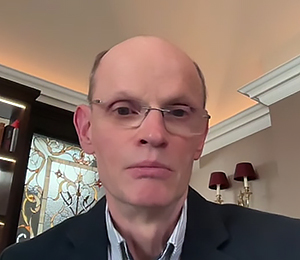
I am a long-time researcher of what is happening in Russia and Ukraine. I was the first NATO representative to work in Russia. It was the 1990s, when times were very different… Back then, people believed that there could never be a war between Russia and Ukraine because Russians and Ukrainians were quite close. And this, as we know, was a certain miscalculation. Since 2009, I have been a fellow in the Russia and Eurasia program at Chatham House.
I’d like to say a few words about how Russia is currently perceived in Western capitals, because I often talk to people about this topic. And my first observation is that over the past 35 years, Western countries have lost the ability to think strategically about Russia. Ultimately, strategy is about finding ways to get what you need. This is very simple to put it. And for some reason we thought that at the end of the Cold War we got what we wanted from Russia. Or, more precisely, that we could not have gotten anything better, despite the obvious deterioration of the situation in Russia itself. Against this backdrop, the security bloc in Western countries, if I can call it that, lost its priority.
Defense budgets were cut, armies no longer focused on national defense. Now we are finally starting to restore some of this defense potential. But it will be a very long way to go. What we haven’t done very seriously yet is to start rebuilding our expertise on Russia. It was simply allowed to decline at the end of the Cold War, and resources were simply redistributed. For example, there were Russian-speaking intelligence officers in the UK who were sent to study Pashto after 2001, when our attention shifted to Afghanistan.
To understand the situation, I asked the British official what the British government would do if Putin died today and Prime Minister Mikhail Mishustin became acting president, according to the constitution. The British official looked at me and could not find the right words to answer. And I really had to tell this person that I think we have to do something better. But I think this just reflects a lack of training and understanding. Both in Britain and in other countries (I tend to think that Britain still has some experience with Russia), you still tend to hear about quite fatalistic views of Russia. Russia will not change even when Putin leaves the Kremlin!
And it’s almost as if there is no faith that Russia can be induced to change its behavior. In a way, the West is part of the problem here, because we generally want to believe that eventually there will be a “good tsar” in Moscow. We continue to believe that Russia can only be governed in one way. This means that there is no alternative to a strongly centralized authoritarian rule. As we all know, to support such a model, an image of the enemy is necessary. And this, in turn, justifies the imperial approach to building security and the idea that Russia’s borders have no end. Today we can see this logic very clearly, that Russia’s zone of influence can never be sufficient. In the case of the war in Ukraine, the Russians say that as part of the revision of the European security system, they need NATO forces and NATO infrastructure to be withdrawn from Poland and other Central European countries. Frankly speaking, this is just nineteenth-century thinking that has no place in twenty-first-century Europe!
Therefore, I personally believe that we need to talk about the main problem, namely the system of governance in Russia. We need to fight the idea that decentralization of power automatically means the disintegration of Russia, because Western countries are frankly afraid of this scenario. This is the chaos theory, the danger of nuclear weapons. We have repeatedly seen that Western leaders are extremely uncomfortable with the idea that the central government in Russia could be reduced. Therefore, I believe that we need to focus more on an analytical approach to how Russia can become a true federation.
We started to see some changes in the 1990s. I recall my stay in Moscow, the role of the Federation Council, where you could see elements of the regions that had a real influence on things, but still felt fully integrated into Russia itself, into the federation. Therefore, I think the experience of decentralization in Ukraine is important. I would say that it is not well known outside of Ukraine and, of course, very little is known in Russia.
During my career, I had the opportunity to live abroad and learned a lot about my country and about myself in a sense from the UK’s close neighbors. Whether it be the Belgians, the French, the Dutch or the Germans. I must also say that Ukrainians and Russians have also drawn my attention to certain character traits that I have inherited as an Englishman, or indeed as a Briton. And I recall the famous phrase of Rudyard Kipling, who may not be very fashionable these days, but he coined this wonderful phrase about what those who know only England should know about England.
I’m talking about the need for Russia and Russians to have much more contact with the people around them and learn more about who they are-from Belarusians, Georgians, Kazakhs, and of course Ukrainians. Because if they can do that and become more self-aware of who they are and how they are perceived as a nation, then I think that will help them find their place in the twenty-first century world. This is extremely important for the future of Russia and, equally, for the stability and security of Europe.
John Lowe
Head of International Partnerships, NEST,
Associate Fellow, Russia and Eurasia, Chatham House