Restructuring in the USSR and Russia. Historical Parallels
In December, President of the RF Putin ordered a structural restructuring of the country’s economy in order to reduce its dependence on the oil industry, which has become the main target of pressure and attacks from the USA and Ukraine.
This decision reminds of the actions of former USSR leader Mikhail Gorbachev, who also attempted to “restructure” the c
untry’s economy in order to overcome the crisis that arose in the early 1980s as a result of measures taken by the USA to reduce world oil prices.
Russia considers itself the successor to the Soviet Union and therefore inherits all of its problems. At one time, they caused the collapse of the USSR, and now they are leading to the collapse of the Russian Federation.
According to many experts, the year 2025 marked a turning point in the functioning of Russia’s economy, which, after growing in previous years, entered a period of stagnation and then recession. We have already discussed this in our previous articles. When discussing the current economic situation in Russia, it should be noted that it is changing according to the same scenario as the USSR on the eve of its collapse.
At present, it resembles 1985, when the then leader of the USSR, Mikhail Gorbachev, was forced to announce the “perestroika” and “democratization” of the country. The reason for this was the economic crisis in the Soviet Union, provoked by the USA in response to the USSR’s refusal to pursue a policy of easing international tensions and use of force to change the government in Afghanistan, along with bringing Soviet troops to its territory.
Thus, in the early 1980s, on the initiative of the then US President Ronald Reagan, America and its partners sharply reduced world oil prices, which led to a significant reduction in the USSR’s revenues, which depended on its exports. At the same time, by introducing the Strategic Defense Initiative, which provided for the military use of space, the USA forced the USSR to sharply increase its military spending. In addition, support for the resistance forces in Afghanistan was strengthened, which accordingly required the USSR to increase its spending on the war as well. As a result, the Soviet Union faced a critical shortage of state budget funds, which prevented the government from maintaining the economy and providing social services, as well as financially supporting its allies and the war in Afghanistan. This is what prompted the USSR leadership, in the form of the Politburo of the Central Committee of the Communist Party of the Soviet Union, to make radical changes in the country.
The goal of the proclaimed “perestroika” was to increase the efficiency of the Soviet economy by transforming it from a planned state economy to a market economy. And as part of the so-called “acceleration”, it was planned to increase labor efficiency by applying more modern technologies and improving the organization of labor. It was also planned to reduce the USSR’s dependence on oil exports.
At the same time, by proclaiming the “democratization” of the Soviet Union, Mikhail Gorbachev hoped to obtain loans from the USA and Europe, which were sorely needed to cover the state budget. The West agreed to provide funds, but only on condition that Moscow carry out democratic reforms. The most famous of these was the so-called “glasnost”, namely, the abolition of censorship in the media.
The idea was indeed successful. However, in practice, it was not implemented. Thus, the planned state economic system was destroyed, but the government was unable to establish normal market relations. This was due to its incompetence and corruption, as well as the redistribution of economic assets among the party elites – the future oligarchs. All this gave the economic crisis in the USSR new characteristics, such as mass bankruptcies and the shutdown of enterprises in different industries. The economy began its rapid decline, the state budget deficit rose sharply, which even Western loans could not prevent. Measures to compensate for the budget shortfall by issuing unsecured money caused hyperinflation.
This led to a socio-political crisis in the Soviet Union, associated with mass unemployment, delays in salary payments, rising prices, and the stratification of society into the wealthy and the poor. Initially, these factors caused dissatisfaction among the population with the country’s authorities, and then with the USSR itself. In its republics, the Soviet Union began to be perceived as an obstacle to their development.
As a result, these trends gave rise to centrifugal processes in the USSR, which began to intensify. This was especially true since democratic reforms in the country weakened the power of the state system and contributed to the growth of national movements. Moscow tried to restrain them, even using military force. In those Soviet republics where the desire for independence was most active, Moscow deliberately provoked armed conflicts. But this only made the situation worse.
Against this background, the USSR also began to lose its international position. In July 1991, the Warsaw Pact, created by the USSR as a counterweight to NATO, ceased to exist. The Council for Mutual Economic Assistance also collapsed. At the same time, the Soviet Union’s partners in the Middle East, Africa, and Latin America began to distance themselves from it. And in 1988, the USSR was forced to end the war in Afghanistan and withdraw its troops from there.
Within five years of the start of the USSR’s “perestroika”, the country’s internal problems had reached a critical point, culminating in a political “explosion” in the form of its collapse in December 1991. The catalyst for this was an attempt by a group of individuals from the ruling elite of the USSR – the so-called State Committee for the State of Emergency – to restore totalitarianism in the country.
The complete disintegration of the Soviet Union was not part of the USA’s plans, as it posed a number of critical threats, including the possible loss of control over the USSR’s nuclear weapons. The USA failed to prevent its collapse even by increasing its aid and attempting to influence the leadership of the republics.
After the collapse of the USSR, centrifugal processes engulfed Russia itself. They were characterized by the same socio-economic and interethnic reasons which manifested themselves in the form of “parades of sovereignty”. That was a consequence of Moscow’s inability not only to create conditions for the economic development of the regions, but also to ensure their survival. In addition, in the 1990s, the federal center was weak and unable to counteract the actions of the subjects of the federation, who sought greater independence. Moreover, the then President of the Russian Federation, Boris Yeltsin, called on them to “take as much sovereignty as they can”.
Regional leaders took advantage of this and began to expand their powers, subordinating economic assets in their territories and the financial flows they generated to themselves. They redistributed taxes and other revenues to their advantage. Then, under the pretext of prohibiting the export of scarce goods from the regions, they began to fortify the borders. Local currencies appeared, initially in the form of vouchers for the same scarce goods.
Another powerful basis for the autonomy of the regions was the establishment of direct economic ties with neighboring countries. However, Russia did not relinquish control over its main resources – oil and gas – as the main pipelines ran through its western territories.
At the same time, since Moscow could not provide adequate funding for law enforcement agencies in the regions, control over those agencies began to shift to the constituent entities of the federation, which resolved the problem on their own. This mainly concerned the bodies and departments of the Ministry of Internal Affairs and the Ministry of Emergency Situations, but in some cases it also involved the armed forces.
Another significant problem for Russia was the intensification of armed conflicts in the North Caucasus. The conflicts had historical roots, but during the Soviet era, they were frozen. Chechnya even held a referendum and declared independence, repelling Moscow’s attempt to regain control by force in the mid-1990s. Islamism also began to take root in the North Caucasus, which became a source of tension for the whole of Russia. All this brought it to the brink of collapse, which in fact began. It was saved by the Russian oligarchs. They were interested in preserving the integrity of the Russian Federation as a condition for the success of their businesses. To this end, they brought Putin to power and concluded a “stability pact” with him.
It was informal in nature, but provided for the parties’ clear obligations. Russia’s business elite took responsibility for Putin’s political and economic support. For his part, he had to ensure stability in the country and its positive relations with the West as the country’s main trading partner.
Within the framework of this approach, the oligarchic circles of the RF managed to consolidate Russian society around Putin and create the basis for the restoration of a totalitarian system of power in the country on the grounds of countering Islamic extremism, which was identified as a critical threat to the RF. It was for this purpose that the Chechen war was provoked for the second time in 1999-2000, and Putin was credited with Russia’s victory in it.
Using his authority, which had grown significantly after the war, the support of the oligarchs, and preaching the ideas of countering extremism and restoring “great Russia”, Putin concentrated state power in his hands and then moved from cooperation to confrontation with the West. At this, favorable conditions for his activities were created by the restored high prices for oil, which remained the basis of the Russian economy. Besides, even in the most difficult times, other raw material sectors of the Russian economy, in particular coal, metallurgy, and forestry, continued to work steadily for export.
Financial assistance from the USA and Europe, followed by trade with them, played an important role in preserving Russia’s integrity in the 1990s. Despite the Kremlin’s resumption of anti-Western policies in 2007 and its intensified efforts to regain control over the post-Soviet space, including by military means, as was the case in Georgia in 2008, the United States and Europe effectively indulged it.
Pressure on Russia in the form of sanctions began only after its first attack on Ukraine in 2014. However, the consequences were not critical for Russia.
The West’s attitude toward Russia really changed only in 2022, when it decided on full-scale aggression against Ukraine. At that time, the USA and the EU imposed more effective sanctions against Russia, which began to have a significant impact on the Russian economy. However, Russia found ways to circumvent them in its main oil sector.
The situation took on a completely different character after Donald Trump returned to the US presidency in January 2025. In line with his “America First” concept, he began to try to radically weaken Russia as a military adversary of the USA and squeeze it out of the global energy market as a competitor. This was also discussed in our previous articles. However, D. Trump’s efforts are often dismissed, so it is worth showing that they can indeed take place.
To achieve his goals with regard to Russia, D. Trump took the same measures as Reagan had done before him. Namely, he lowered global oil prices to a level that was critical for Russia’s economy. As of the second half of November this year, the price of Russian oil fell below $40 per barrel, which is less than the average cost of its production in Russia and transportation to foreign markets.
Moreover, Donald Trump went further than his predecessor. He forced Europe to give up Russian energy carriers and switch to American ones. As a result, the USA pushed Russia out of the European energy market and took its place. Now he is making efforts to deprive Russia of the Chinese and Indian markets with the prospect of American or other US-controlled oil entering them.
This is the main reason behind the sanctions imposed by D. Trump in October on Russian companies “Rosneft” and “Lukoil” under the pretext that Russia must stop the war against Ukraine. In addition to further undermining Russia’s oil industry, the sanctions are being used by the US President to put pressure on China and India. In addition to the previous ones, more powerful secondary sanctions are now being prepared, which provide for the introduction of 500 % tariffs on goods from countries that buy Russian oil.
Furthermore, D. Trump is using the Russian-Ukrainian war as a factor in the further depletion of Russian resources. With his seemingly pro-Russian policy, he is pushing Putin to continue the war, which weakens Russia by preventing it from achieving any tangible military and political gains. At the same time, the war is destroying Russia’s oil and gas infrastructure and undermining the possibility of transporting Russian oil to foreign markets via Ukraine.
With this policy, D. Trump has done more damage to Russia since the beginning of this year than all US and EU sanctions combined since 2014. However, like other US Presidents at turning points in history, he most likely does not want the complete collapse of the RF as a single state, as this could create the same problems that were expected and actually arose during the collapse of the USSR. It is more likely that D. Trump intends to gain dominant influence over Russia and free access to its natural resources.
Trump’s stated goals and methods of achieving them are more than obvious. Therefore, it is not at all clear why most experts consider him a supporter of Russia. Moscow itself hopes that he will share the world with it. So let’s look at what he has actually done to Russia.
It was D. Trump’s actions that catalyzed the sharp acceleration of crisis processes in the Russian Federation. Currently, even the ruling elite, which previously claimed that everything was fine with Russia’s economy, agrees with the fact that the economic situation in the RF is deteriorating.
During a series of public events in December, President of the RF Putin acknowledged that GDP growth in 2025 had slowed down to 0.5–1 %, while the target level, taking into account the decision on a “soft landing for the economy”, was set at 2–2.5 %. In other words, even according to official data, Russia’s economic growth rate has slowed down more than fourfold compared to the previous year.
The same applies to Russia’s budget deficit. The planned level of this indicator for 2025 was 1.17 trillion rubles. In the spring, it increased to 3.79 trillion rubles, and in the autumn – to 5.74 trillion rubles.
However, according to independent experts, the real picture is much worse. The above-mentioned economic growth rate of 0.5–1 % is less than the statistical error, which is 3 %. Therefore, in reality, GDP may not grow in 2025, but may decrease by 1–2 %. The decline in production in the non-military sector is forecast to be around 5.5 %.
But then, this is not the limit. In the first 11 months of this year, transport volumes in Russia fell by more than 10 %. Obviously, the production of goods has decreased by the same amount, since it is these goods that are transported. It follows logically that the Russian economy will experience a similar decline.
The Russian state budget deficit may also be significantly higher than expected. According to non-governmental forecasts, it could reach 8 trillion rubles, which will become known in the near future.
A number of leading sectors of the Russian economy are already in a critical situation. These include: coal, metallurgy, and forestry industries, as well as diamond mining, due to Western sanctions that have made their export impossible; automobile and agricultural machinery production due to reduced demand for their products; construction due to people’s inability to buy apartments; agriculture due to high interest rates and a significant reduction in state support; transport due to a decrease in transport volumes.
Since August of this year, all of these industries have been undergoing a process of partial or complete suspension of operations. Due to a lack of funds for mutual settlements, a crisis of non-payments is spreading, leading to the bankruptcy of an increasing number of companies. This applies not only to the above-mentioned industries, but also to the high-tech sector. During the 11 months of 2025, the number of bankrupt IT companies increased by almost 30 %.
Due to a lack of funds in the state budget, similar problems began to arise in the military-industrial complex in the second half of 2025, although it is a priority for funding. In October, there was a decline in the production of defense products. Thanks to the redistribution of funds from other areas, the situation was corrected in November, but all the problems remain.
The situation is even worse in the Russian regions. The main source of income for their budgets is taxes from local businesses. Therefore, the reduction or suspension of their work leads to an increase in the financial problems of the regions.
Thus, the onset of the economic crisis in the country has already completely changed the aggregate balance of regional budgets from surplus to deficit. In particular, last year their total surplus amounted to 849 billion rubles. This year, there was a deficit of 169 billion rubles. In other words, the regions lost about one trillion rubles. Fifty-six subjects of the federation faced a deficit.
Sectors and individual enterprises of the Russian economy that are in crisis, as well as regions, are supported by the government at the expense of the state budget. At this, contrary to the Russian government’s claims that the share of oil revenues in the budget has been reduced to 25 %, they remain the main source of budget revenue.
According to independent experts, the Russian government is deliberately distorting the true state of affairs. In particular, non-oil and gas revenues include taxes from enterprises that serve the oil and gas industry and operate on its funds. In other words, oil and gas revenues remain critical for the Russian Federation.
In view of this, the aforementioned activities of the USA and its partners, together with Ukraine, against Russia’s oil and gas sector are having extremely negative consequences for Russia. Since the beginning of this year, direct oil and gas revenues to the Russian budget have decreased by about 30 %. Most likely, revenues from industrial sectors related to the oil and gas industry have declined in a similar manner.
This situation will become more complicated in the future. During 2025, the share of unprofitable companies in the Russian oil and gas sector increased from about 40 % to 50 %. Russia’s Gazprom remains unprofitable, staying afloat only thanks to its subsidiary Gazprom Neft. A further decline in world oil prices and their stabilization at this level will make the entire oil industry unprofitable.
These circumstances, combined with excessive increases in military spending, are the main reasons for the rapid growth of the Russian state budget deficit and all the other problems that follow from this. Russia has not a single real possibility of covering the deficit.
As a result of Western sanctions, Russia cannot take out external loans, while China does not lend money; tax increases destroy small and medium-sized businesses or drive them into the shadows, which reduces tax revenues; borrowing on the domestic market is too expensive and leads to an unacceptable increase in public debt.
According to a forecast by the center for macroeconomic analysis and short-term forecasting, which is close to the Russian government, if the issue of increasing budget revenues or reducing expenditures is not resolved in the near future, a banking and financial crisis in the country will be inevitable as early as the first half of 2026. After that, Moscow will largely lose the ability to continue financing the war.
Besides, like the USSR in the second half of the 1980s, Russia is rapidly losing its international position and partners, including in the post-Soviet space. In this regard, it is increasingly sinking into international isolation.
Such prospects are forcing the Russian leadership to seek opportunities to resolve economic problems using methods other than those currently in use. In early December, Russian President Putin instructed the government to immediately begin structural restructuring of the Russian economy. According to the plan, which is designed to run until 2030, there will be an increase in the share of industries with high added value, namely mechanical engineering, electronics, robotics, and chemistry. In other words, there are clear intentions to break away from dependence on oil and gas revenues.
At the same time, Putin spoke in favor of a more balanced approach to the law on foreign agents in order to prevent its indiscriminate application. Of course, this is not evidence of the Kremlin’s readiness to begin democratizing Russia, but it is a hint at such a possibility if Western loans become vital for the country.
It is virtually impossible to implement such plans in the Russian reality. Russia has neither the funds, nor the scientific and technical potential, nor the qualified human resources for a structural restructuring of the economy. And all this by 2030. This was acknowledged by Rosneft CEO Igor Sechin, who called Russia nothing more than a raw materials appendage of China.
Therefore, if Moscow does not end the war in the near future, it will inevitably repeat the fate of the late USSR. According to some estimates, the deadline for this is mid-2026. However, even if it agrees to peace, the same thing will happen, but later.
The only question is how Russia will disintegrate. According to the USSR constitution, its republics had the right to secede, which is what happened in December 1991. Russia does not have such a mechanism. Therefore, its disintegration is only possible in the context of a coup d’état, revolution, and civil war, or the gradual erosion of its power vertical.
The possibility of the first option is demonstrated by Yevgeny Prigozhin’s rebellion in June 2023. As the economic and socio-political situation in the country worsens, as is currently the case, the likelihood of such a development will increase. According to opinion polls, more than 85 % of Russians are currently feeling the negative effects of the war and want it to end. This is the highest level for the entire period of the so-called SVO. Moreover, citizens have begun to express their dissatisfaction with the worsening socio-economic problems in the country, and these protests are spreading. Over time, they may take on a mass and anti-government character, as was the case in the USSR in the second half of the 1980s.
The second option may arise if the Russian leadership manages to avoid the first. It will resemble what happened in Russia in the 1990s and described above. But now Russia will have neither Western aid, nor income from oil and other raw material exports, nor prospects for an increase in world prices for them. And the reorientation of raw material flows in Russia from the West to the East gives the eastern regions of the country every opportunity to trade independently with China. Moscow is only a hindrance to them.
There is also a third option for transforming Russia into something like North Korea. Perhaps it will become the main one.
Thus, the economic and socio-political processes in Russia are similar in nature to what happened in the former USSR on the eve of its collapse. In particular, with the economic crisis effectively underway in the country, Russian President Putin announced the start of a structural restructuring of its economy, as Soviet leader Mikhail Gorbachev did under similar circumstances.
Restructuring in the USSR led to its collapse and the beginning of disintegration processes in the RF, which was its main component. Today, the situation in Russia is much worse than it was in the former Soviet Union. Therefore, Russia has only two options to choose from: either it collapses or it turns into something like North Korea.
Such prospects are the logical conclusion of Putin’s course, which sought to revive the Russian Empire, but ended up in a dead end and is essentially being destroyed. Ukraine has become the main stumbling block for Russia.
Yurii Ilchenko,
Institute for Global Politics
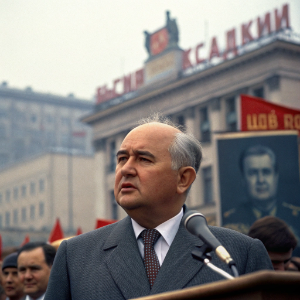
(Image generated by neural network)