The Victory of Right-Wing Populists in the Czech Republic and Its Implications for Ukraine.
Preliminary Assessment
The parliamentary elections in the Czech Republic on October 3-4 led to the strengthening of the positions of right-wing populists in the country. However, they cannot form a parliamentary majority on their own and are forced to unite with other parties. This situation reduces the right-wing populists’ ability to change the course of the Czech Republic, including with regard to Ukraine. However, they will still be there, although they will not be critically negative for Europe and our country.
An important political event in the Czech Republic that could have an impact on the country’s foreign policy, including its attitude to Ukraine, was the parliamentary elections on October 3-4.
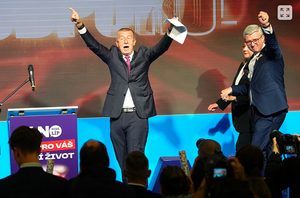
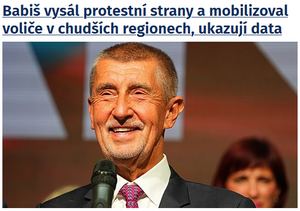
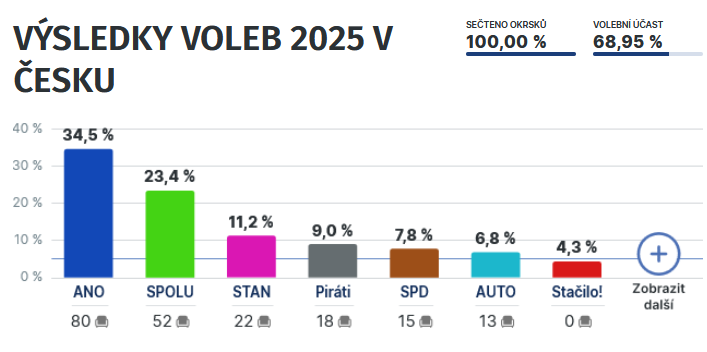
The data from the election commission based on the results of processing 100 % of the votes in the parliamentary elections is provided by IDNES. As predicted by political analysts, the largest number of votes – 35.5 % (80 seats) – was received by the Eurosceptic ANO 2011 (“Actions of Dissatisfied Citizens”) movement led by former Prime Minister A. Babiš. The second place was taken by the pro-European center-right ruling coalition SPOLU of the current head of government P. Fiala, which won 23.4 % (52 seats).
Apart from them, the following parties entered the Parliament: pro-European STAN (“Mayors and Independents”; part of the current ruling coalition) – 11.2 % of the vote (22 seats); pro-European “Pirate Party” – 9 % (18 seats); Tomio Okamura’s far-right SPD (“Freedom and Direct Democracy”) – 7.8 % (15 seats); the right-wing populist Eurosceptic party “Motorists” (part of the same faction as ANO in the European Parliament, the only political party that directly declared its readiness to block with A. Babiš) – 6.8 % (13 seats). The extreme left-wing populist-communist movement Stačilo! (“Enough”), which advocates Czech Republic’s withdrawal from the European Union and was mentioned as a possible, though not obvious, partner of ANO, did not make it to the Parliament with 4.3 %.
According to Czech President P. Pavel’s statement, the results of the parliamentary elections show that the country’s citizens have chosen a pro-Western course. He also expressed readiness to start negotiations on the formation of a new government.
Based on the post-election distribution of votes in the Czech Parliament, the basis of the future ruling coalition will be the ANO 2011 movement. It does not adhere to any specific ideology, but uses the population’s dissatisfaction with the growing socio-economic problems in the country, high levels of corruption and other problems to its advantage.
In this regard, the movement advocates the abolition of parliamentary immunity, tax cuts for entrepreneurs, lower electricity tariffs, assistance in employment for the elderly and disabled, increased funding for science, and the cleansing of the police, prosecutors and state supervisory bodies from people associated with corruption.
The movement does not take openly pro-Russian, anti-Ukrainian, or anti-European positions. However, in its activities, it exploits the ideas of the negative consequences of European sanctions against Russia for the Czech economy, the need to reduce spending on aid to Ukraine and to direct those funds to improve the living standards of its own population, as well as to pursue a more independent policy from the EU.
At the beginning of Russia’s full-scale war against Ukraine in February 2022, ANO supported the Czech Republic’s assistance to our country. However, in June of the same year, it called for an end to it, as the goal of preventing Russia from seizing the entire territory of Ukraine had been achieved.
During his election campaign at presidential elections in the Czech Republic in 2023, leader of the movement A. Babiš, advocated the need to end the Russian-Ukrainian war through negotiations between Russia and Ukraine. At the same time, he criticized his then opponent P. Pavel’s absolute support for Ukraine. And on the eve of the parliamentary elections this year, he promised to stop supplying Ukraine with ammunition. Besides, A. Babiš is an opponent of granting Ukraine EU membership. All of these intentions were confirmed by him immediately after the elections.
Demonstrating this attitude to Ukraine was part of his populist pseudo-socialist policy, which was expressed in his election campaign. At the same time, he tried to take some votes away from his main rival, the SPOLU coalition, which strongly supports Ukraine.
This approach worked and was one of the key factors that allowed ANO to win the election. Russia’s informational and, probably, financial support of the movement and A. Babiš personally also played an important role.
Against this background, the fact that the ANO movement joined the “Patriots for Europe” faction in the European Parliament, along with such pro-Russian parties as Fidesz (Hungary) and FPO (Austria), is indicative. In addition, A. Babiš is opposed to increasing Czech defense spending to 5 % of GDP, as required by NATO. Plus, as an agricultural businessman, he has economic interests in Russia.
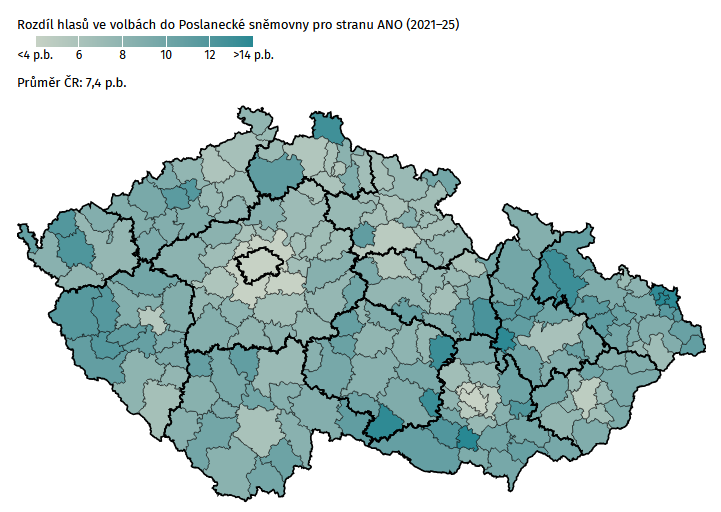
According to most experts, these views and actions of A. Babiš and his movement pose a threat of Eurosceptic and pro-Russian changes in Czechia’s policy, a decrease in its support for Ukraine, and a weakening of NATO and EU unity on Russian and Ukrainian issues. In other words, the Czech Republic could turn into a country like Hungary and Slovakia and become a generator of the same problems as those countries.
At the same time, the ANO movement does not have enough seats in the country’s Parliament to obtain a majority on its own, which requires at least 101 mandates. Given this, it will be forced to form a coalition with other parties, which will not allow it to determine the country’s course alone.
A natural partner for ANO is the “Motorists” party. However, together they will not receive the required number of mandates. Nor will joining the SPD party resolve this problem, as they will still not have more than half of the seats. In addition, uniting with the SPD could undermine the ANO’s credibility, as the majority of Czech society demonstrates a negative attitude to the far rights.
Therefore, the ANO movement will in any case be forced to form a coalition with SPOLU or STAN. This will require them to make certain compromises. According to political observers, such a compromise could be continued support for Ukraine, as this does not raise any particular objections from the Czechs. They are more concerned about socioeconomic problems that are not directly related to Ukraine.
However, the future Czech government will still be dominated by A. Babiš and the ANO movement. Therefore, it may indeed become more pro-Russian and Eurosceptic, and will try to reduce assistance to Ukraine. At the same time, the Czech Republic’s relations with NATO and the EU may become more complicated.
Until now, the Czech Republic has been one of Ukraine’s staunchest supporters and the initiator of increasing the volume of EU-funded supplies of shells to Ukraine. Some of them were produced at its own enterprises. Therefore, if Babiš fulfills his promises to reduce aid to Ukraine, it may weaken our defense potential to some extent. But he cannot do it alone, and the Czech Republic’s overall contribution to Ukraine’s military capabilities is not that significant compared to the leading Western countries.
Therefore, not all is so bad as it seems at first glance. There is a problem, of course, but it is greatly exaggerated by the media.
Thus, the results of parliamentary electionsin the Czech Republic confirmed the trend of strengthening the positions of populists in many European countries, who offer seemingly simple solutions to existing problems. Unfortunately, this also includes promises to reduce aid to Ukraine and redirect funds to their own needs.
In view of the above, populist parties and movements in Europe are actively supported by Russia, which is trying to undermine the unity of NATO and the EU on the Ukrainian issue and weaken Ukraine by depriving it of European support.
All of this creates negative consequences for both Europe and Ukraine, but not at a critical level. So far, the leading European countries have maintained positions favorable to us and have the ability to influence those who go beyond the general course of NATO and the EU.
Besides, in the case of the Czech Republic, right-wing populists are unable to form a majority in the country’s Parliament and form the government on their own. Therefore, they are forced to unite with other political forces, which reduces their ability to change the course of the state.
Yurii Mykhailenko,
Institute for Global Politics