The Results of the NATO Summit in The Hague and Their Consequences for Ukraine
Despite the existing problems, including those related to the policy of US President D. Trump, NATO’s leadership does not change its course. This is evidenced by the Alliance’s Summit in The Hague on June 24-25, 2017;
NATO’s main task remains to deter Russia and ensure readiness to repulse possible aggression from it. At the same time, the Alliance is ready to respond to other challenges and threats to its security;
NATO also demonstrates a common position on enhanced support for Ukraine in the latter’s confrontation with Russia. D. Trump’s peace initiatives are also welcomed;
Nevertheless, it is D. Trump’s policy that is considered to be the main factor in destabilizing the Alliance, although it does not completely disrupt it.
The main event in NATO’’s work in the first half of this year was the Alliance’s Summit on June 24-25 in The Hague. The meeting of the leaders of the North Atlantic Alliance is especially important as the first of such summit events since D. Trump’s return to power in the United States in early 2025. Given the peculiarities of his policy, the Summit aimed to clarify NATO’s activities for the near future.
Despite the significant problems associated with disagreements between NATO member states on a number of important issues, as well as the complication of US-European relations due to D. Trump’s intention to reduce the USA’s involvement in European security, the Summit showed that the overall unity of the Alliance remains. Thus, the conclusions of many politicians and experts about the deep crisis of the Alliance were refuted.
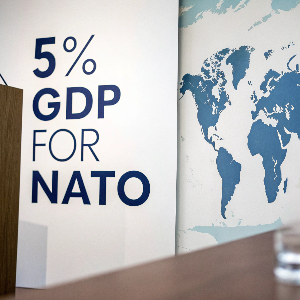 For one, the most important outcome of the summit was the agreement of NATO leaders to increase defense spending to 5 % of GDP. Thus, the most acute contradictions between the members of the Alliance regarding the provision of adequate funding for measures to strengthen the collective defense of the Alliance have been removed.
Expenditures will be divided into two categories, namely: 3.5 % – for NATO’s main defense needs; 1.5 % – to ensure the protection of critical infrastructure, increase civilian resilience, develop innovations and strengthen the defense industrial base.
According to NATO representatives, this shows that Allies are aware of the need to adequately respond to growing threats to common security. And the implementation of the decisions will strengthen the Organization, which is especially important in times of rising tensions in the world and growing threats to Euro-Atlantic security.
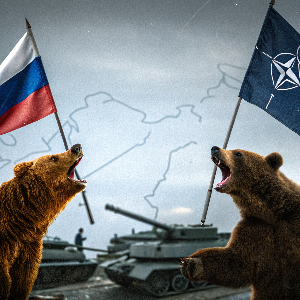 An important achievement of the Summit was the demonstration of the Alliance’s unity in perceiving Russia as NATO’s main adversary. Thus, the leaders of the Alliance adopted a resolution recognizing Russia as the greatest, common and long-term threat to the entire North Atlantic Alliance. In this regard, the Hague Declaration actually repeats the theses of last year’s Alliance Summit in Washington. At this, D. Trump, despite his “flirting” with Russia, did support NATO’s position on it.
Challenges and threats from Russia were discussed in the speeches of NATO Secretary General M. Rutte and other participants of the meeting. According to them, the main threats are Moscow’s aggressive foreign policy, accompanied by the active rearmament of the Russian Armed Forces with the use of Chinese technologies and Iranian and North Korean weapons. In view of this, it was recognized that the threat of a Russian attack on NATO is real, and distrust was expressed toward Putin, who is trying to prove that he has no such intentions. This is how NATO leaders justified the need to increase the intensity of the functioning of the defense industry complexes of the Organization’s member states.
At the same time, according to M. Rutte, Russia will not be able to prevail over the Alliance in the arms race, as its economy is 25 times smaller. However, the realization of this advantage requires closer integration of NATO member states and their defense industries.
According to political scientists, it is the growth of challenges and threats from Russia that allows NATO to remain a consolidated military and political structure in the face of the current US leadership’ negative influence on it. This is evidenced by the reaffirmation by NATO leaders of their commitment to the collective defense of the Alliance. This is of fundamental importance, as the Alliance cannot guarantee the security of Europe without maintaining strong transatlantic ties, which is recognized by NATO leaders, including the United States. Therefore, the consensus in the Alliance on this issue has dashed Moscow’s hopes for splitting NATO using its internal problems.
Against this background, NATO’s leadership demonstrated its unwavering support for Ukraine, although external manifestations of such support were more restrained in nature due to D. Trump’s position.
The Summit participants reaffirmed their commitment to assisting Ukraine in the defense sector and developing its defense industry. For the first time, direct contributions to Ukraine’s defense were officially included in the calculation of defense spending by NATO member states. This decision of NATO became one of the forms of practical guarantees of Ukraine’s security. This is evidenced by the Alliance’s increasing financial assistance to Ukraine, which is a real action by NATO, not just statements by its individual representatives. For example, while last year the Alliance allocated about EUR 50 billion to Ukraine, since the beginning of this year it has already committed EUR 35 billion. The issue of the most efficient allocation of these funds is currently being considered. Thus, it is recommended to allocate them for the development of Ukraine’s defense industry, which is one of the most powerful in Europe. As a result of this approach, Denmark and Lithuania are encouraged to actively invest in Ukraine’s defense industry. According to experts, the funds invested in Ukraine’s defense will allow the parties to implement joint military-technical projects in the future, which will be beneficial for everyone.
At the same time, due to D. Trump, the final declaration of the Summit did not include provisions condemning the war against Ukraine and NATO’s openness to it. Thus, the declaration differs from last year’s document, where such provisions were central. However, this in no way means that the Alliance’s actual attitude to Ukraine has changed. Despite the vagueness of the provisions of the final declaration on Ukraine, M. Rutte characterized them as the next step in building relations between Ukraine and NATO. At this, he emphasized that the Alliance’s previous pro-Ukrainian decisions, including the decisions of the 2024 NATO Summit in Washington on the irreversibility of Ukraine’s Euro-Atlantic integration, remain in force.
At the same time, NATO leaders welcomed D. Trump’s actions as a mediator in the negotiations to end Russia’s war against Ukraine. According to M. Rutte, US President D. Trump helped to move the dialogue from the dead end, which is crucial and is his personal merit. At the same time, he recognized the lack of quick results of such actions in terms of signing a peace agreement, which was the result of Moscow’s delaying the negotiation process.
Despite this position of Moscow, M. Rutte expressed hope that a ceasefire agreement would be possible in the near future. In his opinion, this will also create the basis for the establishment of a comprehensive, just and lasting peace. In this regard, M. Rutte once again emphasized the need for sustained support for Ukraine in order to guarantee its ability to resist Russia and negotiate with it from a position of force.
At the same time, attention is drawn to the growing pro-Russian and anti-Ukrainian rhetoric of Hungary and Slovakia, which is dissonant with NATO’s position on Russia and Ukraine.
As you know, Hungarian Prime Minister V. Orban denied the reality of threats to the North Atlantic Alliance from Russia, and also announced his intention to prevent Ukraine’s membership in the EU and NATO. This fully satisfies V. Putin, who claims that Russia has no intention of attacking NATO and that Ukraine’s accession to NATO is unacceptable.
Besides, V. Orban tried to take Russia out of NATO’s field of vision, arguing that it is necessary to focus on countering other threats, namely, the decline in the competitiveness of the Organization’s members in world trade. He also tried to create the impression that his positions coincided with those of D. Trump and thus strengthen them.
Slovak Prime Minister R. Fico’s statements on the eve of the NATO Summit that “…Slovakia would be better suited to neutrality rather than participation in an arms race with the Alliance” were also indicative. All this is seen by European political scientists as the leaders of Hungary and Slovakia’s leaders’ open defence of Russia’s interests in NATO and the EU, which is being carried out on Moscow’s order.
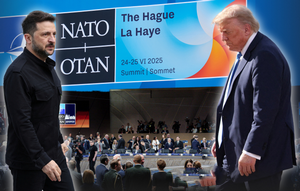
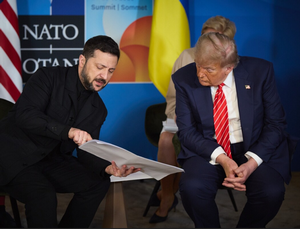 As a separate aspect, it is necessary to point out the inconsistency of D. Trump’s policy and statements, which was confirmed during his participation in the NATO Summit in The Hague. He supported the decisions of the NATO Summit and gave a positive assessment of his meeting with Ukrainian President V. Zelenskyy. At the same time, on the eve of the Summit, D. Trump did not give a clear answer to journalists’ questions about the USA’s readiness to fulfill its obligations to the Alliance on collective defense. Most of his answers regarding Russia and its war against Ukraine were equally unclear.
According to analysts, this is a consequence of his attempts not to aggravate relations with Russia through negotiations on the war and plans to restore US-Russian relations. However, there is speculation that he may change his position to more openly support Ukraine and put real pressure on Russia. According to political scientists, D. Trump is beginning to understand what Putin really is about and what his goals are.
Given the outcome of the Summit, Western political analysts conclude that it is necessary to maintain NATO’s ability to protect its members, despite the complication of the global situation and internal problems in the Alliance.
This first of all concerns the Alliance’s ability to deter Russia and its partners, support Ukraine, and respond to escalating armed conflicts in the Middle East and other regions of the world. This conclusion is in line with the position of NATO’s political and military leadership, which considers the Alliance’s ability to act simultaneously in several areas to be a standard for defense alliances.
Such capabilities will be improved based on the experience of Russia’s war against Ukraine. This issue is currently being addressed by the joint NATO’s organization in Poland, JTAC, which is studying the lessons of the war. In particular, defense concepts, operational plans and the nature of operational and combat training activities of the Alliance’s Armed Forces and the national armed forces of its members will be revised.
The results of the NATO Summit in The Hague are in general positive for Ukraine. First of all, this concerns the NATO leadership’s confirmation of the immutability of its position on the continuation and consistent strengthening of assistance to Ukraine. At the same time, the funds allocated to Ukraine will be mainly used to meet its urgent needs for weapons and military equipment, including by investing in the country’s defense industry. At this, despite Russia’s categorical objections to Ukraine’s possible accession to NATO and D. Trump’s refusal to support Ukraine’s Euro-Atlantic aspirations, the Alliance demonstrated that it remains open to Ukraine. The leadership and leaders of the leading countries of the Alliance remain on the side of Ukraine in this matter. It is also worth emphasizing the strengthening of the Alliance as Ukraine’s main support in the latter’s military confrontation with Russia, as well as the absence of “fatigue” from it.
At the same time, D. Trump’s cautious attitude to Russia was negative for Ukraine, forcing the NATO leadership to cancel the meeting of the NATO-Ukraine Council and to give up including clear wording on Ukraine in the final Declaration of the Summit. The same can be said about the attitude of some NATO members, in particular, Slovakia and Hungary, to Ukraine. This does not have much impact on the Alliance’s overall approach to Ukraine, but it does introduce certain difficulties in NATO’s activities to support our country.
Taking all of the above into account, we point out that President Zelenskyy’s visit to The Hague was important. Given the cancellation of the NATO-Ukraine meeting, it provided an opportunity to convey Ukraine’s positions and needs to the Alliance’s leadership in other formats, including within the framework of bilateral and multilateral meetings.
Among them, the most important were the meetings of President of Ukraine V. Zelenskyy with US President D. Trump, NATO Secretary General M. Rutte, President of the European Commission Ursula von der Leyen, President of the European Council A. Costa, and a mini-Summit with the leaders of the UK, France, Germany, Italy, and Poland.
All this helped to avoid tensions and provocations over Ukraine that could have arisen during the main events of the Summit.
Thus, the outcome of the NATO Summit shows that the course of the Alliance remains unchanged and is in line with Ukraine’s interests. NATO will continue to be our country’s main partner in the war against Russia and will provide us with comprehensive assistance. This will help to preserve Ukraine’s independence and sovereignty and realize our European choice.
Yuriy Ilchenko,
Institute of Global Politics