Once Again About Negotiations
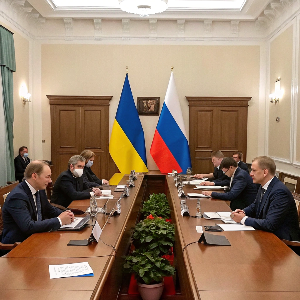
What is Really Happening
Despite the complexity of the negotiations on ending Russia’s war against Ukraine, they are still on and even some progress is being made, that is the process is not in the dead end, as some media outlets report;
within the framework of the above-mentioned process, a ceasefire agreement can be reached in the near future and on acceptable terms for Ukraine;
the next negotiation stage on the conclusion of a peace agreement will be much more complicated, as it will involve making difficult decisions on issues that cause fundamental contradictions between the parties;
even after the ceasefire is declared and before the peace agreement is adopted, the situation will remain extremely difficult and it is quite possible that active hostilities will resume;
Trump’s position will remain a determining factor in influencing the negotiation process. At this, he is not on the side of the Russians, nor does he impose unfavorable decisions on Ukraine. This impression is created by the American media, which are actively waging an information campaign against him.
Since February of this year, negotiations to end the war have been one of the most important events for Ukraine. They have been moving forward little by little. There are certain, albeit not always tangible, achievements, even though some people are trying to convince us that the negotiations have reached a deadlock. Of course, the negotiation process is extremely difficult, due to the fundamental differences between Russia and Ukraine. These differences will never be resolved even after the signing of a peace agreement and formal restoration of bilateral relations. Therefore, the grounds for further conflicts between the two countries or even war will remain. And not because of the status of the occupied territories or Ukraine’s possible accession to NATO, or other sensitive issues that are indeed on the agenda, but have no own significance and are derived from more global problems. For example, Russia’s categorical rejection of Ukraine’s very existence as an independent state.
Besides, the contradictory and ambiguous interests of other countries and political forces are a significant factor influencing the negotiations. Moreover, sometimes our alleged partners do their best to disrupt the peaceful dialogue. This is why the information background around the negotiations is negative for Ukraine, with an emphasis on the inevitable capitulation of our country under pressure from the United States and Russia. In this regard, most American, and other Western and Ukrainian media, politicians, and experts are constantly criticizing D. Trump for allegedly siding with Russia and betraying Ukraine. At the same time, Moscow mostly approves of the US President’s actions, which creates the impression of objectivity of these accusations.
Such trends are increasing as the negotiations progress, and therefore it can be assumed that certain forces are deliberately trying to disrupt them. An example is the media coverage of the meeting of the delegations of the United States, Ukraine, and the United Kingdom in London on April 23, which was important for the preparation of the ceasefire agreement. As you know, most of the media reported on its failure because U.S. Secretary of State M. Rubio refused to participate in it, as did British Foreign Secretary D. Lammy. The reason for this decision was the position of President of Ukraine V. Zelenskyy, who allegedly rejected the terms of D. Trump’s peace plan to freeze the war along the front line in exchange for Kyiv’s recognition of the Russian status of Crimea. At the same time, both the Kremlin and the White House rejected such conditions and positively assessed the results of the meeting between the United States and Ukraine. All subsequent events that do not fit into the above-mentioned assessments of the negotiations are also ignored or distorted, including the results of the meeting between D. Trump and V. Zelenskyy on April 26 in the Vatican and the US President’s demonstration of a positive attitude towards Ukraine’s position and a negative attitude towards Russia’s actions.
The situation under consideration directly affects Ukraine’s interests and therefore requires an adequate perception. Especially since, according to M. Rubio, the decisive moment in the negotiations on peace in Ukraine has already come. D. Trump himself has given Putin quite a bit of time to take concrete steps to end the war. So, let’s try to understand what is really going on.
To begin with, we should clearly understand what peace negotiations are. It would seem that everything is on the surface, but many people do not understand the logic of this process. Therefore, it is advisable to recall the main essence and peculiarity of the negotiations.
Yes, they consist of two different, though interrelated, stages. The first stage involves reaching an agreement between the parties on a ceasefire, or, in other words, a truce. The second stage will determine the conditions and parameters of a comprehensive peace.
What is happening now relates to the first stage, while various peace plans relate to the second stage and are the subject of preliminary “estimates” and probing of the parties’ positions and determine only the contours of the future peace. As a result, it is premature to talk about their decisive influence on the course of the negotiations, although it does exist. In view of this, it is the first stage of the dialogue that requires the most attention. Let us consider it in more detail.
Despite the negative assessment, the ceasefire talks have made some progress. In particular, Russia has withdrawn its demands that a dialogue could only begin if Ukraine surrendered and recognized the legitimacy of the Ukrainian government. In turn, Ukraine has dropped its demand for security guarantees at this stage. At the same time, both sides agreed, in principle, to a direct dialog.
Agreements to stop attacks on energy facilities and hostilities at sea can be considered productive, although they are ambiguous. As we can see, the Russian Armed Forces have stopped striking Ukraine’s strategic energy infrastructure (power substations that connect it to Europe and serve nuclear power plants), and the Armed Forces have stopped striking Russian oil refineries and storage facilities. The same applies to strikes on seaports and civilian vessels. In addition, Russia does not interfere with the operation of the Georgia-Ukraine-Bulgaria ferry service, which resumed in early April.
Unfortunately, this does not mean that Putin and his regime’s positions have fundamentally changed. He still wants to destroy Ukraine. This is his strategic goal and underlies his personal ambitions as a restorer of the Russian empire. It also corresponds to the worldview of a large part of Russian society, which is chauvinistic and imperialistic. But wanting and being able to achieve something are, as we know, completely different things. At present, the Kremlin has lost the opportunity to implement its plans, which is a consequence of the critical aggravation of problems in the Russian economy. And D. Trump’s realization of his threats to impose new sanctions against Russia will finally bring it down. These are the prospects that determine Putin’s policy, who, on the one hand, is trying to prolong the war and seize as much Ukrainian territory as possible, and on the other hand, is forced to demonstrate his readiness to end the war and take steps in this direction.
That is why Moscow continues and even intensifies hostilities at the front, as well as strikes at cities and other settlements in Ukraine. As before, such actions are terrorist, and civilians are the victims. The cessation of such Russian terrorism is the main goal of further negotiations on a ceasefire. In this regard, the logical continuation of the above-mentioned agreements is the proposal of President of Ukraine V. Zelenskyy to mutually give up strikes on all civilian objects. Let’s hope that it can be achieved and that it will contribute to reaching an agreement on a permanent ceasefire.
However, other options are possible. In the worst-case scenario, Russia could refuse from ceasefire altogether and continue to fight as long as its economy allows. According to experts, at least till the end of this year. In the best-case scenario, Russia may agree to a ceasefire at some point this summer or at the beginning of the summer. In fact, Moscow already seems inclined to declare a temporary truce not only for the Easter holidays, but also for the 80th anniversary of Victory Day. This is mainly to reassure the United States that Russia wants peace, and to prepare Russians for a possible cessation of hostilities.
Nevertheless, the Kremlin is still demonstrating the rigidity of its position and putting forward various conditions for agreeing to a truce, including the refusal of Ukraine’s Western partners to supply it with weapons. But such demands are not of fundamental importance, as their fulfillment cannot be reliably monitored. Therefore, a positive result will be achieved.
The second stage of the negotiations is much more difficult, as it is supposed to resolve issues that cause fundamental disagreements between the parties. Moscow’s official demands to Ukraine and its Western partners were reiterated by Russian Minister of Foreign Affairs Lavrov on April 27. As before, they include Ukraine’s giving up joining NATO, its “denazification” and “demilitarization”, lifting of sanctions against Russia, international recognition of Russia’s sovereignty over the occupied territories of our country, and lifting the ban on “everything Russian”.
However, all of this is mostly a means of putting pressure on Ukraine and demonstrating the Kremlin’s firm positions on it to Russian society. The only really significant obstacle to reaching an agreement between Russia and Ukraine on signing a peace agreement is determining the status of the occupied territories, because other issues can be resolved one way or another.
In particular, in the current situation, Ukraine’s membership in NATO, as the main guarantee of its security, can be replaced by our country’s participation in the new European security system as its key element. Such plans are already being implemented in practice, including in terms of the deployment of European military contingents on Ukrainian territory.
In April of this year, a unit of the Armed Forces of Denmark arrived in Ukraine to learn from the combat experience of the Ukrainian Armed Forces. Moscow called it a “legitimate target for strikes” and reiterated that it was inadmissible to deploy foreign troops in Ukraine, as this would lead to an escalation of the war. However, it has done nothing. This is a repeat of the situation when Moscow was against the transfer of long-range weapons to the Ukrainian Armed Forces and also threatened war against our Western partners. But it has not fulfilled any of these threats.
The same will happen this time. Especially since the United States has already unofficially agreed to the deployment of the so-called “European Deterrence Force” in Ukraine. In fact, Moscow’s demands for the “demilitarization” and “denazification” of Ukraine, which involve its actual disarmament and replacement of the current government with Russian proteges, are bracketed out of the negotiations. They are formal and are not subject to discussion.
In contrast, determining the status of the occupied territories is a serious matter. They are not urgently needed by Russia, but Putin needs at least some quality results of the war, which he can present to the Russian population as a “victory of the SVO”. Not to mention the fact that Ukrainian lands were included in the Russian constitution as “new territories”. Besides the USA and EU will not be able to lift sanctions against Russia over Crimea until it is recognized as “Russian” by Ukraine.
However, there are some ways out of this, which are likely to be found. Of course, Ukraine will under no circumstances withdraw its troops from the areas of Zaporizhzhia and Kherson regions under its control, which the United States does not demand from us, and Russia cannot seize them by force. Moscow also understands this, and therefore puts forward such demands only as one of the elements of bargaining in the negotiations. Therefore, this issue is likely to be dropped with the tacit consent of the parties. At the official level, Moscow will consider them its own in the “occupied” status. The same will be true for the Ukrainian-controlled territories of Donetsk and Luhansk regions. The territories of the regions captured by Russia will temporarily remain in its possession, but without Ukrainian and international recognition.
A more complicated situation will be with determining the status of Crimea. International recognition of Crimea’s belonging to Russia is fundamentally important for Moscow as a condition for lifting sanctions against it. However, this is fundamentally unacceptable to Ukraine and most of its European partners. Therefore, certain compromises can be reached on the relevant wording in the peace agreement. On the one hand, they will allow to start the process of lifting sanctions against Russia, and on the other hand, they will not mean Ukraine’s abandoning it.
Currently, there are some signs of a possible use of this approach. According to D. Trump, he did not demand that Ukraine recognize Crimea’s belonging to Russia, and therefore the media’s opposite claims in this regard are false. He only asked Ukraine to refrain from making harsh statements about the Crimean Peninsula, as it hinders negotiations. Besides, D. Trump acknowledged the convergence of his and V. Zelenskyy’s positions on the Crimean issue, which is not denied by Ukraine. In addition, according to Ukrainian negotiators, the peace agreement is almost agreed upon.
It is still too early to say what will happen to the occupied territories of Kharkiv region and Zaporizhzhia NPP. Perhaps D. Trump will be able to force Russia to return Kharkiv region to Ukraine and transfer the Zaporizhzhia NPP to US control. At least, he has the appropriate tools to do so.
This forecast may sound too optimistic, as it does not match most other predictions. But again, this is not entirely true. No one expects Russia to give up and concede to Ukraine right away. Even if a ceasefire agreement is reached, the situation will remain extremely difficult. For example, Moscow will put pressure on Ukraine to force it to accept Russia’s terms of peace. In particular, this could include sporadic shelling of Ukrainian positions on the front line, limited missile and drone strikes on Ukrainian territory, and demonstrations of force through military exercises.
Moreover, Russia may give up the ceasefire and resume active hostilities. But in this case, the United States is likely to take tough retaliatory measures, including the imposition of sanctions, which will have extremely negative consequences for the Russian economy.
In view of the above, the Kremlin may switch from military to political and informational methods to achieve its goals in relation to Ukraine. In this regard, Russia will try to influence the outcome of the presidential and parliamentary elections in Ukraine after the war is over and the martial law is cancelled.
At the same time, it will implement the scenario of the change of power in Georgia when, after Russia’s attack on it in 2008, Moscow brought the pro-Russian Georgian Dream party to power there. Despite the fact that before that Russia occupied two-thirds of Georgia and remained its enemy, the aforementioned political force was able to completely change Georgia’s foreign policy and turn it towards the aggressor.
In conclusion, I would like to return to the beginning of this post and answer the question: who exactly is interfering with the negotiations and for what purpose? I will not say categorically, but it seems that this is the work of D. Trump’s opponents within the framework of the domestic political struggle in the United States. At the same time, Ukraine has once again become its hostage.
Suffice it to recall the US presidential elections in 2016, 2020, and 2024, when the topic of assistance to Ukraine was actively used by all major candidates. Back then, D. Trump opposed it. Now his opponents are doing the same and discrediting all of D. Trump’s efforts to end Russia’s war against Ukraine. The American media are also involved in this, taking revenge on him for the harassment of local media, in particular, Radio Liberty and Voice of America. Unfortunately, all their insinuations about D. Trump are repeated, either deliberately or frivolously, by European and Ukrainian media.
In such a situation, D. Trump is trying to achieve at least some tangible results in his work by speeding up the process of restoring peace in Ukraine. At the same time, he is in a way flirting with Moscow, which it uses to strengthen its position and to create discord between the United States and Ukraine.
One fundamental conclusion can be drawn from all of the above. One way or another, peace will be restored in Ukraine. We will not be able to quickly regain all our territories, but we will become part of Europe and its defense system. Therefore, the negative consequences of the war for Ukraine will be offset to some extent by the achievements of our country.
P.S. After D. Trump returned to power, Russian propagandists claimed that “the United States and Russia will sit at the negotiating table, and everyone else will be under it.” On April 26, at the funeral of Pope Francis, President of Ukraine V. Zelenskyy was given a seat in the front row of the heads of state attending the ceremony, along with the leaders of the United States and France, D. Trump and E. Macron. And Putin remained in Moscow, as he could not come to Italy because of the International Court of Justice’s decision to arrest him for crimes against humanity.
So, who is at the table and who is under it?
Yuriy Ilchenko
Institute for Global Politics