Strategic Partnership Between Ukraine and Türkiye as a Factor of Security and Stability in the Baltic-Black Sea-Caspian Region
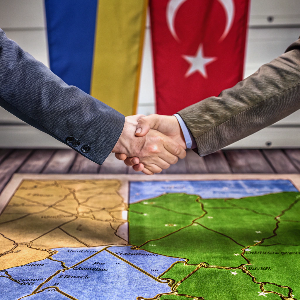
The strategic partnership between Ukraine and Türkiye provides them with great opportunities to realize common and national interests. At the same time, the military, economic, and political potential of Ukraine and Turkey allow them to take a leading position and become a factor of security and stability in the Baltic-Black Sea-Caspian region. All of this is very important for Ukraine in the context of the Russian-Ukrainian war, as it is a factor that helps to strengthen and improve our country’s capabilities in confronting the aggressor. All of these circumstances demonstrate the need not only to strengthen the strategic partnership between Ukraine and Turkey, but also to bring it to a qualitatively new level.
The development of relations between Ukraine and Turkey is an example of positive interaction between the two countries. Their interaction is in the interests of each and has a positive impact on their neighboring regions.
First of all, this means the unification of Ukraine and Türkiye in the form of a bilateral strategic partnership as one of the poles of the Baltic-Black Sea-Caspian Community, which includes the Baltic States, Central and Southeastern Europe, the Black Sea and the Caspian regions. Despite the different states of the countries, they have a number of common interests that can consolidate efforts to realize them. I mean the geographical location of the Baltic-Black Sea-Caspian region on the border with Russia, which directly poses a threat to those countries. For eone, Moscow does not hide its intentions to restore the sphere of influence of the former USSR, including the above-mentioned countries and regions. At the same time, it is ready to implement its plans militarily. Suffice it to recall the Russian attacks on Georgia in 2008 and Ukraine in 2014, and especially the full-scale Russian-Ukrainian war launched by Moscow in 2022.
It is now quite possible that Russia will attack other countries in the Baltic-Black Sea region, which are at the forefront of its expansion on the European direction. Moreover, it is already preparing for this as part of military exercises in the European theater of operations. The largest of these should be the strategic command and staff exercise of the armed forces of Russia and Belarus “Zapad-2025” in the autumn of this year. After all, the Russian Federation has resumed them, despite the most Russian troops’ participation in the war against Ukraine.
The exercise scenario involves rehearsing one of the options for a full-scale war between Russia and the United States/NATO in the European theater of operations. According to this scenario, the main areas of military confrontation between the parties are the Baltic and Black Sea regions. It is there that key operations are planned, as defined in the operational plans of the Russian Armed Forces.
This approach is fully consistent with the current military and political situation in the world and Europe, which is characterized by an escalation of confrontation between Russia and the West to the level of the former Cold War. And the Baltic-Black Sea region is located between them. Given this military-strategic position, it may become the main arena of hostilities. And they have been taking place in Ukraine for years.
There are Military threats from Moscow to the countries of the Caspian region too. For example, Russia has territorial claims to Kazakhstan, which have been repeatedly voiced by Russian politicians, allowing for the possibility of implementing such plans with the help of troops.
Russia could also use its Armed Forces to take control of Georgia, Moldova, and Azerbaijan. As already mentioned, in 2008 Moscow did this in relation to Georgia. And one of the goals of Russia’s war against Ukraine is to reach Transnistria and then invade Moldova. So far, Moscow has refrained from implementing its military plans for Azerbaijan. It has not even interfered with Baku’s efforts to regain control of Nagorno-Karabakh. But this is only temporarily and due to its lack of the necessary potential. Under such circumstances, Russia is Ukraine’s direct enemy and aggressor. For the Baltic States, Central and Southeastern Europe, and the Black Sea region, it is a potential adversary.
For certain political and economic reasons, Türkiye does not define Russia as an enemy, and does not break ties with it. However, this does not change the essence of the matter. Moreover, Moscow recognizes Türkiye as its enemy, preparing for war with it as well. Moldova and Georgia with their current governments and Azerbaijan also refrain from openly recognizing Russia as their enemy. As in the case of Türkiye, this has political and economic reasons, but does not reduce the level of Russian threats to their security.
These circumstances frankly require the Baltic-Black Sea-Caspian Sea region countries to join forces to deter Russia and repulse possible aggression from the RF. This is already being done within the framework of NATO, whose members are the Baltic States, Central and Southeastern Europe, and Türkiye. Ukraine is a partner of the Alliance and receives comprehensive assistance from it. For the same purpose, a new European security system is being formed, which so far remains largely a European component of the Alliance.
Since Russia’s attack on Ukraine in 2014, the main content of the operational plans of NATO and the US Armed Forces in Europe has again been the fulfillment of the above-mentioned task. And most of the exercises that take place in the European theater of operations are devoted to their mastering. This year, the main one is the “Defender Europe-25” SCPE, which takes place in May-June in the Baltic-Black Sea region.
At the same time, with all due respect to our NATO partners, they are currently unable to effectively confront Russia militarily and are doing everything to avoid it. Currently, only Ukraine and Türkiye are capable of countering Russia.
Everything is clear with Ukraine. It has been defending itself and Europe on the battlefield for more than three years. And not only does it deter the “second army of the world”, but also strikes back. The center of criminal decision-making, which is Moscow, included. Of course, we use the assistance of the United States, Europe and other countries, but the main burden in the fight against Russia is still on Ukraine and its Defense Forces. It is they who are the most powerful Army in Europe, with combat experience and readiness to counter the aggressor.
Despite its restrained attitude to Russia and unwillingness to overly aggravate relations with it, Ankara also fiercely defends its interests, including by using military force. In July 2016, the Turkish Armed Forces shot down a Russian Su-24 aircraft that violated Turkish airspace while conducting strikes against pro-Turkish rebels in Syria. And in 2023–2024, Türkiye assisted Azerbaijan in regaining control over Nagorno-Karabakh, which was occupied by Russia’s ally Armenia. And finally, in 2024, Türkiye played a leading role in the fall of the Assad regime in Syria, which was Moscow’s main support in the Middle East.
Therefore, it is Ukraine and Türkiye that can become the basis of the security system in the Baltic-Black Sea-Caspian region as part of a broader European security system that extends to its neighboring regions.
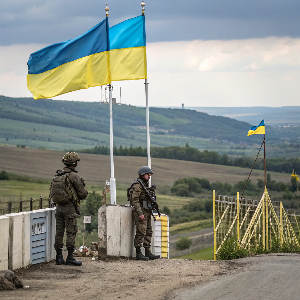 Ukraine is already one of the main forces in deterring Russia’s westward expansion and is seen by Europe as a key element of its security. Türkiye, in turn, is a deterrent to Russia’s expansion in the Black Sea region and its spread to the Mediterranean region, as well as the Caucasus and, to some extent, the Caspian region. And together with other allies and partners, they can completely put an end to Russia’s attempts to establish control over the Baltic-Black Sea-Caspian region.
Along with strengthening their security, the countries of the Baltic-Black Sea-Caspian region have a number of other common interests.
Thus, in the political sphere, the main ones are to ensure opportunities for sovereign and independent development, as well as to strengthen their positions in the region and in the world. At the same time, the unifying factor for the Baltic-Black Sea-Caspian countries is again the encroachment of Russia, which is trying to subjugate them. At present, the only international organizations that can consolidate the political efforts of those countries are the UN and the OSCE, which have common positions on certain issues. However, those organizations have broader goals which cannot fully express their interests. Especially since they include Russia. Therefore, it seems more promising to combine the potentials of various regional organizations, which include the Baltic-Black Sea-Caspian countries. Moreover, some of them are members of several such organizations, which allows them to act as intermedia between them. Those associations include the Black Sea Economic Cooperation Organization (BSEC), the Organization of Turkic States (OTS), and the Baltic, Adriatic and Black Sea Initiative (or simply the Three Seas Initiative).
Among the Baltic-Black Sea-Caspian Sea countries, Ukraine is a BSEC member and a partner of the Three Seas Initiative, and Türkiye is a member of both BSEC and the OTS, which is a unique position among others. Therefore, they can be an important unifying link.
The common economic interests of the countries of the Baltic-Black Sea-Caspian region are more specific and pragmatic, in particular, they are concentrating their efforts on implementing infrastructure, energy, and digital projects. Opportunities for this are provided by their location on transport routes between Europe, Asia and the Middle East, as well as by the presence of developed industry and agriculture, scientific and technical potential, wide networks of railway, road, and pipeline infrastructure, and energy reserves. Therefore, the main efforts of such countries are focused on creating a unified transport and logistics system from the Baltic to the Black Sea and Caspian regions by combining their railway, road, sea, air, pipeline, fiber optic and other communications.
This provides additional opportunities for their economic development and helps to strengthen trade and economic ties between Europe, Asia and the Middle East. At the same time, Europe’s energy security is improving, and the countries of the Caspian region are getting alternative access to foreign markets. Thanks to these actions, they have already significantly reduced their dependence on Russia, which allows them to pursue a more independent policy. Such opportunities are especially important in the context of the escalating confrontation between Russia and the West over its war against Ukraine. This has significantly increased the role of the Baltic-Black Sea-Caspian countries in defending Europe’s interests.
The main projects mentioned above in the Baltic region and Central and Eastern Europe are improving transport links within several transport corridors, namely Via Baltica, Rail Baltica, and Via Carpathia, which connect them to the rest of the continent. In the Black Sea and Caspian regions, the development of the “Middle Corridor” communications between them and the “North-South” communications with China can be pointed out.
Geographically, Ukraine and Türkiye are located together, in the center of the Baltic-Black Sea-Caspian region, and their transport and logistics infrastructure is the most developed compared to other countries. Therefore, they can also become a center for the integration of their communications.
Implementation of such plans requires further strengthening of the strategic partnership between Ukraine and Türkiye. The basis for this is being created by a number of agreements, namely: Treaty of Friendship and Cooperation between Ukraine and Türkiye of May 4, 1992; Joint Action Plan between the Cabinet of Ministers of Ukraine and the Government of Türkiye on Enhanced Cooperation of April 2, 2004; Joint Declaration on the Establishment of the High-Level Strategic Council between Ukraine and Turkey, which established a strategic partnership between the two countries of January 25, 2011; Framework Military Agreement between the Cabinet of Ministers of Ukraine and the Government of the Republic of Türkiye of October 16, 2020; Free Trade Agreement between Ukraine and Türkiye of February 3, 2020.
These documents provided favorable conditions for intensifying cooperation between Ukraine and Turkey in all spheres. Among them, the greatest progress was made in the trade and economic sphere. Thus, before the outbreak of Russia’s full-scale war against Ukraine, Türkiye ranked third among our country’s partners. In 2021, the trade between the two countries amounted to about USD 8 billion.
At this, Ukraine mainly supplied Turkey with ferrous metals, grain crops, ore, slag, and ash, while receiving various engineering products, metals, oil, and oil products from Türkiye. At the same time, about 30 joint high-tech projects were being implemented in the aerospace and defense industries. More than 700 companies with Turkish capital operated in Ukraine, which contributed to the intensive development of bilateral trade and economic relations.
Strategic partnership with Türkiye became especially important for Ukraine after Russia’s attack on it in 2014 and especially with the outbreak of a full-scale war in 2022.
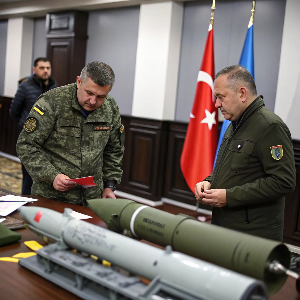 In fact, the war was a turning point in Ukrainian-Turkish relations. Thus, Türkiye condemned Russia’s actions for its invasion of Crimea and annexation of the Peninsula, supported Ukraine’s territorial integrity, and refused to recognize the “referendum” on the Crimean Peninsula and its “Russian status”. Türkiye did not recognize the self-proclaimed “republics” in the Donbas either. Subsequently, Ankara participated in various negotiations and dialogues on the topic of Russia’s attack on Ukraine. At this, Türkiye paid special attention to the protection of Crimean Tatars. Besides, it sent humanitarian aid to victims of the armed conflict in the Donbas.
Military-technical cooperation between Ukraine and Türkiye has also intensified. In this regard, the main role was played by the supply of Turkish Bayraktar TV 2 strike UAVs and ammunition to Ukraine.
Ankara reacted even more sharply to Russia’s full-scale military invasion of Ukraine. Thus, on February 24, 2022, President of Türkiye R. Erdogan made an official statement, directly calling Russia’s actions a war against Ukraine. The next day, in a telephone conversation, the Turkish leader tried to convince Putin to end the war. However, the most tangible consequence for Ukraine was Ankara’s decision to close the Black Sea straits to warships, which was done on the basis of the Montreux Convention. As a result, Russia was unable to strengthen the Black Sea Fleet, which began to suffer losses.
Turkish Bayraktar TV 2 UAVs can be considered a real salvation for Ukraine. At the initial stage of the war, they were one of the main and most effective means of the Armed Forces of Ukraine, which effectively destroyed armored and other enemy equipment.
A significant contribution to resolving Ukraine’s war-related problems was Türkiye’s increase in exports to our country of such goods as petroleum products, power generators, aircrafts, vehicles, metal products, tires, medicines, and food.
Türkiye’s military supplies to Ukraine have also increased significantly. In the first quarter of 2022 alone, Turkey supplied Ukraine with UAVs, ammunition, military equipment, and supplies worth about $60 million. The next important step was the agreement on the sale of UAVs to Ukraine. The next important step was an agreement to transfer to Ukraine specialized equipment for demining and restoration work. With Türkiye’s participation, the problem of resuming Ukraine’s exports of grain and other grains, which had been blocked by Russia, was also resolved. With Ankara’s active assistance, in July 2022, the Initiative for the Security of Grain Transportation from Ukrainian Ports, or the so-called Black Sea Grain Initiative, was signed in Istanbul, with Ukraine, Russia, Türkiye, and the UN as participants.
Ukraine is grateful to Türkiye for hosting and resettling refugees on its territory. Under the special ASAM program, they are provided with medical, humanitarian and financial assistance. Türkiye has also taken in about a thousand orphans from southern regions of Ukraine. The humanitarian aspects of Türkiye’s work include its role in the exchange of prisoners of war.
A separate aspect of Ankara’s actions was its participation in ending the war. As you know, it mediated the negotiations between Ukraine and Russia that took place on its territory in March 2022. Despite the fact that they ended without results, a precedent was set. Based on this precedent, the dialogue continued in May 2025.
Besides, Ankara supported the Ukrainian peace formula, participated in the Crimean Platform, and voted for Ukrainian resolutions in the UN General Assembly. Türkiye is also one of the countries that has expressed its readiness to participate in providing Ukraine with real security guarantees in the form of sending its military contingents to Ukraine.
But not everything is as simple as we would like. Türkiye has refused to join the US and EU sanctions against Russia; it also continued trade, economic and military-technical cooperation with the RF and kept its skies open to Russian aircrafts. There are both political and economic reasons for this. Thus, Türkiye is trying to balance between Russia and the United States and Europe, which allows it to strengthen its position as a regional leader. Besides, Ankara is greatly interested in maintaining access to the Russian food market, which brings it about $25 billion in revenue per year. And Russian tourists bring Turkey $17 billion a year. However, all this is offset by the positive aspects of Ukrainian-Turkish relations.
These circumstances create favorable opportunities for further strengthening the strategic partnership between Ukraine and Türkiye both during and after the war.
Taking into account the interests of the parties, the situation in the world and the region, as well as the existing experience, their main directions may be:
- in the political sphere — deepening cooperation between the parties in global and regional international organizations; searching for ways to politically resolve security problems in the Black Sea region; exchange of experience in cooperation with the European Union;
- In the economic sphere — development of trade and economic relations between the parties, including: Ukraine’s increasing grain supplies to Türkiye; joint development and production of weapons and military equipment; meeting Ukraine’s energy needs; participation in the work of the Europe–Asia and Europe–Middle East transport corridors; Türkiye’s involvement in the post-war reconstruction of Ukraine;
- in the security sphere — continuation of joint activities to end Russia’s war against Ukraine; deterring Moscow and ensuring security in the Black Sea region in the postwar period; cooperation between the parties within NATO.
Ukraine and Türkiye may pay special attention to increasing their role and importance in the Baltic-Black Sea-Caspian region based on the above-mentioned prerequisites.
Thus, the development of a strategic partnership between Ukraine and Türkiye and joining their efforts will allow them to take the place of leaders in the Baltic-Black Sea-Caspian region, as well as to become a factor of stability and security in its territory.
This will contribute to the realization of their common and national interests. The countries complement each other, but they also have certain peculiarities. The main ones are: restoration of peace in Ukraine and security in the Black Sea region; preservation of sovereignty and inviolability of state borders of all countries in the region and their unconditional compliance with international law; favorable conditions for mutual economic activity.
Achieving these goals is a difficult task and will require appropriate efforts, but they will be justified by the results obtained.
Yuriy Mykhailenko,
Institute for Global Politics