A Strategic Operation Designed to Reduce Russia’s Ability to Continue the War
Ukraine is currently conducting a well-planned and organized strategic operation that could lead to victory in the war against Russia. We are already seeing successes in disrupting the logistics of Russian troops in the temporarily occupied territories of Ukraine and in taking out approximately 40% of Russia’s oil refining capacity. As a result, the combat capabilities of Russian troops on the front lines and their ability to continue the war are being reduced. This will enable Ukraine to switch from defense to offensive operations in certain areas.
Success in wars and military operations has always depended on the thoroughness of planning, the quality of troop command, the effectiveness of weaponry, and the reliability of logistics. This made it possible to defeat even a significantly stronger enemy. The same can be said about Russia’s current war against Ukraine. It is precisely thanks to its superiority in these areas that Ukraine has managed to halt the Russian advance and, subsequently, seize the initiative in combat operations on the front lines. At this, prospects have emerged for the liberation of our country’s temporarily occupied territories.
Indeed, early in the war in 2022, the Ukrainian Defense Forces’ (UDF) disruption of Russian military logistics in the north of our country, and later on the right bank of the River Dnipro in the south, forced Russian troops to withdraw from those territories. Ukraine’s UAVs, which outnumbered and outperformed their Russian counterparts, played a crucial role in these achievements.
In February 2026, the American company SpaceX, together with the US Department of Defense, blocked the Russian armed forces’ use of the Starlink satellite communication system on the front lines in Ukraine. However, Ukraine was able to use Starlink, giving it an advantage over Russia in troop command and control. Ukraine also significantly increased production of UAVs of all types – short-, medium-, and long-range. Mass supplies of these UAVs were established by our partners to meet the needs of the Armed Forces of Ukraine. As a result, the Armed Forces of Ukraine gained the ability to significantly hinder enemy units from reaching the front lines and delivering necessary equipment to them. The enemy’s logistics was severely disrupted as a result of strikes by Ukrainian forces on communication lines in the operational depth, as well as a significant escalation of attacks on strategic targets within Russia’s energy and military-industrial complexes.
Thus, the Ukrainian Defence Forces effectively halted the Russian armed forces’ offensive and began to wear them down. The Russian Federation began to face a significant fuel shortage, which sped up the development of crisis processes throughout its economy.
The issues in Crimea were the most sensitive for Russia. In fact, the Peninsula found itself trapped. The so-called land corridor leading to it from Rostov region is practically non-functional. The Chonhar Bridge across the Syvash Bay has been destroyed. Bridges from Henichesk in Kherson region to the Arabat Spit in Crimea, as well as from Chaplinka to Armiansk in the Perekop area, have also been damaged.
The bridge across the Kerch Strait is overloaded. Not even fuel tankers or railway tank wagons carrying fuel are allowed to cross it. Currently, fuel can only be delivered to Crimea via the ferry crossing. However, only one ferry is currently operating there. The other two have already been destroyed. It is highly likely that the same fate awaits it in the near future.
As a result of precision strikes on railway locomotives and Dzhankoy railway station, train traffic between Russia and Crimea via the land corridor has been suspended indefinitely. Most of the oil depots on the Peninsula have also been destroyed. Therefore, even if liquid fuel could be delivered there, there would be nowhere to store it.
The blockade of Crimea is not complete yet. But what has already been done threatens to create critical problems for both Russian troops and the Peninsula’s residents. Petrol is no longer available for open sale in Crimea. It is distributed via ration cards at a rate of 20 liters per week. However, there is still a shortage. And in the city of Sevastopol, which is at the end of the logistics chain, only emergency services are being supplied with fuel.
The troops currently have fuel, but in extremely limited quantities. In particular, there isn’t even enough to support the operations of mobile air defense units. Civilians, meanwhile, are forced to travel to Russia’s Krasnodar Territory to obtain fuel. However, the Kerch Bridge limits fuel transport to no more than 100 liters. Moreover, there is already a shortage of petrol in the Krasnodar Territory. This shortage is also being felt in the neighboring Stavropol Territory.
A food shortage has also emerged and is worsening in Crimea. The reason is a reduction in food imports to the Peninsula and panic buying driven by people’s fears of a possible complete blockade of Crimea. Therefore, in the near future, the authorities will be forced to introduce ration coupons for food products. And then a state of emergency may be declared in Crimea, entry into the region may be prohibited, and the evacuation of the population may begin.
In southern Ukraine, the occupiers are also having a tough time. Following the Ukrainian Defence Forces’ drone strikes on military trucks and fuel tankers, the Russian military command and local authorities have restricted traffic on the main routes from Rostov region to Crimea. There, freight traffic has dropped by 70%. But even without the ban, drivers are refusing to travel to Crimea by road, even for a substantial fee.
Disruptions of logistics in the region have already forced the command of the Russian Armed Forces’ “Dnepr” military group to impose limits on fuel consumption and the use of artillery shells. Meanwhile, the units of the 58th Army operating in Zaporizhzhia region have run out of petrol for combat missions. Officers are forced to bring it themselves in jerry cans in their personal cars from Rostov region.
In the Dnipro and Crimean districts of Kherson region, which are at the far end of the logistics chain, the situation for Russian troops is approaching a critical point. They are already severely short of ammunition, food, and medical supplies. The rotation of military units, the movement of reserves, and the evacuation of the wounded have become significantly more difficult or practically impossible. As Russian military officials say, if Ukraine launches an offensive, they will be unable to defend themselves.
The command of the “Dnepr” military group is unable to cope with these problems. Currently, there are five combined-arms armies and a number of marine and airborne units and formations there. In total, this is equivalent to about 30 regiments. The average daily fuel requirements for a combat unit at the regiment-to-brigade level are about 1,000 tons. This requires at least 30 trips by 30-ton trucks. That is, a total of 900 trips for the entire group.
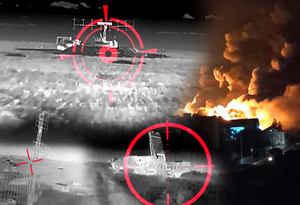
No air defense system, even one reinforced with mobile fire units, can protect them from UAV strikes. The RF Armed Forces command is trying to compensate for this in other ways. In particular, military vehicles are disguised as civilian ones, or cargo is transported in civilian vehicles. Movement is organized in small convoys along secondary roads. Additionally, roads are urgently being covered with anti-drone nets. But so far, this hasn’t helped much. As a result, the logistics system of the “Dnepr” military group is deteriorating. Previously, cargo was delivered virtually unimpeded to the cities of Mariupol, Berdiansk, and Melitopol, where it was distributed to warehouses. From there, it was transported closer to the front line by smaller vehicles. And from there – to the tactical rear by passenger cars, motorcycles, ATVs, horse-drawn transport, or by hand.
Now the warehouses are located farther from the front. Consequently, transportation of cargo by light vehicles and on foot is increasing. Accordingly, the volume of cargo delivered to the front is decreasing. Therefore, Russian troops in the Dnipro and Crimean districts find themselves in an even worse situation. There is no talk of their withdrawal yet, but it is clear that such a possibility is quite likely. In light of this, Russian occupying administrations are already being withdrawn from those areas. Currently, there are none left in Vasylivka. Next in line are Tokmak, Dniprorudne, Enerhodar, Kamianka-Dniprovska, Mykhailivka, Pryshyb, Chernihivka, and Polohy.
For Russia, the situation in Luhansk and Donetsk regions is somewhat better, as they directly border Russia. Therefore, it is easier to establish logistics in that area, since there are more possible supply routes. Furthermore, the region is not flanked on the sides as southern Ukraine is. However, an increase in Ukraine’s number of UAVs will make it possible to neutralize this advantage.
Currently, the Ukrainian Armed Forces are already capable of striking access roads to the cities of Donetsk and Luhansk and roads across most of their regions. And in the near future, Ukrainian UAVs will be able to reach the “Don” highway connecting Moscow and Rostov-on-Don. Therefore, a shortage of fuel, ammunition, and other war-fighting resources will also arise within the RF Armed Forces’ “South” military group.
The situation in the temporarily occupied territories of Ukraine can be viewed as a preview of Russia’s own future. Ukraine has already disabled more than 40% of Russia’s oil refining capacity. In the European part of the country, to one degree or another, all refineries and most major oil depots have been damaged. And the Ryazan and Gelendzhik oil refineries have been destroyed completely.
So far, this has not led to an acute fuel crisis in Russia. Its needs are met by the Omsk Oil Refinery – which Ukrainian missiles and UAVs have not reached yet – two refineries in Belarus, and the remaining capacity of damaged oil refineries. Besides, Russia still has reserves of liquid fuel at medium- and small-sized oil depots that have not been destroyed yet. However, restrictions on fuel sales are already in place in Russia’s twenty regions. These include Moscow, St. Petersburg, Kursk, Belgorod, Tambov, Ryazan, Pskov, Tver, Novgorod, Murmansk, and their surrounding regions. The list is rapidly expanding. Ukrainian defense forces continue to destroy Russian refineries, oil depots, and oil pumping stations. Air raid alerts have already been declared in Omsk. And Belarusian refineries will be able to cover no more than 10–15% of Russia’s needs. It is still possible to purchase petrol and diesel fuel from China, as was done last year. But it will not be possible to deliver the required quantities to the European part of Russia.
Therefore, what is currently happening in Crimea and other occupied territories of Ukraine will inevitably be repeated throughout Russia. Moscow will hold out the longest thanks to the Russian regions, but eventually there will be a collapse in petrol, diesel fuel, and food supplies there as well. This will lead to an economic crisis, followed by a social and political crisis in the Russian Federation.
In other words, we are witnessing Ukraine carrying out a well-planned strategic operation aimed at creating the conditions for victory in the war against Russia. Ukraine is being assisted in this endeavor by its partners, namely Europe – in the form of the EU and the European component of NATO – and the United States. Europe is providing financial aid to Ukraine, supplying weapons, and facilitating their joint production with Ukrainian companies on its territory. At the same time, it is weakening Russia by consistently tightening sanctions against it. The USA is also supplying weapons to Ukraine, albeit at Europe’s expense.
The operation began back in 2025. Its first phase involved neutralizing Russia’s air defense system in the occupied territories of the South and East of Ukraine and in Crimea. As a result of strikes by the Defence Forces of Ukraine, the system suffered significant losses and largely lost its ability to function. Similarly, the density of air defense systems on Russian territory itself was reduced, particularly in regions bordering Ukraine.
This made it possible to move on to the second phase of the operation, which has been ongoing since April of this year and includes the aforementioned actions by the Defence Forces of Ukraine to disrupt the logistics of Russian troops in the temporarily occupied territories of Zaporizhzhia, Kherson, Donetsk, and Luhansk regions of Ukraine and in Crimea, as well as the destruction of critical facilities of Russia’s fuel and military-industrial complexes. At the same time, an active strategic defensive operation is ongoing, involving separate counteroffensives. This undermines the enemy’s offensive capabilities and reduces its ability to continue the war. It is already significantly slowing down the advance of Russian troops on the front lines, reducing arms production in Russia, and speeding up the unfolding of a crisis within the country. Moreover, Ukraine has begun to recapture its territory. As early as this summer, these changes could reach a qualitatively new level. The RF Armed Forces will be forced to switch to a defensive in order to hold onto the occupied regions of Ukraine and prevent new breakthroughs by the Armed Forces of Ukraine into Russia. At the same time, the continued disruption of Russian troop logistics by the Defence Forces of Ukraine and the deepening economic crisis in the Russian Federation will erode Russia’s defense capabilities. First and foremost, this will concern the occupied territories in the South of Ukraine. It is there that conditions favorable for the Armed Forces of Ukraine to conduct an offensive operation may arise. Its aims could be:
at a minimum – pushing the enemy back 20–30 km from the Dnipro River. This will allow: restoring control over the river and subsequently ensuring free navigation; recapturing the Zaporizhzhia Nuclear Power Plant and the area of the dam of the former Kakhovka Reservoir, which will enable its restoration; and removing the cities of Nikopol and Zaporizhzhia from the line of direct fire. The offensive could be launched from starting positions in the Kamyanske–Orikhiv corridor along the Dnipro, combined with amphibious landings and the capture of bridgeheads on the river’s left bank;
at most – liberation of the entire territory of Kherson and Zaporizhzhia regions, and, should favorable opportunities arise, the southern part of Donetsk region as well. In this case, strikes will be delivered both along the Dnipro River and in the directions of Orikhiv–Tokmak–Melitopol and Oleksandrivka–Berdiansk, Oleksandrivka–Mariupol.
Implementation of the first scenario could begin as early as this summer or autumn, while the second scenario could be pursued in the longer term, after the Defence Foreces of Ukraine take control of the River Dnipro corridor and wear down the enemy.
The liberation of southern Ukraine will make it possible to de-occupy the Donbas and Crimea. But this will be a new task requiring time for preparation and additional resources.
Thus, the situation regarding Russia’s war against Ukraine is increasingly tilting in our country’s favor. This is a result of Ukraine switching from purely defensive actions on the front lines to carrying out a strategic operation aimed at reducing the combat capability of Russian troops and weakening Russia’s overall ability to continue the war.
The main components of such an operation are blocking the logistics of Russian troops in the occupied territories of Ukraine and undermining Russia’s economy by striking its military communications and key oil industry facilities. As of today, this is already quite noticeable.
Ukraine is receiving assistance from its partners, namely Europe and the United States. Europe views Ukraine as a counterweight to Russia and is therefore investing in Ukraine’s defense. Containing Moscow’s military expansion, which poses a threat to the Western world, also aligns with American interests. That is why the USA is supplying weapons to Ukraine, albeit at Europe’s expense. All of this will enable Ukraine not only to definitively halt the enemy’s advance but also to launch a counteroffensive aimed at regaining control over the occupied territories. The first stage of this could be the liberation of the South of Ukraine, which would create the conditions for the de-occupation of the Donbas and Crimea. However, this will be a long-term task.
Yurii Mykhailenko,
Institute for Global Politics
Collage by Krym.Realii