Europe and the United States Are Preparing for a War with Russia.
Peculiarities of the NATO and US Armed Forces’ Exercises
Europe and the United States are consistently making efforts to create a new system of European and Euro-Atlantic security. This issue is extremely relevant due to the growing threats to the Western world from Russia. One of the most important components of such efforts is to increase the readiness of NATO and the US Armed Forces to repulse Russia’s aggression in the European theater, which is quite real. At least Europe no longer doubts this. As part of the operational and combat training of the NATO and US armed forces, a full range of issues is being worked out in anticipation of a possible war with Russia. The main ones are strategic exercises such as Defender. Given the nature of such exercises, Ukraine, as an important element of the European security system on the southern flank of the European Theater of War, is also involved in NATO and the US operational plans. All of this is happening despite the alleged rapprochement between the United States and Russia and Washington’s anti-Ukrainian stance.
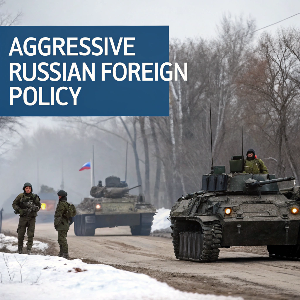 Everyone with common sense is well aware of what Russia really is. And that it is impossible to establish any normal relations with it. Moscow will never give up its aggressive foreign policy and waging wars against its neighbors, as evidenced by Russia’s attacks on Ukraine in 2014 and 2022. They fully demonstrate the true nature of Russia and the cynicism of its ruling regime. What else can be added if, even with the start of peace talks to end the war, Moscow continues to strike peaceful cities and other settlements in Ukraine, killing ordinary citizens, including children. Moreover, Russia deliberately timed such strikes to coincide with key moments in the negotiation process. This is exactly what was proved by the combined missile and drone strike of the Russian Armed Forces on Kyiv on the night of April 24, immediately after the meeting of the delegations of the United States, Ukraine and Europe in London.
The reasons for Moscow’s aggressiveness and its confrontation with the West are as well known as the West’s response to threats from Russia. I have already raised this topic once, but it is worth considering it in the context of a more complete coverage of the activities of Europe and the United States in preparing to repulse Russia’s possible aggression. However, first, we should pay attention to some key aspects.
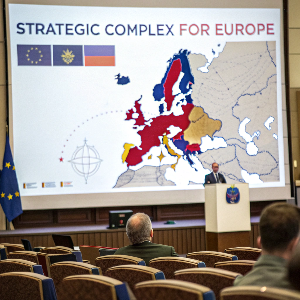
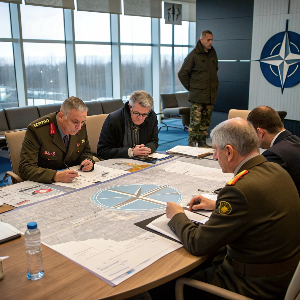 For example, back in 2022, NATO’s new Strategic Concept, the EU’s Defense Strategy – “Strategic Concept for Europe” and the US National Security Strategy 2022 were adopted, which clearly define their perception of Russia. According to these documents, NATO and the EU consider Russia to be their main military adversary. And for the United States, it is the second adversary after China and a source of acute and urgent threat.
Such differences in the perception of Russia are completely objective in nature. For example, Europe, in the form of the European component of NATO and the EU, directly borders Russia, and therefore is under direct threat from it. In contrast, the main problems for the United States are created by China. It has actually reached the same level as the United States and is challenging American global leadership. As for Russia, the United States considers it a secondary and regional enemy. This is the basis for the formation of a new system of European and Euro-Atlantic security, which envisages that Europe will focus its main efforts on countering Russia, while the United States will focus on containing China. At this, the United States is in no way leaving Europe to its fate, and continues to provide it with military support, no matter what some “experts” say. Such principles have been implemented since the second half of the 2010s and have only become clearer in nature since D. Trump’s return to power in 2025.
These aspects will be taken into account in the updated strategies of NATO, the EU and the United States and in operational plans of their armed forces in the near future. In particular, such issues will be discussed at the NATO and EU summits this summer. At this, the summit of the North Atlantic Alliance will be attended by US President D. Trump.
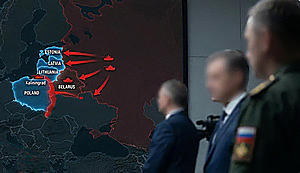
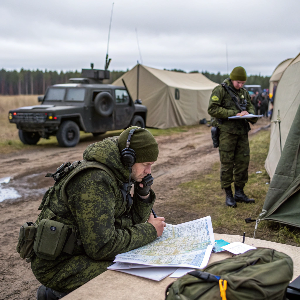 According to preliminary decisions, it is planned to increase the role of the armed forces of European countries in countering Russia in the European theater of operations (ETO), while most of the US Army and Navy will be reoriented to contain China in the Asia-Pacific region. At the same time, the strategies and operational plans of NATO, the EU, and the United States will include Ukraine as a component of European security. The content of the operational plans of NATO and the US Armed Forces is classified. However, given Russia’s likely actions, which were discussed in my previous article, it is clear that the plans provide for a strategic defense operation to repulse the Russian Armed Forces’ offensive on one of the directions of the European theater of operations, namely, its northern or southern flanks. At the same time, other directions will be covered from limited enemy attacks. After the Russian Armed Forces are stopped, a counteroffensive operation is planned to completely defeat them and restore the territorial integrity of NATO member states.
In such a system, Ukraine is obviously assigned the role of a kind of foothold of the Alliance on the southern flank of the European Theater of Operations, and its Armed Forces – the first echelon of NATO’s Allied Forces on this direction. They will be strengthened by the European “deterrence force” planned to be deployed on the territory of Ukraine, and Ukraine itself will be covered by the Alliance’s air defense and aviation.
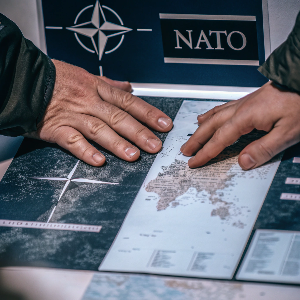 Operational plans of NATO and the US Armed Forces in the part related to the defense of Europe are tested and worked out as part of their operational and combat training in the European and Atlantic theaters of war. Their task is to prepare to repel possible aggression from Russia by practicing various options during armed conflicts and wars with it; deterring Russia by demonstrating military power; confirming the unity of Europe and the United States in NATO and readiness to defend the allies; deepening the integration of new members into the Alliance.
All of this is being accomplished through a series of military exercises and other related activities. Since 2014, they have become increasingly large-scaled and have actually reached the level of the past Cold War. Currently, the main ones are the annual strategic command post exercises (SCPEs) such as Defender. A number of other exercises, directly or indirectly related to them, also take place against a common operational background. These events address the full range of issues related to Russia’s war against Europe and the United States. Exercise scenarios are standardized and model various options for the development of a crisis situation with its escalation into war. As a rule, they contain three main stages or components, namely:
- aggravation of relations between Russia and Europe and the United States. According to the plans of the exercises, Moscow provokes conflicts in Central and Eastern Europe and the Baltic States by interfering in them, which causes a negative reaction from the West and its actions to contain Russia by putting pressure on it;
- Russia and Europe and the United States are preparing for war. Both sides are building up their troops in the European theater of operations, as well as taking other preparatory measures for a military clash between them;
- the beginning and the end of the war. Russia carries out a military invasion of Europe. NATO and the United States repel the attack, defeat the enemy, and regain control of the lost territories of the countries – objects of aggression.
With this scenario in mind, the main events of the Defender-type exercises are held alternately on the northern and southern flanks of the European theater of operations. This year, Defender Europe-25 is scheduled for May-June on the southern flank of the European theater of operations in the Mediterranean and Black Sea regions. The previous exercise, Steadfast Defender-24, was held last summer on the northern flank in the Baltic and Arctic regions.
In recent years, they have involved up to 100,000 soldiers and officers, 100 aircrafts and 50 ships, and more than one thousand vehicles and armored vehicles.
Elements of the above scenario are mastered in separate exercises related to the SCPE, such as Defender. As a rule, each of them has corresponding profiles that remain unchanged for years. The main ones are shown in the table below.
Main Exercises Related to the Defender-Type SCPE and Their Tasks
|
Objectives |
Training |
Region |
Contents |
| Deployment of NATO Response Forces in the forward areas of the ETW |
«Steadfast Dart» |
Romania |
Еmployment of the NATO Joint Response Force on the southern flank of the ETW in the Black Sea region |
|
«Feldberg» |
France, Germany, Poland |
IInvolvement of the French-German Brigade in the operations of NATO’s Multinational Rapid Deployment Corps “North East” |
|
| Deployment of the main groups of NATO and the US Armed Forces in the ETW |
«Arctic Forge» |
Finland |
Deployment of NATO troops on the northern flank of the ETW in the Arctic |
|
«Dacian Spring» |
Romania |
Redeployment to Romania of a mechanized brigade of the Armed Forces of France |
|
| Conducting defensive and counteroffensive operations |
«Joint Viking» |
Norway |
Repulsing Russia’s attack on the northern flank of the ETW |
|
«Allied Spirit» |
Germany |
Repulsing Russia’s attack on the Baltic direction |
|
|
«Dynamic Front» |
Northern or southern flanks of the ETC |
Use of artillery to repel the invasion of the Russian Armed Forces |
|
| Conducting maritime operations |
«Mavi Vatan» |
Black Sea, Aegean Sea, Mediterranean Sea |
Main components of naval operations; protection of the Black Sea straits |
|
«Sea shield» |
Black Sea |
Countering Russia’s attempts to seize part of Romania and the Black Sea straits |
|
|
«Dynamic Mariner/Flotex» |
The Mediterranean Sea |
Preventing the Russian Navy strike group and submarines’ breakthrough to the Mediterranean Sea |
|
|
«Dynamic Manta» |
The Mediterranean Sea |
Defending maritime communications |
|
|
Conducting operations in cyberspace |
«Cyber coalition» |
Estonia |
Repulsing attacks on US and NATO computer systems and conducting attacks on enemy cyber networks |
|
Use of tactical nuclear weapons |
«Steadfast noon» |
airspaces |
Tactical nuclear strikes on enemy positions on the battlefield and objects in the rear |
 In the process of developing a new system of European and Euro-Atlantic security, the nature of operational and combat training activities of NATO and the US Armed Forces will undergo certain changes, but the general direction will remain. In particular, this will include an increase in the share of European armed forces in conducting such activities in the European theater of operations. In turn, the United States will intensify and expand the scope of its army and navy exercises in other theaters of war.
However, in any case, the nature of the NATO and US Armed Forces’ joint exercises will be in Ukraine’s interests. Thus, the military activities of our partners will help to strengthen their unity, and therefore strengthen their ability to counter Russia and provide assistance to Ukraine. At this, Ukraine’s participation in them will remain an effective factor in its integration into Europe through the security component.
Besides, NATO and the United States’ military activity in the European theater of operations is forcing Russia to divert its forces and resources away from Ukraine, including building up its forces in the Caucasus, the Baltic region, on the border with Finland, and in the Arctic. This is another significant contribution of the West to enhancing Ukraine’s ability to confront Russia.
All this allows us to draw several conclusions that are directly relevant to Ukraine.
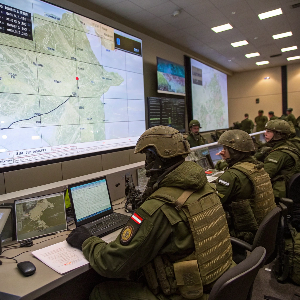 For example, Europe has finally got rid of its illusions about peaceful coexistence with Russia and realized the seriousness of the military threats it poses. In view of this, actions to strengthen European defense as part of the Euro-Atlantic security system have been intensified. One of its most important elements is the preparation of NATO forces in cooperation with the US Armed Forces to repel Moscow’s possible aggression through military exercises of the appropriate orientation. During such events, the whole range of issues related to the war between Russia and Europe and the United States is being worked out.
A special place in Europe’s defense system is given to Ukraine, which plays a key role as a frontline bastion in the way of Russia’s military expansion. This is already being taken into account in NATO’s operational plans to counter the Russian Federation in the European theater of operations.
Thus, NATO, and in fact, Europe, actually guarantees Ukraine’s security without its official membership in the North Atlantic Alliance. Thus, Europe is already considering Russia’s war against Ukraine as a Russian aggression against itself.
Yuriy Mykhaylenko
Institute for Global Politics