Russian Influence in the United Kingdom: Retrospective and Prospects
Relations between the United Kingdom and Russia have gone through different stages since the collapse of the Soviet Union – from a brief period of “thaw” to escalating mutual accusations, intensified intelligence activities, and political interference. Especially in the mid-2000s, the situation began to deteriorate significantly, which was associated with Vladimir Putin’s rise to power and the growing influence of Russian special services. The turning point was 2006, when Oleksandr Lytvynenko was killed in London, and the Russians were blamed for it [1]. The British intelligence services regarded that incident as an example of a murder on foreign territory on the orders of the Russian Federation.
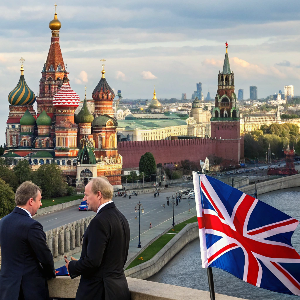 After Russia’s annexation of Crimea in 2014, the Government of the United Kingdom began to emphasize Moscow’s hostile attitude more and more clearly. Intelligence reports indicate an increase in the number of cyberattacks and disinformation campaigns aimed at Western countries. The situation was exacerbated completely by Russia’s full-scale invasion of Ukraine in February 2022, which London viewed as a gross violation of international law and a serious threat to European security.
For a long time, the United Kingdom had been considered one of the most open and attractive places for foreign capital to invest. The main advantages included a strong financial market (the City of London), an efficient legal and economic infrastructure, a prestigious real estate industry (especially in central London), and significant opportunities for “image enhancement” by funding the arts, sports, or universities.
Since 2008, the so-called “golden visas” have been in place, allowing a foreign investor to obtain a British visa in exchange for an investment of 2 million pounds sterling. After five years, such a person could obtain permanent residence in Great Britain. Transparency International reports that out of 3,048 visas issued in 2008-2015, 60 % were granted to Russian and Chinese nationals.
 The combination of two principles – a lenient approach to illegal financial flows and “golden visas” – made it very difficult to find out the actual source of capital from abroad. In the United Kingdom alone, more than 700 Russian millionaires have taken advantage of the “golden visa” program and received residence permits. A report by the Center for American Progress [2] states that the United Kingdom has become a key location for Russian oligarchs and their wealth. According to various estimates, in 2020, there were from 73,000 (according to the Office for National Statistics) to even 150,000 (according to The Guardian) people born in Russia in London alone, and this number included people with only temporary status. This openness has encouraged many Russian oligarchs to invest in London real estate, and the children of the Russian elite have often studied in British private schools. At the same time, the media and anti-corruption organizations (including Transparency International) have expressed concern about the risk of money laundering.
According to 2020’s report of the Intelligence and Security Committee [3], Russian influence in London was so significant that the term “Londongrad” was used [4]. The report states that Russian oligarchs were welcomed “with open arms” in the United Kingdom, primarily through their investments and capital, as part of a policy that allowed illicit funds to enter the British market, which was called the “London money laundry”.
Those funds were used to expand patronage and strengthen Russian influence in the British establishment. The beneficiaries were PR companies, charities, political structures, universities and cultural institutions. According to the report, Russian influence in the United Kingdom had become a kind of “new normality”, thanks to which many people associated with Vladimir Putin had been able to integrate into the British elite using their financial resources.
This high level of penetration is particularly evident in London City. It is also worth adding that it is not just the oligarchs themselves – along with Russian capital, a sector of support services such as law firms, accounting firms, real estate agencies, and PR companies has grown, which have consciously or not contributed to the expansion of Russian influence, often coinciding with the Kremlin’s interests. British companies met the needs of Russian elites by providing, among other things, legal protection, support in the fight against competitors, and money transfers through offshore accounts.
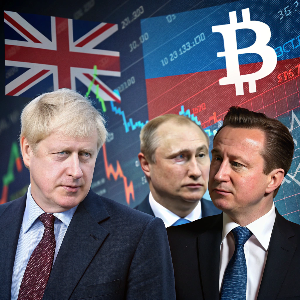 The report followed a series of media reports suggesting that the Conservative Party may have been heavily dependent on funding from Russian oligarchs. Among the donors named was a friend of then-Prime Minister Boris Johnson, Alexander Temerko [5], who donated more than £1 million to the Conservatives. And the wife of former Russian Deputy Minister of Finance Vladimir Chernukhin [6], businesswoman Lyubov Chernukhina, donated £1.6 million to the Tories [7] (including £160,000 for a tennis match with Boris Johnson and former Prime Minister David Cameron). According to the BBC, Georgy Piskov [8] (almost 18 thousand pounds) and Alexander Knaster [9] (400 thousand pounds since 2010) also gave a financial support. According to Open Democracy, the Conservatives had received over £3.5 million from Russian donors since 2010. Boris Johnson, as Prime Minister, also had a close relationship with Yevgeny Lebedev [10], the son of Russian oligarch and former KGB officer Aleksandr Lebedev [11], who owns shares in the Evening Standard and The Independent. Aleksandr Lebedev was once a critic of Vladimir Putin, but later supported the annexation of Crimea in 2014. Although, in fairness, it should be noted that in June 2022, in an interview with The New York Times, he criticized Russia’s invasion of Ukraine and said that Russia was “turning into Iran and North Korea”.
The British media reported that the Evening Standard was actively involved in Boris Johnson’s political campaign, and after he won the election in December 2019, the Prime Minister attended Yevhen Lebedev’s birthday party. Soon after, Yevgeny Lebedev was given the title of Lord, which caused a negative public opinion. The Prime Minister’s Office explained this step by the newly minted ”aristocrat”’s contributions to the United Kingdom.
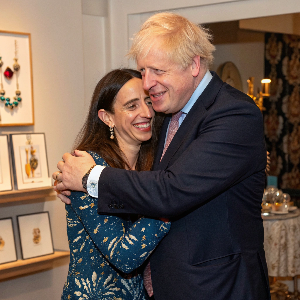 In December 2020, the Infobomba channel on Telegram published a photo of Boris Johnson in an embrace with the head of the Art, Jewelry and Fashion Club, Stephanie Gorbunova [12], at a charity event for the Tories in 2016, organized by Ensemble Productions, a company run by Olga Balakleyets. Her official biography states that she works in the field of international cultural and charitable events,consults some government agencies, and has received numerous awards (including a medal from the then Russian President Dmitry Medvedev). Her husband, Julian Gallant, is a Conservative Party politician. He once headed the center of Russian culture in London, the so-called Pushkin House. Olga Balakleyets is also one of the co-owners of Private Club No. 5 Limited, whose shareholders include the aforementioned Stefani Gorbunova and Zhanna Malevskaya, the widow of Anton Malevsky, the leader of the Izmailovo organized crime group, one of the largest criminal organizations closely linked to the FSB.
In the face of growing criticism and after Russia’s attack on Ukraine in February 2022, the British Government responded by passing new legislation. The Economic Crime (Transparency and Enforcement) Act gave the authorities new tools to identify the true owners of real estate in the United Kingdom, especially if they are foreigners. In 2023, the Economic Crime and Corporate Transparency Act was passed, requiring companies to disclose more data (e.g., on beneficial owners) and strengthening the powers of supervisory institutions, including Companies House.
The government claimed that that was a key step in the fight against “dirty money” and corruption, especially in the context of questionable origin of funds from Russia. According to government estimates (as of the end of 2023), trade with Russia fell by 90 %, and the value of Russian assets in the UK fell from £29 billion to about £8 billion. More than 20 billion pounds of suspicious origin were frozen.
Measures Against Hostile Activities
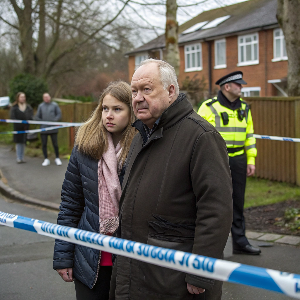 In March 2018, former GRU officer Sergei Skripal and his daughter were poisoned with a Novichok in Salisbury. Russia was blamed for the attack, prompting Theresa May’s government to expel 23 Russian diplomats whom London considered intelligence officers. This expulsion was the largest in the last 30 years and, as 10 Downing Street emphasized, was intended to “undermine Russian intelligence activities in the UK for years to come”. In addition, rules were introduced that gave the security services broader powers to search people at the border if they were suspected of malicious acts in favor of foreign powers.
The National Security Act 2023 was adopted in response to intelligence findings and recommendations included in the 2021 Integrated Security Review, which indicated an increase in threats from the so-called gray zone (espionage, sabotage, cyberattacks, disinformation campaigns).
The Act 2023 included new offences related to espionage, sabotage, and foreign interference. Activities sponsored by foreign states (in particular, disinformation) were given a clearer legal basis for prosecution. The document provided for preventive and investigative measures against persons who cannot be convicted in the ordinary course of justice, and introduced the so-called “Foreign Influence Registration Scheme” – FIRS [13]. It is based on a two-stage registration process: the first level covers activities that create political influence, while the advanced level covers activities that pose a potential risk to the national security and interests of the state. Failure to register and conducting activities on behalf of a foreign state is a crime that entails liability, even if the activities are covert. Certain provisions on the establishment of the FIRS came into force at the end of 2023, and the system will be fully operational on July 1, 2025.
The Government has created a working group to protect British democracy from external interference. This team is responsible for the problems of disinformation, political party financing, cybersecurity of the electoral process, and potential pressure on state institutions.
One of the most controversial aspects of attracting Russian capital was the Investor Visa program, which offered fast-track residency in the country in exchange for investments of at least £2 million. Critics argued that the rules were overly liberal and could facilitate the laundering of large sums of money coming from Russia.
With this in mind, in February 2022, the Government announced the immediate closure of the program for new applicants, while a revision of visas issued in 2008-2015 revealed numerous violations. Some of the visas may have been obtained by people who are actually engaged in illegal activities or are associated with Russian special services. At the same time, the so-called exclusion criteria were introduced, based on “inadmissibility due to a threat to national security”. In February 2025, they were extended to individuals closely associated with the Russian regime.
Election Financing and Political Transparency
 British law (especially the Political Parties, Elections and Referendums Act 2000) restricts foreign organizations’ abilities to finance campaigns. However, in light of reports of donations from Russian oligarchs, the question has been raised as to whether the current rules effectively prevent covert influence.
In the 2022 Election Law, the government introduced, among other things, the obligation to mark political advertising online (digital footprint). The provisions also included stricter rules on foreign donors, including a ban on spending above a certain threshold and the registration of the initial value of assets of newly formed parties. Civil society organizations and the Commission on Standards of Public Life called for additional instruments, such as an obligation to verify the actual origin of funds or the introduction of comprehensive anti-corruption procedures in political parties. However, the Government argued that the current mechanisms are already sufficiently restrictive, although further improvements are not excluded.
Media and Disinformation
 After the outbreak of war in Ukraine, media regulator Ofcom opened a case against RT (Russia Today), which was accused of bias and spreading pro-Kremlin propaganda. In March 2022, Ofcom revoked the channel’s license for broadcasting in the United Kingdom. Besides, EU sanctions blocked RT’s satellite broadcasting. The Online Safety Act 2023 was adopted to protect users from illegal content and disinformation in the online space.
Key elements of the law include the recognition of “foreign interference” as a so-called priority offense and the obligation of Internet platforms to actively remove content that promotes hostile interference. Ofcom has also been given additional powers in the sphere of media literacy to increase awareness and resilience to manipulation by citizens.
Roman Abramovich and the Chelsea Football Club Issue
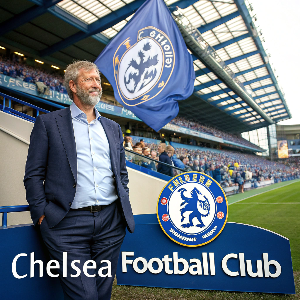 Roman Abramovich, the longtime owner of Chelsea Football Club, has become a high-profile symbol of Russia’s financial presence in the United Kingdom. After the invasion of Ukraine, he announced the sale of the club. In March 2022, the oligarch was sanctioned, his assets were frozen, and his shares were banned.
The sale of the club was eventually completed in May 2022 with the promise that the funds would be used for humanitarian purposes in Ukraine. However, the transfer of funds proved to be legally complicated, and the analysis of how they will be used is still ongoing.
Toughening Anti-Russian Sanctions
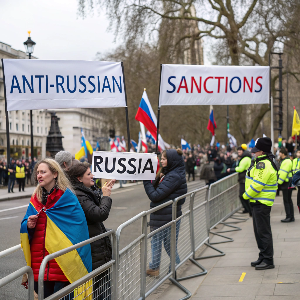 In April 2025, Secretary of State for Security Dan Jarvis announced in parliament that Russia, along with Iran, would be included in the “enhanced tier” of the FIRS. The decision was made based on Russia’s hostile actions over the years (including the Salisbury attack, cyberattacks, and disinformation campaigns), its ongoing military aggression against Ukraine, and its potential to destabilize the security system in Europe and beyond.
Starting July 1, 2025, any individual or legal entity doing business in coordination with the Russian authorities (including Government agencies, Armed Forces, Intelligence Services, or Parliament) must register with the FIRS. “This is a powerful tool to detect and block malicious activities directed against our country”, Dan Jarvis emphasized. Refusal to register such activities will be punishable by imprisonment for up to five years.
Many MPs and experts pointed out that China was not included in the same level of registration. In response, the Government answered that the FIRS should remain flexible and can expand the list of countries at any time if it is established that other countries are engaged in comparable hostile activities.
At the same time, on March 25, 2025, the UK Office of Financial Sanctions Implementation (OFSI) imposed a fine of 465 thousand pounds on the law firm Herbert Smith Freehills for the first time. It was found that the firm’s Moscow branch (which operated in the Russian Federation in 1999-2022) made payments to sanctioned Russian legal entities totaling almost £4 million before closing.
Countering Russia’s Military Activity
T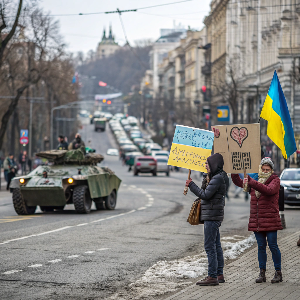 he British Armed Forces regularly monitor Russian ships passing near the territorial waters of the United Kingdom. The Russians are accused of mapping underwater infrastructure (power and Internet cables), which, according to experts, may be related to possible sabotage. With this in mind, the Royal Navy and Air Force keep patrol ships and aircrafts on standby to counter hostile activity.
In January 2025, Defense Secretary John Healey announced tighter rules for responding to Russian sabotage operations. The United Kingdom, together with NATO allies, created the Baltic Sentry mission and activated the Joint Expeditionary Force as part of Operation Nordic Warden to protect infrastructure in the Baltic and North Sea regions.
Russia’s Response
The Russian Federation’s Embassy in London said that FIRS would turn the country into a police state. Russian diplomats called the initiative of the British authorities a tool that forces anyone who wants to conduct any activity in the UK “under an agreement” with Russia, regardless of citizenship, to disclose their plans under the threat of imprisonment. According to a statement from the Russian diplomatic mission, “official statements and explanatory brochures of the Government on this issue are full of inaccuracies and contradictions. The wording seems to be deliberately vague, allowing the authorities to establish the necessary ‘corpus delicti’ at their own discretion”.
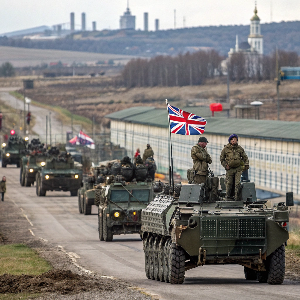 Similar dissatisfaction was expressed by the RF’s Embassy after British Prime Minister Keir Starmer, presenting the country’s new Defense Strategy in early June 2025, stated the need to prepare for war, in particular because of Russia’s aggressive policy. According to the Prime Minister, this is the most effective way to deter threats. On this occasion, the Russian diplomatic mission issued an expected statement criticizing the “new wave of anti-Russian rhetoric”. The document reads: “Russia poses no threat to the United Kingdom or its people. We have no aggressive intentions and no plans to attack the UK. We have no interest in doing so and no need to do so”. However, if Moscow has forgotten (or pretends to have forgotten), London does remember the false statements of Vladimir Putin and his environment that Russia is not going to attack Ukraine.
Better Late than Never
Russians, and especially oligarchs, have felt at home in the United Kingdom for years, but Russia’s invasion of Ukraine in February 2022 has led to dramatic changes. Now Russia is perceived by the British authorities as a key security threat, and a number of the above-mentioned measures have been taken in response.
This policy culminated in the implementation of the provisions contained in the FIRS and the introduction of the most stringent “hostile influence” oversight of Russia. Minister Dan Jarvis emphasized that “it is our duty to protect the interests of the United Kingdom. FIRS will provide transparency and deter those who would do our country harm”. Although many politicians and experts consider the steps taken as unprecedented, representatives of the British Government admit that the effectiveness of these decisions will depend largely on the effectiveness of law enforcement agencies and international cooperation, in particular within NATO and with the support of the European Union.
Volodymyr Palyvoda,
expert in international relations
Notes:
[1] Litvinenko Aleksandr Walterovich, Lieutenant Colonel of the FSB. In 2001, he was granted political asylum in the United Kingdom as a person persecuted in Russia. In 2006, he was granted British citizenship. He is the author of several books in which he accused the FSB of organizing terrorist acts (including the 1999 residential bombings in Buinaksk, Moscow and Volgodonsk), kidnappings and murders, as well as of links to the criminal world. In addition, Litvinenko accused Vladimir Putin of pedophilia while studying at the Andropov Red Banner Institute of the USSR KGB, which almost cost him his career. He died in November 2006 as a result of radioactive contamination with polonium-210. In September 2021, the European Court of Human Rights ruled that the Russian Federation was guilty of Litvinenko’s murder.
[2] A think tank affiliated with the US Democratic Party.
[3] A parliamentary committee that is legally responsible for overseeing the UK’s intelligence community.
[4] “Londongrad” is a Russian TV series in the genre of adventure action about the adventures of Russians living in London. It became the first feature film on Russian television to be shot almost entirely in the British capital in 2014. The authors chose the phrase “Know ours!” as the film’s slogan, which speaks for itself.
[5] Temerko Aleksandr Viktorovich is a well-known Russian and British businessman of Ukrainian origin. After the arrest of Mikhail Khodorkovsky in 2003, he served as Vice President of Yukos. In 2005, after the authorities illegally expropriated Yukos’ assets in favor of Rosneft, he left the company and moved to the UK. In Russia, Temerko was accused of fraud and put on the wanted list, but London refused to extradite him to Russia. Since 2008, he has been a Director and Deputy Chairman of OGN Group, the largest provider of engineering and construction services in offshore oil and gas fields. In 2011, he became a British citizen. Temerko supported Ukraine in the conflict with Russia. In March 2015, he told The Guardian newspaper that the United Kingdom should help Ukraine with weapons. At the same time, in July 2019, Reuters quoted Temerko on the basis of several interviews in which he praised the UK’s exit from the EU, spoke positively of high-ranking Russian security officials (including the current and former heads of the FSB), and proudly recalled his work as President of the Specialized Corporation for Defense Industries “Russian Arms”, a position he held in 1995-2000.
[6] Chernukhin Vladimir Anatolyevich – Deputy Minister of Finance of the Russian Federation (2000-2002) and Chairman of Vneshekonombank (2003-2004). A protégé of the then Prime Minister Mikhail Kasyanov. After the resignation of his patron, he moved to the United Kingdom. Through his ex-wife’s connections, he received the patronage of British tycoon Nathaniel Rothschild, who created a job opening for Chernukhin to obtain a work visa. The former official’s salary was 275 thousand pounds a year. However, Chernukhin did not emigrate empty-handed. Just 2 years after moving to London, he bought one of the most beautiful office buildings in the capital, the former Midland Bank building, having paid £72 million for it (at its market value of £40 million). According to the Independent, on paper, the Chernukhins are exiles of Putin’s regime, but throughout his stay in the UK, Chernukhin has been diligently keeping silent. He probably has good reasons for this.
[7] Colloquial name for the Conservative Party. It is of Irish origin, “Tory” means “robbers”. In the days of the two-party system in England and Great Britain, the Tories represented the interests of the aristocracy and the higher clergy.
[8] Piskov Georgy Igoryevich – Russian entrepreneur, co-founder of Unibank OJSC (Armenia), Unistream CB OJSC and Protobase Laboratories IT company. He is the founder of MoneyTO Limited money transfer service. In 2015, he launched the MoneyTO Limited brand in the United Kingdom.
[9] Knaster Aleksandr Markovich is an American billionaire of Russian origin, former CEO of Alfa-Bank, founder of Pamplona Capital Management. Together with bankers Mikhail Fridman, Peter Aven and Herman Khan, he founded the Genesis Philanthropy Group, which aims to develop and strengthen Jewish identity among Russian-speaking Jews around the world.
[10] Lebedev Yevgeny Aleksandrovich – the eldest son of Russian oligarch Aleksandr Lebedev. Since the age of eight, he has lived in London and has dual citizenship (Russian and British). He is the owner (together with his father) of Lebedev Holdings Ltd, which publishes the Evening Standard and The Independent newspapers, as well as the London Live TV channel. A life member of the House of Lords since 2020. Queen Elizabeth II granted him the title of Baron of Siberia and the Hamptons.
[11] Lebedev Aleksandr Yevgenyevich – a Russian oligarch, former member of the State Duma. In 1984-1992, he served in the Main Directorate of the KGB of the USSR and the Russian Foreign Intelligence Service. In 1987-1991, he was an employee of the KGB residentura in London. In 1993, together with a group of former embassy colleagues, he founded the Russian Investment and Financial Company, JSC RIFC, where he became Chairman of the Board of Directors. In 2011, according to Forbes magazine, he was ranked 45th in the list of the 200 richest businessmen in Russia with a personal fortune of $2.1 billion. In 2012, he was already ranked 89th with a fortune of $1.1 billion. In May 2022, the Canadian Government added Aleksandr Lebedev to the list of “Russian Oligarchs and Members of Their Families and Close associates of Vladimir Putin” who are subject to sanctions. Commenting on this event in The Financial Times, Lebedev said: “I have been an oppositionist for ten years, spent a year in court on trumped-up charges, awaiting a seven-year sentence, lost all the money and assets I had,as well as my business”.
[12] Stephanie Gorbunova is a graduate of Moscow State University (1991), holds Swedish citizenship, and has been living in London since 2012.
[13] FIRS is an acronym for Foreign Influence Registration Scheme.