Main Directions of the EU’s Today’s Policy in the Сontext of Ukraine’s interests
The European Union leadership continues to strengthen the security of the Organization and the implementation of its interests. The next step in this direction was the EU Summit on June 26-27 this year;
during the Summit, EU leaders confirmed their shared view of Russia as the main source of threats to the European Union. In view of this, a decision was made to allocate appropriate funds to strengthen own defense;
as part of the EU’s general approach to ensuring European security, support for Ukraine as one of the main forces in deterring Russia is considered important. Following the Summit, Ukraine was granted another tranche of financial assistance;
despite the overall unity of the European Union, the main obstacle to its work remains the pro-Russian positions of Hungary and Slovakia. They are trying to block its measures that contradict Moscow’s interests.
During the Russian-Ukrainian war, the policy of the European Union, as Ukraine’s closest partner, is of great importance to Ukraine. Today, it is determined by the EU’s strategic goals to ensure the security of its members in the context of the escalating situation in the world due to the critical intensification of the confrontation between Russia and the West and China’s de facto intervention on the Russian side.
An additional negative factor for the European Union is US President Donald Trump’s intention to downplay America’s involvement in ensuring Europe’s security, including trade wars against it. This undermines the unity of the Western world and weakens its opposition to Russia and its allies among totalitarian countries. However, as the NATO Summit in The Hague in June this year showed, Trump does not intend to leave Europe on its own with Russia and other security threats.
Under such circumstances, the main course of action for the EU is to strengthen the European security system as an integral part of the overall architecture of the Euro-Atlantic security space. This task is complex in nature and involves: strengthening the European Union’s defense capabilities in close cooperation with NATO; increasing Europe’s economic stability and competitiveness; ensuring harmony within the EU; and reducing tensions at the Organization’s borders and in neighboring regions.
The increased level of threats to Europe from Russia and other challenges to its security unites EU members around the implementation of these tasks. At the same time, some European countries are beginning to support the Kremlin’s position, which undermines the unity of the Organization itself. Currently, Hungary and Slovakia hold such positions, disrupting or attempting to disrupt the EU leadership’ all plans and actions to strengthen European security, provide assistance to Ukraine, and other issues that are disadvantageous to Russia.
All this affects the European Union’s attitude to Ukraine. The leadership and most EU members see Ukraine as one of the main forces restraining Russia’s military expansion in Europe. Therefore, they support Ukraine in its military confrontation with Russia, providing financial and economic assistance, and promoting its European integration. At the same time, joint with Ukraine measures are being taken to connect it to the new European security system as a key element.
At the same time, Budapest and Bratislava consistently hinder the deepening of Ukraine’s cooperation with the EU. At the current stage, their main course of action in this sphere is to block the start of negotiations on Ukraine’s accession to the European Union. Besides, they are trying to prevent the introduction of new sanctions against Russia.
All this was confirmed during the EU Summit on June 26-27 in Brussels, which included a meeting of the European Council and a number of other events. EU leaders confirmed their shared perception of Russia’s war against Ukraine as a direct threat to Europe, requiring enhanced security measures. At this, emphasis was placed on the need to increase the European Union’s responsibility for resolving this issue, as the US may not pay sufficient attention to it. Therefore, the EU’s action plans in the security sphere were clarified, and a number of important decisions were made regarding their implementation. The main one was the adoption of preliminary agreements on ensuring adequate funding for the EU’s defense needs. This removed one of the most difficult problems regarding the allocation of the funds needed for European countries’ joint defence. In particular, in order to improve the development of the European defense industry, a special investment fund, Security Action for Europe (SAFE), was created with a volume of EUR 150 billion. The fund will be replenished through joint borrowing and will provide loans to EU members and a number of other countries, primarily Ukraine. Besides, priorities in joint defence procurement have been clarified, taking into account mutual needs and interests.
The fund’s financial mechanisms have created a strategic platform for a radical upgrade of Europe’s defence capabilities amid growing threats from Russia and unstable relations with the USA. This fits in nicely with the NATO leaders’ decision to increase their defense spending to 5 % of GDP, as well as the Alliance’s Defense Investment Plan, which were approved at the North Atlantic Treaty Organization Summit in The Hague in June this year.
At the same time, the EU leadership has identified further steps to build a new European security system. One of them is the distribution of responsibilities among EU countries that are also NATO members. It is proposed to assign to each of them or their groups those areas where they have achieved or can achieve the greatest success. In particular, Germany is ready to take on a leading role in strengthening Europe’s missile defense and air defense systems. In addition, Berlin can meet the EU armed forces’ need for Leopard 2 A8 tanks and Zidean-class submarines.
The activation of the EU Rapid Deployment Force (EU RDC) with 5,000 military personnel has been confirmed, which is a significant step in ensuring the European Union’s ability to act quickly and decisively in case of a crisis.
The European Council meeting confirmed Ukraine’s key role in the future European security system. In view of this, European Union representatives expressed their readiness to continue making every effort to meet Ukraine’s priority needs in strengthening its defense. As part of the practical implementation of these intentions, the EU allocated another tranche of financial assistance to Ukraine in the amount of EUR 30.6 billion to strengthen its defense and support its economy. President of Hungary Viktor Orbán opposed this. However, the European Union leadership bypassed his veto in the “EU minus Hungary” format.
Of the aforementioned funds, EUR 3.5 billion has already been allocated under the Facility for Ukraine, and another EUR 7 billion under the G7 ERA initiative, which is financed by proceeds from frozen Russian assets. Hungary cannot block these funds at all.
Since the start of the war, the EU has already allocated approximately EUR 158.6 billion to Ukraine, including EUR 59.6 billion in military aid. Most of the funds earmarked for strengthening Ukraine’s defence will be directed toward its urgent needs for large-caliber ammunition, air defense systems, and various types of UAVs. The EU has already fulfilled 80 % of its commitments to supply ammunition to Ukraine in 2025. A total of 1.6 million units have been delivered.
Besides, the EU leadership and leading European countries plan to increase investment in the Ukrainian defence industry and expand the practice of joint arms production. France and Germany are the most active in this regard, proposing to increase the number of joint ventures with the Ukrainian defence industry, which is already being implemented. In addition, Paris and Berlin have taken the initiative to allocate funds for better use of spare production capacity in Ukraine’s defense industry. According to European politicians, all this will contribute to strengthening Europe’s defense capabilities, where it is necessary to quickly eliminate shortcomings in the capabilities of the armed forces of EU member states.
By providing assistance to Ukraine in its military confrontation with Russia, the European Union leadership advocates for the swift restoration of a just, comprehensive, and lasting peace. This position of the EU was confirmed by the participants of the European Council. Besides, they supported Donald Trump’s mediation efforts to end the war. At the same time, Ukraine’s readiness for negotiations was welcomed, and Russia’s actions to delay them were condemned. First and foremost, Iran, Belarus, and South Korea were mentioned in this regard. China was not mentioned.
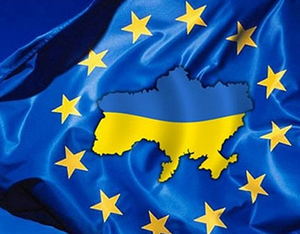
In the opinion of the vast majority of EU leaders, Ukraine’s European integration will contribute to the strengthening of Ukraine and the entire European Union. Based on this, the European Council meeting expressed strong support for Ukraine’s accession to the EU. However, Hungary again opposed granting Ukraine membership in the Organization. According to Hungarian Prime Minister Viktor Orbán, this is his principled position, as Ukraine’s membership in the European Union is contrary to his country’s interests. He also justifies such statements with the results of a referendum in Hungary, which allegedly showed that more than 90 % of Hungarians supported him.
V. Orbán’s actions are sharply criticized by P. Magyar, the leader of the Hungarian opposition and head of the “Tisza” party. He accused V. Orbán of falsifying the results of the referendum and pursuing a pro-Russian policy. Currently, the “Tisza” party’s rating already exceeds that of Orbán’s ruling party,” Fidesz – Hungarian Civic Alliance”. It has a good chance of winning the parliamentary elections in Hungary in April 2026, which could change the country’s policy.
Unlike Washington, which continues to “flirt” with Moscow despite the latter’s openly aggressive policy, Brussels maintains a firm stance toward Russia. At this, the EU’s main tool for exerting pressure on Russia remains the consistent toughening of sanctions.
The 18th package of sanctions against Russia, which has been submitted to the European Council for consideration, provides for the introduction of restrictions on Russia’s “shadow fleet” and banking sector, as well as certain individuals. In addition, they discussed the possibility of lowering the price cap on Russian oil from $60 to $45 a barrel, as well as a complete rejection of Russian gas by 2027.
According to experts, the implementation of such plans would deal a powerful blow to Russia’s economy, weaken its ability to continue the war, and push it towards negotiations. However, the introduction of new sanctions against Russia was blocked by Slovakia. Officially, Bratislava is demanding that the EU provide it with guarantees to mitigate the consequences of its disconnection from Russian energy resources in the form of allocation of EUR 20 billion. But many consider this an attempt by the Slovak authorities to prevent the toughening of sanctions against Russia, which is a manifestation of the pro-Russian policy of the country’s Prime Minister R. Fico.
For now, the issue of implementing the 18th package of anti-Russian sanctions has been returned for approval to the Ambassadors of the European Union member states.
The European Union leadership is paying special attention to normalizing relations with the United States. In particular, a meeting of the European Council considered the prospects of concluding a trade agreement with the United States of America. Two alternatives were discussed, namely, to quickly sign it on US terms or to continue fighting for a more complete taking into consideration Europe’s interests. The decisions taken are not being made public.
At the same time, representatives of the EU hope that relations between Europe and the USA will improve if the United States returns to fulfilling its obligations to guarantee Europe’s security. Evidence of this is said to be the results of the NATO Summit in The Hague, when the USA reaffirmed its commitment to transatlantic unity. Hope was also expressed that the USA would change its attitude to Russia and increase pressure on it, including on the issue of its war against Ukraine.
Like most other recent EU and NATO events, the consequences of the meeting of the European Council are ambiguous for Ukraine.
The EU leadership’s decision to allocate another tranche of financial resources to strengthen Ukraine’s defense is positive for our country. Brussels’ measures to enhance European security by building its new architecture are also in Ukraine’s interests. Plus, the vast majority of European Union members support Ukraine’’s accession to the EU. Against this background, the pro-Russian positions of Hungary and Slovakia, which are hindering the EU’s actions to support our country, have negative consequences for Ukraine. As mentioned above, this concerns their blocking of the start of negotiations on Ukraine’s accession to the European Union and plans to strengthen sanctions against Russia.
All these circumstances allow us to draw a number of conclusions about the European Union’s policy in the context of Ukraine’s interests.
In general, the EU leadership remains united in its perception of Russia as the main source of threats to European security. In this regard, Brussels’ main course of action is to build a new European security system that addresses all aspects of this issue. The first step in this process is to adopt mechanisms for financing relevant measures related to the production of weapons and military equipment. These create the basis for the rearmament of Europe, strengthening its defence capabilities.
The Kremlin’s continuation of the war against Ukraine and its delaying of peace talks are catalyzing the EU’s actions to strengthen its support for our country. At the same time, Brussels’ primary efforts are focused on meeting Ukraine’s urgent military needs and putting pressure on Russia by consistently toughening sanctions.
At the same time, a significant internal problem for the EU is the pro-Russian positions of Hungary and Slovakia, which are trying to block the actions of the European Union leadership that contradict Moscow’s interests, including with regard to Ukraine. However, this problem is gradually being resolved.
Yurii Ilchenko,
Institute of Global Politics