France Is Strengthening Its Economic Security Protection
 Speaking in the French Parliament in July 2025, Christophe Plassard, a Member of the National Assembly’s Finance, General Economy and Budget Control Commission [1], called on the country’s intelligence services to move from a defensive strategy to a more offensive one in the face of escalating economic warfare. The MP emphasized that the current actions of the Defense Intelligence and Security Directorate (hereinafter – DRSD [2]) and the Directorate General for External Security (hereinafter – DGSE [3]) are insufficient and should be strengthened by active operations against foreign interference in the economy of France.
The politician presented an information report that diagnosed threats to economic security and formulated recommendations aimed at protecting French sovereignty [4]. The report emphasizes that economic warfare is one of the key challenges for the state, as it directly affects its ability to act independently and protect its strategic interests. The author defines it as “a confrontation between different parties seeking to capture, control and monopolize wealth in order to strengthen their power through economic means”.
 The military-industrial and technological base (hereinafter referred to as BITD [5]) is under particular threat: 500-550 violations and more than 750 notifications of threats to economic security are reported annually, which is almost twice as many as in 2020. The most common targets of attacks are small and medium-sized enterprises, which are the weakest links in the chain of creation of value[6], and thus are easier to destabilize.
Threats are multifaceted and include theft, sabotage, cyberattacks, lawsuits, lobbying, capital grabbing, and disinformation campaigns. The report points out that Russia and China are the main sources of attacks, although there is also significant activity by allies (so-called “friendly spying” [7, by the United States included.
 In response, the state has strengthened its defenses. For example, the General Directorate of Armaments has created a special unit to support the defense industry in cybersecurity and open source analysis, while the Strategic Information and Economic Security Service (SISSE [8]) has increased its staff and established 24 regional offices.
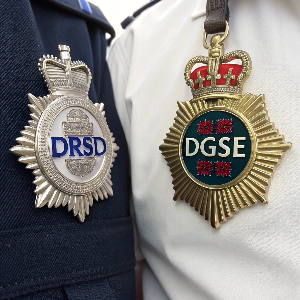
At the same time, the DRSD and DGSE have expanded their economic security activities to reach a level of engagement comparable to that of counterterrorism. Legal instruments have also been strengthened by expanding control over foreign investment in strategic sectors and reviving the 1968 “Law on Blocking” [9]. This led to a fivefold increase in the number of state interventions, although the level of sanctions is still considered insufficient. In cybersecurity, the National Agency for Information Systems Security supports large strategic groups, while the DRSD focuses on protecting small and medium-sized enterprises.
Christophe Plassard’s report contains a number of recommendations: foreseeing and preventing foreign investors from leaving the market; widespread use of proxy boards [10] in companies with foreign capital; strengthening financial sanctions for violations of investment laws; providing financing for small and medium-sized enterprises through targeted investment funds; and strengthening export support tools. The document also emphasizes the need for a multidisciplinary monitoring strategy and better coordination in the field of economic security policy between ministries and the private sector.
 The autumn of 2025 has been determined as a key period for further legislative and political action. The Parliamentary Commission on Finance, General Economy and Budget Control will consider the issue of agricultural land purchases by foreign investors. Besides, debates will begin on the draft budget for 2026, which includes funding for economic security and countering industrial espionage. In mid-October, the Interagency Group on Combating Economic Espionage will begin its work. The NIS2 Directive [11] is expected to be adopted by November, and a draft law on foreign investment control has already been submitted to the Senate.
The DGSE Reform
For several years, France has been shifting its economic security model from a defensive to an offensive one, and the DGSE has played a key role in this transformation [12]. In December 2023, a mission center was created within the structure of the special service to detect unfair foreign competition, support national businesses, and fill previous gaps in the protection of economic sovereignty. The emergence of the new unit was a response to the sharp increase in foreign intervention in strategic sectors of France’s economy.
The DGSE includes an economic component in its traditional intelligence activities based on agent and electronic intelligence and technical operations, not only to protect France’s strategic interests abroad, but also to actively shape them. Intelligence services of France now consider the economy as important a battlefield as the military sphere, and foreign interference, especially from Russia and China, is systemic and long-term.
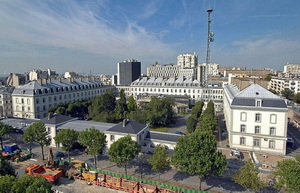 The DGSE is modernizing its structure, developing capabilities in cyber operations and artificial intelligence, and optimizing its internal workflow to speed up information sharing and threat response. One of the elements of this reform is the construction of the new DGSE headquarters in Fort Neuf de Vincennes [13], an investment worth more than one billion euros, which aims to create a modern intelligence center and eliminate previous internal fragmentation.
The DGSE’s activities complement other elements of the French economic security system. The SISSE is responsible for ongoing economic protection and strategic advice to businesses, developing a network of regional delegates who support local companies. The DRSD, for its part, focuses on economic and cyber counterintelligence, protecting the defense industry and the science and technology sector. In 2023, the number of security-related incidents in the defense sector increased by 10 %, which was considered a structural phenomenon that required a systemic response.
Economic Security: France’s Priority
 The need to strengthen the protection of the economy was reflected in the updated National Strategic Review (hereinafter – RNS-2025). The document defines economic security as one of the pillars of national sovereignty, along with territorial defense and cybersecurity. According to the RNS-2025, France must develop the ability not only to respond to threats but also to anticipate them through offensive intelligence operations and cooperation with the private sector.
New rules have been introduced to control foreign investment and protect strategic sectors of the economy, which aims to reduce the risk of takeovers by entities linked to countries that compete with France. Economic security is now seen as an integral element of national security, not just a purely economic issue.
Christophe Plassard’s report is part of a broader process of building a French economic intelligence doctrine based on three pillars: institutional reforms, strategic education, and a change in operational approach. The reform of the DGSE demonstrates that the political leadership of France has taken the issues raised in the report seriously and is creating structures capable of functioning in the era of global technological competition.
Volodymyr Palyvoda
expert in international relations
Notes:
[1] The Parliament of France consists of the National Assembly (lower house) and the Senate (upper house).
[2] The acronym for the name in French is Direction de la protection et de la sécurité de la défense. A body subordinated to the President through the National Intelligence Council; structurally part of the Ministry of the Armed Forces.
[3] The acronym for the name in French is Direction générale de la Sécurité extérieure. A body subordinate to the President through the National Intelligence Council; structurally part of the Ministry of the Armed Forces.
[4] This report was originally scheduled to be presented in 2024, but was not published due to the dissolution of the National Assembly. The election of Donald Trump as President of the United States, the threat of a sudden increase in customs duties, and the global strategic changes initiated by Washington have only confirmed the observations made by Christophe Plassard a year ago.
[5] The acronym for the name in French is Base industrielle et technologique de défense. The totality of a country’s national industries involved in defense activities, it is also called the “sovereignty industry”.
[6] Value chain is a set of successive activities that a company carries out to create a valuable product or service, adding value at each stage from production to sale to the consumer.
[7] “Friendly espionage” is industrial or economic espionage, which consists in the illegal acquisition of information by competitors to gain a market advantage, or mutual espionage between allied states, which can sometimes occur to obtain information about the political, economic or military plans of an ally of interest. Analogous to the military term “friendly fire”, which refers to mistakenly firing at one’s own or allied forces, resulting in casualties.
[8] An acronym for the French title – Service de l’information stratégique et de la sécurité économiques. It is a body under the General Directorate for Enterprise Affairs of the Ministry of Economy, Finance, Industrial and Digital Sovereignty. Its mission is to protect the strategic assets of the French economy from external threats.
[9] The law prohibits the transfer of documents and information of an economic, commercial, industrial, financial or technical nature to foreign persons or authorities if they could harm the interests of France.
[10] The proxy board of directors is composed entirely of nationals and manages the foreign-owned company to ensure the protection of classified information and compliance with national regulatory requirements.
[11] An updated European Union Law (Directive 2022/2555) that strengthens cybersecurity in member states by requiring critical organizations to implement risk management measures, report security incidents, and ensure supply chain security. It expands the scope of the previous NIS Directive to cover more sectors, strengthens the enforcement powers of authorities, and promotes closer cooperation through a network of Computer Security Incident Response Teams (CSIRTs) and the EU-CyCLONe network for managing large-scale crises.
[12] The reform of the DGSE is directly related to the problems in this special service. For more details, see the article “Hard Times for French Intelligence” // https://igp.org.ua/publikacii/tyazhki-chasi-francuzkoї-rozvidki/
[13] Construction of the new DGSE headquarters began in 2024, and the relocation of all units should be completed by 2028.
[14] For more details, see the article “To Win the War: France Has Clarified Strategic Goals for Its Defense Capabilities Until 2030” // https://igp.org.ua/publikacii/franciya-utochnila-strategichni-cili-v-sferi-svoїx-oboronnix-spromozhnostej-2/