Foreign Private Intelligence Companies Working for the Kremlin and Its Allies — a Problem that Needs to Be Addressed
In recent years, a specific area of business has been actively developing in Western countries — the provision of services by private intelligence companies (hereinafter referred to as PICs).
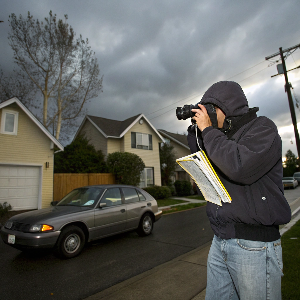
Not only domestic consumers, but also external ones have become interested in the capabilities of PICs. The latter often use such services to realize their interests abroad, which are mostly harmful to the national security of those countries where non-state intelligence structures can have a fairly reliable cover (“roof”) to organize their work. Under such circumstances, customers can forget about some special measures that require significant material costs or a lot of time. Business engagement of foreign specialists to perform tasks for their own countries removes a lot of the above-mentioned problems. The main thing in such a situation is to find a suitable foreign structure and hide the channels of payment by the contractor.
It is clear that schemes involving the capabilities of PICs, especially from the leading EU and NATO countries, can be effectively used by the Russian special services to perform intelligence tasks against a third country, and especially against Ukraine and its allies who provide active assistance.
Such activities have become especially sensitive in the context of the escalating confrontation between Russia and its allies (Iran, China, DPRK) and most Western countries against the background of Russia’s war against Ukraine, deepening Middle East problems, actualization of the issue around Taiwan, etc.
The situation has reached the point where the leaderships of NATO and the EU member states (as well as these international organizations themselves) are forced to take measures to neutralize the destructive impact of such cooperation on the national security of countries, alliances and coalitions.
In this context, noteworthy are the efforts made by the United Kingdom’s authorities in relation to PICs.
In particular, this concerns the legal regulation of issues related to the activities of such structures in terms of criminal liability of their employees for damage to national security within the framework of cooperation with enemy special services.
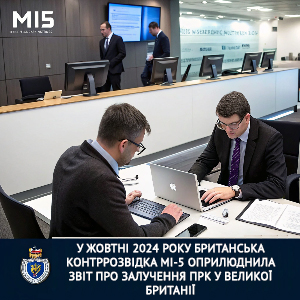 Lately, the provision of private intelligence and security services in the United Kingdom has become a big business involving former members of the country’s intelligence services. Therefore, government agencies are significantly concerned about the activities of this industry.
A report by the British counterintelligence agency MI5, published in October 2024, pointed out that Russia and Iran are increasingly involving private intelligence officers and criminals to perform certain tasks in Great Britain. This is a new trend. “A more striking change in 2024 was that Russian state actors began to turn to their trusted intermediaries to do the dirty work, including private intelligence officers and criminals from both the UK and third countries,” reads the report [1].
Some of the nuances of the problem have recently been highlighted in the Western media (in particular, Voice of America [2], Politico [3]), which analyzed the statement of UK Minister for Security Dan Jarvis on new guidelines for compliance with the National Security Act. According to him, “security professionals have become attractive intermediaries for those who want to do harm to the UK. Private detectives, private intelligence officers, and bodyguards of high-ranking officials have special skills, access to information, and proximity to persons of interest that hostile actors want to exploit” [4].
The official urged the PICs staff to be vigilant and not to cooperate with hostile regimes (primarily Russia, Iran and China), and gave them a number of guidelines and tips to prevent violations of the law [5]:
- working for a foreign state is not illegal, but assisting it in activities that are detrimental to the United Kingdom is a criminal offense;
- the maximum penalty for such activities can be up to 14 years in prison;
- foreign actors can often act covertly or through intermediaries, which makes it difficult to detect their intentions and requires all precautions (counterintelligence) to ensure that the PIC does not carry out harmful activities in favor of a foreign state;
- possible forms of such harmful activities: direct or indirect work for foreign intelligence, as well as foreign interference by inciting social hatred, destabilizing public security, attacking foreign dissidents, and transferring secret information to another state;
- PICs should identify (understand) who they are really working for, report any problems and spread the information among their colleagues.
The British Government’s guidelines for PICs came as the UK is preparing to introduce the so-called Foreign Influence Registration Scheme (FIRS) in the summer of 2025 [6]. Its introduction is one of the requirements of the aforementioned National Security Act.
It should be noted that the FIRS was developed in the summer of 2024. However, its implementation was postponed after the parliamentary elections in the United Kingdom (July 2024) and the new government’s attempt to reset relations with China.
From late December 2024 to January 2025, intelligence services put pressure on government officials to include China in an expanded list of countries requiring attention. This issue became especially acute after the scandal involving the friendship between the King’s brother, Prince Andrew, Duke of York, and Chinese businessman Yang Tenbo (also known as Yang Chris), whom British intelligence services consider a Chinese agent. The intelligence services are convinced that Tenbo’s task was to get closer to influential people in the United Kingdom in order to further influence them in the interests of China. This Chinese citizen is currently banned from entering the UK.
The FIRS is similar to the US and other foreign interest registration systems and will require registration of arrangements for the exercise of political influence in the UK at the direction (request) of a foreign state (its representatives).
It will be a criminal offense to avoid registration when it is required, or to carry out activities that are conditioned by unregistered arrangements.
Some forms and methods of activities of PICs and examples of the use of their capabilities against the national security of individual countries and the “collective” West.
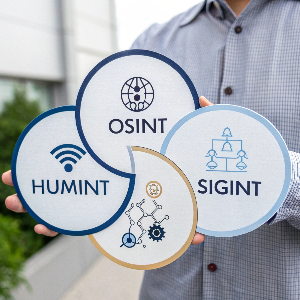 The involvement of foreign PICs in confrontation with Western adversaries and the “collective” West in general and the latter’s allies (such as Ukraine) is one of the important elements of the hybrid war against the West, which has been quite actively waged by Russia, China and Iran in recent years.
The PIC staff collects and analyzes information about events in the world, usually focusing on security issues and geopolitical risks. They receive information not only from the media and other open sources (Open source intelligence — OSINT) and a more advanced form (Professional OSINT — Pro-SINT), but also from their own sources. In fact, this is Human intelligence (HUMINT) [7].
The capabilities of PICs are used by internal and external actors in the perspective of promoting their interests also by influencing public opinion in certain countries:
- public opinion (activities, primarily in social networks using CYBINT — DNINT (Cyber Intelligence-Digital network intelligence) forces and means to falsify news sites and publish false information (example — Tik Tok’s activities during the 2024 presidential campaign in Romania)
- Individuals, primarily representatives of political, governmental and business circles (HUMINT, the example of Prince Andrew).
In PICs in great demand are orders that involve other capabilities and methods of execution:
- SIGINT (ELINT, COMINT) — Signal Intelligence (Electronic Intelligence, Communications Intelligence) — radio intelligence, electronic intelligence, intelligence in communications networks;
- FININT (Financial intelligence) ;
- TECHINT (Technical intelligence);
- GEOINT (Geospatial intelligence);
- IMGINT (Imagery intelligence) — analysis of images obtained in various ways.
The UK is a leader in providing private intelligence services on the European continent.
Experts estimate that in 2020, the budget of PICs located in London alone (known as the “City of Spies”) was close to $20 billion.
 The events surrounding the Russian-Ukrainian war prompted official government agencies to use the capabilities of PICs. Thus, in April 2022, the UK Government, taking into account the events in Ukraine, set the military intelligence leadership the task of expanding cooperation with PICs(in particular, processing satellite images obtained by reconnaissance satellites).
At that time, the issue of the possible negative impact of the activities of PICs on the national security of the United Kingdom was not yet as acute as it was stated in the aforementioned MI5 conclusion of 2024. Although even then, the activities of PICs had a rather sensitive negative connotation, in particular, in terms of their role in the process of the UK’s exit from the EU (2015-2019) in the context of influencing the will of citizens.
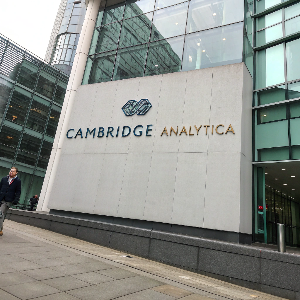
A typical example of such activities is Cambridge Analytica PIC (hereinafter — CA), which was established in 2013 as a subsidiary of another PIC — SCL Group. It specialized in providing consulting services in the political sphere, using technologies of in-depth data analysis (in particular, from social networks) to develop strategic communication on the Internet during election campaigns [8]. According to The Guardian, CA has formed a global network of its sources and had them in 68 countries (as of 2018) [9].
It is believed that in 2016, it was the CA that helped the then Government convince the UK population to vote in favor of leaving the EU in a referendum. But, as it turned out later, the CA assisted not only its Government, but also external players interested in destabilizing and weakening the EU. First and foremost, it was Russia, which believed that the withdrawal of such a powerful member from the organization would weaken the EU and, in general, the unity of European allies. The “Russia Report” published a few years later, prepared by the Parliamentary Committee on Intelligence and Security, already referred to the facts of possible Russian interference in the Brexit referendum. The investigation also included the CA.
The Guardian article referred to an 18-month investigation into the CA’s interference in the Brexit process, which resulted in new evidence of the PIC’s close ties to Russian handlers, including the Russian Ambassador to the UK. The same article points out that “…on March 11, 2016, that is, three months before the European referendum and long before anyone began to wonder about foreign interference in the two political cataclysms of 2016: Brexit and Trump’s election, the Russian Embassy in London issued a press release (protesting allegations of Russian involvement in influencing the Brexit outcome)” [10]. A few days before, Foreign Secretary Philip Hammond delivered a speech at Chatham House, in which he said that “the only country that would want us to leave the EU is Russia”.
It is worth noting that despite the controversy that began around The CA after scandalous assessments of its involvement in Brexit and the US elections, in 2017, the Russian Sberbank used the services of this company to obtain information that would allow it to “improve the system of assessing the creditworthiness (credit risks) of clients.”
In 2018, the controversy around the CA PIC reached its peak. It was at the center of an international scandal when it became known that the PIC had illegally gained access to the data of 50 million (according to other sources, 87 million) Facebook users while working for the presidential campaign of US President Donald Trump in 2016 [11]. In addition, the British TV channel Channel 4 released a recording of conversations with PIC managers, which suggests that the CA employees resort to bribes to discredit political figures. The scandal had led to the fact that Facebook closed access to any services for the CA.
One of the leading developers of the CA software that provided information about Facebook users was Aleksandr Kogan, a British citizen with Russian roots [12].
In May 2018, due to this scandal, the management of the PIC was deprived of the right to conduct business for “unethical behavior”, which led to its subsequent bankruptcy and disappearance from the market.
Summarizing, we can draw some conclusions, including those directly related to Ukraine.
The issue of the use of PICs in the modern world has become relevant and will continue to grow as the confrontation between Russia and the West escalates, especially against the background of the war in Ukraine and in the context of a certain destabilization of the “collective” West due to the new US administration. The facts and experience of the world’s anti-Western actors’ involvement in the use of PICs to resolve certain issues in their favor in different parts of the world require early detection of such actions in order to counter them, on the one hand, and on the other — such experience can be used in the course of further confrontation between Ukraine and the Russian Federation
Serhiy Muzychenko,
independent expert
Notes:
[1] Director General Ken McCallum gives latest threat update. https://www.mi5.gov.uk/director-general-ken-mccallum-gives-latest-threat-update
[2] Британія застерегла приватних шпигунів від співпраці з Росією, Іраном та Китаєм. // https://www.holosameryky.com/a/velyka-brytaniya-zasterehla-pryvatnykh-shpyhuniv-vid-roboty-z-rosiyeyu/7946213.html
[3] Stop Working for Russia, Britain Tells Its Private Spies. https://www.politico.eu/article/russia-britain-private-spies-uk-home-office-national-security-china-russia-s/
[4] Minister for Security Dan Jarvis: Complying with the National Security Act 2023. https://citysecuritymagazine.com/risk-management/minister-for-security-dan-jarvis-new-guidance-on-complying-with-the-national-security-act-2023/
[5] Read more.: Guide to the National Security Act 2023 for Security Professionals. January 2025 https://assets.publishing.service.gov.uk/media/ 6784ee23f0528401055d22f6/Guide+to+the+National+Security+Act+2023+for+Security+Professionals.pdf
[6] Policy Paper. Foreign Influence Registration Scheme Factsheet. https://www.gov.uk/government/publications/national-security-bill-factsheets/ foreign-influence-registration-scheme-factsheet
[7] Open-Source Intelligence Professionalism: Distinguishing “OSINT” from “Pro-SINT”. https://federalnewsnetwork.com/commentary/2024/10/open-source-intelligence-professionalism-distinguishing-osint-from-pro-sint/
[8] Приватні розвідувальні компанії: іноземний досвід залучення приватного сектору до виконання завдань розвідки: аналіт. доп. / В. О. Паливода. — Київ: НІСД, 2022. // https://niss.gov.ua/publikatsiyi/analitychni-dopovidi/pryvatni-rozviduvalni-kompaniyi-inozemnyy-dosvid-zaluchennya
[9] Facebook Asks US Supreme Court to Dismiss Fraud Suit over Cambridge Analytica Scandal https://www.theguardian.com/technology/2024/nov/06/ facebook-cambridge-analytica-lawsuit
[10] Arron Banks, Brexit and the Russia Connection. // https://www.theguardian.com/uk-news/2018/jun/16/arron-banks-nigel-farage-leave-brexit-russia-connection
[11] Скандал с Facebook и Cambridge Analytica. Что мы знаем. // https://www.bbc.com/russian/features-43475612
[12] Cambridge Analytica-Linked Academic Spurns Idea Facebook Swayed Election. // https://www.theguardian.com/technology/2018/jun/19/aleksandr-kogan-facebook-cambridge-analytica-senate-testimony