Donald Trump Has Declared War on International Terrorism
Is It Just Another Slogan or a Real Reorientation of the Intelligence Services?
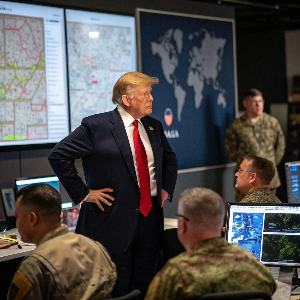
Donald Trump’s second term in the White House is marked by changes and reforms in the USA’s foreign policy. International terrorism, which was not paid much attention during the presidential campaign, has been identified as a priority element of this policy.
On January 20, 2025, on the first day of his term in office, the 47th President signed a number of the most important documents, in his opinion, including the Executive Order [1] “Protecting the United States from Foreign Terrorists and Other National Security and Public Safety Threats”.
This document is in line with Donald Trump’s decision during his first term, according to which restrictions were imposed on the possibility of entering the United States for citizens of countries such as Syria, Iraq, Somalia, and Yemen. This time, however, the executive order provides for tighter control over individuals who have received visas or are about to receive them. These checks are designed to make sure that applicants “do not bear hostile attitudes toward the USA’s citizens, culture, government, institutions, or founding principles, and do not advocate for, aid, or support designated foreign terrorists and other threats to our national security.”
All institutions related to national security (including the Department of State, the Department of Homeland Security, and the CIA) must be involved in the migrant vetting process. The executive order also instructs the heads of those agencies to submit a report to the President within two months with a list of countries that do not provide full information about their citizens, which may lead to a decision to suspend their entry into the United States.
The next step will be to identify individuals who potentially threaten the USA’s security and take measures that will lead to their deportation from the country. In addition, the regulation requires the implementation of solutions that will prevent refugees and stateless persons from entering the United States.
Latin America As a Terrorist Threat
 The United States has almost always classified Iran (since 1984), Syria (since 1979), and North Korea (since 2017) as state sponsors of terrorism. The exception is Cuba, which “maneuvers” within this list. Before the end of his term, Joe Biden removed the country from the list of state sponsors of terrorism in exchange for a commitment to release 553 political prisoners. However, Donald Trump reversed this decision after taking office. Similarly, Barack Obama removed Cuba from the blacklist in 2015, but Donald Trump returned it to the list in 2021.
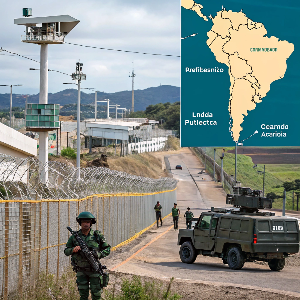
Other entities that have been added to the list of terrorist groups under Executive Order 14157 include Mexican drug cartels and other transnational organized criminal groups (hereinafter referred to as OCGs): Mara Salvatrucha, Tren de Aragua, Unidos, Golfo, La Nueva Familia Michoacana, Noreste, Jalisco Nueva Generacion and Sinaloa.
The designation of cartels as terrorist groups provides intelligence services and law enforcement agencies involved in the fight against organized crime with additional means and powers to detain their members, minimize their influence or eliminate those groups. This is directly related to the launch of a more aggressive anti-terrorism policy and Donald Trump’s decision of February 1, 2025 to ease the rules related to actions against terrorist groups introduced by the previous administration. Until now, the US military and the CIA had to obtain official permission from the White House to conduct UAVs’ strikes. During a meeting with the US Africa Command, Defense Secretary Pete Hegseth signed a directive that simplifies the formalities required for such attacks. Now, decisions about why and whom to attack are made mainly by commanders on the ground. In addition, they have the prerogative to attack a target solely on the basis of the subject’s membership in a terrorist group. On the one hand, such actions can speed up the weakening of terrorist groups’ capabilities, but on the other hand, they can lead to erroneous decisions and possible civilian casualties. In the case of organized criminal groups, the elimination of the organization’s leader often leads to a split within the structure and its division into two or more groups.
Africa and the Middle East in the Crosshairs
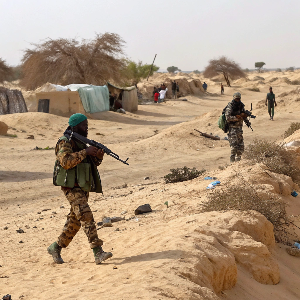 However, the mentioned possibility of attacks on terrorist targets is more aimed at groups operating in the Middle East and on the African continent. In this regard, the United States has conducted at least six air strikes against the Islamic State (hereinafter — ISIS) in Somalia and al-Qaeda affiliates in Syria. Donald Trump has also announced that he authorized the elimination of one of the senior leaders of ISIS, who was planning its terrorist actions. There is no exact information about this person, although experts suggest that it is the so-called emir of the Somali wing of ISIS. In addition, since the introduction of new solutions to combat terrorists, at least four such attacks have been carried out in Syria.
On February 4, 2025, Donald Trump signed the Presidential National Security Memorandum on Iran. The document contains three points that should be implemented as part of the anti-Iranian policy, two of which relate to limiting Tehran’s potential development of nuclear weapons. The third point refers to the need to neutralize the Iranian terrorist network. Its implementers are Secretary of State Marco Rubio, who will control the implementation of the sanctions policy, and Attorney General Pamela Bondi, who is responsible for prosecuting Iranian-funded terrorist groups and finding ways to arrest terrorists and extradite them to the United States.
Donald Trump has also returned the Yemeni Houthis to the list of terrorist organizations, explaining that they are supported by the Islamic Revolutionary Guard Corps (IRGC) and Quds Forces. The latter specialize in unconventional warfare and are responsible for supplying weapons and training to terrorist groups around the world. The IRGC, among other things, assists militants in Iraq, Lebanon, the Palestinian territories, Syria, and Yemen. The IRGC’s goal, as declared by Tehran, is to liberate the region from the domination of Western countries and Israel. Besides, the IRGC is accused of carrying out a series of attacks on US Navy ships and creating problems for the allies’ trade (60 % of EU-related ships were forced to bypass Africa instead of going through the Red Sea).
On March 15, 2025, President Donald Trump effectively declared war on the Houthis, resulting in several attacks by the US Central Command on targets in Sanaa and the northern province of Saada. In addition to the United States, the Houthis have also accused the United Kingdom of air strikes, although London has not done so, but has provided assistance to Washington (for example, in the supply of fuel).
The hostility in US–Iranian relations is particularly exacerbated by Iran’s cooperation with Hamas, which has been recognized as a terrorist organization by the US State Department since 1997. However, it is worth noting that American leaders recently met with representatives of Hamas in Qatar and held talks on the topic of hostages held in the Gaza Strip. This marks a departure from the long-standing US policy of refusing to engage in direct negotiations with groups it considers terrorist. Until now, negotiations had been conducted with the participation of intermediaries (in particular, Egypt and Qatar).
However, this tactical step does not mean a change in the conceptual approach to terrorist groups. Donald Trump confirmed this by calling on Hamas to withdraw from the conflict, while threatening that otherwise the United States would provide Israel with all the necessary means to destroy the organization.
Previous Presidents’ Approaches to Counterterrorism
 Analyzing Donald Trump’s anti-terrorism policy, which is another variant of the US administration’s approach to the problem of terrorism, one of the main challenges to the United States in the twenty-first century, it is worth recalling the actions of the previous masters of the White House. The moment of the attacks on the World Trade Center and the Pentagon on September 11, 2001, which killed about three thousand people, was a turning point for the United States in fighting Islamic fundamentalism.
A week after the attacks, then-US President George W. Bush said: “Every nation, in every region, now has a decision to make. Either you are with us, or you are with the terrorists. From this day forward, any nation that continues to harbor or support terrorism will be regarded by the United States as a hostile regime”.
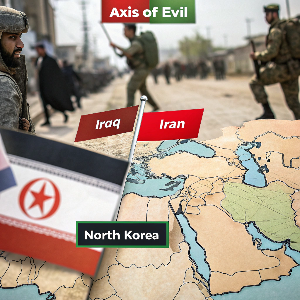
In January 2002, in his State of the Union Address [2], the American leader outlined the course of action his administration would take to fight global terrorism. It was then that the term “axis of evil” was coined, covering countries such as Iraq, Iran and North Korea, i.e. countries that seek to possess weapons of mass destruction and are open to possible cooperation with terrorist organizations to proliferate them. This term served as the basis for the so-called Bush Doctrine [3], which was characterized, among other things, by the following quote: “The war on terrorism cannot be won on the defense. We must take the fight to enemy territory”. The Americans had to act preventively, taking their activities outside the United States. An important element of George W. Bush’s struggle against terrorism was an attempt to force individual actors in international politics to take sides.
“First, we do not distinguish between terrorists and the states that protect them. We will hold them equally accountable”, the Master of the White House said, and this policy was embodied in the American invasion of Afghanistan, which began in 2001. The doctrine also stated that the United States would attack al-Qaeda wherever it exists, preferably with the state on whose territory it is present. And if that state does not agree, then without it.
Barack Obama continued the war on terrorism, although he did it in a slightly different way than his predecessor. At the verbal level, he took a different approach to the functioning of the Guantanamo Bay prison, announcing the need to close it in January 2009. But, as we know, those statements were not accompanied by any specifics, as the institution continued to operate for years. According to Professor Zbigniew Lewicki in his book American Presidential Doctrines of Foreign Policy and National Security, the Obama administration focused on increasing strikes against the leaders and targets of terrorist organizations, mostly using drones. “Drones have turned al-Qaeda’s command and training structure into a burden, forcing the group to choose between having no leaders or having them dead”, said American political scientist Daniel Byman. The most impressive success of Barack Obama’s administration in the context of fighting terrorism was the Navy SEAL operation “Neptune’s Spear”, which resulted in the killing of al-Qaeda leader Osama bin Laden in May 2011.
The period of Joe Biden’s presidency (2021-2025) is widely perceived as being associated with the chaotic withdrawal of the US contingent from Afghanistan. However, it should be noted that the situation is more complicated, and the actions of his administration were de facto the implementation of Donald Trump’s agreement previously made with the Taliban.
Speaking about Joe Biden’s policy in the context of fighting terrorism, one cant’s help mentioning the problem of so-called domestic terrorism. It was under President Joe Biden that the National Strategy for Countering Domestic Terrorism was adopted for the first time in the USA’s history [4].
Counterterrorism in Donald Trump’s First Term in Office
 An assessment of today’s counterterrorism policy of Donald Trump (predecessor and successor to Joe Biden) will not be complete without comparing it to the time of his first term in the White House (2017-2021).
In December 2017, the US President adopted a new National Security Strategy, which, among other things, focused on overcoming international terrorism. To implement it, in October 2018, Donald Trump approved the National Strategy for Counterterrorism, which defined (as stated) new approaches to overcoming this threat based on the previous experience of the United States and the international community. The document emphasized the search for and destruction of sources of terrorist groups, elimination of financial support for militants, modernization and integration of counterterrorism tools. The Strategy emphasized the use of all American tools to prevent and combat terrorism, including military and non-military means.
In the foreword to the Strategy, Donald Trump, in his typical pathos, promised “to the American people to spare no effort to preserve the safety and security of the United States”. The President stated that “We will defeat radical Islamist terrorists such as ISIS and al-Qa’ida, expand our agile counterterrorism toolkit to prevent future terrorist threats, deter emerging threats, roll back Iran’s global terrorist network.”
Fighting Terrorism: Donald Trump’s Attempt No 2
 When Donald Trump returned to the White House in January 2025, he began to talk again about how he would defeat international terrorism. The question then arises: why wasn’t this done during his first term? Who prevented him from doing so? Is it really Joe Biden’s fault?
On April 30, 2025, Donald Trump’s team celebrated 100 days into his second presidential term. According to experts, the White House has nothing to boast about in geopolitics. Loud statements mean meager results. For example, the promise to end the war in Ukraine “within a day” did not materialize. The US President now calls his words “figurative”. Apparently, his slogan about defeating drug cartels, to which he has granted the status of terrorist organizations, can be considered equally “figurative”. The major drug trade is the same age as Donald Trump, and it began in Latin America in the 1940s. And it is likely to outlive more than one American President. Donald Trump’s own attitude to the US intelligence community, which he has tasked with defeating international terrorism and drug trafficking, leaves much to be desired.
During his first term in office, Donald Trump openly stated that he did not trust the intelligence information provided to him by the CIA and other intelligence agencies. During his second term, the president began to settle scores with them (especially with the FBI, which was investigating the storming of the Capitol in January 2021). In the context of saving the state budget, the new administration announced its intention to significantly reduce the staff of the National Security Agency and the CIA, among others. According to Langley’s official statement, “These moves are part of a holistic strategy to infuse the Agency with renewed energy, provide opportunities for rising leaders to emerge, and better position CIA to deliver on its mission.” In reality, however, it is clear to everyone that disloyal employees are being fired.
Although fighting international terrorism has been declared a top priority of Donald Trump’s national security policy, cost-cutting has also affected one of the main actors in this fight — the National Counterterrorism Center, which is part of the Office of the Director of National Intelligence. Apparently, not particularly counting on the financial component of the President’s loud slogans, the Center’s leadership is now discussing the use of new tools, including artificial intelligence.
Volodymyr Palyvoda,
independent expert
Notes:
[1] An executive order is a policy document issued by the US President to direct the activities of the federal government. Article 2 of the Constitution of the USA grants the President broad executive and law enforcement powers.
[2] The State of the Union Address is an annual message that the President of the United States presents at a meeting of both houses of the US Congress at the beginning of each calendar year in office. The State of the Union Address usually contains information on the state of the economy and the budget, and is a platform for the President to propose legislative initiatives and national priorities.
[3] The Bush Doctrine is an expression used to describe various related foreign policy principles of the 43rd President of the United States. Initially, the phrase characterized the policy according to which the United States has the right to protect itself from countries that provide shelter or assistance to terrorist groups, thus justifying the invasion of Afghanistan in 2001. Later, the Doctrine included additional elements: a policy of preventive war, which means that the United States should topple regimes in other countries that pose a potential or perceived threat to its national security, even if this threat is not immediate; a policy of “spreading democracy” around the world, especially in the Middle East; and strategies for countering terrorism.
[4] According to the provisions of Art. 802 of the Patriot Act, the term “domestic terrorism» means actions that are dangerous to human life, which are in violation of federal or state criminal law, and if those actions are intended to intimidate the population, to influence government policy by intimidation or coercion, or by mass destruction, murder or kidnapping, and those actions occur within the territorial jurisdiction of the United States.