What Happens to Countries Which Contradict the Principles of the European Community
With elections of state leadership taking place one after another in Europe, we should expect significant geopolitical changes in the near future. After all, no matter how surprising they may be, this has already been observed not only on the European continent, although right now it is important for us to know how the newly elected leaders of some European countries will react to the Russian-Ukrainian war, among other things. And also what the voting citizens of each country hope for, but at the same time, as a rule, they neglect the fact that “everything new is actually well-forgotten old”.
What is meant by this?
This is exactly what Romanian analyst Daniel Ionascu tells us in his latest publication entitled “What Happened to Other Countries Which Elected Extremists to the Leadership? The Cases of Greece, Hungary and Slovakia Are Painful”.
At the beginning of his post, he reminds us that over the past 15 years, several European countries (incidentally, EU members) have elected what he calls extremists to the post of leader, with further unpleasant consequences. We are talking about such countries as Hungary, Romania, Greece, and Slovakia, which “increased taxes due to the stoppage of cash flows.”
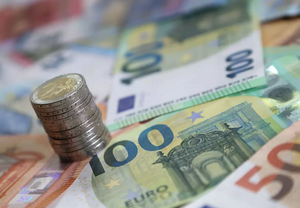
First of all, the author analyzes the events in Greece under the subtitle “The Far Left in Greece”, first referring to statistics, according to which, for example, the average salary of Greeks in 2023 was EUR 17,605 a year, which is less than the EUR 24,005 a year in 2008. According to the World Bank, the gross domestic product (GDP) per capita, i.e., the indicator of well-being, is USD 23,400 in 2023, which is significantly less than the USD 31,695 per capita recorded in 2008. And in this state of affairs, Greece needed three financial programs between 2010 and 2015, raising taxes, cutting wages and pensions. Were these measures effective? The answer is: “the standard of living has not yet returned to the previous level”. To achieve this, Greece needed additional EUR 280 billion. How did it happen that such a country got into economic trouble? The author reminds about the global crisis that began in 2007–2008 in the United States and hit Greece hard in 2009 as interest rates on government loans soared. In total, Greece was supposed to receive three financial programs from the European Commission (EC) and the International Monetary Fund (IMF) in the amount of the aforementioned EUR 280 billion. However, this was only possible if Greece implemented reforms, which the Greeks had to confirm by voting for austerity. In 2014, the Greeks elected the far-left Syriza as their main party, and in 2015 it launched a referendum to ask the population whether they would accept the austerity program. 61.31 % of those who voted were against it. So, there was not enough money. At the time, Greeks were not allowed to withdraw more than EUR 60 a day from ATMs, and if they missed a day, the amount was not carried over to the next. This led to huge queues at ATMs, and the authorities threatened to print euros themselves. The alternative was not to open banks.
However, Greece was forced to carry out reforms, privatization and balance the budget after it became obvious that Greek banks, which depend on money from the European Central Bank, might never reopen. The EUR 1,800 a month limit was later increased to EUR 5,000, but Greeks had a three-year withdrawal limit until 2018, AP reported. Syriza remained in power until 2019.
Another illustrative example can be the events in Hungary, which has been continuously ruled by Prime Minister Viktor Orban and his Fidesz party since 2010. In 2011, Orban introduced constitutional amendments to include traditional values and references to Christianity. In 2020, the Parliament again amended the Constitution to make it clear that the traditional family consists of a woman and a man. In 2025, according to the New York Times, another amendment stated that gender is biological at birth and that there are only two genders.
But this was not what played a major role in Hungary’s economy. An important factor was the nationalization of the energy sector. The author reminds us that economically, Hungary has made significant investments in the automotive industry, with German giants BMW, Audi, and Mercedes opening factories in the country. At the energy level, it has nationalized several companies, including taking control of the MOL oil group, and the government has encouraged it to expand in neighboring states. The MVM energy group has also aimed at acquisitions of shares in the region. It recently purchased the E.ON Romania, but the deal is being challenged by the Ministry of Energy and may be blocked. The state has signed a number of energy contracts with Russia, from building a nuclear power plant with Rosatom to importing gas from Gazprom. Moreover, Hungary is one of the promoters of Russia’s interests at the European level. At the same time, the central bank has lost its independence, while the press has fallen into the hands of oligarchs friendly to Orban. As a result, European funds were blocked due to democratic failures in Hungary. The blockade depreciated the forint, and then, in 2023, Hungary experienced the highest inflation in the EU – 26.2 %. The Hungarian Government has also introduced a number of changes in recent years, such as fuel and food price caps, which led to petrol and diesel shortages in 2022. In 2023, food shortages and high prices forced people to form groups to shop in Romania, where at the time its GDP per capita officially exceeded that of Hungary’s. By the way, at the end of last year, Romania surpassed Hungary in terms of wages, having come close to Poland. According to the data published by the National Institute of Statistics, the adjusted average annual salary in Romania in 2023 was EUR 17,739, compared to EUR 16,895 in Hungary and EUR 18,054 in Poland. Hungary also has the highest VAT in the EU at 27%.
The author also draws the reader’s attention to the state of affairs in neighboring Slovakia, which is ruled by a person close to Russia. Prime Minister Robert Fico, the only EU leader who recently attended Putin’s parade in Moscow, came to power after the 2023 elections. Fico, a member of the Socialist Party, previously served twice as Prime Minister of Slovakia, between 2006 and 2010, and between 2012 and 2018. After Fico won the election in 2023 with an isolationist policy, foreign investment dropped significantly. Therefore, Bratislava was forced to increase a number of taxes. According to the Termene.ro portal, the increase in such fees began on January 1, 2025: the standard GDP rate increased from 20 % to 23 %, the reduced rate of 10 % was increased to 19 % and it applies to products such as processed food and electricity. A 5 % GDP rate was extended to essential goods, such as basic food, medicines, books, school textbooks, and accommodation services; the corporate tax rate was increased from 21 % to 24 % for companies with annual revenues of more than EUR 5 million. For companies with revenues of less than EUR 100 thousand, the rate was reduced from 10 % to 5 %.
The author, writing his article on the eve of the elections in Romania, drew voters’ attention to the consequences that could arise from the victory of a particular presidential candidate. In order to warn his compatriots against rash steps, he described what happened or is happening in Romania’s neighboring EU member states when voters are exposed to propaganda that is in line with Russia’s propaganda efforts. And ultimately, in order to prevent an economic catastrophe, he quotes from Facebook the words of Adrian Radulescu, an advisor to the National Bank of Romania (BNR) – “If we do not change the direction of the ship called Romania,… we will be overtaken by the Titanic!”
As you know, voters of Romania realized the level of their responsibility in time and made a choice that will not lead to consequences similar to those of Slovakia, Hungary or Greece.
Oleh Makhno,
Institute for Global Politics