The New Government of the Czech Republic: What Will Be Its Attitude to Ukraine?
Is the Czech Republic approaching a political crossroads? This question was often heard even before the elections to the Czech lower house of Parliament, which took place in October 2025. After all, the changes in parliamentary representation were obvious and would inevitably affect domestic and foreign policy, which would be handled by both MPs and representatives of the new government once it is approved by President Pavel at the beginning of next year. A. Babiš, who already has experience in such a responsible position, will obviously be appointed Prime M inister, and his subordinates, i.e., the heads of ministries, will be practically new ambitious individuals. The Czech media have already published enough information to determine the future course that the Czech Republic should follow. However, the process of determining this course is not yet complete and has some peculiarities. This is especially true given that it is influenced by many factors, including, logically, the location of the state, which is surrounded by several countries where there are ongoing debates at all levels about the future of the EU and the advisability of providing assistance to Ukraine, which has now become Europe’s shield in the Russian-Ukrainian war.
One way or another, such a political movement will be wary in the Czech Republic. And this is important for Ukraine, because it is from the Czech Republic that it has received and continues to receive comprehensive assistance, and it is the Czech Republic that has initiated and continues to initiate the supply of weapons and other equipment needed by the Ukrainian Armed Forces.
Will this continue? That is, when a new government comes to power there?
During the election process, as we know, different visions of such future “weapon” cooperation were presented. Among other things, proposals were even made to change the form of assistance to Ukrainian refugees. But during elections, as we have seen time and again, many slogans are bandied about, and only time will tell what happens next.
The only thing that attracts attention in the first place is how the President of Czechia advises members of the future new government and its possible leader. It can even be argued that the President is seeking to determine (read: remind) the country of the path it should take before the government is approved, so as not to experience the turmoil seen in Slovakia or Hungary, not to mention others.
Today, the current government of the Czech Republic has proven itself to be one of most reliable allies of Ukraine, which has been at war with Putin’s Russia for several years now. But will this still be the case soon, when the government is in the hands of the new Prime Minister Babiš? During his election campaign, he promised to stop supplying ammunition to Ukraine and did not even confirm that he would comply with the well-known Article 5 in case of an enemy attack on any NATO member state. In other words, he does not fully understand what needs to be done to maintain Europe’s security. And this is despite the fact that during the Russian-Ukrainian war, the Czech defense industry received a noticeable boost in production, with its revenues growing and the technological level of the Czech Armed Forces growing as a result.
By the way, it is worth recalling how the winners of the recent elections to the House of Representatives feel about this. After all, this is also linked to the future attitude of the leadership of the Czech Republic to foreign policy.
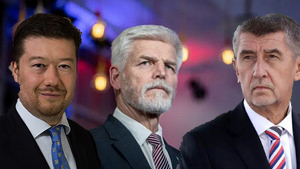
Tomio Okamura – the leader of the radical right-wing, anti-European, and xenophobic Freedom and Direct Democracy (SPD) movement – has become the Speaker of the Czech House of Deputies. He was recently supported by all the deputies of the new coalition present in the Assembly Hall. However, according to Czech media reports, deputies from the new minority “… argued in the debates preceding the vote that Okamura should not be the head of the Houseof Parliament, and, in fact, the third person in the state. They reminded him of his offensive and, according to some politicians, even racist remarks about Romani, immigrants, and Muslims, as well as his skeptical assessments of further aid to Ukraine.”
(Tomio Okamura was born in Tokyo. His father was Japanese and his mother was from Moravia. As a child, he lived in Japan and the former Czechoslovakia. In Tokyo, he worked as a garbage collector, among other things, and in the Czech Republic, he was a businessman on the verge of bankruptcy. He entered politics in 2012. He served one term as a senator. In the latest elections, he secured a seat in the House of Deputies for the third time for the movement he leads).
And since we have already touched on the topic of the origins of the future leaders of the Czech Republic, let us recall what the media report about the future Prime Minister A. Babiš himself. He is considered a right-wing populist. He is also a billionaire, entrepreneur, and former Prime Minister who led the Czech Republic from 2017 to 2021. He is often referred to as the “Czech version of Donald Trump”. Babiš’s political views are well known to European right-wing populists: opposition to immigration, environmental initiatives, and Brussels. His fortune is estimated at over three billion dollars. He started his business in the early 1990s, during the breakup of Czechoslovakia. In 1993, he founded Agrofert, a company involved in agriculture, forestry, construction, and the chemical industry. Like Trump, he has been involved in lawsuits for corruption offenses, including the misuse of European subsidies. One of the key cases is the so-called Stork’s Nest, when a farm was transferred to his family members in order to be eligible for EU funding, which Agrofert, his holding company, would not have been entitled to receive under the law. He is featured in the Pandora Papers investigation for purchasing properties in France through offshore companies, which may indicate possible violations of financial and tax laws.
Having determined who is currently coming to power in the Czech Republic, let us turn to some aspects related to the peculiarities of its political foundation. This refers to what significantly influences Czech society when it comes to choosing the direction of its development (read: its future existence). Here, it is worth paying attention to the views and opinions of the Czechs themselves, in particular Czech analysts. They believe that one of the reasons for the Czechs’ support for Babiš during the vote is… the tangible influence of Russian propaganda and populism. The respected Czech website Aktualne reported that “… according to Czech intelligence and analysts from the Center for Online Risk Research, nearly a thousand TikTok accounts are promoting pro-Russian narratives in support of ‘extremist’ parties ahead of the Czech elections. Some Czech media outlets suggest that Russia may be behind these accounts.” In general, political experts assure that European countries should follow the example of Ukraine, which has already developed a certain immunity to disinformation in order to avoid falling prey to Russian information attacks.
Incidentally, one such analyst, international expert Stanislav Zhelikhovsky, points out that since the collapse of communism in 1989, the Czech Republic has not experienced significant periods of nationalist-populist rule, as was the case in Poland, Slovakia, or Hungary – even during the four years when Andrej Babiš and his ANO party were in power (2017–2021). At that time, Babiš was less prone to populism.
However, since then, geopolitical shifts, first of all in the form of Russia’s full-scale war against Ukraine and the Kremlin’s toxic influence, have played a significant role and affected the Czech Republic in the form of the current elections. It is not certain that this will not be observed later, when the new government approved by President Pavel takes office.
Summarizing the above and taking into account the Czech government’s attitude to Ukraine and the Russian-Ukrainian war, it is important to point out some of the Czech Republic’s distinctive features. Whatever the case may be, they should play a positive role in Ukrainian-Czech relations. Namely, Czech President Pavel has authority as a politician and is capable of influencing and determining his country’s policy, even though the Prime Minister has broad powers in determining such policy. As noted in the Czech media, the President advocates a tough line on Russia and can put pressure on the government if it tries to deviate from the pro-Western course.
It is also worth remembering that Czech society is significantly different from the societies of neighboring countries and feels safer than they do. But it is also wary of Russia. Czech politicians must take this into account when making decisions. Moreover, they must take into account that “… the Czech Republic is already in a different political and geopolitical reality than it was in 2021, and will not want to repeat the path of Hungary or Slovakia. Friendship with Ukraine and Europe will remain,” concludes respected Czech political analyst S. Zhelikhovsky.
We in Ukraine do not mind such a prediction at all. And we are ready to fully support it.
Oleh Makhno,
Institute for Global Politics