Based on remarks delivered at the Institute for Global Politics roundtable discussion, “Challenges in Cross-Border Cooperation and Ways to Address Them”
“The issues of a culture of peace and democratic governance are the fundamental foundations of successful cross-border cooperation”
I would like to raise one issue – the issue of a culture of peace and democratic governance as the fundamental basis for successful cross-border cooperation – and I will focus on inter-territorial cooperation. I would like to draw your attention to the fact that these issues are addressed in existing documents and research. However, they are not defined as a central pillar that would, to a certain extent, enable the funding of participation in such efforts by scholars and, more broadly, by people who strive for peace and democracy.
In light of these issues, we propose that a structured algorithm be developed, along with defined concepts, logico-structural matrices and models, and tools for democratic participation in the new project. We also propose that resource allocation and risk assessment be addressed.
I would like to draw your attention to the fact that a culture of peace essentially forms the psychological and social foundation for interaction with the population at all levels, from the bottom upward. Therefore, we need a conscious approach based on the concepts already mentioned today by Viktor Vasylovych Bed – issues related to spirituality. We tend to pay less attention to this and focus more on economic and political aspects. However, we would like to point out that as early as 2012, we established the International Academy of Theological Sciences, whose President – Viktor Vasylovych, who is here with us today – along with the Academy’s Vice President, represents very prestigious academic institutions and higher education establishments: the Avhustyn Voloshyn Carpathian University and the Uzhhorod Ukrainian Theological Academy. If we do not pay attention to the issues of spirituality and the spiritual development of the individual, we will be devoting far too much effort to the mechanisms discussed here. I am very grateful to those who have spoken, but I ask that you pay attention to this particular point. After all, it is precisely a culture of peace and democratic self-governance that makes it possible to overcome stereotypes and historical narratives about hostility between the populations of border regions – and, more broadly, even at the European or global level.
We must develop preventive diplomacy. We appeal to the representatives of the consulates present here today. There needs to be a shift in how we perceive the border. The border should not be viewed solely as a security barrier. Communities on both sides must trust one another, which will be mutually beneficial.
Regarding the information and technology processes currently underway: we can communicate at any level, even without the presence of representatives from the organizations tasked with developing this area. We must also work to change the perception of the border – that is, to move away from a barrier-based approach toward trust and mutual engagement. In other words, a culture of peace is becoming a catalyst for development and self-organization today. We must move from a culture of war (pardon the term, though it is widely accepted) to a culture of peace and engage in self-organization from the bottom up.
Next. The role of democratic governance provides a direct legal and organizational foundation for cross-border relations, including the decentralization of power. This is because power is minimally represented by individuals. Local communities must be able to grant civil society organizations access to the planning of joint projects; this does not require significant resources, not even financial ones.
Next, transparency and accountability, as well as the harmonization of procedures. Of great importance – and particularly significant for the global community and the scientific community – are the synergistic effects and practical results achieved through diplomacy and security, through economic dividends, intellectual development, and concrete actions. These include human rights, education, and upbringing, as has already been mentioned today.
And the fact that we would support a new direction of cooperation, such as “eco-peace”. If we embark on such an “eco-peace” program, it will not be limited to engaging with existing structures that are, to a certain extent, responsible for the environment. That, too, is unacceptable, because the small number of people dealing with these issues cannot fully influence people’s sense of responsibility for environmental safety. Therefore, it is very important that an issue such as the spiritual paradigm – the currently prevailing humanistic one – serve as the foundation for all these measures.
Without going into detail, I would like to draw attention to the prospects and challenges in this area in light of new opportunities for sustainable development and the strengthening of security. At our University and at the International Academy – which comprises 75 academicians and corresponding members from 18 higher education institutions and 17 countries around the world, plus the United States and, of course, Canada – we have the opportunity to explore new, promising topics related to the nature of the world, the world order, and global consciousness. We will be able to participate in a very serious dialogue and cooperation, which will enable us, to a certain extent, to move toward a spiritual dimension. Because the aspect of spirituality has already been mentioned today. But this is approached in a very constructive manner at institutions of higher education, including those mentioned today. I want to emphasize that this is a very important aspect, first and foremost, of human self-realization and responsibility toward the people, the state, and the planet. We see this foundation in the preservation of linguistic and cultural heritage, historical consciousness, and moral and ethical values, as well as in the development of spiritual resilience – as our military servicemen are demonstrating today in relation to these issues.
Religious identity, based on Christian and universal human values, has already been discussed today. Over the past 10 years, our University has hosted eight international conferences addressing these issues.
Regarding cultural solidarity: We know that this, too, is a form of human self-expression through what we collectively call “culture”. However, the culture of peace and the culture of solidarity must be interconnected. Digital integration is also very important and must be promoted through any communication platform in Ukraine and beyond. Regarding investment attractiveness and environmental sustainability: if we pay attention to these issues, it will have a positive impact on our development.
And regarding the main concerns and risks. These are very complex internal and external issues that pose their own threats and can hinder cooperation. Geopolitical instability, the crisis of democracy, and historical traumas related to what we are discussing now. Let’s consider just Ukraine, with its 12 historical regions. But what we associate with cross-border cooperation is a relatively new approach. Yet it has deep roots, as it is based on a historical framework that has already been mentioned today.
Immitation of reform is also very dangerous. Reforms are ostensibly being implemented, but none of them are being carried through to completion. This is because reforms are shaped by structures we are well aware of but cannot reach through vertical channels.
The economic imbalance we are currently witnessing. Even more complex is the issue of national and religious selfishness. If these issues are addressed solely through an individualistic approach – without considering matters of national unity, interdependence, responsibility, an understanding of the culture of peace, and democratic governance itself – then, of course, it will take us a very long time to overcome these challenges. But this is precisely where a great deal of work awaits us in developing documentation – a very substantial amount. This involves organizing and holding conferences, meetings, forums, and, of course, panel discussions, where we can examine these issues at various levels with the appropriate structural components.
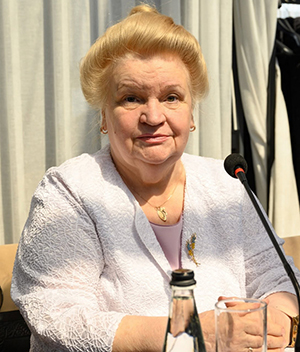
Maya ARTIOMOVA,
Director of the Research Institute of Philosophy, Theology, and Analytics
at the Avhustyn Voloshyn Carpathian University,
Doctor of Philosophy, Professor