The Institute for Global Politics and the Association of Slovak Intellectuals of Transcarpathia Are Launching Cooperation
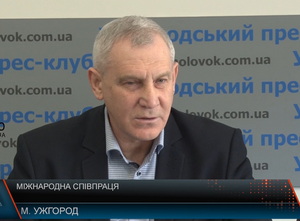 The activities of the Institute for Global Politics attract the interest of a wide range of both our analysts and their foreign colleagues, as has been repeatedly confirmed by joint projects addressing pressing contemporary issues, first of all those related to the Russian-Ukrainian war, the consequences of which are felt throughout the world, and above all in Europe. The Institute’s website features a wealth of up-to-date information, to which we can add the recent press conference in Uzhhorod, where Oleh Bereziuk, President of the Institute for Global Politics, and his colleagues were invited.
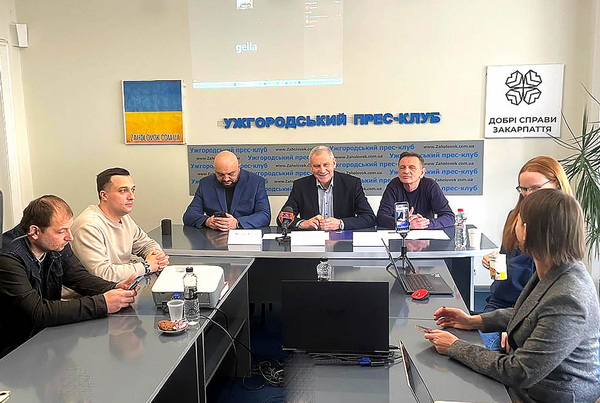
The event took place at the Uzhhorod Press Club with the support of the NGO “Society of Slovak Intellectuals of Transcarpathia,” which is actively engaged in addressing the region’s current issues.
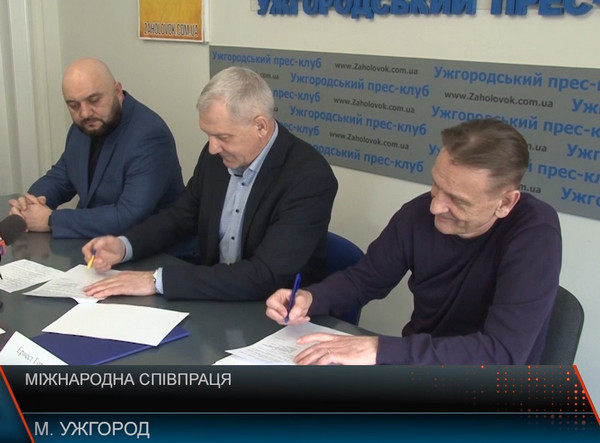
In his opening remarks, O. Bereziuk told the journalists gathered at the event about the work of the Institute he heads. He pointed out, in particular, that cooperation for the benefit of Ukraine is extremely important today, and the signing of the Memorandum of Cooperation and Partnership between the parties – the NGO “Institut
e for Global Politics” and the NGO “Society of Slovak Intellectuals of Transcarpathia” – is one such manifestation of this. On behalf of the Society, the document was signed by its head, Ernest Horvat.
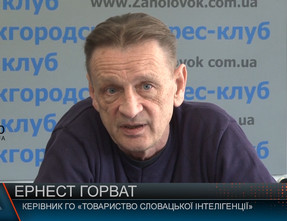 In response to questions from journalists, Mr. Horvat highlighted directions of such joint activities and reminded about the experience in cross-border cooperation gained by the Association, which will undoubtedly prove useful in the future work of both organizations. Incidentally, this will be the topic of an upcoming roundtable scheduled for this month in Uzhhorod. Its theme has already been clearly defined: “Problems and Prospects of Cross-Border Cooperation in Wartime”.
“As we all know, the situation in Ukraine is extremely complex,” he said, “so joint activities between neighboring countries have become significantly more difficult. We cannot ignore this. Our colleagues from the Institute for Global Politics agree with this. By the way, we should also resume and coordinate cooperation with those organizations that were once very popular and active in Transcarpathia but have currently scaled back their activities.
What will this bring to Ukraine? In E. Horvat’s view, it will resolve many issues, including those related to the difficulties of crossing the border, without which it is difficult to cooperate with foreign colleagues today.
– In gen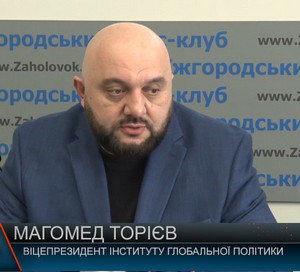 eral, cooperation in this direction will contribute to strengthening interstate ties, which in some cases have been weakened or even severed.
During his speech, Magomed Torijev, Vice President of the Institute for Global Politics, highlighted how Russia is currently attempting to undermine Ukraine’s reputation, particularly in Europe. To this end, the Russians allocate appropriate funds, enlist individuals to appear on television with specific narratives, distort information about the course of military operations, and provide support to their so-called war correspondents. The Institute for Global Politics constantly analyzes such “activities” and takes specific informational countermeasures. And the experience gained in this area can also be used in bilateral cooperation. This includes addressing integration challenges in Transcarpathia itself, in particular, to ensure the effectiveness of efforts related to the resettlement of Ukrainian citizens arriving from eastern Ukrainian territories where hostilities have taken place.
– We now need to actively develop such cooperation to open a window of opportunity for the development of Transcarpathia, – E. Horvad is convinced. – And in this regard, we must take into account the industries being relocated from the East to the West of Ukraine as a result of the long-standing Russian-Ukrainian war. And also to prevent Russia from returning to Europe.
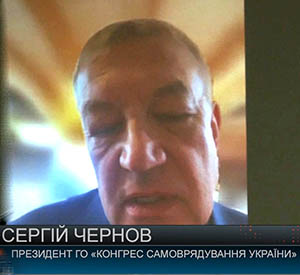 Serhii Chernov, President of the NGO “Congress of Local Self-Government of Ukraine”, who was invited to participate in the online discussion, shares this view. At the time, he was in Strasbourg, France, attending a gathering of local council leaders known as the Congress of Local and Regional Authorities of the Council of Europe. In sharing his perspective on the topic raised at the press conference, he felt it was important to mention the resolution signed in Strasbourg regarding the activities of local self-government bodies. In his view, this could also have a positive impact on Ukraine’s cross-border cooperation with neighboring countries.
– In general, I must say that local self-government is often hindered by politics. It unexpectedly interferes with the activities of local authorities and structures, – believes S. Chernov. His opinion is valid not only as that of a Doctor of Sciences in Public Administration, but also as a former long-time Head of the Kharkiv Regional Council.
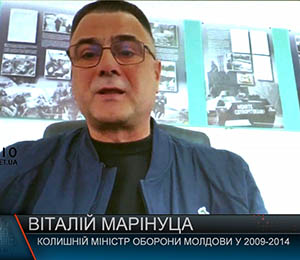 Vitalii Marinutsa, Director of the Republic’s Institute for European Studies, expressed online his support for establishing cooperation among civil society organizations, noting that he already has experience working with the Institute for Global Politics, with which he has organized similar events, including roundtables. He fully agrees with the view that effective cross-border cooperation at the local level today influences the policy of interaction between countries.
All participants in the press conference supported the signing of the memorandum by the heads of civil society organizations and expressed interest in the planned joint roundtable.
Oleh Makhno,
Institute for Global Politics