Russia Has Begun Active Preparations for Armed Aggression Against Poland
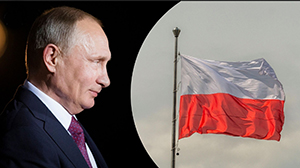
The Russians seem to have learned lessons from their failed attempt to take Ukraine by surprise and are therefore preparing more thoroughly for the next war. In Poland, Russian intelligence services have stepped up their activities, launching a series of information campaigns and psychological operations against their closest neighbors, particularly Ukraine and Germany.
The goal is to prevent these two countries – which possess Europe’s most powerful armies and most developed economies – from coming to Poland’s aid come the need, which would significantly facilitate a ground operation by Russian forces against the Polish Army.
It is clear that Russia cannot fight on two fronts at once; to carry out this plan, it will have to urgently end the war in Ukraine. An analysis of statements by Kremlin propagandists already indicates that Russian public opinion is ready to accept that Putin neither won nor lost the war in Ukraine. This is how Russian propaganda is trying to save Putin’s face after the end of the Russian-Ukrainian war.
Meanwhile, after this war, he will still have to channel the discontent and aggression of demobilized soldiers. And so, a war against Poland could become the most acceptable solution for Putin in his current situation. In case of Russia’s military aggression against Poland, Putin could find himself in a near-win situation. If he manages to capture at least the Suwałki Corridor, it could be presented to Russians as a victory in the war against NATO. This would be especially important and timely ahead of the upcoming State Duma elections, as Putin’s party has begun to rapidly lose votes following the Ukrainian attacks.
That is precisely why such a scenario is entirely possible today, especially since the Polish Army cannot stand up to Russia on its own, and NATO (in fact the USA) is unlikely to provide Poland with substantial military assistance in the current situation. This is all the more true given that current US President Donald Trump, for some reason, has a very favorable attitude to Putin and is constantly trying to help him get out of this difficult situation and remain in power.
If an invasion of Poland were to fail, Putin could tell the Russians that this was a war against a powerful adversary, thereby justifying, in a certain sense, the failure of his goals.
This article simply outlines the main ideas regarding the prospects of the RF’s armed attack on Poland. All these conclusions are based on an in-depth analysis of the socio-political processes currently taking place in Russia and Ukraine, as well as in other countries in Europe and around the world.
Based on our assessment of the known facts, we can conclude that there is a high probability of Russian troops’ large-scale invasion of Poland in the near future, although this will likely occur only after the end of the Russian-Ukrainian war or, at the very least, after the conclusion of the temporary ceasefire between Ukraine and Russia.
Oleh Bereziuk,