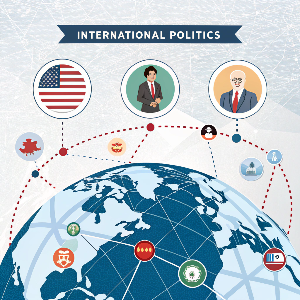
Undoubtedly, the change of power in Washington will have a significant impact on socio-political processes worldwide, including in Ukraine
However, an analysis of developments in international politics suggests that none of the global leaders today intend to wait for the U.S. government to undergo the necessary personnel and organisational changes, nor for Donald Trump’s administration to transition into the systematic implementation of its domestic and foreign policies.
When it comes to Russia, it is reasonable to assert that its policies are unlikely to change in the near future. Instead, the Kremlin will seek to maximise the window of opportunity created by the power transition in the U.S. to advance its imperial ambitions and aggressive plans. Despite all statements made by the current U.S. President, Donald Trump, Vladimir Putin has no intention of ending the war against Ukraine. He continues to destroy Ukrainian cities and villages and kill innocent civilians.
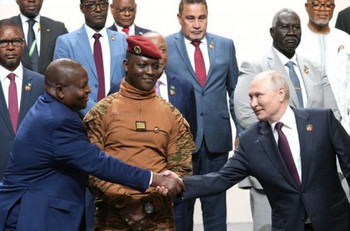
Moreover, using Soviet-era propaganda rhetoric and methods, Russia is actively expanding its influence beyond Ukraine, particularly in Africa. In reality, Moscow has long pursued a neo-colonial policy on the African continent, seeking to exploit the natural resources of impoverished nations rather than aiding their development and state-building efforts. In this regard, Russia’s expansion in Africa has already yielded certain successes. The Kremlin has displaced France from its traditionally controlled territories in West Africa and continues to expand its influence in the region.
Particular attention should also be paid to the densely populated North Caucasus, where Russia draws significant mobilisation resources for its army. By sending “cannon fodder” from this region to Ukraine, Putin effectively solves two problems at once. On the one hand, he reduces the number of potentially rebellious Chechens, Ingush, and other freedom-loving Caucasian peoples, who could pose a threat to the modern Russian Empire. On the other hand, he seeks to weaken the Ukrainian Armed Forces through attritional warfare.
Ukraine’s Strategic Task: Supporting Oppressed Nations.
Under these circumstances, it is of strategic importance for Ukraine to support opposition forces and national liberation movements of Russia’s indigenous peoples. Ukraine must actively assist these nations in breaking free from Russian colonial rule and establishing their own independent states, taking into account their ethno-cultural values and national identities.
However, for Ukraine—a relatively young state—this is an enormous task that will be difficult to accomplish alone. Therefore, to win the war and put an end to Russian imperialism and neo-colonialism once and for all, Ukraine must have reliable allies. First and foremost, these should be nations directly interested in curbing Russian aggression and establishing a long-term, just peace in Europe. Additionally, a strong international security system must be built to protect all nations and peoples on our planet.
Oleh Bereziuk
Institute for Global Politics
Institute for Global Politics