“The World Is on the Brink of a NuclearC”
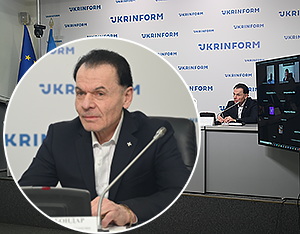
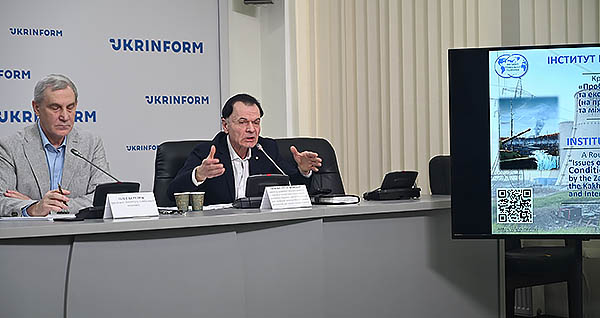
Excerpts from the speech by Oleksandr Bondar – director of the State Scientific Institution “Institute of Ecological Restoration and Development of Ukraine”, Doctor of Biological Sciences, Professor, and Academician of the National Academy of Agrarian Sciences of Ukraine – at the Global Policy Institute’s press conference “Problematic Issues of Nuclear and Environmental Safety in Wartime (using the examples of the Zaporizhzhia NPP, Kakhovka HPP, and international oil and gas pipelines”.
I will outline general issues regarding environmental, nuclear, and radiation safety related to food security, social security, and so on. We have just mentioned nuclear power plants – Zaporizhzhia and Chornobyl. Undoubtedly, the issue of nuclear energy development is extremely important today. We know that in 2022, the European Union adopted a decision to include nuclear energy in the “EU Green Taxonomy”. It is clear that this is extremely important. And although this is a temporary measure, intended for a transitional period, it demonstrates that the international community considers it an alternative energy source with minimal environmental impact. Therefore, it significantly increases our country’s efficiency and interest specifically in the development of nuclear energy.
But we know that every situation or phenomenon can always be viewed from two sides. First, there are undoubtedly what are known as “white swans” – that is, the positive aspects we’re discussing now: cheap electricity. In principle, Ukraine mastered managing this cycle quite a long time ago. But, secondly, there is also a certain negative aspect here. These are phenomena associated with massive environmental pollution, with the enormous danger of handling spent nuclear fuel – that is, with the impact on the environment and the corresponding negative consequences.
Today, following the Chornobyl disaster of 1986, the world has faced such colossal negative consequences for the first time. But with the start of the war in 2022 (though, in principle, we have been engaged in military operations since 2014), all these issues have become significantly more acute. The world has come close to the brink of a nuclear disaster. And it is no coincidence that such important issues are being raised again: ecocide, pollution, or even the destruction of the environment, and so on.
Undoubtedly, the Zaporizhzhia Nuclear Power Plant has drawn particular attention today. Yes, its so-called operating conditions differ somewhat from those of the Chornobyl Nuclear Power Plant. While Chornobyl is generally located in forested areas, up to 150 kilometers from Kyiv, the Zaporizhzhia NPP is currently under the influence of Russian aggression. That is the first point. Second, it is located in the lower reaches of the Dnieper River. Third, an accident there could cause much greater damage because, as is well known, there are significantly more fuel collectors there than at the Chornobyl Nuclear Power Plant. There were 2,000 at Chornobyl, while here at the Zaporizhzhia Nuclear Power Plant there are 18,000. The contaminated area could be tens of times larger. The area of critical contamination is 30,000 km², and up to 2 million hectares of Ukrainian land would be affected… We must realize what a harmful impact this could have on the environment of the Black Sea region, and how it would generally damage the lands of our south, which form the basis of Ukraine’s breadbasket.
Undoubtedly, the issue of the destruction of the Kakhovka Hydroelectric Power Plant arises alongside this. We have not yet fully grasped the consequences that may await us due to such a tragedy… It is also worth bearing in mind that the consequences of ecocide are linked to the destruction of the hydroelectric power plant. Today, despite the clearly negative nature of this phenomenon, opinions in our society regarding these consequences are divided.
For example, there have been numerous statements by representatives of the National Academy of Sciences and experts, such as: “There used to be the Great Meadow there.” “These are the very territories that the Cossacks once used. And since time immemorial, there has been a wonderful diversity there – plants, forest groves. Right along the lower reaches of the Dnieper. So, perhaps it’s actually beneficial that we can now restore this area following the destruction of the Kakhovka Hydroelectric Power Plant?..” But, as our ancestors used to say, you can’t step into the same river twice. Because the territories of the Cossack era were completely different. There was plenty of game there, and the land was also used for livestock farming. The Dnipro’s water volume was by about 40% larger than it is today.
And that is why the issue of the Kakhovka Hydroelectric Power Plant, which directly affects the Zaporizhzhia Nuclear Power Plant, is linked precisely to those ecosystem services, to those important issues that must be considered in terms of their impact on the environment. 600,000 hectares of irrigated land currently lack water. Major cities in southern Ukraine are also facing a severe water shortage. And here’s an interesting point: Black Sea water is beginning to displace surface and groundwater, causing salinization, and as a result, we would end up with desert-like landscapes. This wouldn’t happen immediately, but later – yet it is a clear sign of the undeniable impact on the environment.
Besides, everyone knows that Zhovti Vody is located upstream on the Dnipro River. This is the Zhovti Vody Mining and Processing Plant, Ukraine’s first uranium mining facility, established in 1949. Three mines remain there. It is practically one of 28 such facilities worldwide, the largest in Europe for uranium mining. Now imagine that since 1949, uranium waste has been stored there, amounting to about 35 million tons. Without any protection, it is located right in the Dnipro basin. About 700–800 meters from the water’s edge. And all this mass, if, God forbid, it were to end up there (as a result of a Russian missile strike), would end up in the Dnipro and also contaminate a vast area.
All these security issues are linked to other, equally important issues. Figuratively speaking, they all point to the problem of ecocide. And today, they are not receiving the attention they deserve. For example, Article 441 of our Criminal Code regarding the definition of ecocide, the Rome Statute…Yes, all of that is mentioned there. But today, this needs to be improved – if only so that it can be made public and we can count on receiving appropriate compensation from Russia for the damages inflicted upon us.
By the way, let me remind you of the war in 1991, specifically, as we know, in the Persian Gulf, Kuwait, and Iraq. At least 350 different oil and gas wells were blown up there. The damages amounted to nearly $300 billion, but only $6 billion was spent on ecological restoration. In other words, in such a case, these damages must be proven; we must demonstrate their true cost. We must prove our damages from Russia, as calculated for reparations today, in the relevant courts. These are all the issues facing Ukraine…
And one more thing: today, so to speak, we are approaching the issues of sustainable development. We say that the European Union is built on this. That is, it is based on social, environmental, and economic aspects. But I believe that today the world faces other challenges. And this is confirmed by events in the Middle East and in our country. Therefore, we must add another, so to speak, component – our military and national security. Because without establishing such a security framework, we will not be able to build our own system of sustainable development. We must completely overhaul our land-use system and the system of fortification, much like what was once done in Switzerland. In other words, we must now change the paradigms of land use in Ukraine, the use of nuclear energy, and the security system itself. We must view the system of environmental safeguards for national security in Ukraine in a completely different way today.
It is necessary to collect environmental data on the state of the environment throughout Ukraine.
I would like to point out that since the start of the war, we have consistently received biased information regarding certain events. Initially, the press reported on massive fires in the Chornobyl zone. Later, there were reports of territorial contamination and environmental damage in certain areas of Kharkiv region, and so on. But the information that its users – including government agencies – receive today is sometimes not entirely accurate. And so, the question arose about the need to create a kind of situational information center, a “control room”, where environmental information regarding the state of the environment throughout Ukraine would be fully monitored and collected.
In 2010, there was a minister Zlochevskyi. He tried to create the kind of environmental information source we’re discussing now here at the Ministry of Ecology of Ukraine. But it didn’t work out. Huge sums of money were spent, but this “plane”, so to speak, never took off. Then there were some other developments. Separately, together with the Ministry of Energy and the Ministry of Temporarily Occupied Territories, even before the war – circa 2018–2019 –we created an online map where one could see these environmental sites in the Donbas.
The war began in 2014 precisely in Donetsk and Luhansk regions, where we had identified such hazardous sites. There were 3,500 of them in those two regions. Pollution was recorded, the environmental damage caused by it was assessed, and the consequences were modeled. This was a very important and useful endeavor, albeit a small-scale, or local, one.
And I believe that this is exactly the kind of modeling we need to be doing right now. Based at the Institute and under the auspices of the relevant military organizations, which, first of all, would provide objective information and report on the overall pollution situation, the level of landmines in various territories, oil contamination, and hazardous phenomena in the nuclear power sector. So that this information is objective and easily accessible to decision-making bodies at the state level.
During Wartime, We Should Ensure Environmental Safety
There are two additional points. First, and most importantly, security issues must be handled by those responsible for them. I mean that it has been two years since the Institute of Environmental Restoration was established on the basis of the State Environmental Academy, which, during its 15 years of existence, has trained and upgraded the qualifications of at least 30,000 specialists. These are the people involved in environmental security, which includes environmental management agencies, district and regional environmental departments, national parks, environmental inspections, and so on.
But that program has been scrapped! I mean, it has been handed over to the Ministry of Education and Science today, and that’s where it “has rested in peace”. I mean, right now, during wartime, when we desperately need to change our attitude to the environment and prioritize environmental safety. To create a military system with an assessment of military security, which does not yet exist in Ukraine today, but which is urgently needed. And so, we will now hold discussions with the Ministry of Economy – which now includes the Ministry of Ecology as part of the Ministry of Agrarian Policy – about restoring this line of work within the Ministry of Economy’s system. Because I believe that education is not a full bucket; it is a burning fire.
Regarding another issue – professional audits of nuclear power plants. I want to say that Energoatom, at one time, resorted to a very interesting policy. One such example: in 2017 and 2019, they approached us regarding conducting an environmental audit of the Rivne Nuclear Power Plant. The cost for the study? They offered 150,000 hryvnias! Payment for work at a nuclear power plant? We refused.
Someone did take on this audit and conducted it for that amount. Although in reality, it is practically impossible to inspect all the premises and conduct a proper review. When it comes to something like a nuclear power plant audit, there needs to be a completely different approach at the state level.
Oleksandr Bondar