To Take Belarus Out of the Game. Ukraine’s Ultimatum
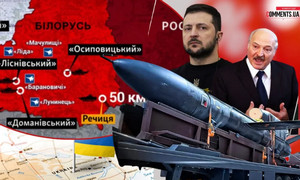
On June 19, Ukrainian President V. Zelenskyy demanded that A. Lukashenko shut down the UAV relay stations in Belarus that are guiding Russian strikes on Ukrainian territory. One week has been given to comply with this demand. But if this is not done, Ukraine promises to shut down these systems itself. Ukraine is capable of doing so. This raises questions about the legality of such actions by Ukraine and their potential consequences in terms of creating yet another front for our country.
As the Prussian military theorist Carl von Clausewitz once said, “War is the continuation of politics by other means.” Typically, the final political step before the start of war is an ultimatum. This remains entirely relevant today. Indeed, before the outbreak of full-scale war, Russia issued a well-known ultimatum to the USA, NATO, and Ukraine in December 2021. Its main points, as they pertained to our country, were a halt to NATO’s enlargement – primarily at Ukraine’s expense – and the Alliance’s giving up cooperation with our country in the military sphere. The United States, NATO, and Ukraine rejected Russia’s demands as unacceptable for sovereign nations and international organizations. This is precisely what prompted Russia to resort to open aggression against Ukraine, as it was afraid to attack the USA and NATO. However, over the course of more than four years of war, Russia has not only failed to achieve its demands but has also faced the exact opposite outcome.
In 2023–2024, Finland and Sweden became new NATO members. And cooperation between the Alliance and Ukraine has evolved into expanded assistance to our country in its military confrontation with Russia. Thanks to this, Ukraine has managed to bring about strategic shifts in the war in its favor. This process is still in its early stages, but it can no longer be stopped.
Kyiv is not issuing ultimatums to Moscow yet. However, its demands that Russia cease hostilities along the front lines are accompanied by devastating strikes on Russian oil refineries and routes to occupied Crimea, as well as on the logistics system of Russian troops at the front, bringing Russia closer to disaster. There’s no need to go into further detail here; everything is clear enough without explanation. An ultimatum will eventually be issued to Russia – and not merely to suspend the war, but to withdraw Russian troops from all occupied Ukrainian territories and return those territories to our country. But that will come later. Ukraine is quite rightly starting with Belarus, as Russia’s closest ally.
Ukraine’s actions are entirely justified and legitimate. Belarus is one of the few countries that openly supports Russia’s war against Ukraine. In February 2022, Russia attacked Ukraine from Belarus’ territory. At this, both ground forces and Russian aircraft stationed at Belarusian airfields participated in those actions. Besides, missile strikes against Ukraine, including Kyiv, were launched from Belarus.
Now, Alexander Lukashenko is justifying Belarus’ role in this conflict with various excuses, such as “the inability at that time to prevent Moscow’s actions” or the claim that “Russia attacked Ukraine during military exercises, which came as a surprise even to him”. This is a blatant lie and the Belarusian dictator’s attempt to evade responsibility. His actions were deliberate and fully in line with both his own interests and his alliance obligations to Russia. A. Lukashenko’s interests are obvious. He remains in power solely thanks to Russia. Russia supports him politically and assists him financially and economically. And in 2020, Moscow saved his regime from collapse when the rigging of the country’s presidential election sparked mass protests by the Belarusian people. Russia sent units of its National Guard to Belarus, which, operating under the guise of the Belarusian police, suppressed the protests of A. Lukashenko’s opponents. In this way, he has incurred an even greater debt to Putin, including on a personal level. It is precisely in exchange for Russian assistance that A. Lukashenko maintains an alliance with Russia. These relations are formalized within the framework of the Union State of Belarus and Russia, the Collective Security Treaty Organization, the Eurasian Economic Union, and the CIS. A Regional Group of Forces comprising Belarusian and Russian troops has been established within the CSTO. Its main task is to prepare for and wage wars against Ukraine and NATO. Since the mid-2000s, these operations have been practiced during joint military exercises between Russia and Belarus. The main ones include strategic command-and-staff exercises of the Russian and Belarusian armed forces, such as “Zapad”, as well as CSTO exercises “Unbreakable Brotherhood” and “Barrier”, which take place on Belarusian territory. All such exercises took place on the eve of Russia’s first attack on Ukraine in 2014 and before the start of full-scale war in 2022. In addition to providing the Russian Armed Forces with combat experience in operations against Ukraine and NATO, the exercises were also used to deploy strike groups of Russian troops in the direction of Ukraine.
Today, Belarus supports Russia in the war by cooperating closely with it on military-technical matters. Approximately 500 Belarusian enterprises fulfill Russia’s military orders, accounting for more than 80% of Belarus’ military-industrial complex. Its annual revenue from this cooperation amounts to $5–7 billion. Belarus supplies Russia with various types of UAVs, rocket projectiles, artillery ammunition, cartridges, components and electronics, control units for ballistic and cruise missiles, as well as wheeled tractors and chassis for the Iskander tactical missile system and the S-400 air defense system. Belarusian enterprises also repair Russian armored vehicles, missile – artillery systems, aircraft, and communications equipment.
The main enterprises working for Russia’s military-industrial complex are considered to be OAO “Peleng”, BelOMO, the Rogachev “Diaprojector” Plant, the company “Laser Devices and Technologies”, OAO “Integral”, the Minsk Wheeled Tractor Plant, MAZ, BelAZ, MTZ, “Belshina”, the Minsk Bearing Plant, “Planar”, “Thermoplast”, and the Zhlobin “Svet” Plant.
At the same time, the Mozyr and Novopolotsk oil refineries supply fuel for Russian aviation and military and transport equipment, and also compensate for the shortage of petrol and diesel fuel caused by Ukrainian Armed Forces’ strikes on Russian oil refineries. In total, they meet about 10% of Russia’s fuel needs. Military equipment and ammunition are transported via the Belarusian railway. And the Belarusian banks Belinvestbank and VTB Bank finance Belarus’ military-industrial complex.
Since the days of the former USSR, there have been two Russian military facilities on Belarusian territory. Specifically – the 43rd Communications Node of the Russian Navy and the “Volga” radar station, part of the missile attack early warning system. Later, Russian fighter jets were permanently stationed at the Belarusian Air Force base in Baranovichi. Currently, several Su-30SM aircraft are based there. Their official mission is to help ensure Belarus’ air defense as part of the CIS’ integrated air defense system. However, they are capable of carrying out air strikes.
In 2024, Russia sent tactical nuclear munitions to Belarus, which are stored in warehouses there. Since then, Russia and Belarus have systematically conducted joint military exercises on their use, including the use of Belarusian weapons that could serve as delivery systems. The main ones are the “Iskander” operational-tactical missile systems, which Belarus also received from Russia. It was reported that Russia provided Belarus with the “Oreshnik” missile system.
Recently, in addition to this, four relay stations have been deployed in Belarus, enabling Russia to guide UAVs toward targets located in northern Ukraine. Belarusian airspace is also used for their flight paths. Drones launched from Russia’s Bryansk region toward western Ukraine fly along the Belarusian-Ukrainian border on the Belarusian side and only enter our country’s airspace in the final stage of their flight.
All such objects assist Russia in waging war against Ukraine and are therefore legitimate targets for our strikes. Ukraine can use missiles and UAVs for this purpose, as well as barrel and rocket artillery. Unlike Russia, Belarusian territory is fully accessible to our air strike capabilities. And our artillery can destroy targets located near the border.
In May, Commander of the Ukrainian Armed Forces’ Unmanned Systems Forces, R. Brovdi (“Madiar”), had already published a list of 500 targets on Belarusian territory that could become priority targets in case of Belarus’ entering the war this year on Russia’s side. And Ukrainian President V. Zelenskyy, in fact, pointed to possible preemptive actions by our state.
At the same time, Ukraine’s preemptive strikes on Belarusian territory are highly likely to serve as a pretext for Belarus to take active measures against our state. Besides, Russia would use them to impose its “protection” on the Belarusians, even if they have no such need. As a result, this would create so-called “justification” for Russia to launch a second attack on Ukraine from the north – this time together with Belarus.
Ukrainians are already concerned about this state of affairs, especially since Russia and Belarus could attack Ukraine without any provocation on our part. Therefore, let’s examine this issue in more detail.
To begin with, we need to determine what kind of war might break out on our northern border. It is clear that Ukraine will not enter Belarusian territory. Our goal is simply to disrupt the Belarusian infrastructure that operates in Russia’s interests. Therefore, Ukraine may limit itself to conducting an air operation to destroy such infrastructure. And if Russia and Belarus launch offensive operations against Ukraine from Belarusian territory, strikes will also be directed against their troops.
In turn, as was the case in early 2022, Russia, together with Belarus, may attempt to carry out a ground offensive to seize the northern part of our country, advance toward Kyiv, and block arms shipments through Poland and, if possible, through Romania. At the same time, airstrikes on Ukraine would not cease.
However, as Russia and Belarus attempt to carry out such plans, they would inevitably face a number of significant challenges. For one thing, they lack the military resources necessary for such actions. The Russian Armed Forces are already largely engaged in the war against Ukraine on other fronts. They are already stretched thin there, as evidenced by the slowdown in Russian troops’ offensive operations on the front lines. Moreover, the number of casualties exceeds the number of reinforcements. Therefore, it would be extremely difficult for Russia to muster enough personnel to attack Ukraine from the north – as it did in 2022 – without a general mobilization. And declaring mobilization could trigger a sociopolitical crisis in the country.
The same applies to Belarus. It has only three mechanized brigades and one airborne brigade, which is not enough for a war with Ukraine. Moreover, Belarus would have to deploy some of these units to secure its borders with Poland and Lithuania, both of which are NATO member states. Furthermore, the Belarusian army lacks experience in modern warfare and the necessary weaponry. Its air defense system, for the most part, consists of outdated equipment and is incapable of effectively protecting the country’s territory – especially against UAVs, since it has no means of countering their massive attacks.
The leadership of Belarus could also declare a mobilization, but aside from recruiting additional personnel into the military, this would achieve nothing. Conscripts must be trained and armed, which cannot be done quickly. But there would also be a problem with the people. Currently, no more than 5–7% of Belarusian citizens support the idea of building a “Russian world” or Russia’s war against Ukraine. And within the Belarusian armed forces, there is an “unspoken consensus” according to which the army categorically refuses to participate in combat operations against Ukraine.
Therefore, the society of Belarus would react negatively to A. Lukashenko’s decision to directly involve the Belarusian Armed Forces in the war against Ukraine, with either covert or overt resistance within the army. This could escalate into mass protests by Belarusian citizens, as was already the case in 2020. The catalyst would be casualties among the personnel of the Belarusian army, which consists mainly of conscripts rather than contract soldiers, as is the case in Russia. Therefore, Minsk can rely only on its own and Russian propaganda, which would portray Ukraine’s preemptive strikes on Belarusian infrastructure involved in the Russian war as an act of aggression against Belarus. In principle, this could rally the Belarusian public. However, even if Russia and Belarus manage to muster sufficient forces to attack Ukraine, they would still face the problem of the terrain along the Belarusian-Ukrainian border being unsuitable for large-scale offensive operations.
The border between Belarus and Ukraine runs along the Pripyat and Dnipro rivers. Their floodplains near the border are marshy and covered by large forest areas. Such terrain allows for an offensive only along a few narrow corridors that run alongside roads with limited capacity. These corridors can be easily blocked, including by blowing up bridges across the Dnipro and Pripyat rivers, as well as across smaller rivers and ravines. It is extremely difficult to bypass the bridges, as this would require crossing swamps. Moreover, the forests make it impossible to deploy troops in offensive formations, especially with military equipment.
Russian troops reached Gostomel, Bucha, Irpin, and Demydov on the shores of the Kyiv Sea, and also approached Brovary and Boryspil in a short time solely because they faced virtually no resistance. Resistance began only as they approached the city of Kyiv. And even in that situation, the Russians were unable to establish proper logistics, as evidenced by traffic jams stretching for tens of kilometers. And when the Ukrainian Defense Forces began systematically disrupting those efforts using aviation, UAVs, and Special Task Forces, the supply of Russian troops effectively ceased, forcing Russia to withdraw them from the North of Ukraine.
In such a situation, Ukraine’s establishment of a powerful and continuously improving defense system in the northern sector would make an enemy offensive from Belarusian territory impossible, even if the enemy possesses a dominant superiority in forces and resources. This was demonstrated during the initial phase of the Russian-Ukrainian war, when, in the early days, the enemy was halted on the northern approaches to Kyiv largely by units of the National Guard, the Territorial Defense Forces, and the special forces of the Main Intelligence Directorate of the Ministry of Defense of Ukraine – and practically without a pre-prepared line of defense.
The defense system that Ukraine has already established and is continuing to strengthen along the border with Belarus and Russia’s Bryansk region is significantly stronger than it was at the start of the war. Therefore, this would make it possible to repulse a new offensive. This is especially true once Ukraine gains the capability to deploy various types of UAVs on a large scale, which can eliminate enemy personnel directly on the front lines and create cordon zones to isolate the combat area to tactical and operational depths. This is particularly true when the enemy is operating in only a few relatively narrow directions.
Given all these conditions, Russia and Belarus would be unable to conduct a large-scale offensive operation from Belarusian territory. However, if Belarus, for one reason or another, does become embroiled in the Russian-Ukrainian war, Russia would have a full opportunity to use Belarusian territory and airspace to launch missile, drone, and bombing strikes against Ukraine. In other words, this would allow Russia to directly target – including with medium-range drones – the northern regions of Ukraine, including the cities of Kyiv, Zhytomyr, Rivne, and Lutsk, as well as the transportation and logistics corridors connecting Ukraine to Europe. In other words, the situation in northern Ukraine would come to resemble that in the frontline regions of our country.
The enemy would also attempt to break through into Ukraine’s regions bordering Belarus, as has been observed in Sumy and Kharkiv regions. However, such hostile actions would again be complicated by the need to cross the Pripyat River and traverse marshy, forested terrain.
Meanwhile, thanks to these challenges facing the enemy, Ukraine would have the opportunity to destroy Belarusian oil refineries and military enterprises that operate on behalf of Russia. As a result, the fuel crisis in the Russian Federation would become even more acute. At the same time, the Russian military-industrial complex would be left without Belarusian components, which would be difficult to replace. This would reduce Russia’s ability to continue the war against Ukraine.
Furthermore, strikes against Belarus would undermine its economy, leading to a sharp deterioration of the socioeconomic situation in Belarusian society. Public discontent with the war would trigger an internal crisis and chaos in the country. Consequently, Belarus would be neutralized as a military adversary of Ukraine. Russia’s ability to use Belarusian territory for its own purposes would be significantly hampered.
Therefore, all of Belarus’ infrastructure that operates in Russia’s interests – thereby enhancing its ability to wage war against Ukraine – may be destroyed by our Armed Forces on legal grounds. I mean military facilities, defense industry enterprises, communications and navigation systems, warehouses, oil refineries, oil storage facilities, and oil pumping stations.
Ukraine has all such capabilities and has already identified a list of priority targets on Belarusian territory to be struck. Should Belarus join Russia’s war against Ukraine or continue to assist the Russians in deploying air attack assets, those assets will be destroyed. The Belarusian leadership has been informed of this.
At the same time, such a turn of events would create conditions for a renewed Russian attack on Ukraine from the north – this time in conjunction with Belarus. However, unlike in 2022, Ukraine is prepared for this and capable of mounting a strong defense against a new enemy invasion. Among other factors, the terrain in the north of our country would contribute to this.
Unfortunately, the North of Ukraine would face the same challenges as the frontline regions. At the same time, Ukraine would prevent Belarus from providing support to Russia and neutralize it as Russia’s ally.
Myroslav Yastremskyi