The Resurgence of a Bipolar World. The USA and China Exclude Russia from It
The changes taking place in the world and around Ukraine are linked to the de facto establishment and consolidation by the USA and China of a bipolar system of international relations. Under this system, Washington and Beijing are intensifying the division of the world into spheres of influence. For now, they are trying to coordinate these zones through dialogue, but contradictions between them persist. Russia has been excluded from this process of global redistribution, as the USA and China no longer consider it a major power. This is why Russia may escalate the war against Ukraine to a qualitatively new level by declaring mobilization. In this way, Russia would attempt to destroy Ukraine as an independent state in order to subsequently bring it under its control. From Moscow’s perspective, this would serve as proof that Russia, too, can be considered a global center of power.
The world is now definitively split in two by the two leading centers of power: the United States and China. This was already clear, but Russia still hoped to join their ranks. Now those hopes have been dashed, as it has been definitively excluded from the list of major powers.
This was evidenced by the outcome of the talks between US President Donald Trump and President of the PRC Xi Jinping, which, as is well known, took place on April 13–15 of this year in Beijing. During the meeting, the significance of the United States and China as the two most influential countries in the world was clearly acknowledged. On the eve of the meeting, D. Trump publicly refused to recognize Russia as a “great world power” equal to the USA and China. As with any states operating within the same political, economic, and security space, their interests align on some issues and diverge on others. For example, the leaders of the USA and China acknowledged their shared responsibility for the fate of humanity. At the same time, the geopolitical competition between them was evident.
In other words, the current global situation resembles that after World War II, albeit with a number of fundamental differences.
As is well known, two centers of power also emerged in the world at that time, consisting of the USA and Europe on one side, and the USSR and the countries of the socialist bloc on the other. Those were the Western and Eastern blocs with opposing orientations. At this, Europe was effectively a satellite of America, while the socialist countries were under the control of the Soviet Union. The Western bloc had a democratic-capitalist ideology, while the Eastern bloc’s ideology was based on totalitarian-communist principles. They were also geopolitical rivals, which primarily manifested in their ideological confrontation and struggle for global influence. As a result, the Cold War began between them, taking the form of a fierce confrontation across all spheres. At the same time, the USA and the USSR, as the two most powerful nuclear powers, recognized the necessity of their peaceful coexistence.
After the so-called Cuban Missile Crisis, which nearly ended in nuclear war, the USA and the Soviet Union shifted to a policy of easing international tensions. However, this did not mean that the USA and the USSR were giving up the confrontation, which continued in the form of an arms race, as well as armed conflicts in Third World countries with their open or covert intervention. That was precisely the nature of their struggle for dominance on the international stage.
The leader of the Third World, which had not joined either the Western or Eastern blocs, was China – at that time underdeveloped and insular. It adhered to a policy of neutrality, during which relations with the United States and the USSR periodically improved or deteriorated. Although, ideologically, China was close to the Soviet Union. And the contradictions between them arose mainly as a result of differing interpretations of Marxism-Leninism.
Following the collapse of the Soviet Union in 1991, the United States temporarily became the world’s sole center of power – that is, a unipolar one. However, China’s rapid development has changed this situation. As already mentioned, the world has once again become bipolar, albeit in a different configuration. Thus, the United States remains the world’s most powerful nation and retains its global standing. As before, Europe remains the United States’ main ally, although Donald Trump’s policies have complicated their relationship. Since the 1990s, Europe has grown stronger and more united within the EU, and has expanded to include countries in Central and Eastern Europe, Southeastern Europe, and the Baltic states. Ukraine can now be counted among them. As a result, Europe is increasingly becoming a separate center of power with nuclear weapons (in France and the UK).
In terms of its economic and military potential and global influence, China has effectively taken the place of the former USSR. At this, it has, in fact, subjugated Russia, that is, made it its vassal. North Korea and Iran, as well as a number of Southeast Asian countries, are also under China’s influence.
The United States and the PRC are geopolitical rivals. However, unlike the United States and the Soviet Union, they are not yet engaged in a Cold War. Ideological differences between the current United States and China are virtually nonexistent. Both countries are capitalist, although the PRC refers to itself as a communist state. However, the country’s leadership uses this ideology solely as a tool to maintain its grip on power. The ideology is not exported and does not hinder the operations of private businesses. Besides, US President Donald Trump has dropped America’s claims regarding the totalitarian nature of the PRC’s state system and human rights violations within it.
In reality, tensions between the USA and China do exist. America seeks to maintain its sole dominance on the international stage, and this provokes corresponding resistance from the PRC. This refers to the division of spheres of influence in the world, as well as the terms of bilateral trade.
For example, as part of the “America First” concept, the USA is attempting to build a so-called “asymmetric bipolar world” with its leading role – including in relations with China. To this end, Washington uses political, economic, and military tools to advance its interests. This is most clearly demonstrated by Donald Trump’s “trade” or “tariff” wars against the rest of the world. Formally, the USA raises tariffs on goods from other countries to balance trade with them. However, in reality, Washington is imposing its will through such actions. And against those countries that do not yield to political and economic pressure, the USA uses military force.
To date, the United States has, by and large, achieved its goals. The exception here is China, along with its closest partners under its patronage. First and foremost, these are Russia, Iran, and North Korea. Moreover, in contrast to American plans for dominance on the international stage, China is creating its own sphere of influence in the world through the implementation of the “One Belt, One Road” strategic initiative. It envisions the creation of a single economic space comprising countries within China’s sphere of interest. This stance makes China the United States’ main geopolitical rival.
In response, the United States is pursuing a policy of containing China, which includes a military component. Specifically, this involves increasing the USA’s military presence in the Indo-Pacific region (IPR; known in our region as the Asia-Pacific region). To this end, the USA is redirecting part of its military resources from the European theater to the Asia-Pacific theater.
The broader geopolitical tensions between the USA and China are playing out at the regional level as both nations seek to expand their spheres of influence. The USA claims the entire Western Hemisphere, Europe, and part of the IPR. At the same time, it has interests in Russia, the Middle East, Central Asia, and Africa.
In principle, China accepts that the Western Hemisphere should come under US control and that Europe should remain under American influence. However, the West is also of interest to the Chinese as a market for Chinese goods and a source of modern technology. At the same time, China also lays claim to part of the IPR and has its own interests in Russia, the Middle East, Central Asia, and Africa, which differ from those of the United States.
Thus, the USA and China are openly competing over the development of relations with IPR countries as part of their efforts to strengthen their positions in the region. At the same time, China lays claim to Taiwan, while the USA de facto defends it, although it does not officially recognize its independence. Meanwhile, like the USA, China is strengthening its military presence in the Indo-Pacific. At the same time, China regularly takes measures to demonstrate military force in the Taiwan Strait.
By the way, China barely reacted to the USA’s military operation in Venezuela. It merely limited itself to condemning it. But at the same time, Beijing reacts sharply and negatively to the US and Israeli military operation against Iran. Moreover, despite Western sanctions, it continues to import oil from Iran and, according to some estimates, supplies it with weapons even during the war.
As for Europe, the United States and China have different goals regarding it. The USA intends to maintain its influence there and is therefore interested in keeping Europe dependent on it. That is why Washington is trying to undermine EU unity through individual European countries, strengthen America’s positions in the European energy market, and prevent China from gaining a foothold in Europe. China, on the other hand, is actively developing trade and economic ties with EU member states, seeking to extend its “Belt and Road” initiative to them.
When it comes to the interests of the USA and China regarding Russia and Ukraine, they are diametrically opposed. Thus, the USA aims to weaken the Russian Federation as much as possible as its primary military adversary, remove it from the European and global energy markets as a competitor, and sever its ties with its most powerful partner – China. At the same time, the USA is interested in gaining access to Russia’s natural resources and developing economic cooperation with it in specific areas.
At the moment, the USA is attempting to use Russia’s war against Ukraine for these purposes, during which the Russians are expending ever-increasing resources without achieving tangible success on the front lines. That is why D. Trump is effectively encouraging Putin to continue hostilities, while ostensibly demonstrating a favorable attitude toward him and Russia. At the same time, he inflicts critical damage on the Russian economy through a deliberate drive to lower global oil prices in 2025 and early 2026. In addition, in October 2025, the USA imposed sanctions against Rosneft and Lukoil, which play a leading role in the Russian energy sector. Furthermore, to force Moscow to end the war and isolate it from China, D. Trump is proposing that Putin implement certain economic projects beneficial to both sides.
According to this position, the USA sees Ukraine not only as a means of exhausting Russia. In its view, Ukraine is meant to deter Russia from attacking Europe. That is why Ukraine is being supplied with weapons, albeit with European funds, which allows D. Trump to save American ones. And after Ukraine supported the USA and Israel’s military operation against Iran by helping to protect American bases from drone strikes, D. Trump changed his attitude to Ukraine. He publicly called Ukraine the United States’ best ally in Europe. At the same time, he acknowledged that the Armed Forces of Ukraine have the highest level of combat readiness on the continent, surpassing many of the United States’ NATO allies in this regard.
It is quite possible that Donald Trump, having strained relations with Europe, will view Ukraine as the USA’s foothold on the European continent. In that case, strengthening Ukraine could run counter to his interests, especially if it acquires powerful missile weapons. After all, this would increase its independence from America and help boost the potential of Europe, which is already integrating Ukraine into its ranks.
China is using Russia and its war against Ukraine to strengthen its position in the confrontation with the West by diverting its attention and resources. Meanwhile, Western sanctions are forcing Russia to reorient itself toward China, supplying and selling its natural resources to China at reduced prices. Therefore, China supports Russia by purchasing its oil, gas, timber, and other raw materials, which allows Russia to generate funds to continue the war. China also supports Russia and its economy by supplying a wide range of goods, including dual-use items.
However, all of this is done exclusively for money. China and its businesses do not provide loans or other assistance to Russia, nor do they invest funds in its economy. Only China’s own projects on Russian territory are funded, primarily in Siberia and the Far East, where various Chinese enterprises are opening. Chinese citizens are specifically hired to work at those sites, leading to the Sinicization of those Russian regions.
As previously mentioned, Russia is not a true ally to China, but merely a tool for implementing Chinese policy, a source of raw materials, and a de facto colony. Therefore, China’s attitude to its neighbor is determined by its own interests and the state of the USA–China relations. If relations do indeed improve, Beijing will cease to support Russia’s war against Ukraine, as there will be no need to do so. It may even force Russia to end the war altogether. And it will retain its access to Russian resources, since Russia is completely dependent on it. Therefore, the USA will not be able to drive a wedge between those neighboring countries.
Despite their strategic rivalry, the USA and China are the world’s largest trading partners. Given this, Washington and Beijing have an objective interest in normalizing their trade and economic relations. However, they face a number of complex challenges in this regard. The main one is the trade imbalance in favor of China. From Beijing’s point of view, the reason is the greater efficiency of the Chinese economy, which allows it to produce and sell goods at lower prices. Washington refutes such explanations and accuses the PRC’s leadership of unfair competition, as well as of stealing American technology. In response, the USA had been raising tariffs on Chinese goods even before President D. Trump took office. D. Trump merely made this process more systematic and the tariffs significantly higher. This has been the main cause of the current strain in relations between the United States and China.
These issues were evidently discussed during the meeting between Donald Trump and Xi Jinping in Beijing this May. The leaders of the two countries apparently focused primarily on resolving bilateral trade issues and concluding a relevant agreement, as well as on coordinating their positions regarding Iran, Taiwan, and ending Russia’s war against Ukraine.
There are different assessments of the negotiations’ outcomes. Some experts consider them successful, while others call them a failure. Perhaps no significant breakthroughs were actually achieved, but the parties demonstrated a willingness to cooperate. However, problems in their relationship remain.
For instance, there is an agreement to establish a USA–China Trade Council and a USA– China Investment Council to optimize bilateral economic relations. Additionally, framework agreements have been signed regarding China’s purchase of 200 Boeing aircraft and $17 billion worth of US agricultural products from 2026 to 2028.China has restored market access for 400 US companies. At the same time, Beijing has agreed to take into account Washington’s concerns regarding shortages in the supply chains of rare earth elements and other critical minerals, as well as regarding bans or restrictions on the sale of equipment and technologies for their production and processing.
At the same time, Xi Jinping spoke out clearly against Iran potentially acquiring nuclear weapons, that is, he supported the USA’s position on this issue. For his part, Donald Trump assured Xi Jinping that the USA would not recognize Taiwan’s independence. And to confirm this, he froze the execution of contracts for arms deliveries to Taiwan worth $17 billion.
It is possible that certain agreements were also reached regarding the Russian-Ukrainian war. At the very least, following this meeting, the PRC’s Minister of Foreign Affairs Wang Yi expressed China’s readiness to facilitate a peaceful resolution of the “war in Ukraine”. Such a decision will depend on the further development of the USA–China relations. There are prospects for their normalization. Evidence of this is Xi Jinping’s agreement to visit the USA this autumn.
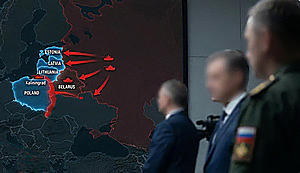
Russia is downplaying the fact that the USA and China have excluded it from the ranks of the world’s major powers and sidelined it from the process of reshaping the global order. However, there is a negative backlash from the so-called “Z-community”. At this, calls are growing for the Russian leadership to intensify the war against Ukraine, including through a general mobilization. According to Russian chauvinists, the destruction of Ukraine as an independent state and bringing it under control would prove that Russia retains its significance as a global center of power. It is evident that the Russian ruling elite shares this view.
Thus, the meeting between US President Donald Trump and President of the PRC Xi Jinping signals the final establishment of a bipolar world order. They have declared the United States and China to be the leading centers of power and refused to recognize other countries, including Russia, as such. Washington and Beijing acknowledge their shared responsibility for the fate of the world and are attempting to improve their relations. After all, they are the world’s largest trading partners. At the same time, significant disagreements persist between them.
The main one is the USA’s desire to maintain its sole dominance on the international stage, which does not suit China. Both the countries have disagreements regarding the division of spheres of influence in the world, as well as issues in bilateral trade. All these and other related issues are quite complex and can hardly be resolved once and for all.
Nevertheless, the meeting between the leaders of the United States and China has opened up prospects for improving bilateral relations at the strategic level. This will create the conditions for resolving disputes at other levels. As a result, China’s support for Russia’s war against Ukraine – as a means of diverting the West’s attention and efforts – may no longer be relevant. At the same time, Russia may be dissatisfied with being excluded from the ranks of major powers and from the process of redivision of the world. This could prompt it to intensify the war against Ukraine by mobilizing all available resources.
Yurii Mykhailenko,
Institute for Global Politics