Nuclear Security in Europe. France Taking the Lead
France is working to establish a European system of forward nuclear deterrence against Russia. Such a system is intended to complement the existing extended nuclear deterrence system led by the United States. As part of this system, there are plans to deploy French nuclear-capable aircraft in European countries. In the event of war, these aircraft, with the support of France’s partners, would carry out nuclear strikes. The system France is developing does not provide for the automatic use of nuclear weapons in response to nuclear strikes against France’s allies. It is solely about cooperation. However, France’s initiative is supported in Europe, as it gives European countries the opportunity to become more independent from the United States.
Since 2025, the main focus of the USA and Europe’s activities in defense matters has been the creation of a new European and Euro-Atlantic security system. This has already been discussed repeatedly in our previous publications. However, for a more complete understanding of the rest of this article, it is worth briefly mentioning this again.
As is well known, the European security architecture is based on the principle of redistributing responsibilities between the USA and Europe in accordance with the main threats to their security. Thus, the USA focuses on containing China globally and in the Asia-Pacific region. Europe, in the form of the EU and the European component of NATO, focuses on countering Russia in the European theater of operations – and, of course, with American support. The USA will continue to guarantee Europe’s strategic nuclear security through cooperation with the United Kingdom and, to a limited extent, with France, both of which are nuclear powers. It will also cooperate with other European countries that possess nuclear delivery systems or can perform supporting roles in the use of such weapons. In this regard, the USA is implementing the concept of extended nuclear deterrence, which provides for the use of nuclear weapons against any country that dares to launch a nuclear attack on American allies. In other words, US nuclear forces are, in fact, integrated with NATO. At the same time, the authority to make such a decision remains exclusively with Washington. The same applies to the United Kingdom and France. As a rule, this refers to their strategic nuclear components. However, their tactical nuclear components should also be taken into account. Based on this, the USA and NATO’s extended nuclear deterrence system includes:
At the strategic level – the nuclear missile forces of the United States, France, and the United Kingdom, which have land-based, air-based, and sea-based components;
at the tactical level – the air forces of the United States, France, and the United Kingdom, as well as those of a number of other European NATO members, certified to deploy tactical weapons. US tactical nuclear weapons are stored in American depots in Europe, while France’s are stored in depots located on its territory. The United Kingdom does not have tactical nuclear weapons.
Cooperation between the United States, the United Kingdom, and other NATO member states in the nuclear sphere, both in peacetime and wartime, takes place through the NATO Nuclear Planning Group (NPG), as well as through US Strategic Command and the general staffs of the national armed forces of NATO member states.
France’s nuclear forces are virtually autonomous. The country does not participate in the NPG. Cooperation with the United States and the United Kingdom in the nuclear sphere takes place on a bilateral basis. In the event that France’s nuclear missile command and control system is destroyed during wartime, there is a provision for the United States to assume command of its submarines. The joint use of tactical nuclear weapons by the United States and NATO in the European theater of operations is governed by the North Atlantic Treaty Organization’s “Nuclear Sharing” concept, adopted in 1954. It establishes the possibility of using the forces and assets of NATO member states as delivery systems for US nuclear weapons.
Based on this concept, agreements have been concluded between the United States and European NATO member states on this issue, as well as on the storage of US nuclear weapons in facilities on their territory. This serves to strengthen allied relations within the Alliance in the nuclear sphere.
Currently, there are six US depots for tactical nuclear weapons in Europe, including Aviano and Ghedi in Italy; Büchel in Germany; “Kleine-Brogel” in Belgium; “Fokkel” in the Netherlands; “Incirlik” in Türkiye; and “Leikenhelt” in the United Kingdom.
It can be deployed by certified F-16, Tornado IDS, and F-35A aircraft, which are in service with the air forces of the United States, Belgium, the United Kingdom, Italy, the Netherlands, Germany, and Türkiye.
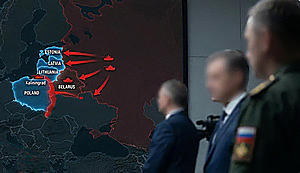
The air forces of Poland, the Czech Republic, Hungary, Denmark, and some other NATO member states are participating in the SNOWCAT (Support of Nuclear Operations With Conventional Air Tactics) mission, providing their aircraft for escort, refueling, electronic warfare, and logistics support for strike aircraft equipped with nuclear weapons. Negotiations are also underway regarding the possible deployment of US nuclear weapons in other countries, specifically Poland, Lithuania, Latvia, and Estonia, which are most at risk of an attack by Russia. In addition, dual-use aircraft capable of carrying both conventional and nuclear weapons may be deployed there.
The readiness of the US and NATO nuclear deterrence systems to carry out their intended missions is tested during relevant exercises, as well as through test launches of land-, sea-, and air-based missiles. The main ones are tactical nuclear exercises such as “Steadfast Noon” and strategic nuclear force exercises such as “Global Thunder”, which take place annually against a unified operational background with the participation of all components of the nuclear forces of the USA and its NATO allies.
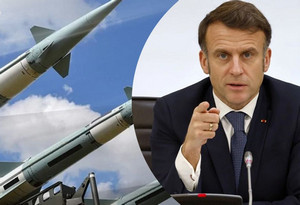
At the same time, since the USA has focused its efforts on containing China – and in doing so has not only shifted its attention away from Russia as a common adversary of the West but has even begun to flirt with it – Europe has developed doubts about Washington’s commitment to fulfilling its nuclear obligations. European concerns on this matter have also intensified due to Donald Trump’s negative attitude to Europe. Given this state of affairs, President of France Emmanuel Macron proposed an initiative to increase Europe’s responsibility for its own nuclear security. At the same time, certain steps have been taken to implement this initiative in practice. Thus, in early 2026, France’s nuclear doctrine was expanded to include the concept of forward nuclear deterrence, which aims to deter a potential nuclear attack by adversaries not only against France itself but also against its partners.
This cannot be considered a new approach at all. The previous version of France’s nuclear doctrine also allowed for the use of nuclear weapons “to counter a massive threat on European territory posed by a technically advanced adversary capable of striking with both nuclear and high-tech conventional weapons”. But now this possibility is more specific.
Under the new doctrine, the leadership of France retains the exclusive right to make decisions regarding the use of the country’s nuclear weapons. Furthermore, unlike the USA and NATO’s concept of extended nuclear deterrence, the doctrine does not provide for automatic nuclear strikes against an adversary in response to its nuclear attacks on French allies. Essentially, it is merely a matter of establishing coordination between France and its allies regarding the use of French nuclear weapons. In particular, the temporary deployment of Rafale B/C and Rafale M aircraft capable of carrying nuclear weapons belonging to the French Air Force and Navy at airfields in partner countries is permitted during exercises, in the pre-war period, and during wartime. Aircraft of the Navy and Air Force of France will carry out missions involving the use of nuclear weapons, while the allied armed forces will support these operations, including providing anti-sabotage and air defense at airfields. They will also work alongside French specialists to maintain and escort fighter jets during flight, as well as conduct reconnaissance. To achieve this, close cooperation must be established in the areas of operational planning and command and control, air traffic management, air defense, logistics, and so on. At the same time, there are no plans to station nuclear weapons depots on the territory of partner countries, as the United States does.
According to official Paris’s plan, the forward nuclear deterrence system being developed by France will not replace the existing US and NATO system. It will complement it as the nuclear component of a new European security system. Close coordination will be established between them. How this will be achieved has not been disclosed.
As mentioned above, France does not explicitly guarantee nuclear security to its partners. At the same time, the French initiative is drawing attention in Europe. A number of European countries view participation in the program as a way to strengthen nuclear deterrence against Russia and as a backup option in case the United States refuses to fulfill its obligations to Europe. Currently, nuclear cooperation agreements have been signed between France and the United Kingdom, as well as between Germany and Norway. These agreements vary somewhat depending on the status of the countries involved. They provide for the creation of high-level bilateral steering groups, deeper cooperation in the nuclear sphere, and participation in nuclear exercises conducted by France’s armed forces. A distinctive feature of the agreement between France and the United Kingdom – which also has nuclear weapons – is the expansion of cooperation between the two countries’ nuclear forces to deter Russia, specifically through the organization of joint patrols by the two countries’ nuclear submarines. In turn, agreements between France and Germany and Norway provide for the possible deployment of French aircraft on their territories. Corresponding negotiations are also underway between France and Belgium, the Netherlands, Denmark, Poland, and Sweden. The Baltic states may join these efforts.
These plans are already being implemented in practice through the participation of the United Kingdom and Germany in French Armed Forces’ nuclear exercises such as “Poker”, which take place four times a year. The exercise scenario envisages France’s participation in a nuclear missile war between Russia and the USA/NATO.
The exercise focuses on the planning and execution of nuclear operations, including the preparation of France’s nuclear forces and their air component for the use of nuclear weapons, the making of relevant decisions, the loading of aircraft with nuclear munitions and their deployment to forward airfields, aircraft takeoff, formation of flight formations, flight to the missile launch lines with in-flight refueling, and penetration of the enemy’s air defense system. During the practical phase of the exercise, nuclear-armed aircraft, accompanied by fighter jets and aerial refueling aircraft, fly the following route: home airfields – the French province of Brittany – the Bay of Biscay – the Iberian Peninsula – the Gulf of Lyon – the southern coast of France, where the missile launch line targets ranges in central France. Afterward, the aircraft return to their home airfields, flying over French territory.
The United Kingdom has been participating in these exercises since the second half of 2025. However, the specific details of these operations are not disclosed. In July 2026, Germany joined the exercises. During the exercises, French Air Force Rafale ZC aircraft were based at an airfield in Germany for the first time and operated in German airspace alongside German Eurofighter jets. This scenario is more realistic than the previous one, since in the event of a nuclear war between Europe and Russia, French nuclear-capable aircraft would operate specifically through German airspace.
Implementing the concept of forward nuclear deterrence enables France to achieve its key military-political and purely military objectives. Thus, France is enhancing its role as a leader of the European Union, elevating it to a qualitatively new level. This has always been a strategic goal of the French, which is now reinforced by the powerful factor of France’s role as a guarantor of Europe’s nuclear security. At the same time, the survivability of the air component of France’s nuclear forces is improving, giving them greater opportunities to disperse their forces and assets. Furthermore, the operational flexibility of their deployment is increasing, as nuclear-capable aircraft can now operate closer to Russia’s borders.
At the same time, there are some challenges hindering France’s ability to implement its plans. These challenges are quite complex and will require significant effort to resolve. First and foremost is France’s lack of a sufficient number of nuclear warheads to reliably deter Russia. According to the Stockholm International Peace Research Institute (SIPRI), France currently possesses only about 290 nuclear warheads. Moreover, unlike other nuclear-armed nations, it failed to bolster its capabilities at a time when global tensions were rising.
In early 2026, the government of France decided to increase the number of nuclear warheads for its armed forces. France has the expertise and production capacity to do so, but it lacks the necessary volumes of uranium.
It is also necessary to: establish a regulatory framework to facilitate cooperation between France and its partners in the nuclear sphere, as well as to define and develop the relevant procedures; to coordinate the nuclear deterrence systems of France, the United States, and NATO; to deploy joint or combined command, control, communications, and intelligence structures; and to standardize logistics and the training of specialists.
Nevertheless, even at this stage, Ukraine can leverage France’s initiative to its advantage. As noted in our article “The Decisive Stage of the War: When Hostilities Might Cease”, Russia’s lack of tangible success on the front lines and the effectiveness of Ukraine’s strikes on Russian territory could push Russia to resort directly to nuclear blackmail against our country. Ukraine must be prepared for this thanks to the tools it has acquired to deter Russia. One such tool could be Ukraine’s accession to the advanced nuclear deterrence system that France is developing. Specifically, Ukraine could propose to France that they jointly develop uranium deposits on Ukrainian territory, combine efforts to conduct scientific research in the nuclear field, and discuss the possible stationing of French nuclear-capable aircraft at Ukrainian airfields.
France’s initiative is being implemented outside of NATO, so Ukraine does not need Alliance membership for this purpose. As noted earlier, even if France does not agree to cooperate with Ukraine, the very fact that this issue is being raised will serve as a warning to Russia, which will not be able to ignore it.
Thus, as part of efforts by the USA, NATO, and the EU to build a new system of European and Euro-Atlantic security, a separate system of forward nuclear deterrence is being created at France’s initiative. It will complement the existing extended nuclear deterrence system, which operates under the auspices of the USA and NATO.
France’s actions are aimed at strengthening its position as an EU leader, as well as enhancing the survivability of the air component of its nuclear forces and the operational readiness of their deployment. This military component – in the form of a forward nuclear deterrence system – aligns with Europe’s interests in increasing its autonomy from the United States in this sphere.
As a result of France’s deepening cooperation with European countries on these issues, its nuclear weapons will be brought closer to Russia’s borders. This will complement a similar process taking place within the framework of cooperation between the United States and its partners under the extended nuclear deterrence framework.
This state of affairs requires an appropriate response from Russia. For example, Russia is developing new delivery systems for nuclear weapons and deploying them on Belarusian territory. All such trends increase the risk of a nuclear war between Russia and the West.
Russia’s toward nuclear threats to Ukraine are also on the rise. A response to this could be Ukraine’s accession to the forward nuclear deterrence system being established by France. Even the mere announcement of such plans by Ukraine could serve as a deterrent against Russia.
Yurii Mykhailenko,
Institute for Global Politics