An Empire Based on Blood and Bayonets
These people, who call themselves Russians, believe that they have a great history, literature and culture. I always keep this in mind, although I have some reservations, because this culture is not always manifested in everyday life. At the same time, I hate Russian… imperialism. After a video I once came across, my hatred for this imperialism increased at least fivefold. I am once again convinced that this Russian Empire, as before, is held together by blood and bayonets. And it, this imperialism, must be destroyed, swept away and erased from human history as soon as possible. If you read my post to the end, I am sure you will agree with me.
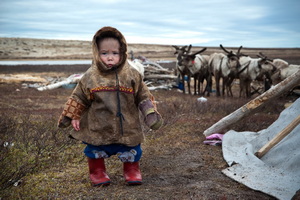
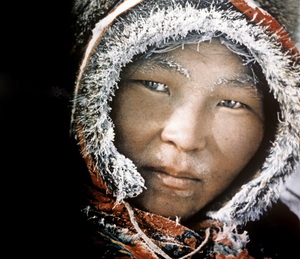 What is it about? Here’s what I am talking about. For years, I thought that the autonomy of Yakutia in Russia was akin to our Nakhchivan. In my imagination, it was an ordinary land with frosty expanses where one can see herds of reindeer shepherded by Chukchi. And the names of these inhabitants were perceived as the names of funny characters from fictional jokes. And nothing more. But…
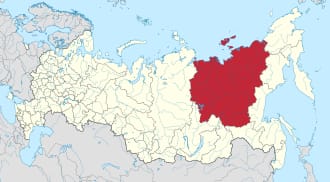 But in fact, it turns out that the Republic of Sakha-Yakutia is a huge territory, about 1/5 of Russia with an area of 3.1 million square kilometers. It is even larger than Argentina, which is one of the ten largest countries in the world.
The history of the Republic of Yakutia-Sakha goes back a long way. In short, local autochthons were formed from Turkic-speaking tribes that once migrated here. In the 17th century, these places became controlled by the Russian Empire. For many years, there were also convict laborers here. They worked at the most difficult jobs – in mines, logging, etc. Currently, this vast territory is home to about a million people representing 135 nationalities. 80 % of Yakutia’s territory is covered with forests. Yakutia, located 9,000 kilometers from the Russian capital, has a 3-hour polar circle. Imagine that in summer the temperature here is +40 degrees Celsius, while in winter it can reach -75 degrees Celsius.
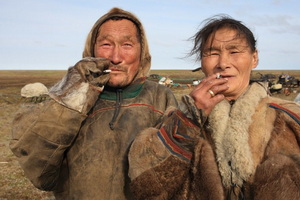 One reads about how the people here live, dress and eat, and one is horrified. The vast majority of the population still has no idea what a cell phone or Internet connection is. In winter, car engines are not turned off at night to prevent them from breaking down due to frost. Usually, once a week (or month), food is delivered to the province by helicopter or ferry, and usually with the expired date. There are many places where there are no schools, police stations, or medical centers. If someone gets seriously ill, the best thing to do is to call a doctor in a neighboring village (500-700 km away) to tell them where the patient is hurting and get advice. That is, if there is any connection.
Because in order to get to the nearest settlement, one needs to travel for many hours on river ferries, and then by truck or helicopter. That’s it… That is, despite the twenty-first century, the Russian Empire still forces the locals to live as they did in the era of the primitive communal system. Perhaps one could contemplate all this simply. But…
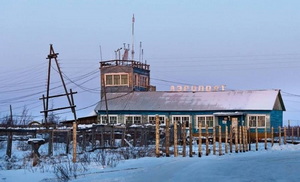
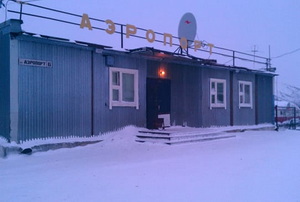 And now – attention. As you know, for many years, Russia has been supporting not only Armenia, but also many other countries that had no economic capacity or natural resources under the guise of subsidies. We all understand why this was done. But imagine that Yakutia is a land rich in strategic minerals, such as diamonds, gold, oil, gas, and coal. There is also forest, fish, etc. There are two oil pipelines from here to the center of Russia. It produces 95 % of Russia’s (and 25 % of the world’s) diamonds, 47 % of coal, and 35 % of gas. The region is rich in rare flora and fauna. Yet, in contrast to all this, the population lives in miserable conditions. There are 36 large and small airports in the region, 25 of which are unusable (some photos are attached). Most of the airplanes and helicopters here are old and faulty. Therefore, airplane crashes in Yakutia are considered a common occurrence. It is as if those who die in those accidents are not people, but rather predatory animals. And this is the attitude not only to the Yakuts, but also to most of the peoples living in this region.
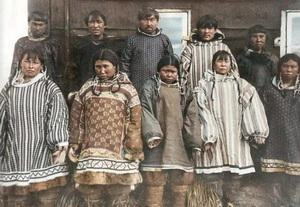 Both during the Second World War and in the current Russian-Ukrainian war, representatives of the local population were sent to the front en masse. The Yakuts are hardy because they grew up in a harsh climate. And since they used to hunt, they have good skills in using small arms. They are sent to dangerous places on the front line during the war, and just like in 1941-1945, the vast majority of them do not return. They are not considered heroes, like the rest of those fighting at the front, if they are “not Russian”. Unlike the representatives of the titular nation, none of them have ever been in the spotlight or honored.
And these facts are more than enough to be able to depict the true face of the Russian Empire. Like a tick, it drinks the blood of many nations and at the same time forces them to do hard labor like slaves. This is ruscism, even in relation to the Yakuts, citizens of Russia. Those who are being robbed of diamonds, oil, and gold, who have to live like savages and subhumans. And after that, ruscism again encroaches on other people’s wealth, wants people to work for it for nothing.
Etibar Huseynov,
head of the Azerbaijani website https://protest.az/
specially for the Institute for Global Politics