Russia’s Economy As the Driving Force Behind the War. Part II. How the Russian Economic Crisis Is Affecting the Russian Military-Industrial Complex and Its Military Potential
In the first part of our article, “Russia’s Economy as the Driving Force Behind the War,” we examined the problems facing Russia’s economy and concluded that a deep crisis is unfolding in the country. These crisis-driven processes are negatively affecting all spheres of life in the Russian Federation, including its ability to continue the war against Ukraine. For now, Russia is able to reallocate funds and resources in favor of its armed forces and military-industrial complex. But this will not be the case once the crisis in Russia reaches a critical level – that is, when such resources run out. In this regard, special attention must be paid to the RF’s military-industrial complex, which supplies Russian troops with weapons and necessary equipment. Without this, it is impossible to continue the war.
The key conditions for any army’s success in war are its personnel’s high level of training and motivation, as well as the availability of effective weapons in sufficient quantities. This applies directly to Russia’s war against Ukraine.
Today, these factors enable the Ukrainian Defense Forces not only to hold back the enemy’s offensive – despite the enemy having far greater military capabilities – but also to gradually seize the initiative. Of course, Russia is trying to maintain its advantage, which is based on its human resources and the strength of its military-industrial complex. It is Russia’s own military-industrial complex that meets the basic needs of its armed forces and other security agencies for weapons and military equipment, since assistance from its allies is limited. This is happening both in the context of Russia’s ongoing war against Ukraine and as part of preparations for a possible attack on Europe. Therefore, the RF’s leadership is making every effort to ensure the uninterrupted operation of its military-industrial complex. To this end, priority is given to funding the military-industrial complex, including through the reallocation of funds from the civilian sector.
From the time of Russia’s full-scale invasion of Ukraine in February 2022 until the onset of the crisis in the Russian economy in mid-2025, this approach enabled the Russian government to maintain a high rate of growth in its military-industrial complex. During this same period, production of UAVs and ammunition in Russia increased more than 22-fold, of armored vehicles – 2.2-fold, of light armored vehicles (infantry fighting vehicles, armored personnel carriers) – 3.7-fold, of artillery – 9.6-fold, of aircraft –4.6-fold, and of personal body armor – 18 times.
At the same time, the military-industrial complex is an integral part of any country’s economy and is therefore affected by all of its problems. This applies to Russia as well, although there are some differences. Its command-and-control system does indeed allow the government to reduce spending on economic support and social programs and increase military spending. But this cannot shield the Russian defense-industrial complex from the consequences of the country’s economic problems. Indeed, since September 2025, the growth rate of arms and military equipment production in Russia has begun to slow down, and in some sectors, output volumes have fallen. This is evidenced by the performance trends in four sectors of the Russian economy that involve the production of weapons and military equipment, namely: finished metal products (excluding machinery and equipment) – ammunition, artillery systems, small arms, etc.; computers, electronic, and optical devices – control, guidance, and communication systems, etc.; other vehicles – tanks, infantry fighting vehicles, armored personnel carriers; and aviation equipment – aircraft and UAVs. The corresponding indicators are presented in the table.
Table 1. Performance indicators for key sectors of the Russian economy related to the production of weapons and military equipment for the relevant periods of 2025 and for 2024. Changes are shown compared to the same period of the previous year.
|
August 2025 р. |
September 2025 р. |
October 2025 р. |
November 2025 р. |
Year 2025 |
Year 2024 |
|
|
Finished metal products |
+21,2% |
+13,9% |
+0,7% |
-1,3% |
+18,0% |
+31,6% |
|
Computer, electronic, optical equipment |
+12,8% |
+14,4% |
+7,5% |
+10,6% |
+11,7% |
+27,9% |
|
Other means of transport |
+60% (?) |
+6% |
+6% |
+6,4% |
+32,0% |
+34,2% |
|
Aviation equipment |
– |
+41% |
+40% |
+29,5% |
+172% |
+175% |
All of this coincides with the widespread shift of enterprises – primarily in the civilian sectors of the Russian economy – to reduced operating hours or a complete shutdown.
As shown in the table, the production rate of combat armored vehicles declined most significantly, while the production volumes of ammunition and artillery decreased overall. Production of command, control, guidance, and communications systems maintained its positive momentum, but later became unstable in nature. Production of aviation equipment, which mainly consisted of UAVs, remained at a high level, but in November 2025, the pace of this production began to slow down. The increase in UAVs production also explains the relative stability of production of computer, electronic, and optical equipment, since a significant portion of these components is used specifically in unmanned aerial vehicles and their control systems.
At the start of 2026, Russia’s economy shifted from stagnation to recession. At the same time, the country’s defense-industrial complex faced significantly greater difficulties. In January–April of this year, the decline in production of most types of weapons and military equipment in Russia accelerated.
Table 2. Trends in the production of weapons and military equipment in Russia in the first half of 2026, compared to 2025. Changes are presented relative to the same period last year.
|
2025 р. |
2026 р. |
||
|
January-April |
May |
||
|
Finished metal products |
+18,0% |
+7,9% |
+15,8% |
|
Computer, electronic, optical equipment |
+11,7% |
+0,0% |
+2,1% |
|
Other means of transport |
+32,0% |
+31,3% |
+24,7% |
|
UAVs of the Shahed type |
+172% |
plan +230% |
|
|
Iskander tactical missile system |
+14% |
plan +100% |
|
The rise in oil prices resulting from the USA and Israel’s military operation against Iran had a somewhat positive impact on the Russian economy with a two-month delay – that is, in May of this year. This also affected the defense industry. It was precisely from that time onward that the production of military equipment and weapons in Russia began to increase. In June and July of this year, the Russian economy’s growth rate began to slow down, and industrial output declined overall. Clearly, this had a negative impact on the growth of military equipment and weapons production, and it is possible that production volumes fell again.
The exception to this is the production of UAVs and missiles, which play a central role in modern warfare. And with the actual shift of combat operations on the front lines in Ukraine to a positional phase, their importance has reached a qualitatively new level. Despite the worsening economic situation in Russia, their production is growing significantly. In other words, given the lack of funds in the Russian Federation’s state budget to fully finance the defense-industrial complex, funds are being reallocated among its various sectors. The bulk of the funds is allocated to the production of UAVs and missiles, while the production of other types of weapons – primarily armored vehicles and artillery – is financed on a residual basis. However, even under this scenario, Russia’s defense-industrial complex is unable to ensure adequate funding for the production of the full range of missile systems. Thus, priority is given to the production of ballistic missiles for the “Iskander-M” tactical missile system, which are capable of penetrating Ukraine’s air defense system. Production of air-launched cruise missiles and X-47M “Kinzhal” aeroballistic missiles is declining. Specifically, in 2026, production of the X-47M missiles fell from 60 to 5 units per month.
However, Russia’s defense industry is facing growing funding problems. Due to the rapid growth of the state budget deficit, the government is significantly short of the necessary funds. As a result, advance payments to defense industry enterprises for fulfilling military orders are being cut. And these enterprises cannot resolve this problem by obtaining bank loans due to high interest rates. In June 2026, the Central Bank of the RF lowered the rate to 14.25%. However, this level is still too high, as defense industry enterprises can only operate when the rate does not exceed 7%. Therefore, defense enterprises, like most others, are significantly lacking the necessary funds to ensure the smooth operation of their production processes – including the purchase of necessary materials and components from suppliers, the payment of employee salaries, and the coverage of electricity, transportation, and utility costs. This threatens to disrupt military orders, which is prohibited by law and carries criminal liability. In this situation, defense industry enterprises are forced to take out bank loans even at high interest rates. However, some of them are unable to repay these loans and go bankrupt. Typically, assistance is provided for them in such cases. However, this assistance can only come from the state budget, which is also becoming increasingly problematic.
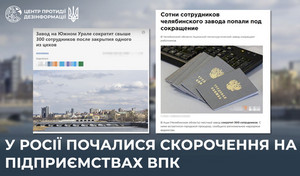
Bankrupt defense industry enterprises are unable to repay their debts to creditors, leading to a banking crisis. As a result of this problem, the Defense Bank – the primary financial institution of the Russian Federation’s defense industry – has found itself in an extremely difficult situation. By the end of 2025, it had lost 19 billion rubles, while receiving 29 billion rubles in state aid.
For the same reasons, the Russian defense-industrial complex is transforming from the driving force of the Russian economy into one of the main drivers of the country’s payment crisis. Military enterprises are compelled to fulfill government orders. Consequently, they enter into contracts with subcontractors without guarantees of payment or with deferred payment terms. As a result, the subcontractors also lose funds and find themselves in the same difficult situation. Thus, the cycle of non-payment is spreading further, including into the civilian sector. It has now affected about 60% of large companies.
To reduce their expenses, defense industry enterprises are implementing strict cost-cutting measures. Investment in the development of the defense industry has been significantly reduced, which has effectively halted the launch of new production facilities. According to many experts, including the International Institute for Strategic Studies (IISS), most enterprises in the Russian defense-industrial complex had already reached their limits for increasing arms production by the summer of 2025. Previously, the problem of insufficient production capacity had been addressed by expanding it. Until last summer, there was intensive development of infrastructure at tank, missile, artillery, and aviation plants, as well as at UAV manufacturing facilities. That development then slowed down and has now practically come to a halt, with the exception of the expansion of some UAV manufacturing facilities.
The Russian government effectively acknowledges that it is unable to rapidly increase the production of weapons and military equipment. As Minister of Industry and Trade of the RF A. Alikhanov stated in July of this year, the defense-industrial complex, as the engine of industrial growth, will soon reach its maximum capacity and a high baseline and will no longer, as before, provide a significant boost to the growth rate of the manufacturing sector. This trend is confirmed by the reduction in the recruitment of new personnel in the defense-industrial complex. Since 2022, approximately 600,000 people have been recruited. Recruitment peaked during the first year of the war. At that time, job openings in the defense-industrial complex accounted for 2% of the country’s total labor market. After that, the number of job openings began to decline. In the summer of 2024, it stood at 50,000, and in the summer of 2025 – at 35,000. In June of this year, demand for labor in the Russian defense-industrial complex was at its lowest level since the war began, and even lower than before it started. In this regard, the most telling sign was the virtual absence of demand for commissioning engineers, who are responsible for commissioning new plants and their equipment.
In addition to a lack of funding, a whole range of other problems significantly hinders the operation and development of Russia’s defense-industrial complex. The main ones include: the inability of Russian industry to replace foreign materials and components lost as a result of Western sanctions; the cessation of supplies to Russia of high-tech equipment used for weapons production; and a shortage of highly qualified personnel.
The main problem with import substitution is Russia’s inability to independently establish production of complex digital microchips, specifically processors and memory components. This also applies to many other products, materials, and equipment, including bearings, composite coatings, and CNC machine tools. Russia has either lost the technologies and production infrastructure that enabled their manufacture, or never had them in the first place. Russia is unable to restore or rebuild them due to a critical decline in the quality of its scientific and technical capabilities. According to an assessment by the UK’s Royal Institute of International Affairs, Russia’s military-industrial complex is technically deteriorating. Therefore, in the near future, it will have to scale back and slow down military production, as well as accept a decline in the quality of its products.
Russia is attempting to address these issues by circumventing Western sanctions. However, this is also becoming an increasingly difficult challenge for the country. China is considered Russia’s largest partner. It supplies Russia with some sanctioned goods, but at prices ten times higher than those charged to other countries for similar products. Besides, many Chinese products supplied to Russia are of poor quality. As early as 2025, North Korea significantly reduced its supply of artillery shells to Russia. Some believe this occurred under pressure from China, which the USA and the EU had accused of facilitating such shipments and which could have faced sanctions as a result.
Iran has also halted arms transfers to Russia. It lost this ability due to the war with the USA and Israel. Military-technical cooperation between Russia and Iran will not be able to resume quickly even after the war in the Middle East ends, as Iran’s defense industry has been largely destroyed. At the same time, as the USA and the EU have imposed stricter controls over the enforcement of their sanctions, circumventing them has become more difficult and costly.
As mentioned earlier, the Russian military-industrial complex is facing an acute labor shortage. The sector already employs about 4 million people. According to various estimates, several hundred thousand more workers are needed. This primarily refers to qualified engineers, IT specialists, lathe operators, milling machine operators, and other metalworking specialists. It is difficult to address this problem due to a massive exodus of people to the army, a demographic crisis, and competition from the civilian sector. In a number of military industry sectors, wages have begun to decline, including in comparison with civilian enterprises in the same regions. There are also significant wage arrears.
The difficulties in the civilian sector are having a negative impact on Russia’s military-industrial complex. First and foremost, these include the downsizing or suspension of operations at enterprises that are not directly part of the military-industrial complex but supply it with various products. An example of this is the shutdown of PJSC “Russkie Motory” in Nizhny Novgorod. The company has stopped supplying components to military-industrial complex plants that assemble engines for aircraft and ships.
Another, so to speak, powerful factor causing damage to Russia’s military-industrial complex is the strikes by the Ukrainian Defense Forces on Russian enterprises and their associated infrastructure. Indeed, since early 2026, the Ukrainian Defense Forces have begun to more actively strike military and civilian enterprises that support the operations of the Russian armed forces. This first of all refers to the radio-electronic, optoelectronic, chemical, and other industries that produce components for UAVs and missiles, as well as components for explosives. As a result, Russia has seen a sharp decline in the production of ammonium nitrate, which is used in the manufacture of gunpowder and explosives. At the same time, Russia’s military-industrial complex is facing a severe shortage of radio-electronic components.
Western and independent Russian experts believe that the current state of Russia’s military-industrial complex still allows it to supply the troops with the necessary weapons and military equipment, although shortages are increasingly evident and quality is declining. In particular, even pro-Russian war correspondents and propagandists acknowledge that the troops lack small arms, ammunition, and UAVs. The Russian defense industry is also unable to bring new weapons systems up to standard, including the “Sarmat” ICBM. As the war demonstrates, many other weapons – which the Russians claimed were “unmatched in the world” – do not meet their stated specifications. In particular, this refers to the “Kinzhal” hypersonic missiles, which are successfully intercepted by American Patriot systems or diverted from their targets by electronic warfare measures. Statements by Russian leadership regarding the successful testing of the “Burevestnik” and “Poseidon” systems are nothing but propaganda.
Major programs for the development and production of new military equipment were also derailed, including the Su-75 multi-role fighter, the PAK DA strategic bomber, the T-14 “Armata” tank, and the “Izdelie-80” cargo drone.
However, the operations of Russian military industry enterprises – as well as the Russian economy as a whole – could deteriorate sharply in the very near future as a result of the fuel crisis engulfing the country. By the end of this summer, the situation could become critical, significantly complicating – or even rendering impossible – logistics for both military and civilian enterprises.
Russian military units on the front lines in Ukraine are already feeling the fuel shortage. The situation is most acute in the southern sector in Kherson and Zaporizhzhia regions, where the delivery of fuel and other types of logistical support is hampered by Ukrainian Special Operations Forces strikes on transportation routes. The commanders of units and subunits are forced to limit combat sorties and the operations of mobile air defense groups that provide cover for motorways. There is also a shortage of fuel for power generators, which support headquarters operations and the functioning of various radio-electronic systems – including electronic warfare (EW) equipment – as well as charge UAV batteries. In the combat zone, all of this reduces the combat capabilities of the Russian army.
Thus, despite the fact that the uninterrupted operation of the military industrial complex is of extreme importance to Russia’s leadership in the context of an ongoing war against Ukraine and a potential military confrontation with the USA and NATO, since mid-2025, the Russian Federation has seen a slowdown in the production of weapons and military equipment, and in some areas, actual output has been declining. The main reason for this is the growing deficit in the Russian Federation’s state budget. Given this, the Russian government cannot guarantee adequate funding even for such priority and protected items as military needs, including the production of weapons and military equipment.
There are also problems related to the inability of Russian industry to: a) replace foreign materials and components; b) resume the supply of high-tech equipment to Russia; c) address the shortage of highly qualified personnel; and d) mitigate the negative impact of challenges in the civilian sector.
The government of the RF acknowledges the limits of its capabilities regarding the military-industrial complex. Therefore, amid the resurgence and acceleration of negative trends in the country’s economy, priorities are being set for the production of weapons and military equipment. Right now, the main priorities are UAVs, missiles, and electronic warfare systems. Armored vehicles and artillery systems are taking a back seat.
Problems in the operation of Russia’s military-industrial complex are also arising as a result of strikes by the Ukrainian Defense Forces on military-industrial enterprises. Currently, this first of all refers to the production of radio-electronic systems, gunpowder, and explosives. However, the fuel crisis in Russia could have an even more significant impact on the country’s military-industrial complex. For now, the operation of Russia’s military-industrial complex allows it to continue the war in Ukraine. However, the deepening crisis in the Russian economy – which is irreversible in nature – will inevitably lead to a critical deterioration in the state of affairs within its military-industrial complex. This will reduce Russia’s ability to wage war against Ukraine, at least at the current intensity. Moreover, it will be unable to launch an attack on Europe as well.
Yurii Mykhailenko,
Institute for Global Politics