The Collapse of the Soviet Union and Prospects for Russia’s Disintegration. A Comparative Analysis
(Part 1)
What is happening in and around Russia could lead to its disintegration in the manner of the Soviet Union’s collapse;
at present, the United States and, possibly, Europe, are taking certain measures to this end;
so far, this may take the form of forcing Putin to make political concessions to end the war against Ukraine;
however, at the initial stage, similar actions were taken against the USSR.
In our article “D. Trump’s Policy. Views of Opponents and Supporters” analyzed the scenario of the USA’s possible actions to disintegrate Russia. It raised some doubts and even objections about its possible implementation. At this, a number of counter-arguments were cited, which, in our opinion, seem quite obvious.
For example, it is argued that the vertical of power in Russia will not be broken. Besides, attention is drawn to the strength of Russia’s special services and security forces, which would prevent any rebellion, and the army would pacify any separatists. And the high level of so-called patriotism, “spiritual bonds” and “resilience” of Russians to them and adversity would not allow even the thought of large-scale protests against the government or secession of any territories from the Russian Federation.
According to our opponents, all of this is based on the economy of Russia, which is allegedly one of the world’s largest states, being a single organism with the centre in Moscow. And the economic problems that have arisen recently are temporary and will soon be resolved. Immediately after the end of the war and the lifting of sanctions, Russia will begin to rebuild its economy. Ultimately, the world will not allow Russia’s destruction, as it would lead to a geopolitical catastrophe and the collapse of the global economy. At the same time, there will be a real threat of Russian nuclear weapons getting out of control. It may even fall into the hands of extremists, including the Russian military command, as well as terrorists and various problematic countries. And then, they will quite expectedly use it against the United States and Europe.
What can be the answer to all this? At first glance, everything is correct. However, this was typical of the former USSR, but it did not prevent its collapse. The parallels between today’s Russia and the Soviet Union are clear, which makes it possible to draw a conclusion about the future of the aggressor. Therefore, let us first recall why and how the USSR disappeared. This is also important from the point of view of countering Putin’s ideas and Russian propaganda narratives about the artificiality and lack of reasons for the collapse of the Soviet Union, which they call “the greatest tragedy of the twentieth century”.
According to most objective assessments, the main reason for the disintegration of the USSR was the low efficiency of state management of the country’s economy, which led to the accumulation of systemic problems in its operation. Besides, just like Russia today, the Soviet state was critically dependent on oil exports and technologically lagged behind the West. And after the Soviet military invasion of Afghanistan in 1979, the USSR was subject to sanctions, which further complicated the functioning of its economy.
Russian propaganda conceals these facts and presents the USSR as a powerful, prosperous, and economically developed state. At this, all the difficulties that were recognized even by the leaders of the USSR and appeared in the media during the totalitarian regime under the leadership of Leonid Brezhnev, the General Secretary of the CPSU Central Committee, are suppressed. The difficult situation in agriculture, construction, transportation, and a number of industrial sectors was openly discussed. At that, about two-thirds of the industry was related to the defense industry and, while consuming the state’s resources, did not provide it with revenues. And they were needed, among other things, to maintain the world’s largest armed forces.
At the household level, all this was well felt. Most goods were in short supply everywhere. Except for some of the most important cities, like Moscow, Leningrad, or Kyiv. And what are now called low prices were not so if we compare them with the salaries of most of the population. By the way, the card system in the form of coupons for scarce goods issued to employees of institutions and enterprises actually existed before the collapse of the USSR.
According to Western experts’ forecasts in 1980s, the economic crisis in the USSR was expected to begin in the 2000s and would most likely lead to its collapse. This was exactly what the United States and Europe were preparing for in a planned manner.
However, in 1983-1984, relations between the West and the USSR deteriorated sharply, as a result of the change of leadership on both sides from relatively moderate politicians to so-called hawks. Thus, in 1981, R. Reagan became President of the United States, and in 1982, Yuri Andropov was appointed General Secretary of the CPSU Central Committee. Both switched to a policy of harsh interstate confrontation, which almost led to World War III. Without going into history, please, be reminded that this is how the situation was interpreted in the Soviet Union and its armed forces. It was then that Reagan called the USSR an “evil empire” that had to be destroyed. He also began practical measures to realize such intentions. Thus, the United States, together with Saudi Arabia, sharply reduced world oil prices. Besides, the United States and Europe imposed sanctions against the USSR to ban the transfer of new technologies to it. At the same time, they stepped up assistance to the mujahideen in Afghanistan, which essentially put the Soviet Union’s war in that country out of its control.
As a result, the economic crisis in the USSR began 15 years earlier than expected, namely in the mid-1980s. The state simply did not have enough money to ensure the functioning of the economy, maintain the armed forces, and cover all other needs. This resulted in a sharp decline in the economy and aggravation of social problems, which caused public discontent and increased protests.
The leadership of the USSR was faced with the need for external borrowing to cover the state budget deficit. Only the United States and Europe, where economic development was booming, could provide it. It was to them that the new General Secretary of the CPSU Central Committee, Mikhail Gorbachev, turned for help. The leaders of Western countries agreed to support the USSR, but on the condition of its democratization and withdrawal of troops from Afghanistan.
In order to avoid an economic catastrophe, the Soviet leadership agreed to those conditions. However, they completely contradicted the worldview of the country’s leaders at the time. Therefore, democratization and the withdrawal of troops from Afghanistan really began. And this process was closely monitored by the West, which could refuse to provide loans if Moscow failed to fulfill its obligations.
It was this that triggered centrifugal trends in the USSR that led to its disintegration. For example, democratization meant easing the rigidity of the country’s totalitarian system, which essentially had the same structure as the Russian Empire, except for granting greater rights to its national components. As is well known, they were granted formal status as Soviet republics with their own communist parties and governmental bodies.
However, Moscow tightly controlled them through its power vertical and economy, which united the country into a single entity. In addition, a policy of Russification and ideological indoctrination of the population in the spirit of loyalty to communism and the USSR was pursued, which was to destroy the national consciousness of the peoples that made up the USSR and turn them into a single “Soviet people”.
Despite this, most of the national components of the Soviet Union retained their identity. Therefore, the weakening of the totalitarian regime in the USSR revived the processes of their national revival and transformation into independent states. At this, national interests were above loyalty to the Soviet Union and communist ideology. In other words, Soviet propaganda, which was no less powerful than today’s Russian propaganda, did not work.
The catalyst for such processes was the further aggravation of the economic crisis in the USSR as a result of the failure of “perestroika” initiated by Mikhail Gorbachev, which was aimed at improving the efficiency of the country’s economy by introducing elements of market relations. This significantly limited Moscow’s ability to use economic leverage over the Soviet republics in the form of redistribution of financial and other resources. And as the social situation further deteriorated, people lost hope that existing problems could be resolved jointly within the USSR.
The Soviet Union’s secret services were also unable to prevent the collapse of the Soviet Union. On the one hand, this was a consequence of the same democratization, which deprived them of the ability to use harsh repressive measures against national leaders and forces. On the other hand, it was the merger of the leadership of special services with the authorities of the republics, against which they did not counteract. Plus, all of them have plunged into corruption.
The same was true of the armed forces. Moreover, their personnel began to scatter to “national flats” even before the collapse of the USSR. As a result, the Soviet Union’s security forces were able to conduct only a few demonstration actions in Azerbaijan, Georgia, and the Baltic States, as well as provoke armed conflicts in Nagorno-Karabakh, Transnistria, Abkhazia, and South Ossetia.
They did not support the attempt of the so-called GKChP (State Committee for Emergency Situations) in August 1991 to seize power in the USSR and restore its totalitarian system either. This is what put an end to the existence of the Soviet Union.
At this, the collapse of the USSR did not cause a geopolitical catastrophe or a global economic crisis, nor did it create any excessive problems for the United States and Europe. In fact, the disintegration of the Soviet Union was under their control and was, so to speak, manageable.
For example, they conditioned the recognition of the independence of Soviet republics and the provision of economic assistance to them by a number of institutions, the main of which was the transfer of tactical nuclear weapons to Russia. Later, they were forced to liquidate the elements of strategic nuclear weapons left on their territories. The warheads were again transferred to Russia.
And then the United States, within the framework of the Chernomyrdin-Gore Commission, actually took control of Russian nuclear weapons. In particular, the relevant agreement provided for the equipment of nuclear warhead storage sites with a system of sensors that would transmit information about their movement to the United States.
Due to the United States and Europe’s influence on the leadership of the newly independent states, no major armed conflicts were allowed to take place on the territory of the former Soviet Union.
After the collapse of the USSR, centrifugal processes intensified in Russia itself, which also has national components. They were mainly the result of the same economic crisis that gripped the Soviet Union and became even more acute in the post-Soviet space.
In principle, it was objective in nature and was caused by the transition of the former Soviet republics from planned-state to market-private principles of building their economies and the severance of stable ties between them. This had been compounded by massive corruption in government bodies, fraud in privatization, and other illegal activities.
In this state of affairs, the authorities of the Russian regions began to actively pursue maximum autonomy in order to strengthen their positions, avoid responsibility to the federal center for their offenses, and redistribute financial flows in their favor.
Besides, in the face of a growing shortage of consumer goods, their export outside the regions was prohibited by closing administrative borders and introducing analogues of local money. They also compensated for the reduction of financial subsidies from Moscow and hyperinflation of the official currency.
At the same time, the regional governors completely subordinated the local bodies of the Ministry of Internal Affairs and partially of the FSB, which depended on them financially and materially, since the federal center could not provide them even in minimal amounts. In the same way, in some regions, units of the armed forces also came under the influence of local authorities.
All this was accompanied by the adoption of local legislation, which sometimes contradicted the all-Russian one. The practice of regions establishing direct trade and economic contacts with foreign countries, bypassing Moscow, was also spreading.
The federal center itself, represented by then-President Boris Yeltsin, did not block such processes; on the contrary, it facilitated them. To confirm this, we can recall his call for the regions to take as much sovereignty as they could. At the same time, at the request of regional governors, the Federation Council was created as the upper house of the country’s parliament, where they could defend their interests at the highest level. At this, the governors were practically independent of the president, as they were not appointed by him but elected by the population.
As expected, such trends launched a “parade of sovereignties” in Russia, namely the “sovereignization” of almost all autonomous and administrative-territorial entities within it. And Chechnya declared itself independent, which led to the first Chechen war.
At that time, the collective West, having stopped providing loans to Russia and supporting the “sovereignty” of the regions, could easily have destroyed it. However, it refrained from doing so, hoping for its democratic development and trying to prevent the negative consequences of its disintegration. However, as we can see now, the West miscalculated democracy in Russia and the possibility of its constructive foreign policy.
Yurii Ilchenko,
Institute for Global Politics
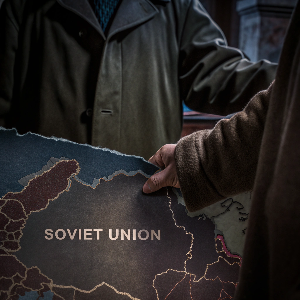
(Image generated by neural network)