To Deter Russia Together. Ukraine, Poland, and the Baltic States As a Possible Centre of the European Security System
The main principle behind the construction of a new European and Euro-Atlantic security system is to strengthen Europe’s responsibility for preventing its own problems in this sphere;
Various options are proposed for this, including the creation of a European component with the participation of Ukraine, which currently has the most powerful army in Europe, with experience in actual combat operations;
So far, this topic remains hypothetical in nature, but it is interesting because it could be one of the possible mechanisms for ensuring security and strengthening Ukraine’s position in the postwar period;
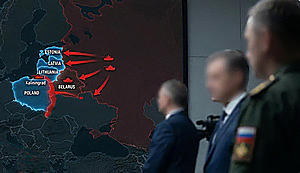
In particular, Kyiv could propose the creation of a military-political alliance comprising Ukraine, Poland, and the Baltic states – countries that directly border Russia and are, or could become, targets of its aggression.
The main threat to Europe’s security in the military sphere is a potential attack by Russia. According to many assessments, the danger is growing because it is Europe – which is helping Ukraine – that stands as the key obstacle to Russia’s plans to transform itself into a major world power. Previously, the United States had always stood by Europe as its key ally. Now the situation is different. China’s intensifying challenges to the United States have reduced America’s ability to assist Europe in countering the Russian Federation. As a result, there is a need to create a new system of European and Euro-Atlantic security. The principles guiding this effort are well known. They call for the United States to focus its efforts on containing China globally and in the Asia-Pacific region, while Europe – in the form of the European Union and the European component of NATO – focuses on countering Russia with American support. These plans are being implemented in practice, and the corresponding measures being taken are yielding positive results.
The main ones include: improving the operational readiness of the Alliance’s rapid response system; strengthening NATO’s forward military presence along the border with Russia; upgrading the air defense system with a main focus on enhancing capabilities to counter UAVs and Russian missiles; increasing military mobility; fortifying the borders with Russia and Belarus; implementation of large-scale rearmament programs in European countries. All of this is supported by the necessary funding.
Appropriate attention is being given to supporting Ukraine in its military confrontation with Russia. The nature of this support is well known and requires no further elaboration. From the point of view of EU leadership, Ukraine is one of the main forces preventing Russia from attacking Europe. For now, the RF is at war with Ukraine because it simply does not have the resources for another war.
The foundation of this system in Europe is NATO’s European component. Despite some challenges stemming from disagreements among European countries, it has demonstrated its ability to fulfill its functions. Moreover, NATO is already effectively engaged in combat operations to defend Europe against Russian attacks and provocations.
So far, this involves Europe’s air and missile defense. It is indeed functioning, contrary to the claims of NATO’s critics, who seek to convince others that Alliance members are unable to stand up to Russia – primarily because leading European countries are trying to avoid a military confrontation. Such claims are false, as has already been confirmed in our publications. But let’s return to this issue once more.
Indeed, NATO’s powerful integrated air and missile defense system, NATINAMDS, has been deployed across NATO countries bordering Russia, stretching from the Baltic Sea to the Black Sea. It consists of the air defense and missile defense systems of those countries, as well as Patriot anti-aircraft missile systems and F-35, F-16, F/A-18, Eurofighter Typhoon, and Gripen fighter jets from other NATO members stationed in the forward area. The operations of these assets are supported by NATO’s E-3A AWACS long-range radar detection aircraft and early warning and control aircraft from the national Air Forces of the United Kingdom, Italy, and a number of other countries. Currently, this system is being supplemented by specialized pan-European counter-UAS systems: the European “wall of drones” and the LCI-X (Layered Counter-UAS Initiative). They will become operational in 2027.
The NATINAMDS air defense system is actively used by NATO for its intended purpose. Moreover, no one hesitates to destroy Russian air attack assets. Evidence of this can be seen in NATO’s response to the well-known incident involving the intrusion of more than 20 Russian UAVs into Poland’s airspace on the night of September 9–10, 2025. As stipulated by protocol, the attack was repelled by Polish and NATO air defense forces and assets in that area, including Poliand’s F-16 fighters and the Netherlands’ F-35s, as well as Germany’s Patriot air defense system. Their operations were coordinated from an Italian Gulfstream G550 CAEW early warning and control aircraft.
Currently, Russian UAVs are being unconditionally and systematically shot down in Romanian airspace thanks to the joint efforts of Romanian fighter jets and NATO member states’ air forces stationed on Romania’s territory. In addition, NATO aircraft are carrying out missions to intercept Russian tactical aircraft and reconnaissance planes approaching the airspace of the Baltic states and Northern Europe. In doing so, they demonstratively activate the active guidance systems of their onboard weapons.
In none of the cases examined were any additional arrangements made; everything was carried out automatically. Of course, this was not without problems, but these stem not from NATO’s wariness of Russia, but from its lack of adequate experience in modern warfare and certain technical challenges. These problems are being addressed, in part with Ukraine’s assistance. To this end, the Joint Analysis, Training, and Education Center (JATEC) has been established in Poland. Besides, Ukraine has deployed a special mission to Denmark. Units of the Armed Forces of Ukraine regularly participate in NATO military exercises, during which they share their combat experience with our partners.
NATO is not engaged in ground combat operations with Russia yet, but it is actively preparing for such a scenario. Much has already been written about how this is happening, so there is no need to repeat it. Suffice it to say that NATO’s rapid response system for crisis situations – as well as its air defense and missile defense systems – will be triggered automatically, without any need for coordination, in the event of a Russian military invasion of Europe.
However, problems may arise in the functioning of the European security system, which could reduce its effectiveness or even paralyze it entirely. This issue deserves special attention. Indeed, it is quite possible that a situation could arise in which the United States would be unable to assist Europe – even partially – in the event of a Russian attack. The reasons for this could include an escalation of political tensions in the United States on the eve of or following its elections, or a Chinese attack on Taiwan, which is under the USA’s protection. Moreover, Russia and China could coordinate their actions in Europe and the Asia-Pacific region.
Besides, internal divisions within NATO and the European Union could intensify significantly. Russia is actively working toward this by supporting various pro-Russian far-right, far-left, and Euroskeptic forces in Europe. In the spring of 2026, Russia lost Hungary. However, its proxies remain in power in Slovakia, Bulgaria, and, to some extent, the Czech Republic. Furthermore, it cannot be ruled out that far-right forces will come to power in Germany and far-left forces in France. This already complicates – and may further complicate – NATO’s ability to take joint action against Russia.
Crisis situations involving influxes of refugees and migrants into European territory, as well as potential conflicts in certain European countries based on ethnic, religious, or separatist grounds, could also create significant problems for Europe. Although these situations will require an appropriate response – including the use of force – they do not fall under NATO’s jurisdiction. Joint Alliance action is envisaged only in the event of an external attack on its members. Moreover, NATO members may have differing views on the causes and parties involved in conflicts and may refuse to participate in peacekeeping or stabilization operations.
The EU leadership has at its disposal the European Rapid Reaction Force (ERRF), created to respond promptly to crises in Europe and beyond. Its strength is approximately 5,000 personnel, which is clearly insufficient. Furthermore, disagreements may arise among EU countries contributing units to the ERRF regarding the nature of their missions.
Such problems can be largely resolved by creating a military-political alliance of European countries that share a border with the Russian Federation and are already, or may become, targets of attack by Russia. This would make it possible to establish a core of the European security system that would, in any case, go to war with Russia. These countries include, first and foremost, Ukraine, Poland, Lithuania, Latvia, and Estonia. Finland also borders Russia, but it does not wish to join such structures, with the exception of NATO. They could be supported by other NATO and EU member states, primarily the United Kingdom, France, and Germany, which are considered European leaders. At this, London will always oppose Moscow even if Paris and Berlin do not support it.
Within the framework of such an alliance, cooperation could be established across a broad spectrum of military-political, military, and military-technical areas. The main areas could include:
First – a common military policy in the region within the framework of NATO’s Strategic Concept, which defines the Alliance’s military-political course, as well as the EU’s Common Security and Defense Policy;
Second – integration of air defense, missile defense, and anti-drone defense systems. In Poland and the Baltic states, which are NATO members, this has already been accomplished. Close cooperation in this area has been established between Ukraine and Poland. It simply needs to be refined;
Third – creation of joint forces in the areas most at risk. This primarily involves deploying Polish troops and Ukrainian units to the Baltic states, which lack sufficient military capabilities to counter Russia. However, if necessary, Ukraine could deploy its troops to Poland, and Poland could deploy its troops to Ukraine. This would ensure flexibility in the deployment of forces and resources. The mechanisms for this already exist in the form of multinational NATO formations and units in Poland and the Baltic states. Ukraine could also be integrated into these;
Fourth – development of joint operational plans in case of war. Such plans already exist within NATO’s Allied Joint Forces, which take into account Ukraine’s role as an integral part of the European security system. Evidence of this can be seen in the nature of NATO’s Allied Joint Forces military exercises on the southwestern flank of the European theater of operations. These plans simply need to be refined. The joint action plans of Ukraine, Poland, and the Baltic states can be tested through the conduct of their own military exercises;
Fifth – deepening cooperation in logistics and weapons production. This is already happening in practice. Poland – and Europe as a whole – serve as an operational and strategic rear base for Ukraine and the Baltic states. It is through Poland’s territory that the main land supply routes for weapons and other military equipment to Ukraine, Lithuania, Latvia, and Estonia run. In addition, close ties in the field of arms production have been established between Ukraine and Poland and the Baltic states, as well as other NATO and EU members. These ties are deepening and becoming institutionalized.
In terms of its potential, an alliance of Ukraine, Poland, and the Baltic states would be fully capable of countering Russia, even without direct assistance from other NATO countries, relying solely on their military-technical support. This is confirmed by nearly five years of war, during which Ukraine has faced Russia head-on on the battlefield. And with Poland and the Baltic states, their combined potential will, at a minimum, double.
There is a view that the governments and populations of these countries are morally weak and, unlike Ukraine, will not go to war with Russia. This is said to be evidenced by the active purchase of real estate in Western European countries by Poles. Based on this fact, the conclusion is drawn that Poles will not participate in the war but will, for the most part, leave their country. In some cases, this is indeed true. However, nearly half of Ukraine’s population has moved to Europe. And Ukraine is actively resisting Russia. The same will happen with Poland and the Baltic states.
The proposals mentioned do not contradict the North Atlantic Treaty. It does not prohibit NATO members from entering into military-political agreements with other countries. Examples include the treaties between the USA and Japan and South Korea, which are American allies outside of NATO. Furthermore, on August 7, 2026, Türkiye, Saudi Arabia, and Pakistan signed a trilateral mutual defense agreement in Mecca. Any armed attack on one of the three countries will be considered an attack on all of them. In other words, precedents already exist and can be used by Ukraine, Poland, and NATO countries.
The need to establish a European military component is already being discussed in expert and political circles across Europe. And although their ideas differ from the proposal outlined here, they are closely related to it. In particular, Polish Foreign Minister R. Sikorski has recently proposed establishing a permanent “European Legion” composed of experienced military personnel from European countries, including Ukraine. In his view, the Legion could function as a rapid-response force for crises in Europe that do not require US intervention. As a first step toward implementing this initiative, R. Sikorski proposed closing the airspace over Ukraine.
At the same time, R. Sikorski believes it is necessary to preserve NATO as a powerful collective security system capable of deterring Russian military aggression against Europe. In the Polish politician’s view, the new military structure should complement the Alliance where necessary, rather than compete with it or duplicate its functions. At the same time, R. Sikorski acknowledged the significant role of the USA in the European security system. He is convinced that the USA will maintain its troops on European soil and continue to provide military technology and intelligence.
Thus, as shown by this analysis, the current European security system is capable of deterring Russia and countering its provocations. At the same time, the system has a number of problems that could reduce its effectiveness in case of war. The reason for this is the decline in the USA’s involvement in guaranteeing European security due to a shift in its focus and efforts toward containing China, as well as the potential for growing divisions among European countries – both due to their own problems and under Russia’s influence.
This can be addressed by creating, within the framework of NATO and the EU, a separate military-political alliance comprising countries bordering Russia that are already, or may become, targets of attack by Russia. These countries are guaranteed to enter the war against Russia. They are Ukraine, Poland, and the Baltic states.
Within such a structure, cooperation can be established in the areas of implementing a joint military policy, integrating air defense systems, forming joint task forces, developing joint operational plans in case of war, and deepening cooperation in the fields of logistics and weapons production. Such an alliance is capable of repelling Russia’s military aggression, as evidenced by the experience of Ukraine, which is doing so on its own on the battlefield. NATO and the EU provide Ukraine only with military-technical and financial-economic assistance. Joint efforts by Ukraine, Poland, and the Baltic states would take these capabilities to a qualitatively new level.
Implementing this approach would provide a real guarantee of Ukraine’s security and enhance its role and significance within the European security architecture and in the Central and Eastern European region.
Yurii Ilchenko,
Institute for Global Politics
(Image generated by neural network)